
What Does Private Prosecution Have to Do with the Presumption of Innocence?
Last edited: 2026-07-27
Photo/nondavidmirage
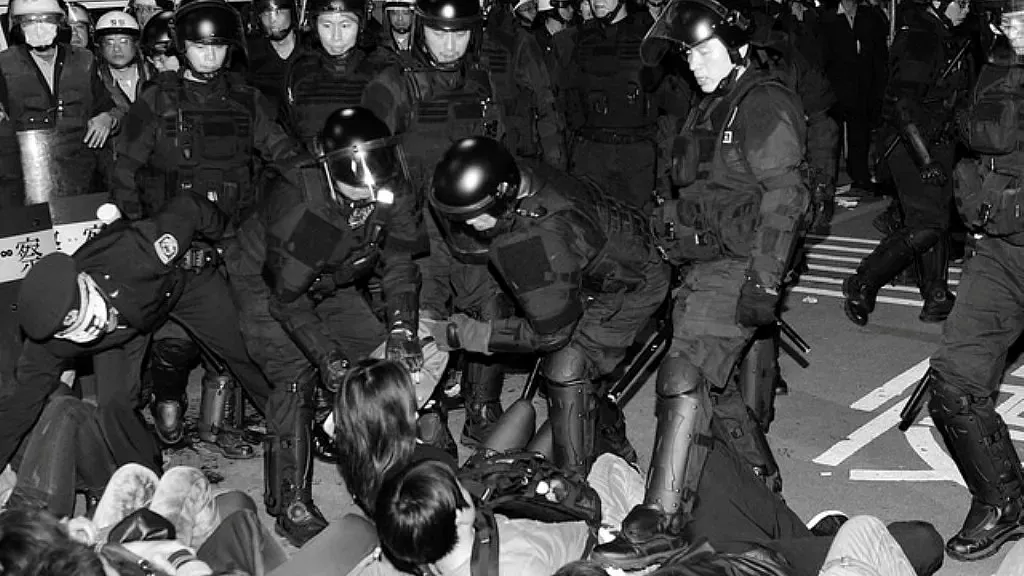
Ever since citizens filed a private prosecution against Premier Jiang Yi-huah and other administrative officials for attempted murder during the March 24 bloody dispersal event, and Premier Jiang was summoned by the Taipei District Court to appear in court, the private prosecution system within the criminal procedure framework has faced unprecedented attacks. In fact, this is not the first time the private prosecution system has been criticized; legal practitioners have long held the view that it is prone to abuse and allows people to "use criminal charges to coerce civil settlements." However, claiming that the private prosecution system violates the principle of the presumption of innocence is probably a first in history (see: Li Nien-chu, "The Complex of Vengeance in the Private Prosecution System," Storm Media, August 26, 2014).
Attorney Li Nien-chu, who advanced this argument, rejected the conventional view that "private prosecution allows victims to fill the gap left by prosecutors who fail to pursue crimes," emphasizing that "prosecutorial default must be an exception; if the system is designed to prevent the pitfalls of prosecutorial default, principles will inevitably be sacrificed for the sake of exceptions." He argued, "The prosecution's failure to initiate charges may be due to default, or it may be due to insufficient evidence. Meanwhile, a victim's decision to initiate a private prosecution may fall far short of the objectivity and professionalism of the prosecutor. When the law uses private prosecution to supplement public prosecution, it must be operating on the assumption that it is 'better to mistakenly prosecute than to mistakenly acquit'; yet the principle of the presumption of innocence is precisely 'better to mistakenly acquit than to mistakenly prosecute.' This is why the private prosecution system inevitably betrays the principle of the presumption of innocence."
From a logical standpoint, the aforementioned argument raises several questions. First, what does private prosecution have to do with wrongful prosecution? When a prosecutor is unwilling to indict, granting victims the right to initiate a private prosecution to pursue a crime can broadly be called "avoiding mistaken acquittal," but which part or circumstance here can be defined as "wrongful prosecution"? Does "wrongful prosecution" occur at the exact moment a private prosecution is filed, or is it when a judge disregards insufficient evidence and arbitrarily convicts someone? If filing a flood of private prosecutions is itself termed "wrongful prosecution" and therefore violates the presumption of innocence, then prosecutors are also capable of malicious prosecution—does that mean public prosecution likewise violates the presumption of innocence?
Secondly, since Attorney Li cannot deny the realistic possibility of prosecutors defaultingly letting criminals go unpunished, what justification is lacking in designing a private prosecution system that provides victims with a means of self-help? If the concern is the poor quality of private prosecutions, haven't subsequent legal amendments mandated compulsory attorney representation for private prosecutions (regardless of any issues regarding discrimination against vulnerable victims)? If the concern is the abuse of the system by private prosecutors, hasn't the legislator also required judges to review whether the private prosecution procedure is being abused before the trial proceedings formally commence?
Attorney Li further stated, "Crime victims are likely to lack sufficient grounds or evidence, initiating private prosecutions based merely on their own conviction. The Code of Criminal Procedure permits judges not to summon the defendant to court and instead first listen to the one-sided account of the private prosecutor. On the one hand, this explicitly condones listening to only one side; on the other hand, if this is intended to place the judge in a position similar to a prosecutor conducting an investigation to review whether the private prosecution has met the threshold for indictment, it cannot prevent the judge—out of sympathy for the private prosecutor as a victim—from slipping into the role of a prosecutor and considering how to gather evidence to convict the defendant. At this point, the judge has in fact abandoned the principle of the presumption of innocence and transformed into a prosecutor accustomed to presuming guilt. How can this possibly comply with the due criminal judicial procedure required by the Constitution?"
To prevent malicious indictments, avoid placing an unnecessary burden on the courts, and spare defendants the ordeal of frivolous litigation, the Code of Criminal Procedure provides for an indictment review system in public prosecutions (Article 161 of the Code of Criminal Procedure) and establishes similar provisions for private prosecutions. Paragraph 1 of Article 326 of the Code of Criminal Procedure requires judges to first question the private prosecutor and defendant and investigate evidence during preparatory proceedings, while Paragraph 2 requires judges not to summon the defendant prematurely. Rather than being designed to favor the private prosecutor, these provisions are meant to protect the defendant and reduce the court's caseload. To take a step back, even if the judge in this instance truly hears only the one-sided account of the private prosecutor, aren't indictments by prosecutors also one-sided accounts? The purpose of an indictment review is merely to ascertain whether the private prosecutor possesses sufficient evidence to indict, and the evidentiary threshold is inherently lower (requiring only prima facie evidence in U.S. law); there is no absolute requirement to summon the defendant at this stage. Although summoning the defendant at this stage may impose a burden on them, it also affords the defendant an opportunity during preparatory proceedings to halt the continuation of the trial.
The situation where listening to one side truly generates problems occurs during trial proceedings, not preparatory proceedings. If Attorney Li is concerned that "judges abandon the principle of the presumption of innocence and transform into prosecutors accustomed to presuming guilt," then what should be supported is requiring the court to adopt a thoroughly adversarial system during trials; judges should particularly refrain from conducting evidence investigations and cross-examination on behalf of the prosecutors. How could one use this point to oppose preparatory proceedings in private prosecutions?
As for the possibility that judges might relax evidentiary requirements out of sympathy for victims, I completely agree with this doubt—the Tu family father and son died precisely because of this, and individuals like Hsu Tzu-chiang and Chiou Ho-shun were also convicted for this reason. However, such individuals are usually at the bottom of society, lacking power and influence, generally untrusted by judges, and naturally receive no judicial sympathy. Do officials who enjoy multi-layered protection from public opinion, attorneys, and bodyguards need to worry about this issue? Even putting aside the private prosecution case regarding the March 24 bloody dispersal—which Attorney Li likely bears in mind yet left unmentioned—do private prosecutions statistically have a higher conviction rate than public prosecutions? In legal practice, do judges actually trust the prosecution evidence presented by prosecutors more, or that presented by victims?
Attorney Li also asked, "(Victims) lack the power to punish; what reason do they have to become parties to criminal proceedings?" Attorney Li likely confuses two concepts: the possession of the state's power to punish, and the initiation of state criminal proceedings. While contemporary states undoubtedly claim an absolute monopoly over the power to punish (the monopoly of legitimate violence), there is no uniform practice regarding how criminal proceedings are initiated. Some countries adopt a monopoly on public prosecution, such as the United States, while others retain the private prosecution system, such as Germany and France—with Germany even allowing victims to participate in public prosecutions through adhesion proceedings. Countries that adopt both private and public prosecutions tend to view complaints and private prosecutions alike as vital mechanisms for limiting the exercise of state prosecutorial power (preventing both over-enforcement and under-enforcement), and one has never heard anyone question whether the private prosecution system violates the principle of the presumption of innocence.
As for Attorney Li's claim that the private prosecution system confuses compensation with punishment, given the emergence of civil punitive damages and provisions allowing deferred prosecution to impose the burden of compensating victims, civil compensation and criminal punishment likely ceased long ago to be the binary opposites Attorney Li imagines. Attorney Li reminded everyone, "Has anyone ever noticed how the current Code of Criminal Procedure encourages crime victims to use the private prosecution system? Crime victims who initiate a private prosecution can file a incidental civil compensation claim without bearing the litigation fees required for filing a separate civil compensation lawsuit. This is precisely the root cause of the 'using criminal charges to coerce civil settlements' phenomenon commonly seen in judicial practice." To claim that such a design encourages victims to file private prosecutions seems to overlook the fact that a private prosecutor must first pay attorney's fees in order to be exempt from those litigation fees. Are attorney's fees really more economical than court fees?
The criticisms of the private prosecution system over the past month have clearly been triggered by Premier Jiang Yi-huah appearing in court for the private prosecution case concerning the March 23 bloody dispersal incident. Critics accused the pro-pan-green team of lawyers of manipulating the private prosecution procedure, paralyzing the government, dragging the judiciary into politics, and sending the nation into decline. Critics evidently believe this absurd case should have long ago been dismissed by a judge for lack of jurisdiction; the fact that the judge did not do so, but instead summoned the Premier to appear in court, clearly demonstrates judicial bias. Former Control Yuan member Li Fu-teng even published an open op-ed harshly criticizing judges for abusing their power and debasing themselves (see: Li Fu-teng, "Judges Abuse Power and Debase Themselves," China Times, August 17, 2014).
However, is this private prosecution case truly devoid of any justification? On April 7, 2014, Professor Lin Yü-hsiung published an op-ed in the Liberty Times titled "Investigating State Violence Cannot Be Done with Deaf Ears and Blind Eyes!", citing the "Berlin Wall shooting case" to illustrate how German prosecutors indicted the entire chain of command within the command system at once—ranging from actual executors and commanders at all levels to top leaders. If Jiang Yi-huah indeed issued orders for time-limited, indiscriminate dispersal during the March 24 incident, holding Jiang Yi-huah criminally responsible is not entirely impossible. Since other countries have such precedents and academic theory supports this view, what exactly were the conditions on that day, and should Premier Jiang Yi-huah bear responsibility? These matters ought to be clarified in litigation; how can one claim this private prosecution case was merely intended to intimidate the defendant?
In fact, the court summoning Premier Jiang Yi-huah during the preparatory proceedings precisely gave the Premier an opportunity to clarify the situation. Such an approach does not violate the provisions of the Code of Criminal Procedure, and can even be regarded as a gesture of goodwill toward the defendant. Harshly criticizing judges for illegal abuse of power, and even accusing the private prosecution system of violating the principle of innocence, instead leaves potential victims of state violence with nowhere to turn for help, enables potential perpetrators of state violence to escape their due criminal culpability, pushes Taiwan's judiciary further from justice, and makes Taiwan's democratic politics appear even more degraded.
This article is an AI-generated translation of the original Chinese text. In the event of any discrepancy, the Chinese version shall prevail.