
Is Non-Publicity of Investigation a Silver Bullet for Lee Chang Yung?
Last edited: 2026-07-27
Photo Source / nonohunter
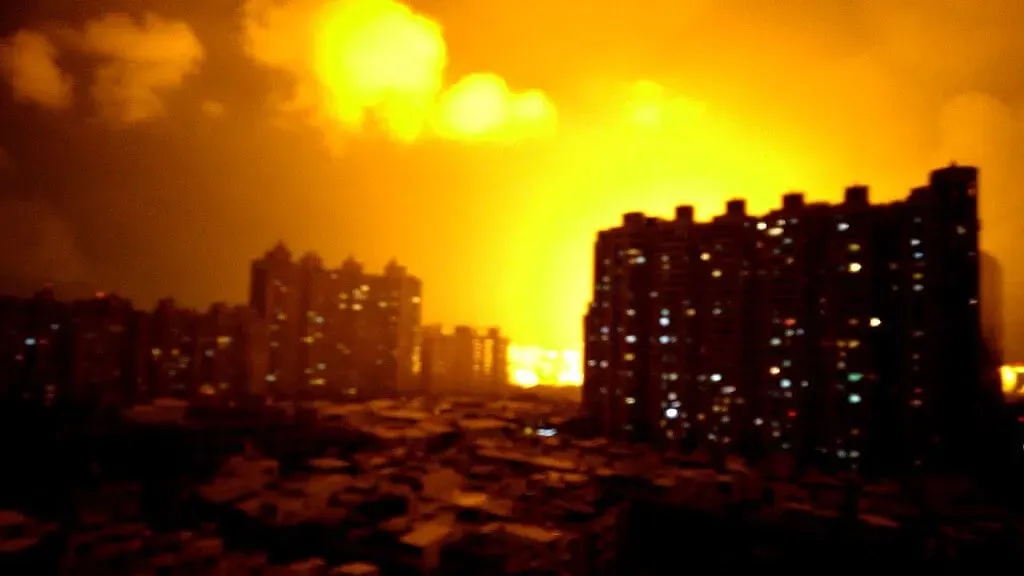
To be honest, any legal counsel assisting Lee Chang Yung Chemical Industry—which is currently facing public condemnation and bears responsibility for the Kaohsiung gas explosion—would probably advise them to apologize and promise to take full responsibility, but also emphasize that before the facts and responsibilities are clarified, they must absolutely not yield to admit fault or acknowledge liability, much like what they are currently doing.
The rationale is simple: the pain and responsibility brought by this gas explosion are immense, and the media's collective witch-hunt continues unabated. Before the Kaohsiung City Environmental Protection Bureau took the lead in raising accusations and before the facts are clarified, Lee Chang Yung must first withstand this heavy pressure. Otherwise, once they yield, should the prosecutors and police eventually prove incapable of uncovering the truth, the company will become a scapegoat and suffer a complete downfall.
Non-Publicity of Investigation Targets Public Officials
However, starting from the press conference led by the Chairman on the afternoon of August 3, in response to relentless questioning from the media, they repeatedly used the bizarre excuse of "non-publicity of investigation, unable to provide external explanations." Waving the prosecutorial authority and manipulating unfathomable legal concepts seemed merely intended to leave the media speechless.
If proposed by legal experts, such a strategy would be a misapplication of legal grounds. Referring to the "Directions for the Non-Publicity of Investigations" issued by the Judicial Yuan and the Executive Yuan at the end of 2012, the legislative intent is to safeguard the "investigative procedure," promote the "discovery of truth," protect the "reputation of the defendant," and "prevent public prejudgment from influencing judicial adjudication."
Conversely, the reason for "non-publicity of investigation" is that during the investigative process, the media frequently exposes investigative contents, causing the investigative procedure to be hindered or disrupted, thereby impeding the discovery of truth. Moreover, it often directly identifies suspects, severely undermining the "presumption of innocence" while creating a "media trial" that contaminates judges' fair mindset. Public prejudgment also makes subsequent adjudication results vulnerable to severe criticism.
Based on practical experience, those most frequently violating the non-publicity of investigations are actually investigative, police, and investigative-investigative personnel, due to their symbiotic and co-prosperous structure with the media. Leaking information to reporters is a way to "cultivate personal relationships," so that connections are established when there is a need for the media to hype or broadcast stories. If something "goes wrong" and can be fended off, reporters will also lend a helping hand. The fish helps the water, and the water helps the fish.
The most vicious practice is when prosecutors and police conduct investigations while simultaneously releasing information through the media to penalize the defendant, playing a two-faced strategy. They even warn defendants against making unauthorized external statements, creating an inequality of status and disparity of arms. Such situations usually occur when they are handling "big figures" and need "public sentiment," prompting them to leak information to reporters. As the media fans the flames and "in-depth reporting" generates profits, the public grows angry, providing prosecutors with "usable public sentiment." Backed by public opinion, prosecutors then boldly and gloriously handle major cases. As for whether innocent people are slandered, it is simply not taken into consideration.
Making a Chicken Feather a Decree
Therefore, Paragraph 1, Article 5 of the "Directions for the Non-Publicity of Investigations" states that the subjects regulated by non-publicity of investigation are "personnel legally performing their duties," with the core focus being public officials. As for defendants, criminal suspects, or other interested parties, they are not originally among the regulated subjects; prosecutors and police merely "may inform" them of this regulation and "admonish" them not to publicize or disclose the procedures or contents "known during the investigation" (Paragraph 3).
Once these premises are clarified, Lee Chang Yung Chemical's absurd statements naturally collapse. Lee Chang Yung is more likely a criminal suspect, not a public official, nor a "personnel legally performing their duties." In principle, they never faced the issue of having to "comply with the non-publicity of investigation." For a criminal suspect, the protection offered by "non-publicity of investigation" is primarily aimed at protecting "the defendant's own reputation"; if they wish to waive it, they waive it, and if they do not care, no one else has the qualification to object.
Even if prosecutors "admonished" them not to "talk nonsense" due to concerns over the investigative procedure and the discovery of truth, it was only directed at the procedures or contents "known during the investigation." Naturally, this would include the parts where prosecutors are clarifying responsibilities. If Lee Chang Yung fully and truthfully discloses its own situation to the public, it should not hinder the discovery of the truth, provided they steer clear of other parties' affairs.
Therefore, what the public urgently wants to know is whether operations on the day of the explosion were in an abnormal state? What measures were taken? If everything was normal, there should be nothing to hide. Continuing to cover things up only makes them more suspicious and deepens doubts. Furthermore, what the public has an even greater right to know is whether there are still any potential hazards at present? What exactly is the status of the pipelines? What plans or intentions are there for the future?
Favorable "Full Disclosure"
What is intriguing is that while Lee Chang Yung claims on one hand that "investigations are not public, and nothing can be disclosed," on the other hand, regarding points where they are questioned, they repeatedly issue denials and clarifications, making a "full disclosure." They claim they complied with SOPs before the gas explosion, that the pipelines were constructed by CPC Corporation, Taiwan, and that the exploding pipe was an 8-inch pipe rather than Lee Chang Yung's 4-inch pipe.
To put it bluntly, raising the banner of non-publicity of investigation is merely taking a chicken feather as an imperial decree. Lee Chang Yung behaves more like they will "speak when they want to, and keep silent when they don't," and "speak about what is favorable to themselves while staying silent on what is unfavorable." Their methods are overly clumsy, their excuses far-fetched, and casually pulling out legal jargon as pretense means that even if they bear zero responsibility in the future, they have probably already compromised their corporate image.
If Lee Chang Yung truly possesses a legal team, they should not uniformly use "non-publicity of investigation" to block the media's mouth. Then again, perhaps when high-ranking leaders in our country also abuse terms like "acting in accordance with the law," no one will take important legal principles seriously anymore—they will simply be trotted out to shirk responsibility and misused at will.
This article is an AI-generated translation of the original Chinese text. In the event of any discrepancy, the Chinese version shall prevail.