
Only Premier Chiang Can Still Sleep Soundly
Last edited: 2026-07-27
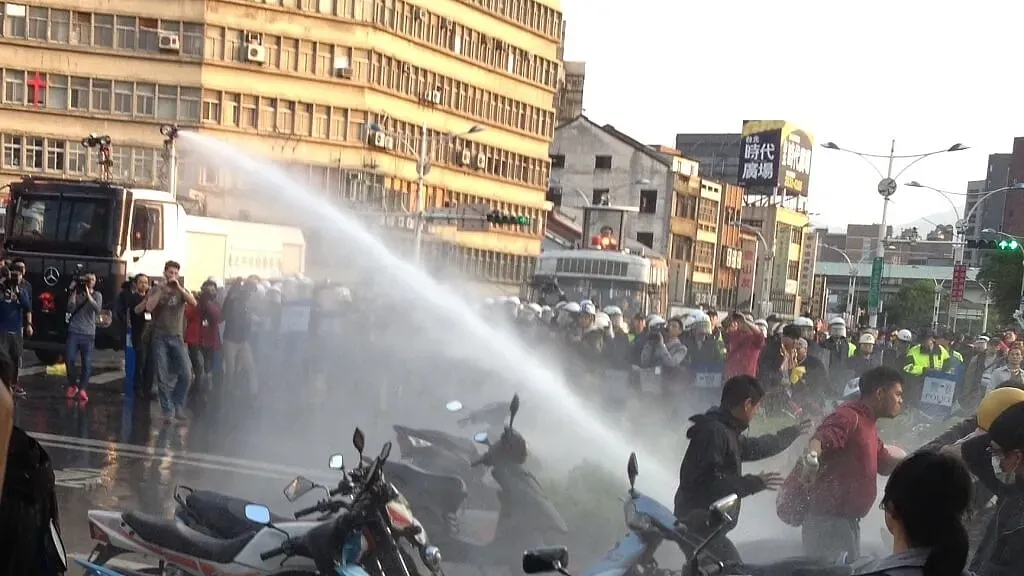
The events of March 24 of this year remain vivid in our minds.
The Executive Yuan eviction operation began at midnight. First at the intersection of Peiping E. Rd. and Linsen N. Rd., broadcast live by media, police officers dressed in dark protective gear began forming up. Using shields and batons as weapons, they resorted to stomping, beating, swinging, kicking, and stamping—various forms of violence—against unarmed and peacefully sit-in protesters.
All night long, heads were bloodied and bruised, people suffered and wailed, the media was evicted, lawyers were given a hard time, and medical teams were blocked. The JRF's phone never stopped ringing. Anxious students and citizens worried about the safety of their friends amidst a grim atmosphere until six in. that morning. That night, perhaps only Premier Chiang was able to sleep soundly.
Everyone along the chain of command shirked responsibility, and to this day, no one has been held accountable; naturally, the police have not produced any review report either. Four months have passed, and those who ordered the eviction—Chiang Yi-hua, Wang Cho-chun, Huang Sheng-yung, and Fang Yang-ning, among others—are finally facing investigation through the judicial process for the first time.
Victims of state violence chose to file a private prosecution directly with the court, bypassing prosecutors. This highlights that after numerous large and small social movements, the public and students have completely lost trust in the investigative system of prosecutors and police, yet they are willing to turn to the courts in hopes of attaining ultimate judicial justice.
A similar scene occurred in Turkey in 2005. A peaceful demonstration celebrating International Women's Day triggered indiscriminate violent eviction by the police. After injured citizens exhausted domestic remedies with final unfavorable rulings, they ultimately sought relief at the European Court of Human Rights (the Izci case).
The European Court of Human Rights ruled against the Turkish government, pointing out that peaceful assemblies should be respected and tolerated by the government. Furthermore, the government must not disperse "peaceful and non-violent" assemblies, and directly declared that the violent methods used by the Turkish police constituted "torture or cruel, inhuman treatment," violating the European Convention on Human Rights.
Moreover, the officers who inflicted the beatings concealed their identification numbers in an attempt to prevent injured citizens from holding them accountable. Regarding this, the European Court of Human Rights stated that the government's failure to launch an investigation after the incident amounted to tacitly conniving at the police officers' ability to delay and obstruct procedures by concealing their identification numbers, thereby evading responsibility and profiting from it—all of which constituted failures of the state.
Taiwan, pursuant to the Enforcement Act of the Two Covenants, applies Article 7 and Article 21 of the International Covenant on Civil and Political Rights, which similarly prohibits torture and protects the freedom of peaceful assembly. General Comment No. 20 further requires the state to conduct prompt and impartial investigations into complaints of torture.
Based on this standard, the legality of the Executive Yuan's order that night to clear the premises before the workday begins will face severe challenges. Summoning Chiang Yi-hua and others to initiate the investigation process is not only lawful, but also an obligation of the state. The court's ability to withstand pressure is truly worthy of affirmation.
This article is an AI-generated translation of the original Chinese text. In the event of any discrepancy, the Chinese version shall prevail.