
JRF Newsletter
Every Trial Should Be the Most Professional Performance—An Interview with Conductor Wen Yi-ren
Last edited: 2026-07-27
Hello everyone:
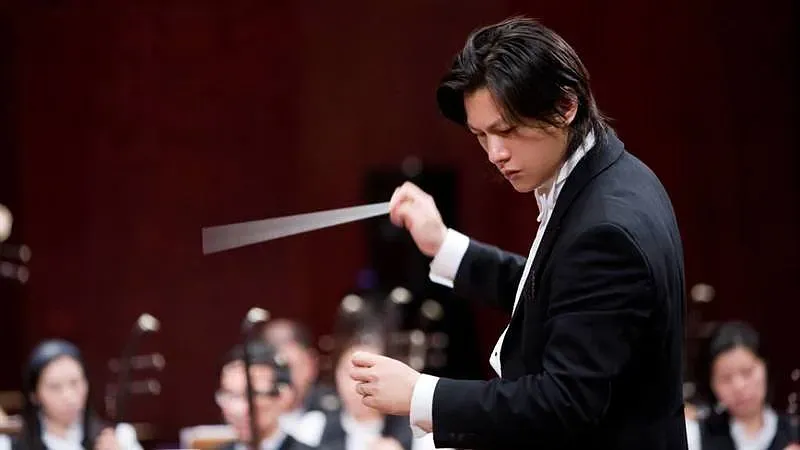
This issue of our newsletter introduces a great friend of judicial reform—conductor "Wen Yi-ren", one of the few international conductors in the music world bridging both Eastern and Western stages. Originally dedicated entirely to classical music performance, Wen unexpectedly came into contact with both the best and the worst of the judicial system, leading him to become one of the most passionate supporters of judicial reform. We thank Wen for sharing this life experience, and his story is presented below.
Nodame Cantabile: Taiwan's "Chiaki Shinichi"
In 2006, the Japanese drama series Nodame Cantabile, set against the backdrop of classical music, became a massive hit, sparking a wave of classical music appreciation in Taiwan and Japan. That same year, young conductor "Wen Yi-ren," who had studied in Austria for many years, was invited by the Nippon Choral Association to conduct the New Japan Philharmonic—one of Japan's top three orchestras—and received acclaim as one of Japan's best concerts of the year. Rising to international prominence, Wen attracted intense media attention, earning praise as Taiwan's "Chiaki Shinichi" and becoming a sought-after conductor in the classical music world, as well as a box-office guarantee for various performances.
"I am not a genius; I am the tortoise in the tortoise and the hare race—a tortoise among tortoises," Wen remarked by way of metaphor. "The only talent a tortoise has is to keep crawling forward. Combined with having no background, no financial support, and a state unwilling to foster talent, I could only rely on hard work, and more hard work."
The person who influenced Wen most was his mother, an elementary school teacher who played a little piano and raised Wen as a single parent. "My mother was extremely strict and factual, so you can imagine my childhood didn't have much time for play. I remember once sneaking off to a baseball ground to join a classmate's baseball team, but my mother showed up uninvited and forcefully dragged me away from the stadium while I cried, taking me to see a movie: The Life of Buddha. Oh god! My idol was Sadaharu Oh, not Buddha!" Wen said with a laugh. When other children were playing outside, Wen had no choice but to practice unceasingly at home, which nevertheless laid a solid musical foundation for him. "We had no money. My reason for studying abroad in Vienna, the music capital, was not only to study in the best environment, but also because tuition was almost completely free—I only had to cover living expenses." Wen describes his life studying abroad with a single word: "bitter." "Cultivating a true conductor requires investing a great deal of time and money." To ensure students attain the competencies expected of professional conductors upon graduation, Austria not only maintains a rigorous curriculum design but also allocates substantial budgets to pay semi-professional orchestras so students can practice practically every month; those who fall short are expelled. To complete his studies, it was all about bitter studying. Life was even harsher: to save money, he often survived on the leftover crusts of bread kindly saved by student cafeteria workers. "I remember being overjoyed when I received a package of oyster vermicelli sent by my mother, but as I cooked it, I cried while eating because it was the taste of home. After finishing, I cried more because there was only one pack."
After graduating from the University of Music and Performing Arts Vienna and the Music and Arts Private University of the City of Vienna, Wen embarked on his career as a professional conductor. Domestically, he was invited each year to collaborate with the National Symphony Orchestra (NSO), the National Taiwan Symphony Orchestra (NTSO), and major professional orchestras; in Europe, he collaborated with the renowned ORF Vienna Radio Symphony Orchestra, the Vienna Modern Chamber Orchestra, the Saint Petersburg Philharmonic Orchestra, the Saint Petersburg Academic Symphony Orchestra, the Bruckner Orchester Linz, and the Wuppertal Symphony Orchestra in Germany, among others. He was also appointed as the Principal Conductor of the National Theatre of Belgrade, making his mark on the international stage. In 2008, Wen was invited by the board of the National Performing Arts Center to return to Taiwan to serve as the Music Director of the National Chinese Orchestra Taiwan (NCO), concluding over a decade of living and working in Europe. He stated, "Cultivating an international-class orchestra for Taiwan was something I had always wanted to do, and coupled with my mother's advanced age and need for care, these were the reasons I returned to work in Taiwan."

The Death of Amadeus Mozart
"When I was studying at the National Taiwan Academy of Arts, Taiwan was still under martial law. Because I enjoyed participating in student clubs to discuss the democratic movement and refused to attend military training and Dr. Sun Yat-sen's Thought classes, I became a problematic figure in the eyes of the military instructors," Wen recalled. "I had good grades and was a student representative—what could they possibly do to me?" After taking over the National Chinese Orchestra Taiwan—formerly the Experimental Chinese Orchestra of the National Taiwan Academy of Arts—Wen found that he had once again become a problematic figure. Accustomed to collaborating with top-tier international orchestras and musicians, Wen was profoundly shocked by the chaotic administrative management of the NCO and the sloppy, perfunctory practice habits of its members. "A professional orchestra requires members to practice their own parts well before rehearsal with the conductor; that is a member's most basic duty," Wen sighed. "In the NCO, only a handful of people fulfilled this basic duty, so every rehearsal ended up being a practice accompaniment session, yet the majority of the orchestra felt that I was the problem."
In 2009, just as Wen completed his first year as Music Director, he did not receive his contract renewal as per usual practice. Instead, he was informed that in order to elevate the orchestra's standards, the music director position would be changed from "direct appointment" to "open recruitment," and he was asked to submit application materials according to the open recruitment guidelines in order to be considered for renewal. Wen stated he never expected this to be a carefully orchestrated conspiracy against him. He had earnestly expressed his aspirations during the recruitment interview: "I hope traditional Chinese music can continue to expand internationally, allowing Westerners to also understand Eastern musical culture. But to my surprise, despite its long development, no publishing house in Taiwan is willing to publish musical scores for traditional Chinese music. Many existing scores are handwritten—sloppy and unclear through photocopying—making it impossible to determine the correct notes of a work, and musical terms are written in Chinese, making international alignment virtually impossible. Last year, I allocated some funding to re-correct the musical scores and typeset them on a computer, not only to let members ascertain pitch positions, but more importantly to make them understand that music is not about 'close enough,' but 'absolute precision.' This is my expectation for the orchestra." As anticipated, among the eight qualified applicants, after being voted out one by one by the review committee, Wen received the highest score. Unexpectedly, however, the recruitment result was declared "vacant."
Shortly after the results were announced, a certain newspaper suddenly published a report titled "Handsome Conductor Exposed for Faking Academic Credentials," stating that orchestra members had blown the whistle on Wen, revealing that the academic credentials submitted for the recruitment process were merely a certificate of completion from an advanced studies program, and attacking him: "It's sheer fraud! To participate in a national-level conductor selection, he actually used inflated academic credentials!" Regarding the whistleblowing by members, the NCO stated it was inconvenient to comment, yet pointed out that the recruitment resulted in a vacancy because the review committee deemed none of the applicants' qualifications suitable—implicitly suggesting that Wen's academic credentials indeed involved falsification. "My academic credentials had already been authenticated by the Taipei Economic and Cultural Representative Office in Austria back in 2007, representing Austria's highest artistic diploma in the performing arts category, and the Ministry of Education had long before my graduation officially announced that this diploma is equivalent to a doctoral degree," Wen countered. "When the National Center for Traditional Arts (NCTA) initially signed the 'Music Director' contract with me, they verified this long ago; when it was converted into a 'Principal Guest Conductor' contract the following year, it was verified once more; and the diploma submitted for re-application upon the contract's expiration bore the cross-page authentication stamp of our representative office in Austria. The orchestra management clearly knew the diploma was authentic before approving my application, which effectively means my credentials were verified three times over. Yet after the newspaper report, neither the NCTA nor the orchestra management made any clarifications; their purpose was to ensure I could never again gain a foothold in the musical world." In music history, Salieri envied Mozart's musical genius and plotted various schemes that led to his untimely death at the age of 35. The false reports by a certain newspaper cut short Wen's musical career at merely 37 years of age, pushing him virtually onto the tragic path of Amadeus Mozart.
Reversed Judgment, Reborn Anew
"I had never been to court before and naively believed that the judiciary would restore my justice," Wen said angrily. "Yet judges and prosecutors presiding over trials did not read briefs, did not investigate evidence, and did not listen to me speak." To clear his name of credential falsification, Wen filed a private prosecution for defamation against the newspaper reporters, but lost in both the first and second instances; he then filed criminal complaints for breach of confidence and defamation against the whistleblowing orchestra members, but the prosecutor still issued non-prosecution dispositions for the defendants; he further filed a civil suit for damages against the newspaper, and lost the first instance as well. "I spent three years going to court and paid exorbitant attorney fees, yet received no justice. Instead, it gave that newspaper grounds for a secondary report: 'Fake Academic Credentials Exposed: Former National Orchestra Conductor Loses Claim for Damages,' repeatedly wounding me and causing me to fall into severe depression, unable to even walk out my front door, let alone work."
Through the introduction of a student's parent, Wen came to know the JRF. "I realized I wasn't the only one who felt there was something wrong with our judicial system; the people here genuinely cared about the injustice I suffered in court," Wen recalled. "Later on, I frequently visited the JRF, and coming here gave me peace of mind." As fortunes turned, Wen finally encountered a judge in a state compensation lawsuit who was willing to thoroughly investigate the case on his behalf. The judge granted his request to review the "internal administrative memos regarding the NCTA's handling of the recruitment" and "the complete audio recordings of the three review committee meetings." This uncovered that the person who made the false whistleblowing report to the newspaper was actually the review committee's member representative, who—having previously clashed with Wen—had intentionally fabricated the falsehood that Wen had falsified and inflated his academic credentials in order to protect himself. The various flaws in the recruitment process further convinced Wen that this was malicious abuse of power by the senior administrative leadership of the NCO. Ironically, ever since Wen's tenure, subsequent appointments of orchestra conductors have instead followed institutionalized direct appointments and operated in accordance with the law.
On April 1, 2013, the Taipei District Court rendered its 100-Year-State-Suits-No.-53 Judgment, ordering the National Center for Traditional Arts to pay Wen Yi-ren NT$500,000 in state compensation. On December 17 of the same year, the Taiwan High Court rendered its 102-Year-Appeals-No.-376 Judgment, modifying the ruling to order the newspaper and its reporters to jointly compensate Wen Yi-ren NT$300,000 and publish an apology. After five years, Wen finally achieved a reversal, winning back his innocence. During the lowest point of his life, Wen met a woman who truly loved him, accompanying him like an angel through his pain and sorrow. "Without her, I could never have survived until today, let alone become a father at 45; she and our child are the greatest gifts God could possibly bestow upon me."

Every Trial Should Be the Most Professional Performance
"Going to court felt to me like gambling—betting on whether this time you would encounter a good judge or prosecutor. I transformed from a musician into a gambler, gambling again and again until I finally encountered a good judge. However, the court should not be a casino, because life cannot be replayed," Wen emphasized.
"As a professional conductor, I must guarantee that every performance is the most professional performance, so as to live up to the audience who come to listen. Judges and prosecutors should similarly guarantee that every trial is the most professional trial, so as to live up to the people who come seeking justice."
Wen Yi-ren's figure frequently appears at JRF events, quietly supporting judicial reform. At the fundraising banquet on October 1st this year, Wen will not be absent either.
"I invite everyone to come together and support judicial reform. I believe that as long as we keep working hard and trying harder, the judiciary will surely become better."

The Friends of Judicial Reform newsletter series introduces partners who have long participated in judicial reform, hoping to resonate with you through their sharing. We invite you to light a candle in the judicial darkness by donating to support the Judicial Reform Foundation.
2016 Fundraising Banquet

If Taiwan's democracy requires a century of pursuit, the maturation of the rule of law demands the interactive refinement of time and human hearts before it can precipitate into a cultural foundation. Sustained by the earnest aspiration to see our institutions reach their highest potential, we have devoted ourselves to judicial issues for 21 years. Through advocacy, social movements, and talent cultivation, we have continually made our voices heard on judicial matters. Walking this path, we have consistently maintained that judicial reform must be built from the bottom up, with the people acting as the protagonists of judicial reform.
2016 is a pivotal moment. Taiwan today is entering a critical juncture of rebirth. We harbor a dream for the judiciary and an expectation for the rule of law in Taiwan. We hope that when people speak of Taiwan, alongside our democratic achievements and economic miracles, they will also see a rule of law and a judiciary filled with honor.
Opening a new chapter in judicial reform together requires everyone's persistent efforts, passing the torch from one generation to the next!
- Time: October 1, 2016 (Saturday) 11:30~14:30
- Venue: Taipei Cosmos Hotel TICC Exhibition Hall 3F (No. 1, Sec. 5, Xinyi Rd., Xinyi Dist., Taipei City)
This article is an AI-generated translation of the original Chinese text. In the event of any discrepancy, the Chinese version shall prevail.
