
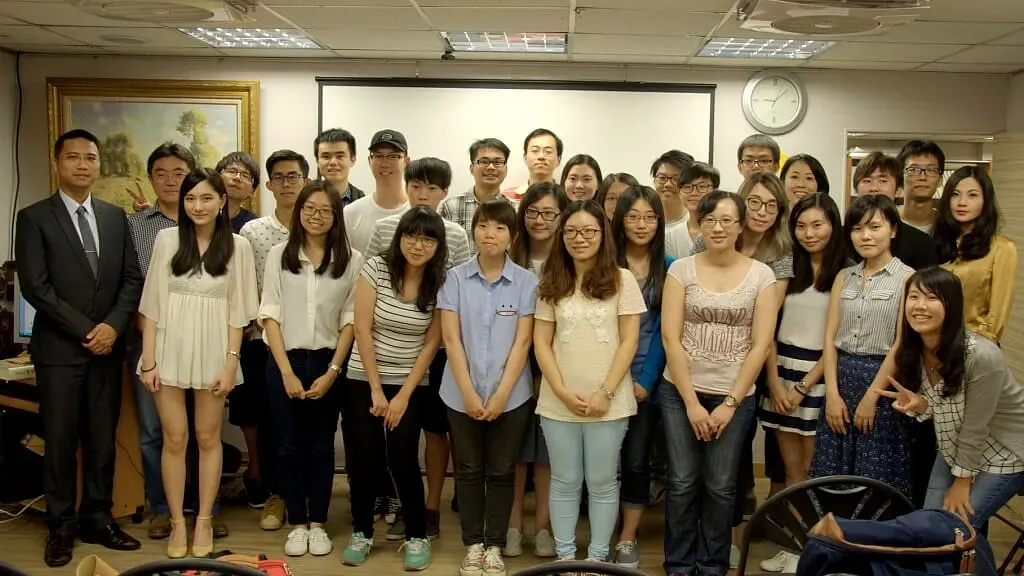
[TONE-Switch Lecture] Take Every Step Steadily and Forge Your Own Path as an Attorney
Last edited: 2026-07-27
On the first anniversary of Hsiu Tzu-chiang's acquittal, we invited attorneys Wu Hsin-yang and Wang I-ting to share their working experiences at large domestic law firms and their expectations for Taiwan's judiciary with the trainees of the 4th batch of the 24th Attorney Training Program.
Do What You Can to Contribute to the Judiciary Attorney Wu Hsin-yang
 Photo / Attorney Wu Hsin-yang leverages his academic research expertise to assist the JRF's Drug Policy Working Group
Before entering university, Attorney Wu Hsin-yang witnessed Taiwan's politics entering the stage of democratic transition. At that time, the JRF had just been established, and judicial reform was one of the hottest topics in society. Seeing that many public figures possessed legal backgrounds led a youthful Attorney Wu to decide to embark on the path of legal studies.
After entering the Department of Law, Attorney Wu discovered that what was taught in class was vastly different from practical operations. Even with a thorough grasp of textbook theories, he still had no clue how to translate legal theory into practical application. As a law student, when friends or family members received traffic tickets or were even called to the police station to make statements, he might not have known how to respond, let alone further care about the institutional reforms researched and developed by government departments and experts. Even so, during his undergraduate and graduate years, Attorney Wu remained full of passion for legal research. Although he interned at Lee and Li, Attorneys-at-Law after obtaining his attorney's license, he long had no intention of practicing formally; instead, he remained in the academic field to make his mark, successively receiving grants from the Academia Sinica's Doctoral Student Cultivation Program and obtaining a Doctor of Law degree from the University of Washington in the United States.
"After submitting my doctoral dissertation, I actually considered staying in the US for employment," Attorney Wu candidly admitted, "However, because my wife had already returned, I 'followed the chicken wherever it went' and returned to Taiwan." Originally, studying abroad was intended to pursue a teaching career, but because his graduation month did not align with the recruitment schedules of various schools, considering maintaining a stable economic income, he decided to settle at Tsar & Tsai Law Firm as a full-time attorney primarily handling non-litigation matters. Unawares, this has already entered its fifth year. Looking back at the turning points in his life, Attorney Wu encouraged novice attorneys that everyone's life encounters are unique, and there is truly no need to self-limit.
The main work of a non-litigation attorney involves applying for initial public offerings (IPOs) and listings, assisting in holding board of directors or shareholders meetings, reviewing contracts and other documents, and providing legal opinions. As for corporate M&A cases, they involve conducting legal due diligence, drafting due diligence reports, assisting clients in formulating relevant strategies, and drafting contracts. Because large law firms have numerous foreign clients, they indeed hold higher expectations for the foreign language proficiency of full-time attorneys when recruiting talent. Although an overseas study background is not a prerequisite, law firms generally still require talent with English, Japanese, or even Korean language proficiency, and request the submission of relevant proficiency proofs.
"Large law firms warmly welcome talent with diverse backgrounds to join," Attorney Wu joked, "Just like catching Pokémon, large firms want to capture every single one!" He encouraged novice attorneys to bravely try submitting their resumes. He also reminded novice attorneys that no matter how many books one has read in the past, after entering the workplace, many things still have to be started from scratch. Upon entering the workplace, one might as well observe how others handle matters, and learn and extract experience from it. "It's like being in the military; everyone swims and runs, but you can go observe how others run and swim more efficiently."
When asked whether studying abroad is helpful to an attorney's practicing career, Attorney Wu stated that taking classes abroad for nine months cannot overnight drastically improve language proficiency, emphasizing that because he is somewhat slow, it was only in his third year of living in the United States that he truly felt his English proficiency improve. However, the experience of studying overseas did indeed make him more courageous and fostered a new attitude toward facing diverse cultures.
Speaking of attorneys engaging in public interest work, Attorney Wu said that unlike many university and high school students nowadays who start engaging in social movements at a very young age, he only truly began coming into contact with judicial reform issues after entering the Graduate Institute of Law at National Taiwan University. At that time, seeing many people running around and giving speeches for Su Chien-ho and others, and having more and more people around him joining the rescue efforts, he gradually realized that with his legal professional training, he could indeed participate in changing society.
"Su Chien-ho could be anyone; it could be a friend, or the person living down the alley," Attorney Wu said, "At first, I always felt I couldn't make much contribution, nor could I stand on the front line as defense counsel for the defendant. But in fact, if everyone can contribute just a little effort to Taiwan's judiciary—even if it's just a short hour—the force gathered by the public cannot be underestimated." After returning to Taiwan, Attorney Wu began directly contacting the JRF and currently mainly assists with drug-related cases. He stated that after all, what he excels at is academic analysis, and he often handles non-litigation cases, whereas the Drug Policy Working Group precisely needs attorneys with the ability to organize cases and analyze documents. Considering that his workload fluctuates with the peak and off-peak seasons of corporate-related transactions and company shareholders' meetings, the JRF staff are always very "considerate" in requesting his support during February, March, or July to September. This cooperative model allows Attorney Wu to continue participating in judicial reform work within his capacity and allowable time.
Learn with Humility, Defend Clients' Rights Attorney Wang I-ting
 Photo / Attorney Wang I-ting expects herself to tread every step of her practicing career steadily
Attorney Wang I-ting has always had a strong interest in criminal litigation cases. Not only did she choose to specialize in criminal law during her graduate studies, but after officially starting her practice, she actively strove for opportunities from the law firm to handle litigation—especially criminal cases. In addition, she also regularly participates in the work of the Taiwan Association for Innocence.
"Actually, I used to lack confidence," Attorney Wang recalled her past, "I always felt that besides academic credentials and licenses, I actually had nothing." Bearing the halo of a master's degree from a top university, Attorney Wang said somewhat shyly, "Back then I also evaded for a long time; after passing the attorney examination, I stayed in school for a long time and was unwilling to go intern."
Certainly, only after practicing will one discover that many technical legal issues in practice have no answers in textbooks and must be slowly comprehended through the accumulation of actual experience. However, Attorney Wang believes that the legal foundation laid in classes remains the most important. Beyond being well-versed in practical jurisprudence and legal provisions, attorneys must further understand the logic behind the enactment of legal provisions. Attorney Wang added that Taiwan's past judicial system possessed a strong inquisitorial color, but the chapters on evidence extensively referenced the American system. The value of participating in the JRF is precisely that it gives her the opportunity to further understand the process negotiated by legislators when introducing foreign systems back then, as well as the focal points adjusted for local conditions. These are all quite helpful for her when citing legal provisions while handling cases.
Speaking of acting as defense counsel in criminal cases, Attorney Wang's resolute gaze revealed her passion for her profession. "For me, every time I come into contact with a different client, it is a learning experience," she humbly said, "Criminal litigation is not something you do repeatedly and one day you can just do with your left hand!" Attorney Wang also mentioned that criminal law actually permeates every corner of society. When handling complex cases, it may involve various fields such as financial law and accounting. Therefore, as retained counsel, one must not only carefully read the case files and evidence but also look for evidence outside the case files that is favorable to the client; after all, every trace and clue in a case may be the key to reversing the development of the case.
Recalling her years of attorney practicing experience, Attorney Wang counted her transformations. "I used to feel that participating in major cases like Su Chien-ho's was necessary to change a person's life," she said indifferently, "Later I realized that in fact, even if it's just a small case, you might still change a person's life." She further emphasized that it is not only being sentenced to death that "impacts a life"; conversely, even if the client must serve a prison sentence, the years wasted behind iron bars are also in the hands of the defense counsel.
Attorney Wang believes that as a medium of communication between the court and the client, a responsible attorney should honestly face their own limits and timely consult professionals in medicine, forensic science, and other fields to provide the best litigation quality for clients and defend their basic rights. Sharing her experience in wrongful conviction rescue, Attorney Wang couldn't help but sigh: "Looking at the cases on hand, sometimes I really think it's a real pity that many arguments were not raised in a timely manner during the fact-finding trial! By the time they are raised during extraordinary remedies, it is already too late!" Therefore, she expects herself that even if she cannot 100% meet the client's demands in every case, she must still do her utmost to strive for their rights and let them know that they are not isolated or helpless during the litigation process.
As for what conditions novice attorneys must possess, Attorney Wang said that generally speaking, large law firms quite welcome fresh graduates because those newly entering society possess higher malleability. Job seekers from undergraduate law backgrounds usually must first pass Chinese-to-English translation tests, and talent with special backgrounds such as medicine, pharmacy, or life sciences will also be targets actively recruited by comprehensive law firms. In addition, because the clients of large law firms are predominantly legal entities or business persons, there are higher requirements for the basic etiquette and proper image of full-time attorneys.
Attorney Wang believes that if novice attorneys can find a suitable internship unit during their initial entry into the profession and master the key skills for handling cases, it will not only be quite helpful for their subsequent practicing career but may even influence a person's future career choices. However, she noted that she has heard quite a few people decide to change careers after completing their internship because they felt they were unsuited to be attorneys. "This is actually quite a pity," Attorney Wang said, "Every law firm is a small world; much of the time it depends on fate, and there is no need to feel that the entire legal profession is dark just because of setbacks encountered in the early stage of practice!"
Finally, Attorney Wang encouraged novice attorneys: "There are as many kinds of attorneys in the world as there are attorneys!" She hopes that as they are about to practice, they will not deliberately set a fixed image for themselves, nor should they narrowly focus on the glamorous side of senior predecessors; instead, they should observe all directions and listen to all sides, and one day, they will surely find the style that suits them best.
This article is an AI-generated translation of the original Chinese text. In the event of any discrepancy, the Chinese version shall prevail.