
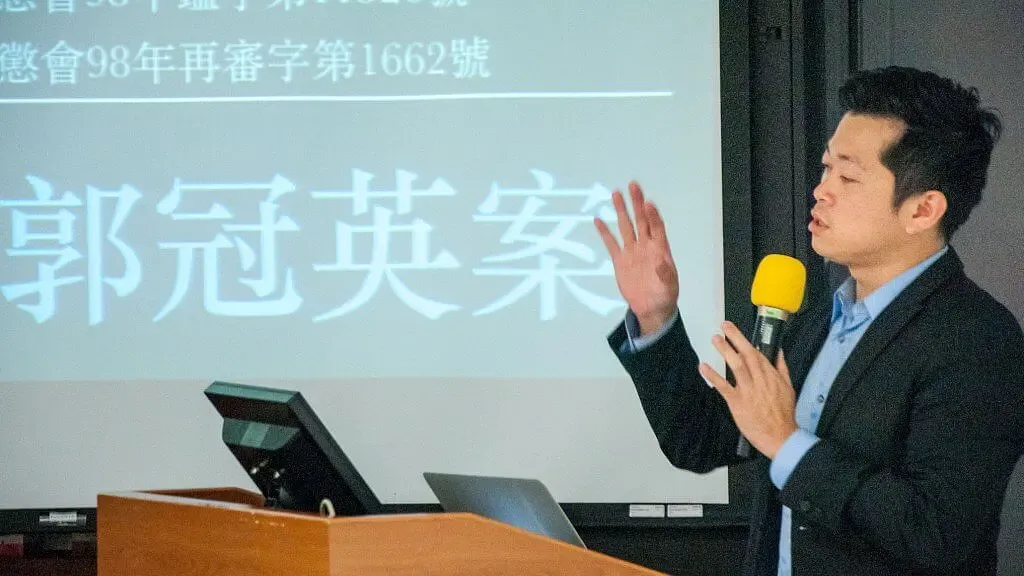
A Brief Discussion on Civil Servant Whistleblowers and Practical Case Analysis of Political Speech
Last edited: 2026-07-27
Introduction
The main theme of this lecture discusses whether a civil servant can invoke freedom of speech to contest a disciplinary action or even dismissal by their employing agency when the agency deems their statements inappropriate and damaging to its reputation. The speaker first introduces cases from Australia and the United States, compares their similarities and differences, and explains the review model for the scope of freedom of speech protection gradually established in U.S. cases. Next, several domestic cases are introduced to illustrate the problems encountered in our nation's practice, and finally, the speaker offers concrete recommendations.
Introduction to Australian Cases
The case of Banerji v Bowles is one of the more prominent cases in Australia in recent years. Banerji was originally a public servant in the Department of Immigration who made statements on Twitter while in office. She used an account rather than her real name, but most people could identify her identity from this account. In those posts, Banerji criticized the Department of Immigration's policies as improper. The Department of Immigration considered that Banerji's critical remarks would affect the implementation of the Department's policies and public trust in the agency. Furthermore, under the Australian Public Service Act—similar to our Civil Service Act—the Australian Public Service Act stipulates that once a person enters an agency to serve as a public servant, they have no protection of freedom of speech, especially when it concerns their job duties, leaving no room to express opinions in a personal capacity. Therefore, the Department of Immigration concluded that Banerji violated the Public Service Act and issued a dismissal decision.
The case has currently been appealed to the second instance, and the Federal Court has ruled against Banerji in both instances. The reasoning in all instances is that those who enter administrative agencies to serve as public servants cannot claim that their speech is protected by freedom of speech against their employing agency. Observed from the perspective of U.S. law, this case is similar to the early privilege doctrine, a concept akin to our special power relationship. Ordinary citizens enjoy fundamental rights protection; if the state wants to interfere, citizens have the protection of the reservation of law, enjoy due process of law, and can seek judicial remedy when infringed. However, within a special power relationship, it is basically considered that public servants cannot claim freedom of speech against their employing agency. When a public servant is disciplined or even dismissed by their employing agency for making statements, even if they can seek remedies from the court, the court will directly determine in its judgment that the claim is groundless, lacking freedom of speech protection.
In subsequent discussions, some worried whether this would result in civil servants being unable to criticize state policies. Since civil servants are also members of the state and society, they naturally ought to have room to speak out and should not be unable to express any opinions on the exercise of state public power merely because of their status as civil servants. Local scholars cited John Milton: "As the foundation of a democratic system, speech should be protected, and everyone should be open to discussion. If truth and erroneous information are opened to competition in the marketplace of ideas, ultimately truth will win the victory, but the premise is that speech must be open; otherwise, truth cannot be found."
This article is an AI-generated translation of the original Chinese text. In the event of any discrepancy, the Chinese version shall prevail.