
JRF Newsletter
Writing Humanity in the Judiciary—An Interview with Hou Chi-hsuan
Last edited: 2026-07-27
Hello, friends:
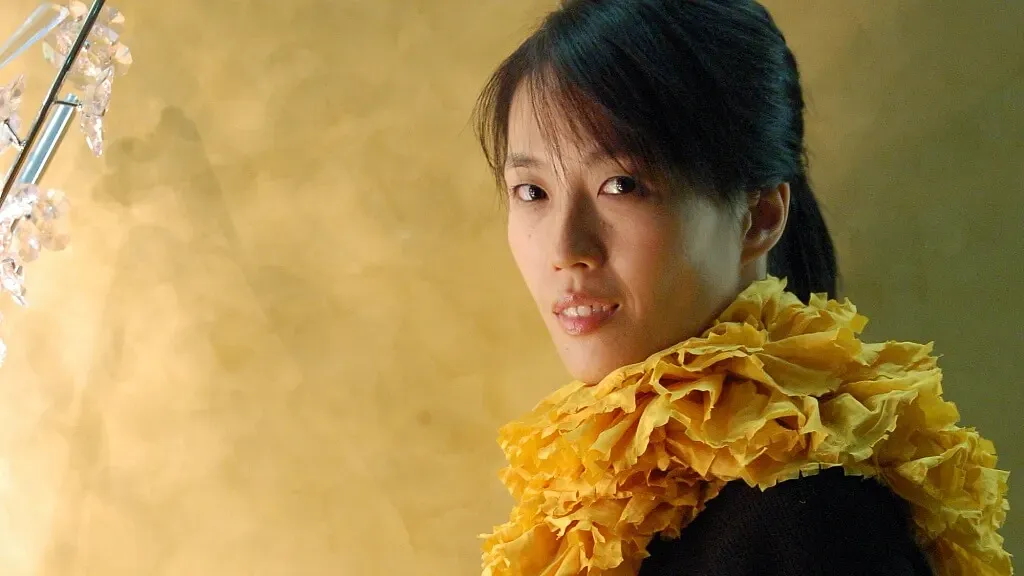
This issue of the newsletter introduces a good friend of judicial reform—Hou Chi-hsuan. She is an author crowned with multiple literary awards who came to the JRF for research while writing a novel featuring a judge as the protagonist, thereby learning about the Chiou Ho-shun case. To quote her, it felt like being handcuffed by something, unable to walk away even if she wanted to. Thank you, Hou Chi-hsuan, for sharing your literary creation process. Below is her story.
Judges Are Human Too, and There Are Times When They Cannot Resist Temptation
"The Unbalanced Balance," a novel about a judge having an affair with another judge, won Hou Chi-hsuan a Special Award at the 2nd Legal Literature Award in 2004. "Before submitting my work, I found that there were very few literary works themed around the judiciary in Taiwan, and works depicting the inner humanity of judges and prosecutors were even rarer," Hou said that she always collects data and researches works in relevant fields before writing. In 2004, an incident involving a judge having an affair with another judge happened to occur, heavily hyped by the media. This novel used explicit and unabashed prose to portray the passion and hypocrisy between judges. At the time, it was avant-garde and innovative, sparking sharply polarized controversies among the judges and ultimately missing out on the grand prize.
"A judge is also human, and being human means liking another person, liking to eat good food, and looking at beautiful things. I became a judge because I passed the special examination for judicial officers; I merely passed a national exam, yet I am expected to hold higher moral standards? Because I am a judge, must I be immune to temptation? Or am I automatically immune to temptation? I am just a man, and there are times when I cannot resist temptation. Why do you keep using my profession to mock and reproach me?"
"You chose a profession commanding respect, so naturally you must pay a corresponding price, otherwise how could you be respected? Just because you are better at taking exams than others? You are a cautious person; at the moment you decided to accept the temptation, you should have already thought clearly about the price to pay after the incident. Or... do you really think you are God and can cover the sky with one hand? I'm sorry, I didn't mean to blame you for your profession, but because of your profession, this whole matter has become complicated and doubled my pain."
"I remember when we discussed the reasons for decriminalizing the 'crime of adultery' back then, didn't you also support it?"
"That was before it happened that my own husband committed adultery with someone else."
"This novel depicts how a husband who understands the law uses the legal principles of the decriminalization of adultery to rationalize his affair, attempting to convince a wife who does not understand the law," Hou commented, "It's not that people who understand the law are more evil, but rather that when justifying one's affair, so-called legal principles are no more noble than a fortune-teller's lame excuse about having a destiny for two wives." The wife naturally fought back, and the story brought out plot twists dialectically debating the decriminalization of adultery. Her past experience working as a planner at a major legal cram school allowed Hou to meet many friends in the legal circle. "In the beginning, everyone was a student, and later they naturally became lawyers, judges, and prosecutors. Among my friends, there are even those reported to the JRF as unsuited for office!" Hou said playfully, "Everyone is a close friend with whom we talk about anything, so I have a more direct observation of people working in the legal profession. Although this novel is fictional, human nature is real."
The Passion for Creation Can Never Become Obsolete in My Life
 Photo / Cover of "Notebook of Profanities"
"Since I was 13, I 'wanted' to be a writer. At that time, I didn't know the hardships of making writing a profession; I simply felt that writing was joyful." Hou said, "I love creating, and I always want to write subjects that few people write about, preferably ones no one has ever written about." In 2007, Hou clinched four literary awards in one go (refer to the bibliography), among which an essay themed around "profanity" brilliantly won the first prize of the Liang Shih-chiu Literary Award, representing her most astonishing and striking work.
There is a pronunciation, sonorous and powerful, scorned, intentionally concealed, avoided, and suppressed, yet blooming fiercely like summer flowers. It flies about, enters the ear and exits the mouth, forming a space in which we live—we use profanity.
A good friend of mine from my university days came from a rural township in Pingtung. She said that "kan" in her hometown was just an ordinary word, akin to a greeting. After a protest rally against the school's unjust oppression of students ended, she stood in the square, filled with righteous indignation, and said, "I wonder what dirty tricks they're going to pull this time?" Upon hearing the word "dirty," I, who happened to be passing by to say hello, truly did not know how to react, astonished that the pure girl from scenic Pingtung would utter such vulgar words. I felt like Hsu Yu retreating to the mountains, hearing that Yao wanted to cede the throne to me and rushing to wash my ears. Yet I still deeply liked my classmate; she was kind, approachable, modest, courteous, and a believer in God. Except when those in power oppressed people unrelated to her, causing this young miss to flare up in anger, no matter who beat her up for no reason or cheated her out of her emotions and money, she would never lose her temper. Such a delightful, church-going good girl was the only female among my friends who cursed.
She taught me how to curse, on the street. She said, just shout it out loud, and long-term depression and dissatisfaction are guaranteed to be completely expelled, leaving your heart refreshed and transcending worldly matters. As if a lost lamb meeting a great savior, my weak willpower could not resist the temptation and instigation. I took a deep breath, opened my mouth, Kan! Not hard enough.…
Reading Hou Chi-hsuan's works always brings unexpected surprises. The clothes, food, and emotions in her writing, seemingly mundane details of life, turn out to be so meaningful. "The times are hasty; if they cannot withstand the sifting of the years, let them perish in the torrent of time. Without regrets or bitterness, in our brief intersection, I thank every predestined person for each wait and read—it is my obsolete youth!" Hou described her state of mind, "Those long-forgotten touches, the unsolozable dilemmas in life, the departed people, and loves that will never return, rendered through words, are vivid before my eyes. The passion for creation can never become obsolete in my life."
 Photo / Hou Chi-hsuan supporting Chiou Ho-shun in front of the Taipei Detention Center
Innocence Is the Only Reason to Rescue Chiou Ho-shun, No More Is Needed
In order to write a full-length novel featuring a judge as the protagonist, Hou Chi-hsuan came to the JRF for research in 2013, where everyone recommended her to visit Chiou Ho-shun. "It's hard to imagine that someone who has endured more than twenty years of detention could still emit such laughter. I thought someone whose soul suffered tearing and severe wounds would no longer know what laughter is," Hou said, "Knowing Chiou Ho-shun didn't solve the progress of the novel; instead, I discovered how shallow my understanding of the cruelty and ruthlessness of the judiciary was, so I stopped rushing to write and calmed down to conduct in-depth research."
"At the JRF, wrongful convictions are living, breathing entities," Hou said she came to know Hsu Tzu-chiang and witnessed his transformation after regaining his freedom. On September 1 last year, the moment she heard the judge acquit Hsu Tzu-chiang, she cheered for A-chiang and rejoiced over the progress of the judiciary. Hsu Tzu-chiang is innocent, but Chiou Ho-shun is not yet. Starting this year, the JRF has intensified its efforts to rescue the Chiou Ho-shun case, intensively holding legal team meetings, events, and courses—almost all of which Hou attended. She said, "I want to write for the Chiou Ho-shun case."
"A writer must not only know how to tell stories, but also establish their own writing style. Depicting real human nature under the collapse of values is the theme I want to explore." Hou feels that Chiou Ho-shun does not care about so-called "beauty," nor does he want others to deliberately cover up his past "lack of beauty"; he simply wants to use "truth" to strike back at this hypocritical, deceptive judicial system. She said Chiou Ho-shun is capable of petty misdeeds and mischief just like you and me, possessing emotions, desires, and character flaws, and also yearning for happiness. Stripped down, he is simply a human being. Rescuing Chiou Ho-shun requires no redundant explanation or elaboration; innocence is the sole reason to rescue him.
The Chiou Ho-shun case involves not only Chiou Ho-shun himself but also 11 co-defendants, presenting 11 different perspectives. "The sole female co-defendant—Wu Shu-chen, is even more the subject I want to write about," Hou said, "Wu Shu-chen was a sacrifice to her parents' marriage, and fate even more cruelly made her a sacrificial offering in a wrongful conviction. Yet she dares to swear righteously to the heavens that the most comforting thing for her, Wu Shu-chen, is that she has never committed a crime. This makes me want to ask those judges who tried Ch'iu's case: are you as gutsy as Wu Shu-chen, daring to say the most comforting thing for you is that you have never judged wrongly?"
Writing Humanity in the Judiciary
"When I was in college, I worked part-time in a bookstore. When the exit alarm rang, the staff had to stop customers and check them. During that time, I encountered all kinds of people stealing things, and I became better and better at judging whether someone was stealing. Once, the alarm rang, and—oh god—it was a familiar friend of mine. I went straight up to him and said, 'Did you not demagnetize the book you bought last time? Shall I demagnetize it for you?' I will never forget his expression, nor will I forget my own feelings at that time," Hou said, "A person putting on judicial robes is still a human being. Judicial reform requires more attention to the people within the judiciary. Literature reflects human nature, and more writing themed around the judiciary helps everyone see the humanity within the judiciary."
Hou Chi-hsuan is currently undertaking a writing project on the Chiou Ho-shun case to contribute her part to rescuing Chiou Ho-shun. Hou will also not be absent from the fundraising banquet on October 1 this year. "Judicial reform cannot rely solely on the support of legal professionals; that would be too terrifying! I invite everyone to participate together and let the judiciary display more humanity."
Afterword
The JRF Good Friend series of newsletters introduces partners who have long participated in judicial reform. Through their sharing, we hope to gain your resonance. We invite you to light a candle in the darkness of the judiciary by making a donation to support the Judicial Reform Foundation.
2016 Fundraising Banquet

If Taiwan's democracy requires a century of pursuit, the maturation of the rule of law even more demands the interactive tempering of time and human hearts before it can precipitate into cultural foundations. Holding onto the initial aspiration of earnest expectation for improvement, we have devoted ourselves to judicial issues for 21 years. Through advocacy, social movements, and talent cultivation, we continuously speak out on judicial issues. Walking this path, we have always insisted that judicial reform must be bottom-up, with the people as the protagonists of judicial reform.
2016 is a critical juncture. Taiwan at this moment is entering a turning point of rebirth. We have a dream for the judiciary and an expectation for Taiwan's rule of law. We look forward to the day when, in addition to democratic achievements and economic miracles, introducing Taiwan can also feature a proud rule of law and judiciary.
Opening a new chapter of judicial reform together requires everyone's persistent efforts, passing the baton from one to the next!
- Time: October 1, 2016 (Sat.) 11:30~14:30
- Location: Cosmos Hotel TICC Hall, 3F (No. 1, Sec. 5, Xinyi Rd., Xinyi Dist., Taipei City)
Bibliography of Hou Chi-hsuan (Ping)
The author's former name was Hou Chi-ping, and she changed her name to Hou Chi-hsuan in 2011
| Year | Genre | Work | Award |
| 1999 | Novel | "Outsider", Hou Chi-ping, published on Taiwan Literature Blog | |
| 2003 | Novel | "Room", Hou Chi-ping, collected in Unitas Literary Magazine, Issue 229. | 17th Unitas New Writer's Award for Fiction |
| 2004 | Novel | "The Unbalanced Balance", Hou Chi-ping, collected in Encounters: 2004 Grand Award for Legal Literature Creation, Yuan-Liou Publishing. | 2nd Legal Literature Creation Award |
| 2005 | Novel | "Rose in the Womb", Hou Chi-ping, collected on the Ministry of Education Literary Creation Award website. | 2005 Ministry of Education Literary Creation Award |
| 2006 | Essay | "Wardrobe Memoir", Hou Chi-ping, collected on the Soochow University Shuangsi Modern Literature Award website. | 26th Shuangsi Modern Literature Award |
| 2006 | Novel | "Myth", Hou Chi-ping, collected on the Soochow University Shuangsi Modern Literature Award website. | 26th Shuangsi Modern Literature Award |
| 2007 | Essay | "Silence", Hou Chi-ping, collected in Youth Literary Magazine, Issue 648. | 27th Shuangsi Modern Literature Award |
| 2007 | Essay | "Snowfield Rice Cake", Hou Chi-ping, collected in the United Daily News Supplement on September 18, 2007. | 29th United Daily News Literary Award |
| 2007 | Essay | "Notebook of Profanities", Hou Chi-ping, collected in Notebook of Profanities: Collection of Award-Winning Works from the 20th Liang Shih-chiu Literary Award, Chiu Ko Publishing. | 20th Liang Shih-chiu Literary Award |
| 2007 | Essay | "A Stamp", Hou Chi-ping, collected in the Liberty Times Supplement on November 28, 2007. | 3rd Lin Jung-san Literary Award |
| 2007 | Education | 52 Changes in Elementary Student Essay Writing: Challenging 52 Essay Writing Methods, Kao Shih-chia, Hou Chi-ping, Wunan Publishing. | |
| 2010 | Essay | Hou Chi-ping, "Bed Singing" Column "Cucumber Variations", collected in Youth Literary Magazine, Issue 673. "The Amorous Taste of Tea", collected in Youth Literary Magazine, Issue 675. "Days of Smoking", collected in Youth Literary Magazine, Issue 678. "Twilight Diner", collected in Youth Literary Magazine, Issue 679. "Troubled Men and Women of Diet", collected in Youth Literary Magazine, Issue 683. | |
| 2011 | Novel | Romance of Alishan, Hou Chi-hsuan, Mankind Thinkers Publishing. | |
| 2012 | Novel | Girlfriend Novelization, Hou Chi-hsuan, Kate Cultural Publishing. | |
| 2015 | Novel | To the Fore (Movie Adaptation Novel), Hou Chi-hsuan, Kate Cultural Publishing. | |
| 2015 | Novel | Must You Love Me? (TV Adaptation Novel), Hou Chi-hsuan, Kate Cultural Publishing. |
This article is an AI-generated translation of the original Chinese text. In the event of any discrepancy, the Chinese version shall prevail.