
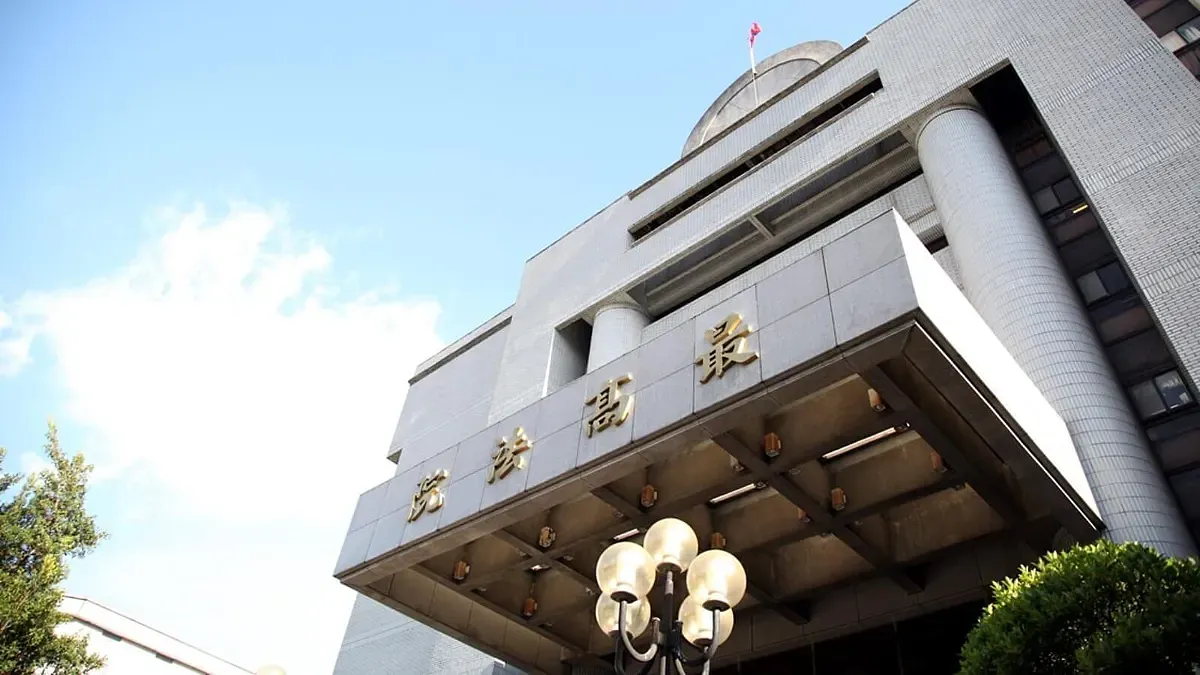
Why Is the Supreme Court Not Respected?
Last edited: 2026-11-03
A Response to the "Supreme Court's Response"
- Arbitrary at first, what good is being cautious later?
- "Changing legal interpretations casually" refers to how the Supreme Court, when adjudicating individual cases, frequently fails to be bound by its prior interpretations, omitting any citation or argumentation from precedent, changing its stance on a whim.
- Subsequently, when judicial divergence arises, even if extremely cautious and rigorous Civil and Criminal Division meetings are convened, it is merely closing the stable door after the horse has bolted; the rights of the people have already been infringed upon beforehand.
- Confirming the accusation that "announcements are made arbitrarily":
- The Supreme Court's explanation regarding "civil servant status" precisely confirms the article's accusation that "announcements are made arbitrarily."
- As for the cited "Directions for the Implementation of the Selection, Compilation, and Amendment of Supreme Court Precedents," it is merely a delegated administrative rule under the Court Organization Act, possessing very low legal hierarchy. Precedents have an enormous impact on our country's legal practice; whether they can be selected, compiled, and amended based on delegated regulations is already questionable.
- The crux is the unwillingness to be transparent and subject to oversight:
- In reality, the "Directions for the Implementation of the Selection, Compilation, and Amendment of Supreme Court Precedents" were promulgated by the Supreme Court itself, and the Judicial Yuan can only passively record them upon formal submission. As a preeminent court, rather than considering recusal to avoid conflicts of interest, it brandishes a low-hierarchy feather as an imperial arrow, which is hardly becoming of its stature.
- Moreover, reporting precedents for "record-keeping" does not necessarily mean they must be "announced"; these can be two separate matters. The Supreme Court's defense is suspected of conflating the two.
- When individual case interpretations differ from previous ones, "no reasons are needed";
- Civil and Criminal Division meetings have "self-defined procedures," and their contents do not need to be fully "made public"; they publish them when they want to and withhold them when they don't, and even the meeting minutes are inaccessible;
- The discussion process of the meetings does not need to be "transparent"; outsiders are not welcome to participate, and video recording or broadcasting is impossible; when questioned, there is the accusation that "there is no need to answer to anyone or accept oversight," and so forth.
Supreme Court judges possess excellent integrity and profound legal knowledge, typically representing the finest legal minds. As the court of final appeal, they hold the power of life and death over the people and guide the judicial reasoning of lower courts; logically, they should be held in the highest esteem. Yet, they have never truly respected by the public, nor are they particularly trusted by fellow judges. Tracing back to the root cause, the primary reason is that they "fail to keep their word."
The most typical manifestation of the Supreme Court "failing to keep its word" is how it "changes legal interpretations." Frankly speaking, as society evolves, changes in legal interpretations are normal; the key is to provide adequate reasoning. The problem lies in the fact that the Supreme Court "changes its mind on a whim." Its current interpretation differs from the past, changing whenever and however it pleases, without any reason.
Casual Changes in Interpretation
What is even more absurd is that when this judge and that judge hold differing views, there is no need to harmonize them. Each division stubbornly clings to its own view, and litigants appealing to the court rely entirely on luck—"good luck gets you a clock, bad luck gets you a longan"—shooting in the blindfolded dark. Whether through stubborn persistence or hypocritical indifference, a group of people who ought to value "legal stability" the most end up repeatedly going back on their word, their credibility bankrupt.
Traditionally, the Supreme Court's remedy has been to compile summaries of precedents or convene general meetings of the civil and criminal divisions, reaching resolutions through voting in an attempt to unify legal interpretations. However, because these are not "case-by-case" adjudications and look remarkably like "general" legal determinations, they have drawn criticism for encroaching upon the legislative power. Consequently, the Judicial Yuan has recently been advocating for the "Grand Chamber" system.
Arbitrary Announcements
Against this backdrop, the ambiguously positioned "civil and criminal resolutions" system has recently escalated, resembling viewing flowers through a fog, making people "more confused the more they look." Recently, the Supreme Court official website announced: "Relevant materials and resolutions of the civil and criminal division meetings of this Court will no longer be publicly announced." Before the "Grand Chamber" system is implemented, if the civil and criminal division meetings are not going to be abolished, the Supreme Court's choice to "neither abolish them nor announce them" is baffling.
The Supreme Court's reason for not making announcements is that they are for "internal" reference. The first instinct is that this refers to "within the Supreme Court," which would align with the announcement's wording: "The legal interpretations of the resolution contents shall be manifested by each division in judgments or rulings through concrete individual cases; please refer to the subsequent relevant judgments or rulings of this Court."
According to the website's explanation, announcements of civil resolutions run "up to August of the 2012 (101) training year [Republic of China calendar]", and criminal resolutions "up to March of the 2013 (102) training year." However, what is perplexing is that simply by looking at the "Latest Announcements" column on the Supreme Court's "homepage," one can easily find the "Civil Division Resolutions of August 2013" and the "Criminal Division Resolutions of December 2013 and March 2014." Declaring them non-public yet easily searchable—is this some kind of joke?
Most absurdly, during the 10th criminal division meeting on June 24, the Supreme Court resolved that: "If a public university professor falsifies expense accounts for research and procurement, they are not exercising public authority, are not public servants under the Criminal Code, and thus do not constitute the crime of corruption." While declaring the resolution non-public, they nevertheless placed it on the homepage of their official website and went to great lengths to issue a press release, fearing that media outlets nationwide would miss it. Claiming they won't make things public while frequently "broadcasting" them with their own hands—what on earth is the Supreme Court doing? What are they trying to achieve?
Immunity from Oversight is the Key
A careful examination of these now-you-see-them, now-you-don't civil and criminal resolutions reveals that selective concealment and incomplete disclosure of information may well be the true intent of the Supreme Court. They love performing "seventy-two transformations" while stubbornly refusing to let the public perceive their changes.
As the saying goes, "the higher the official, the greater the knowledge"; in any case, the "Supreme" Court gets the final say on everything, requiring no reasons, no procedures, no publicity, no transparency, no questioning, and no oversight. When they want to amplify the influence of a legal interpretation, they "broadcast it forcefully," letting clueless media outlets transmit it and the public repeat it, thereby establishing a settled interpretation that pulls or forces the independent trial space of lower courts. Who could possibly submit to such an aloof and arbitrary "Supreme" Court?
The judicial power possesses the function of "having the final say." By nature, it should "not act without a complaint," cannot render "extra-petita judgments," and must express legal interpretations in "particular" individual cases based on "general" legal norms. Judges must anchor themselves to individual cases to expound the law, without overextending or pre-interpreting—this is a statutory duty. For the Supreme Court, whose every move is watched, "estoppel and keeping one's promises" is the most fundamental requirement.
Times have changed; the era of intimidating people with official authority has passed, and the era of winning people over with reason has arrived. If the Supreme Court fails to perceive this paradigm shift and recognize that holding great power means it should be bound by more rigorous legal systems and procedures, it will never establish its proper standing or receive due respect in the hearts of the public and lower court judges. This is neither a blessing for the Supreme Court nor for the people.
Press Release of the Supreme Court in Response to Statements by JRF Executive Director KAO Jung-chih Regarding This Court's Arbitrary Changes to Legal Interpretations
Date of Issue: July 3, 2014
Issuing Unit: Clerk's Office
Contact Person: Judge and Chief Clerk CHIU Jui-hsiang
Contact Number: 02-23141160#6711 0910027699
Judicial Reform Foundation Executive Director KAO Jung-chih stated yesterday (July 2) at the PNN PTS Issue Center that the Supreme Court changes legal interpretations casually, makes announcements arbitrarily, and is immune from oversight. This Court solemnly clarifies as follows:
This Court handles over tens of thousands of civil and criminal cases annually. Due to judicial independence, the legal interpretations held by different divisions may vary. Therefore, pursuant to the "Directions for the Meeting Procedures of the Civil and Criminal Division Presidents' Meetings, Civil and Criminal Division Meetings, and Civil and Criminal Division General Meetings of the Supreme Court," civil and criminal division meetings are established. When the President or individual divisions hold differing interpretations regarding specific cases, legal proposals are drafted and submitted to the civil and criminal division meetings for discussion. Such proposals require the attendance of at least two-thirds of all division presidents and judges, deep study and repeated debate (each meeting lasts approximately 2.5 hours, and seminars have been convened regarding legal proposals, inviting experts and scholars with differing views to express opinions in order to understand the thought processes behind each differing interpretation), and the consent of more than one-half of the attending members before a resolution can be adopted. Furthermore, this Court convened 20 civil and criminal division meetings in 2012 (adopting 9 resolutions), 35 meetings in 2013 (adopting 16 resolutions), and has already convened 18 meetings from January to June 2014 (adopting 13 resolutions), demonstrating a very high frequency of meetings. The process by which this Court changes and unifies legal interpretations is indeed extremely rigorous.
In recent years, there has been outside discussion regarding this Court's method of unifying legal interpretations through civil and criminal division meetings and publishing the contents for external reference. Because the relevant materials and resolutions of this Court's civil and criminal division meetings serve to unify this Court's legal interpretations so that parties to identical case facts may receive identical judgments, and are intended solely for internal reference, they are no longer publicly announced. Instead, each trial division manifests the legal interpretations derived from the resolutions through concrete individual cases in judgments or rulings, submitting them to public evaluation. As for the recent criminal division resolution concerning the status of public servants, because it affects cases under investigation by prosecutors' offices nationwide and is of deep concern to both the legal and academic communities, with some media outlets already reporting on it, the conclusion of the resolution was released via press release so that the general public could know the full picture of the resolution.
Additionally, regarding Executive Director Kao's statement that he found the criminal division resolutions of December 2013 and March 2014 on this Court's website: pursuant to Point 6 of the "Directions for the Implementation of the Selection, Compilation, and Amendment of Supreme Court Precedents," when precedents of this Court are amended, they shall be announced and reported to the Judicial Yuan for record-keeping. Therefore, the announcements on this Court's website regarding the 18th Criminal Division Meeting resolution on December 10, 2013, to cease citing 2 criminal precedents, and the 5th Criminal Division Meeting resolution on March 18, 2014, to cease citing 6 criminal precedents, were both made in accordance with the aforementioned regulations, and the announcements already set forth the legal basis and the main points of the precedents no longer to be cited.
In summary, whether unifying legal interpretations or announcing precedents no longer to be cited, this Court acts in accordance with relevant regulations. Executive Director Kao's assertions that this Court changes interpretations casually, makes announcements arbitrarily, and is immune from oversight stem entirely from a failure to understand this Court's actual current operations and a misunderstanding of the relevant regulations.
This article is an AI-generated translation of the original Chinese text. In the event of any discrepancy, the Chinese version shall prevail.