
The Police Must Not Become Super Grand Justices
Last edited: 2026-07-27
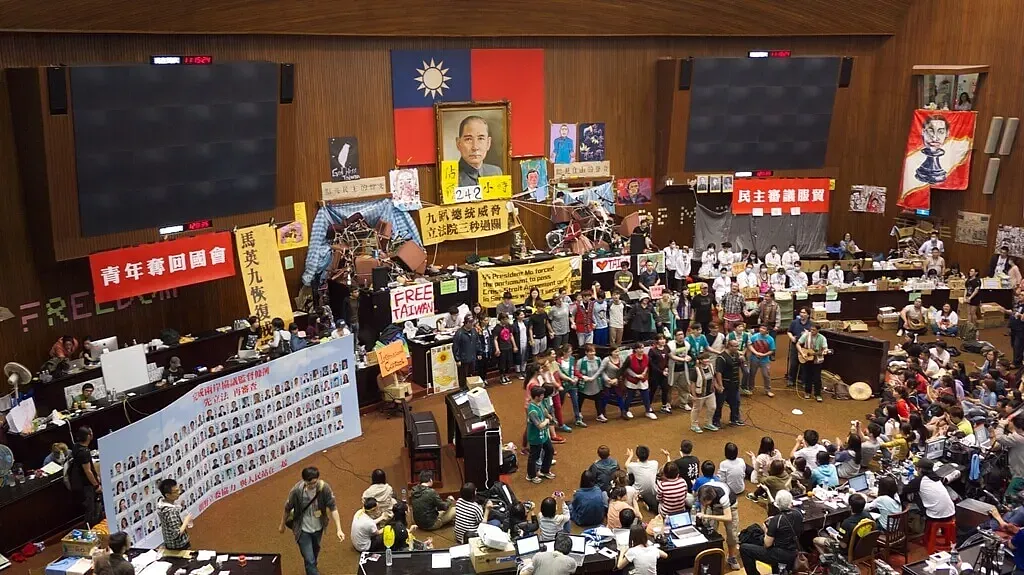
Following the temporary lull in the Sunflower Student Movement and the forced eviction of the referendum alliance members who had long camped outside the Legislative Yuan by the Taipei City Police Department Zhongzheng First Precinct, the police not only immediately revoked their assembly permit but also announced that no future assembly applications by the alliance would be approved. This triggered a conflict involving crowds surrounding the police station. Although the permit was re-issued after the parties concerned filed a petition for review, this process has exposed the disadvantages of adopting a permit system for assemblies and parades.
Whether people's outdoor assemblies and parades should be subject to a prior permit system has long been controversial. In the recent Judicial Yuan Interpretation No. 718, regarding non-immediate emergency or spontaneous assemblies where prior application for a permit can hardly be expected, the Grand Justices declared this part unconstitutional based on the principle of proportionality and the protection of the freedom of assembly and association, and ordered it to cease to be effective by January 1, 2015. However, assemblies and parades other than these continue to maintain the constitutionality of prior permits.
Varying Decisions Risk Turning into Political Struggles
As for Article 11 of the current Assembly and Parade Act, as long as there are grounds such as endangering national security, social order, public interest, or the life, physical safety, freedom, or property of others, the competent police authority may refuse to grant a permit or revoke it after approval. However, these grounds are both vague and general, granting the competent authority immense discretionary space. This not only easily leads to disparate treatment based on the individuals involved, but also makes it difficult to prevent decisions on approval or rejection from pandering to the preferences of those in power, thereby turning the police into a tool for political struggle.
Although people dissatisfied with a disposition refusing an assembly or parade permit may, pursuant to Article 16 of the Assembly and Parade Act, file a petition for review with the superior police authority—and even if dismissed, have the right to file a lawsuit with the administrative court—pursuant to Article 17 of the Assembly and Parade Act, such a petition for review does not have the effect of suspending the refusal or revocation of the permit. Were it not for the public and media pressure as seen in this incident, the probability of a successful petition for review surely would not be very high. Given that assemblies and parades are often time-sensitive, even obtaining a favorable judgment sometimes proves too late to meet urgent needs, thus exposing the limitations of such relief procedures.
Exposing Unclear Legal Procedures
Therefore, in this incident, the Zhongzheng First Precinct's revocation of an already approved assembly on the grounds of maintaining social order and public interest once again exposed the problems and dilemmas that, under unclear laws and opaque decision-making procedures, any disposition made by administrative agencies in cases of high political sensitivity will inevitably be questioned. To make matters worse, the police authority even announced a decision to permanently deny applications from a specific group, which actually violates the provisions and authority restricting the police to granting case-by-case permits. This caused them to override the legislature and completely deprive the people of their freedom of assembly and association, effectively making themselves super Grand Justices.
Although such illegal and unconstitutional decisions were immediately corrected, sparing Taiwan from falling into the footsteps of a police state, what must be deeply reflected upon is this: when facing the abuse of power and illegal exercise of public authority, if the relief and checks-and-balances channels provided by current laws are so limited that people are forced to resort to acts of civil disobedience or resistance that walk the tightrope between legality and illegality, not only will the protection of basic rights under the Constitution be shelved, but the entire society will also be at constant risk of falling into a state of disorder.
This article is an AI-generated translation of the original Chinese text. In the event of any discrepancy, the Chinese version shall prevail.