
Legal Opinions on the Interaction Between Medical Personnel and Police
Last edited: 2026-07-27
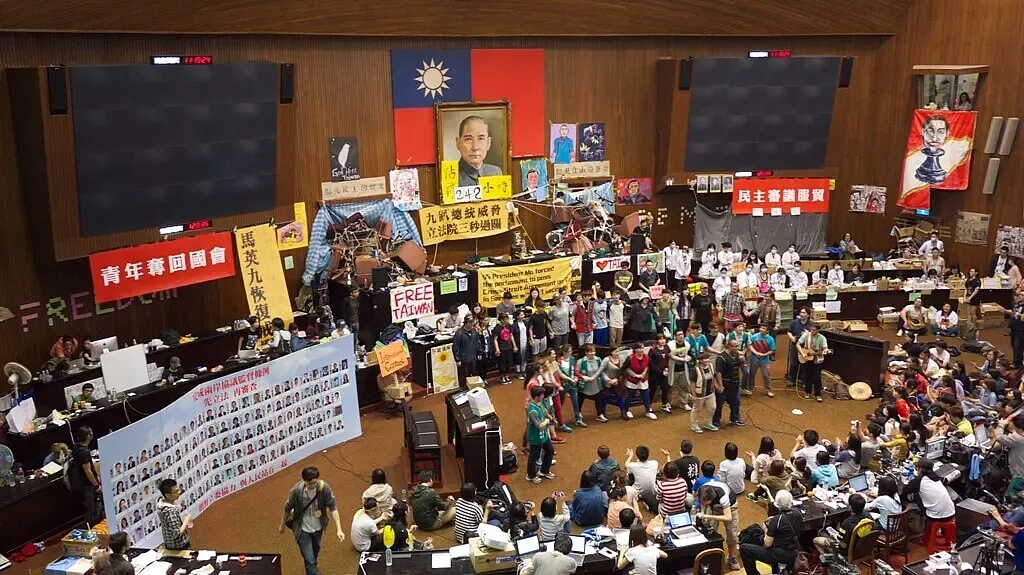
Medical personnel present at the scene raised three questions: First, since medical personnel were also attacked by police during the student movement, how can they reserve the right to legal action and prosecute these police officers? Second, medical personnel wanted to assist the injured but were stopped by riot police; what legal provisions can be invoked to stop the riot police? Third, medical personnel carried out their duty of caring for patients neutrally during the student movement, but is there any risk of being prosecuted by the state afterward? These questions are answered item by item below:
1. Medical personnel were also attacked by police at the student movement site. How can they reserve the right to legal action to prosecute these police officers?
Answer:
First of all, the right to legal prosecution does not need to be "reserved." Article 232 of the Code of Criminal Procedure stipulates: "The victim of a crime may file a complaint." Article 240 stipulates: "Anyone who has a suspicion of a crime may report it." The first half of Paragraph 1 of Article 319 stipulates: "The victim of a crime may institute a private prosecution." Therefore, medical personnel and students alike should gather evidence as thoroughly as possible, retaining evidence of their own mistreatment by various inappropriate police behaviors, so as to facilitate filing a complaint or instituting a private prosecution within the statutory period in the future. The statutory complaint periods vary depending on the crime. Taking the offense of injury likely to be encountered in a student movement occasion as an example, if it is an ordinary offense of injury, because it is a crime subject to a complaint upon request, according to Paragraph 1 of Article 237 of the Code of Criminal Procedure: "For crimes subject to a complaint upon request, the complaint shall be filed within six months from the time the person entitled to make a complaint knows the offender." Therefore, it must be done within six months after knowing the criminal conduct of the offender, and the period for private prosecution is the same.
The complaint procedure can be initiated by the parties concerned at the district prosecutors office, requesting the prosecutor to initiate an investigation. If the prosecutor considers that a criminal act exists, unless the defendant confesses and is granted a suspension of prosecution or the prosecutor applies to the court for a summary judgment, the prosecutor may indict the defendant. If the prosecutor considers that the facts of the crime cannot be proven or that there are other grounds for non-prosecution, a non-prosecution disposition will be rendered. If one is dissatisfied with the prosecutors non-prosecution disposition, a remedy can be sought through the "motions for re-appeal" procedure. A private prosecution must be instituted directly before the court through a lawyer, bypassing the prosecutors investigation. Although it avoids the risk of a potential non-prosecution disposition by the prosecutor, because a private prosecutor does not have the power of compulsory measures—unlike a prosecutor who can search, seize, apply for detention, or interrogate defendants and witnesses during the investigation process—gathering evidence is more difficult, and the litigation costs incurred will be higher. However, the advantage of a private prosecution is that it bypasses the prosecutors decision on whether to indict, allowing the court to conduct a direct trial.
Furthermore, Article 219-1 of the Code of Criminal Procedure states: "Where there is a risk of evidence being destroyed, forged, altered, concealed, or difficult to use, the complainant, criminal suspect, defendant, or defense counsel may apply to the prosecutor for search, seizure, appraisal, inspection, examination of witnesses, or other necessary preservation measures during the investigation. Upon receiving the application mentioned in the preceding paragraph, the prosecutor shall take preservation measures within five days, unless the prosecutor considers it illegal or groundless and rejects it. If the prosecutor rejects the application mentioned in the preceding paragraph or fails to take preservation measures within the period mentioned in the preceding paragraph, the applicant may directly apply to the competent court for evidence preservation." Moreover, Article 368 of the Code of Civil Procedure also stipulates: "Where there is a risk of evidence being lost or difficult to use, or with the consent of the opposing party, an application for preservation may be made to the court; where there is a legal interest and necessity in determining the current status of a matter or thing, an application for appraisal, inspection, or preservation of documentary evidence may also be made." That is, before or during the litigation proceedings, to prevent evidence from being lost, destroyed, forged, altered, concealed, or difficult to use, an application for evidence preservation can be made to the prosecutor or the court. Regarding the illegal infringement events where citizens or medical personnel were beaten by police during the Executive Yuan incident on March 24, 2014, the volunteer legal team has already applied to the court for evidence preservation a few days ago, requesting the preservation of relevant evidence and materials of that day.
2. Medical personnel wanted to assist the injured but were stopped by riot police. What legal provisions can be invoked to stop the riot police?
Answer:
Paragraph 2 of Article 106 of the Medical Care Act explicitly stipulates: "Whoever damages equipment for the protection of life in a medical institution or other similar places, thereby causing a danger to the life, body, or health of others, shall be sentenced to imprisonment for not more than three years." Paragraph 3 stipulates: "Whoever applies violence or intimidation against medical personnel when they are executing their medical professional duties, sufficient to interfere with the medical personnel in executing their medical professional duties, shall be sentenced to imprisonment for not more than three years, detention, or a fine of not more than NTD 300,000." In addition, Article 134 of the Criminal Code stipulates: "A public servant who takes advantage of his official powers, opportunities, or methods to intentionally commit crimes other than those specified in this Chapter shall have his punishment increased by up to one-half." Accordingly, if medical personnel wish to assist the injured but are intimidated and stopped by riot police through violence or coercion, they may invoke the aforementioned provisions of the Medical Care Act and the Criminal Code, assert that the riot police's conduct is illegal, hold them accountable for relevant legal responsibilities, and stop the riot police's wrongdoing.
In addition, normatively speaking, any state power, including the exercise of police powers, must not exceed the necessary degree. Article 3 of the Police Exercise of Powers Act (hereinafter the "Police Powers Act") stipulates: "In exercising police powers, police shall not exceed the necessary limit for achieving the intended purpose of execution, and shall adopt the appropriate method that least infringes upon the rights and interests of the people." What constitutes "exceeding the necessary degree" must be judged based on different circumstances at the scene. For example, when the injured have clearly already been dispersed or are severely injured and facing life-threatening danger, medical personnel are still not allowed to approach and provide treatment. In addition, Article 6 of the Use of Police Weapons Act stipulates that "police personnel shall reasonably use firearms based on urgent necessity and shall not exceed the necessary degree." Article 9 also stipulates that "unless under urgent circumstances, care shall be taken not to injure fatal parts of the person's body." For instance, in this Executive Yuan incident, footage captured by the media showed that while dispersing the crowd, the police used police batons to violently strike the heads of unarmed citizens who showed no resistance, causing the citizens to bleed profusely on the spot or suffer epileptic seizures. This clearly exceeded the necessary degree and injured vital parts of the human body such as the head, constituting an excessive use of force. Furthermore, Article 11 of the Use of Police Weapons Act explicitly stipulates: "Where police personnel, in the performance of their duties in violation of the provisions of this Act concerning the use of police weapons, thereby cause injury, death, or property loss, the respective level of government shall pay medical expenses, consolation money, compensation, or funeral expenses; for intentional acts, the respective level of government may claim compensation from them." If one has objections to the necessity of the police exercising powers or using police weapons at the scene, pursuant to Paragraph 1 of Article 29 of the Police Powers Act: "An obligor or interested party who objects to the method of exercising police powers by the police under this Act, the procedures to be observed, or other matters infringing upon their interests may state the reasons on the spot while the police are exercising police powers and express an objection," indicating that the police conduct has exceeded the necessary degree, and presenting a written or oral objection to the police. If the police consider the objection well-founded, pursuant to the first half of Paragraph 2 of Article 29 of the Police Powers Act: "Where the police consider the objection in the preceding paragraph to be well-founded, they shall immediately suspend or correct the execution behavior," the police shall immediately suspend or correct their execution behavior.
However, from a factual perspective, the police may not necessarily heed the objection and may continue execution. At this time, the public may, pursuant to the second half of Paragraph 2 of Article 29 of the Police Powers Act: "Where the police... consider the objection in the preceding paragraph to be groundless, they may continue execution. Upon the request of the obligor or interested party, they shall make a record of the reasons for the objection and deliver it," request that the reasons for the objection be recorded and delivered. However, in a chaotic and conflicting scene, it is unlikely for the police to issue a statement of reasons on the spot. To protect the rights and interests of oneself and the injured, one can ask the police to explain why medical personnel are not allowed to approach the injured, and what the reasons are. At the same time, appropriate evidence of the negotiation process should be gathered. If the rights or interests of medical personnel or the injured are infringed upon due to illegal or improper exercise of police powers, administrative remedies may be sought in the future pursuant to Paragraph 3 of Article 29 of the Police Powers Act. If the conditions for state compensation are met, a claim for state compensation may be filed pursuant to Article 30 of the Police Powers Act. Regardless of whether they are medical personnel, students, or members of the general public, it is advisable to gather as much evidence as possible under the premise of protecting the safety and rights and interests of oneself and patients. The more evidence collected, the greater the chance of successfully holding [the perpetrators] accountable.
3. Medical personnel carried out their duty of caring for patients neutrally during the student movement. Is there any risk of being prosecuted by the state afterward?
The premise for the state to prosecute criminal conduct is that the actor's conduct has constituted a crime. If the medical personnel's conduct is not illegal or does not obstruct the execution of official duties, simply rescuing patients or setting up volunteer medical stations in the assembly hall to provide services does not constitute a crime. Even according to media reports, some police officers accepted medical care from the volunteer medical team, further demonstrating the neutral position of medical personnel placing life-saving above all else. If any medical personnel face illegal prosecution due to rescuing patients, they may contact the Judicial Reform Foundation at (02) 2523-1178 or contact@jrf.org.tw to request assistance.
4. Is the establishment of a medical station and the performance of duties by physicians inside the assembly hall legal?
Paragraph 2 of Article 8-2 of the Physicians Act stipulates: "Physicians shall practice in medical institutions approved and registered by the competent authority at their location. However, emergency treatment, consultations between medical institutions, mutual support, practicing upon invitation, or prior reporting and approval are not subject to this restriction." Therefore, the first thing to clarify is whether the establishment of medical stations inside and around the Legislative Yuan assembly hall falls under "physicians practicing." As stated by Li Wei-ch'iang (李偉強), Director of the Department of Medical Affairs of the Ministry of Health and Welfare, in his reply to the Chairman of the Taiwan Medical Association (who is also Kuomintang Legislator Su Ch'ing-ch'üan [蘇清泉]), members of the medical station are participants in civic activities who simply divide labor based on their profession, conducting simple triage, and the medicines provided are all over-the-counter drugs. If true treatment is needed, patients are transferred to nearby hospitals. Therefore, there should be no issue of reporting and registration.
※ Special thanks to Attorneys Liu Chi-wei (劉繼蔚) and Kuo Te-t'ien (郭德田) for their valuable opinions; however, all editorial responsibility remains solely with the authors.
This article is an AI-generated translation of the original Chinese text. In the event of any discrepancy, the Chinese version shall prevail.