
Legal Opinion on Whether International Students Participating in Student Movements Risk Deportation
Last edited: 2026-07-27
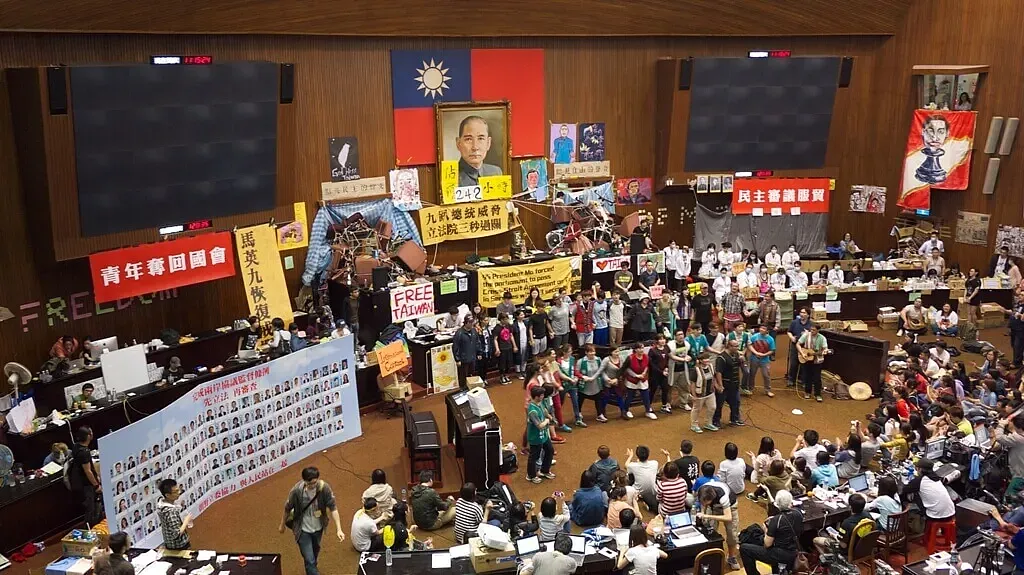
Q: Students inside the legislative chamber asked whether Hong Kong, Macau, Chinese, or other international students would be forcibly deported for participating in this student movement?
A: First, under current laws, Hong Kong and Macau residents in Taiwan are not subject to the ordinary entry and exit control regulations applicable to general foreigners. The control of Hong Kong and Macau residents is governed by the special provisions of the Act Governing Relations with Hong Kong and Macau (hereinafter the Hong Kong-Macau Relations Act); if they are of Chinese nationality, the Act Governing Relations between the People of the Taiwan Area and the Mainland Area (hereinafter the Cross-Strait Act) applies; and for other foreign nationalities, the Immigration Act applies.
Article 14, Paragraph 1 of the Hong Kong-Macau Relations Act provides: "Where a Hong Kong or Macau resident entering the Taiwan Area falls under any of the following circumstances, security agencies may directly force them to exit; provided that if the case involving them has entered judicial proceedings, the consent of the judicial agency shall be obtained first: 1. Entering without permission. 2. Having entered with permission but exceeding the permitted period of stay. 3. Engaging in activities inconsistent with the purpose of the permit. 4. Having factual evidence deemed to constitute a criminal act. 5. Having factual evidence deemed to pose a risk to national security or social stability." Furthermore, Article 18 of the Cross-Strait Act and Articles 18 and 29 of the Immigration Act contain similar provisions. Therefore, whether international students face the risk of forced deportation for participating in the student movement depends on whether the government determines that participating in the student movement constitutes the aforementioned grounds for forced deportation.
The purpose of your coming to Taiwan is to study. Although I believe that participating in social movements to care about and observe Taiwanese society does not exceed the reasonable scope of studying, normatively speaking, even non-Taiwanese citizens or even illegal entrants are still protected by our Constitution and international human rights law regarding their freedom of speech and freedom of peaceful assembly and procession, and the Taiwanese government must not restrict them arbitrarily.
However, judging from past related cases, the government's stance is not as such, and the attitude of the National Immigration Agency is usually very tough. For instance, in 2013, a German youth who had served as an environmental volunteer for the Tainan Community University entered Taiwan prior to an anti-nuclear rally, and the Immigration Agency deported him back to Germany on the grounds of "having engaged in activities inconsistent with the purpose of visa permission"; in 2011, two disaster victims from Fukushima, Japan, who came to Taiwan to participate in an anti-nuclear rally, were also warned that participating in anti-nuclear activities was "inconsistent with the purpose of permission."
It can thus be seen that the current government interprets these regulations using an ideology extremely fearful of social movements. Under this ideology, we can imagine how the government might interpret provisions such as "engaging in activities inconsistent with the purpose of the permit," "having factual evidence deemed to constitute a criminal act," or "having factual evidence deemed to pose a risk to national security or social stability" if it intends to give Hong Kong and Macau students a hard time. Although such interpretations are highly unreasonable, students must indeed evaluate the potential risks themselves. My recommendation is that if you still decide to participate in the student movement, please exercise caution and keep a low profile. Try to avoid situations that may involve criminal acts; frontline confrontational activities may not be suitable, whereas lower-risk forms of participation such as sit-ins or submitting opinion pieces are more appropriate.
In addition, according to news reports, Liu Chung-cheng, Director of the Department of Special Education of the Ministry of Education, stated in an interview today that although many schools have clauses stating that "agitating student movements and unauthorized gathering for petitions shall result in a major demerit," the school regulations of major colleges and universities must comply with the two UN human rights covenants and Judicial Yuan Interpretation No. 684. Therefore, students' participation in assemblies and processions cannot be listed as a basis for disciplinary action under school regulations. Consequently, neither domestic nor foreign students should be disciplined by their schools for participating in this student movement. In the event that any of you receive a deportation sanction for participating in the student movement, you should also note that Judicial Yuan Interpretation No. 710 has explicitly ruled that Article 6 of the Regulations Governing the Forced Departure Processing of Mainland Area Residents and Hong Kong and Macau Residents is unconstitutional for failing to provide an opportunity for defense, and for failing to clearly stipulate reasons and time limits prior to "temporarily detaining" Chinese, Hong Kong, or Macau persons who are being forcibly deported. If necessary, you can also seek assistance from Taiwanese NGOs concerned with the rights of foreigners, such as the Taiwan Association for Human Rights.
This article is an AI-generated translation of the original Chinese text. In the event of any discrepancy, the Chinese version shall prevail.