
Congressional Perspective—The Communication Security and Surveillance Act Amendment Should Take Effect As Soon As Possible
Last edited: 2026-07-27
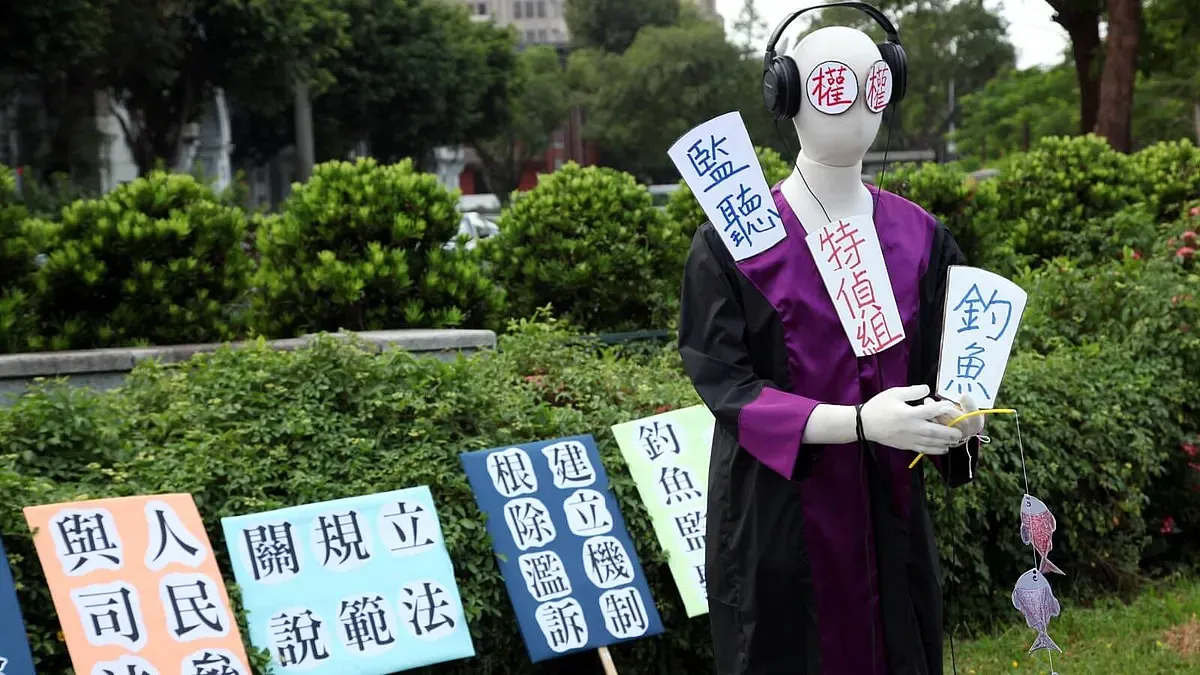
After several late-night review sessions in the Judiciary and Organic Laws and Statutes Committee during the fourth session of the Legislative Yuan, along with no less than 10 marathon rounds of bargaining and negotiation between parties and the administration, the "Communication Security and Surveillance Act" was finally passed in its third reading early this year. However, civil society organizations, scholars and experts, and relevant government agencies are all dissatisfied.
Civil society organizations and scholars and experts believe that this legislative amendment failed to achieve the goals of abolishing the Communication Surveillance Center and changing the execution method to simultaneous wiretapping, criticizing legislators for "losing ground entirely" and making regressions instead of progress. Meanwhile, the administrative branch first intended to submit a reconsideration motion during the interim session to return the bill to the Legislative Yuan, expressing its backlash against the amendment; thereafter, it arbitrarily relied on Article 34, Paragraph 2 of the Communication Security and Surveillance Act, which is unrelated to this amendment—stating that "the amended provisions of this Act shall take effect five months after promulgation." Without exploring the original intent of the legislators or the ins and outs of the amendment, it forcefully argued that this amendment would only take effect after five months, intending to use this period to delay the implementation of the new law and buffer the inconvenience to the administrative branch, with the ultimate purpose of proposing another amendment bill in the next session to "overturn" the Communication Security and Surveillance Act back to its original state.
In short, civil society organizations and scholars think too little was amended, while the administrative branch feels too much was amended, as if the ones deserving blame are always the legislators.
In fact, among the legislators who participated in proposing, reviewing, and negotiating this amendment to the Communication Security and Surveillance Act, many have backgrounds as lawyers, judges, and senior legislators; the scholars and experts consulted prior to the review or negotiation also included leading figures in criminal law academia and the telecommunications industry. However, precisely because the Communication Security and Surveillance Act has a very high professional threshold and involves an extremely wide range of dimensions—including the Judicial Yuan, the National Security Bureau, the Ministry of Justice, the National Police Agency, the National Communications Commission, and various telecommunications operators—each agency is unwilling to change old practices and shoulder responsibilities.
During the review of the bill, judicial police and prosecutorial-investigative agencies fully demonstrated that they only care about the convenience of handling cases, do not want judges to interfere too much, have no intention of changing the bad habit of arbitrarily intercepting people's communication data in the past, and maintain an overbearing mentality of wanting to wiretap whoever they want for as long as they want. Conversely, although legal scholars and experts are well-versed in criminal offenses and the balancing of legal interests during fundamental rights conflicts, they do not quite understand telecommunications expertise or the actual operations of communication interception. Moreover, the Judicial Yuan is neither willing to take charge of the control and auditing of telephone interception records nor willing to play an transcendent, neutral, and objective supervisory role, considering it "muddying the waters."
Although the opposition party advocated for abolishing the surveillance center, insisted on simultaneous wiretapping, revised the surveillance method from pre-recording followed by manual listening to the contents of communication surveillance, and demanded the establishment of a complete ex-post, external evaluation and supervision system, granting monitored persons avenues for ex-post relief, as well as establishing a dedicated judge system akin to Germany's "investigating judge" system to prevent judges from "approving endless warrants for a single case," it was already truly remarkable to reach a compromise given the aforementioned resistance and the ruling party's shielding of the administrative branch. This compromise indirectly achieved the purpose of communication security through principles such as "one wiretap warrant per person," the establishment of a "continuous process resume record" system for criminal wiretapping, and obligations regarding the transmission and preservation of "interception records," which, although not entirely satisfactory, was nonetheless hard-won. Just as the death of Hung Chung-chiu (洪仲丘) brought about a major overhaul of the Code of Military Trials, conversely, had it not been for the annual drama of the "September Political Struggle," there would never have been an opportunity in a Legislative Yuan dominated by a single party to thoroughly transform the Communication Security and Surveillance Act.
Therefore, we look forward to the newly amended Communication Security and Surveillance Act taking effect as soon as possible, and the administrative departments should not be given any pretexts or excuses to delay its implementation. Let alone the Ministry of Justice acting contrary to the original intent of the legislators by forcefully twisting old legal provisions to claim a five-month implementation buffer period, thereby attempting to completely overturn the legislation in the Legislative Yuan. As long as the principle of one wiretap warrant per person and permitting wiretapping only against criminal suspects is not implemented for even a single day, judicial police and prosecutorial-investigative agencies can still continue to arbitrarily wiretap whomever they wish under the guise of national security or investigating major crimes. If the system of "continuous process resume records" for criminal wiretapping and the obligations for transmitting and preserving "interception records" are not established early on, the courts will fundamentally be unable to effectively manage and supervise the application, issuance, execution, custody, use, and destruction of wiretap warrants in criminal surveillance, all handlers, reviewers, and contacts, as well as the "interception records" of the criminal wiretapping enforcement agencies.
At this moment, scholars and experts who care about the amendment of the Communication Security and Surveillance Act should step forward in shared indignation and call upon the Executive Yuan to stop dragging its feet.
This article is an AI-generated translation of the original Chinese text. In the event of any discrepancy, the Chinese version shall prevail.