
<p>〈Congressional Perspective〉Lay Participation in Trials? President Ma, Please Think Twice</p>
Last edited: 2026-07-27
Regarding the "lay participation in trials system," whether Taiwan should adopt the official "lay observation system" or the "lay assessor system" or "jury system" supported by legal scholars, civil society organizations, and legislators still requires extensive deliberation and debate among all sectors of society.
The bill underwent two rounds of review in the Judiciary and Organic Laws and Statutes Committee of the Legislative Yuan, yet significant controversy remains. However, throughout the process of deliberation and debate, no one opposed the idea that we should begin with mock trials. Consequently, the Legislative Yuan resolved to first reference the processes and experiences of Japan and South Korea in promoting citizen participation in trials.
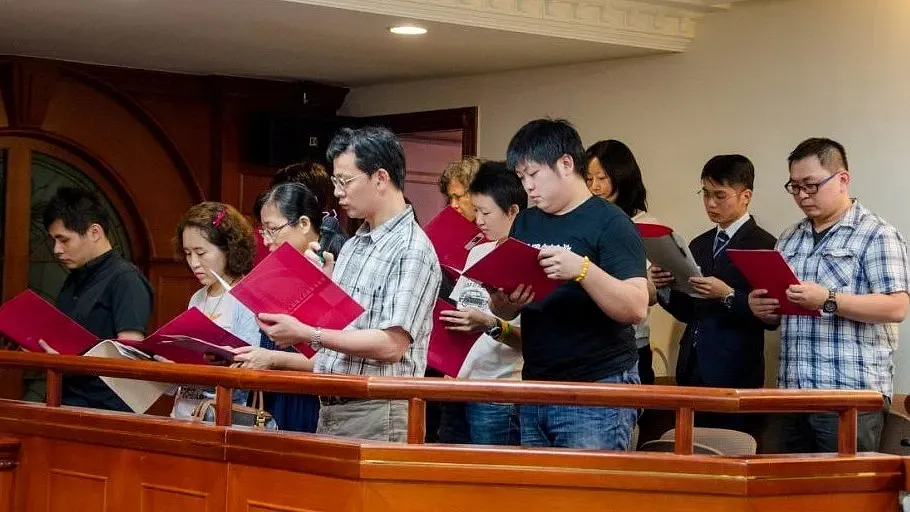
Japan implemented its "saiban'in (lay judge) system" starting in May 2009. Beyond four years of gestation, it undertook a solid five-year preparation period. Participants included not only legal professionals from the judicial, prosecutorial, defense, and academic communities, but also expanded to various cabinet ministries and societal organizations. During this five-year preparation period, 630 mock trials and 290 mock saiban'in selection procedures were comprehensively conducted nationwide. The results of these simulations were subsequently fully disclosed to receive public suggestions and critique.
Before enacting its legislation, South Korea referenced the models of Japan and the United States. Regarding whether to adopt a lay assessor system or a jury system, it also first conducted nationwide simulations. Only after the law passed did it enter the "trial run" phase. To clarify whether gender, age, and occupation would affect case judgment outcomes, trials and shadow juries were sometimes conducted simultaneously.
In contrast, Taiwan's Judicial Yuan is unwilling to conduct comprehensive mock trials or a full-scale trial run, choosing instead to limit the simulation and trial of the draft bill to only two district courts: Shilin and Chiayi. As a result, the Executive Yuan did not spare the Judicial Yuan's feelings; in its opinions on the Judicial Yuan's budget for fiscal year 2014, it hoped the Judicial Yuan would plan for a single court to serve as the mock or trial court. This clearly shows that the Executive Yuan has no intention of supporting the Judicial Yuan's promotion of the lay participation in trials system.
In the legislature, for two consecutive years during budget reviews, the Legislative Yuan demanded that the Judicial Yuan conduct comprehensive mock trials for the lay participation in trials system, accompanied by corresponding complementary measures: When reviewing the budget for 2013, it proposed that "to implement the system of citizen participation in trials, the Judicial Yuan shall, at the designated trial district courts, conduct simulations for one year upholding the spirit of the principle of a single indictment and the model where lay observers possess voting rights." This implied that the entire simulation system and procedure would differ from the past "lay observation" (where you are "only allowed to watch, not judge; only allowed to speak, but your words count for nothing?!"). Instead, it would transform into "participation in trials," where judges and lay assessors would jointly discuss, vote together, and decide by majority opinion on matters of fact-finding, application of law, and sentencing deliberation.
When reviewing the budget for 2014, the Legislative Yuan doubled down, urging that "the Judicial Yuan can no longer repeatedly use insufficient funding as an excuse to reform solely through a small-scale lay observation system, nor can it use the current status of insufficient courtroom space as an excuse to limit mock and trial proceedings to only the Shilin and Chiayi district courts while refusing nationwide simulations or trials—which results in the annual budgeting of thirty million NT dollars for lay participation trials being incapable of genuine execution. Therefore, to achieve the generalization of simulations or trial runs for citizen participation in trials, it is requested that starting this year, the Judicial Yuan select at least two additional district courts from regions such as central, eastern, and southern Taiwan to conduct mock and trial proceedings."
This resolution not only demanded that the mock courts expand to four courts, but also demonstrated that the Legislative Yuan, compared to the Executive Yuan and the Judicial Yuan, cares even more about the determination to implement the lay participation in trials system.
Unfortunately, at the judicial reform conference convened by the President on February 21, the push for the "lay observation system" was still advocated. This clearly completely contradicts the Legislative Yuan's budget resolutions of the past two consecutive years and disregards the public outcry for genuine "lay participation" reform.
The author cannot help but ask: President Ma, do you know that in response to the Legislative Yuan's resolution, civil society organizations last year already recruited citizens to join "shadow" lay assessor teams to actually conduct mock deliberations? This year, they are even preparing to match the Judicial Yuan's specifications by holding a tour of civil-led jury system mock trials and mobilizing shadow jurors to grade the official and civil mock courts?
Relevant civil society organizations and legal scholars will also continue to participate in the work of commentators for both sides' mock trials. We hope President Ma will think twice, listen to the voices of the public, and refrain from hastily deciding the direction of Taiwan's judicial reform, lest the opportunity for judicial democratization be squandered in vain.
This article is an AI-generated translation of the original Chinese text. In the event of any discrepancy, the Chinese version shall prevail.