
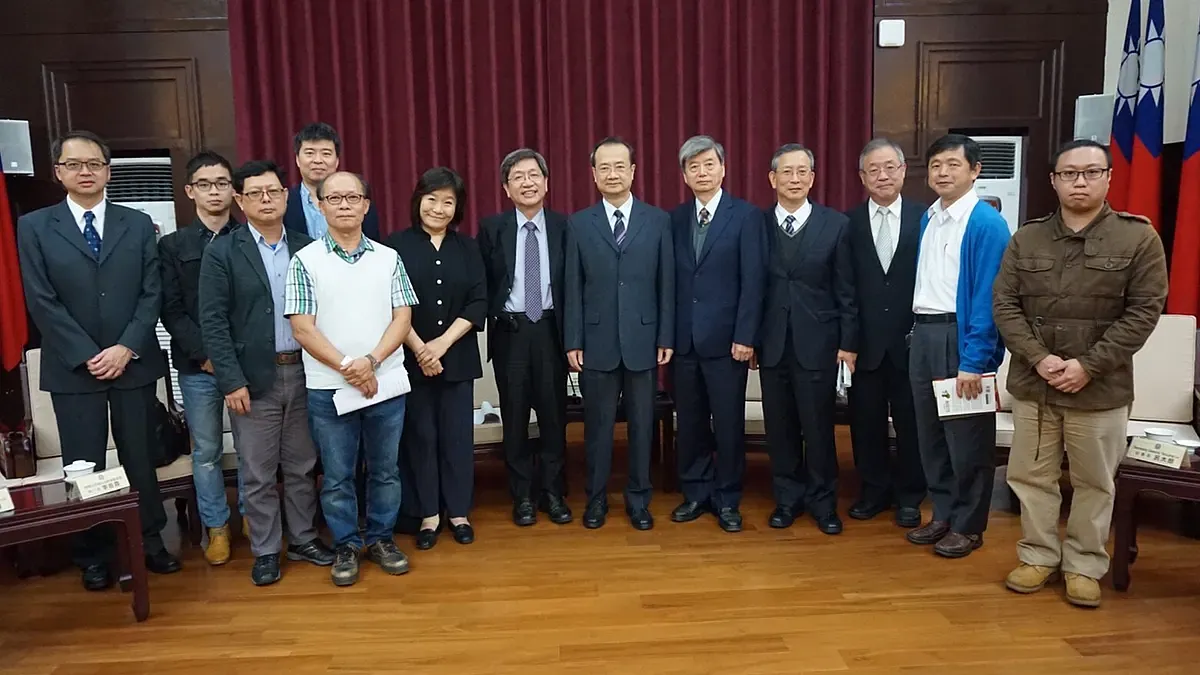
The National Consultative Conference on Judicial Reform Must Involve All Citizens—Representatives of Civil Society Coalitions Visit the Judicial Yuan
Last edited: 2026-11-03
To ensure that the National Consultative Conference on Judicial Reform responds to the public's needs and becomes a movement involving all citizens, 21 representatives from civil society coalitions visited the Judicial Yuan at 11:00 AM on January 4, 2017. They were received by Judicial Yuan President Hsuch Tsong-li, Vice President Tsai Pyung-dun, Secretary-General Lu Tai-lang, and Deputy Secretary-General Lin Chin-chun.
First, Judicial Reform Foundation (JRF) Chairperson Lin Yung-sung presented the coalition's overall recommendations for the National Consultative Conference on Judicial Reform. Subsequently, representatives from various organizations put forward their opinions regarding judicial issues of concern (detailed opinions listed below).
-
In addition to online collection, the consultative conference should also collect physical feedback and make the issue-selection process public.
Online collection has certain barriers—not everyone uses the internet. The government should commission county and city governments to hold physical meetings to gather opinions, integrating online and physical feedback to promote the exchange of views. Furthermore, the first stage of gathering issues should provide a public space to present public opinions and the process of collation and discussion. Relying solely on summaries or streamlined content prepared by staff may lead to criticism that issue selection is a black box.
-
The consultative conference membership should incorporate diverse views and publish qualification standards.
To bring in diverse perspectives, the members of the National Consultative Conference on Judicial Reform must be diverse. The authorities should publish qualification standards for committee members to foster public trust; for instance, whether they are respected and prestigious, actively concerned about social issues, or respected opinion leaders and representatives.
-
The procedures of the preparatory meetings and subcommittee meetings for the consultative conference must be open and transparent.
Both the preparatory committee and subcommittee meetings should be broadcast live via video and text. Issues must be announced prior to meetings so that all sectors can express their views, allowing external input both during and after the sessions. Moreover, prior to the consultative conference, the preparatory committee should compile a white paper—covering both conclusions where consensus was reached and discussions where consensus was lacking—for public review, feedback, and discussion at the conference.
-
A standing committee should be established after the consultative conference to hold regular meetings and incorporate the views of stakeholders.
To ensure that issues lacking consensus continue to be discussed after the conference and that resolutions reaching consensus are implemented, a standing committee must be established to conduct regular discussions and follow-ups. If stakeholders and related views were not incorporated during subcommittee meetings, they must be brought into the standing committee.
In response to the coalition's views, President Hsuch Tsong-li stated that he also comes from civil society and believes it is necessary for the authorities to listen to public opinions and understand the hardships people face. The Judicial Yuan's judicial reform issues are divided into two parts: contentious issues will be brought to the National Consultative Conference on Judicial Reform for discussion, while matters within the Judicial Yuan's authority will not be sent to the conference but will be immediately studied and handled by the Judicial Yuan's internal Judicial Reform Promotion Committee. President Hsuch also invited Vice President Tsai Pyung-dun, Secretary-General Lu Tai-lang, and Deputy Secretary-General Lin Chin-chun to briefly respond regarding their respective areas of responsibility. The coalition's visit concluded at 12:30.
Press Contact
Kao Jung-chih, CEO, Judicial Reform Foundation 02-25231178

List of Civil Society Coalition Representatives and Opinions
(In order of presentation)
- Judicial Reform Foundation Lin Yung-sung, Chairperson (Written opinion)
- The Garden of Hope Foundation Chi Hui-jung, CEO (Written opinion)
- Association for Citizens and Legal Education Li Yueh-lin, CEO (Written opinion)
- Father Nguyen Van Hung, Migrant Workers and Brides Pastoral Care Center, Catholic Diocese of Hsinchu (Written opinion)
- Environmental Jurists Association Lin Jen-hui, Secretary-General (Written opinion)
- Taiwan Labour Front Sun Yu-lien, Secretary-General (Written opinion)
- Taiwan Association for Indigent Defense / Taiwan Jury Association Cheng Wen-lung, Founding Chairperson (Written opinion) [Note: Referring to Taiwan Jury Association]
- Taiwan Queer Rights Promotion Alliance Hu Sheng-hsiang, Secretary-General (Written opinion)
- Taiwan Alliance against Forced Eviction Lin Yen-tung, Executive Committee Member (Written opinion)
- Parents' Association of Intellectual Disabilities, Taiwan Sun I-hsin, Deputy Secretary-General (Summary of remarks)
- Covenant Watch Huang Yi-bi, CEO (Summary of remarks)
- Debt Relief Alliance Wu Tsung-sheng, Associate Professor (Summary of remarks)
- Association for Victims of Occupational Injuries Ho Kuang-wan, Specialist (Summary of remarks)
-
Taipei New Life Association Chin Lin, Director-General (Written opinion)
(The above are organizational representatives who spoke)
- Kao Jung-chih, CEO, Judicial Reform Foundation
- Pan Shih-hsin, Chairperson, Taiwan Queer Rights Promotion Alliance
- Wang Hsiu-wu, Advisor, Taiwan Queer Rights Promotion Alliance
- Lai Yu-fen, Social Worker, Migrant Workers and Brides Pastoral Care Center, Catholic Diocese of Hsinchu
- Lin Che-wei, Executive Secretary, Judicial Reform Foundation
- Hsiao Yi-min, Specialist, Judicial Reform Foundation
Appendix 01: Written Opinion of the Judicial Reform Foundation
(1) Recommendations Concerning the National Consultative Conference on Judicial Reform
- In addition to online collection, physical feedback should also be collected, and the process of selecting issues must be made public.
Online collection has a certain threshold; not everyone uses the internet. The government should commission county and city governments to hold physical meetings for collecting opinions, integrating online and physical feedback to promote the exchange of views.
Furthermore, the first stage of gathering issues should provide a public space to present civil society's opinions and the process of collation and discussion. Relying solely on summaries or streamlined content prepared by staff may lead to criticism that issue selection is a black box. -
The consultative conference membership should incorporate diverse views and publish qualification standards.
- To bring in diverse perspectives, the members of the judicial consultative conference must be diverse.
- The authorities should publish qualification standards for committee members to foster public trust; for instance, whether they are respected and prestigious, actively concerned about social issues, or respected opinion leaders and representatives.
-
Demanding open and transparent procedures for preparatory and subcommittee meetings
- Both the preparatory committee and subcommittee meetings should be broadcast live via video and text.
- Issues must be announced prior to meetings so that all sectors can express their views, allowing external input both during and after the sessions.
- Moreover, prior to the consultative conference, the preparatory committee should compile a white paper—covering both conclusions where consensus was reached and discussions where consensus was lacking—for public review, feedback, and discussion at the conference.
-
Standing committee to hold regular meetings and incorporate stakeholder views
To ensure that issues lacking consensus continue to be discussed after the conference and that resolutions reaching consensus are implemented, a standing committee must be established to conduct regular discussions and follow-ups. If stakeholders and related views were not incorporated during subcommittee meetings, they must be brought into the standing committee.
-
Other substantive issues (especially cross-ministerial issues):
Attorney issues, correctional institution issues, legal education for the public, legal education reform, forensic or forensic identification science, selection and training for judges, prosecutors, and attorneys, and police and investigative agency reform.
(2) JRF's Judicial Reform Opinions Submitted to the Judicial Yuan
- Quality Judiciary
- Some judges do not review case files in advance and conduct trials merely as a formality; how can this be monitored and improved?
- Some judges render severely flawed judgments; how can this be monitored and improved?
- The civil divisions of the High Court have only a single commissioner judge directly trying cases; how can this be improved?
- Some Supreme Court judgments lack reasoning; how can this be improved?
- When wrongful convictions occur in final judgments, how can remedies be expanded?
- Efficient Judiciary
- Research, review, and implementation methods for why concentrated trials cannot be achieved
- Review of the judge rotation system
- Establishing a pyramidal personnel and litigation system to avoid repeated remand and retrials
- Professional Judiciary
- Realizing specialized courts and specialized judge training
- Consolidating forensic science, identification, and various appraisal systems by establishing SOPs, certification systems, and expert witness systems
- Realizing collegiate panels in civil litigation and strengthening civil rules of evidence and cross-examination systems for witnesses
- Human Rights-Respecting and Humane Judiciary
- Realizing monitoring mechanisms for judges forcing settlements and displaying poor courtroom demeanor
- Establishing an evaluation foundation to conduct general and individual evaluations and removal mechanisms for unsuited judges, prosecutors, and attorneys
- Accessible and Convenient Judiciary
- Strengthening the court interpretation system
- Plain-language court terminology, judgment formats, and terminology (plain-language law)
- Transparent courtrooms for appropriate cases, allowing media broadcast throughout
- Establishing a professional spokesperson system that understands media dynamics. Publishing judgments online immediately upon rendition, especially for major socially anticipated cases
- Fair and Impartial Judiciary
- Improving the presumption-of-guilt culture among criminal judges
- Improving the administrative courts' bias toward government agencies
- For administrative enforcement concerning major public rights and interests, the court should take suspension of enforcement as the principle and non-suspension as the exception
- Democratized Judiciary
Establishing public participation in trials, piloting jury and lay-participation systems, establishing relevant complementary systems, and evaluating current conditions and demands.
- Others
- For cases with final judgments, copying of case files and discs should be permitted.
- Judgments and other judicial electronic information should be disclosed in formats that better conform to open-government standards.
- Strengthening ADR functions (restorative justice) to reduce court caseloads.
- Record-making should no longer be the core of trials. Outsource court clerks' typing work, hire typists, or implement the principle of direct judicial examination.
- Simplify judgments or dispense with writing judgments under certain conditions.
- Study which issues should not be resolved by the judiciary and propose legislative amendments.
- Minor amendments to the Judges Act can be handled first without needing discussion at the consultative conference.
- The Constitutional Court Case Adjudication Act and constitutional remedies should be amended in tandem.
- Examination, selection, and training of judges, prosecutors, and attorneys
Appendix 02: Position Paper of the Gender and Judicial Reform Alliance
The Office of the President is holding the National Consultative Conference on Judicial Reform in 2017. Civil society groups hope that the issues discussed will no longer be limited to traditional judicial topics, but will broaden in scope to understand the general public's needs and resolve practical problems encountered by people in the judicial system. Among these, gender issues require urgent attention.
Like other long-standing social systems, the judicial system is built upon patriarchal structures, and judicial practitioners—long predominantly male—lack gender awareness. Although we see the judicial system gradually progressing, there remains significant room for improvement in its current gender-friendliness. For instance, in marriage, family, or gender-related cases, judicial practitioners frequently lack gender awareness and sensitivity, harboring gender biases that subject victims to secondary victimization during judicial processes and even affect judgment outcomes. In the workplace, although the number of female judicial practitioners has grown annually, males still outnumber females among presidents of courts at all levels and presiding judges, with the proportion of male judges increasing in higher appellate instances. Sexual harassment and gender equality incidents occurring in the workplace are frequently met with cover-ups, institutional protectionism, and watered-down handling.
Many such gender-related issues within the judicial mechanism require greater attention and improvement. Therefore, this alliance proposes five major demands:
- Establish gender indicators for monitoring and evaluating judicial professionals.
- Establish a gender equality education and cultivation system for judicial practitioners.
- Balance the gender ratio among heads of judicial bodies at all levels, collegiate panels, and committees.
- Establish a gender-friendly working and trial environment within judicial organs.
- Establish an independent and dedicated gender equality unit within judicial organs.
The Constitution requires the elimination of gender discrimination and the realization of substantive gender equality; the judicial system can be no exception. Starting with this judicial reform, it must carefully examine how to cultivate and enhance awareness and concepts of equal rights across education, qualification, and training stages, ensuring that everyone in society can attain fairness and justice within the judiciary. Therefore, we hope that this National Consultative Conference on Judicial Reform will incorporate gender issues, enabling Taiwan's judicial system to better respond to public needs and win public trust.
Members of the Gender and Judicial Reform Alliance
Judicial Reform Foundation, Legal Aid Foundation, Taipei Women's Rescue Foundation, Awakening Foundation, Modern Women's Foundation, Wan-Chin Women's Association, The Garden of Hope Foundation
Appendix 03: Written Opinion of the Association for Citizens and Legal Education
Brief opinions on visiting the Judicial Yuan on 2017/01/14
- Combining civil society strength to deepen the functions of legal education
Currently, legal education conducted by the Judicial Yuan focuses mainly on understanding and visiting courts. However, visiting a court cannot be understood in an hour or a single class regarding court functions, trial levels, and personnel allocation. To promote legal education, court visits should be more than a superficial glance; they should serve a substantive and comprehensive educational function.
This association suggests that court visits be set at a minimum of half a day (at least 3 hours), combining civil society forces such as the Taipei Bar Association, the Judicial Reform Foundation, and the Association for Citizens and Legal Education, with legal professionals leading introductions and clarifications.
- Holding teacher camps to bring legal education deep into campuses
Legal education is not just the job of legal professionals! Cultivating teachers' legal concepts and teaching methods—first enabling teachers to understand court hierarchies, the separation of trials from prosecution, and court functions—will allow them to practically impart and implement these concepts to students in the future, fostering just and fair legal thinking in the next generation.
Appendix 04: Written Opinion of the Migrant Workers and Brides Pastoral Care Center, Catholic Diocese of Hsinchu
As an advocacy group for migrant workers, given the issue of judicial interpretation for migrant workers in Taiwan, our center proposes the following points:
- Although Taiwan has a judicial translation and interpretation database, due to insufficient training, interpreters inject personal opinions into translations, confusing the true thoughts of investigators and parties involved.
- When police units investigate cases involving migrant workers, due to language barriers, they seek help from foreign spouses. Our center has repeatedly reflected to police units that while spouses can assist with simple conversations, their professionalism is clearly insufficient, making them unsuited to act as interpreters. Police and investigative units state that they lack surplus funding to invite professional interpreters.
- Judicial interpreters should have a certain threshold of educational attainment. If an interpreter's comprehension of their native language is already inadequate, how can they smoothly convert Chinese into their native language—let alone translate vocabulary containing legal terminology? While Chinese proficiency is fundamental, an interpreter's comprehension of their native language is even more critical for the parties involved. An interpreter acts as a communication bridge for the parties; if the interpreter fails to understand the original intent of the party's native language or cannot accurately convert Chinese into the corresponding native language, how can accurate translation be achieved? This skews cases toward unfair outcomes. In other words, an interpreter's native-language proficiency must be on par with their Chinese proficiency to ensure precise translation.
- Regarding police units demanding that NGO organizations provide translation assistance, our center believes this poses a major problem. As a migrant worker group, our office is staffed with bilingual personnel who can provide timely assistance, but given limited manpower, it is impossible for us to attend and support every single time. The government should place greater emphasis on the field of judicial interpretation instead of forcing NGO organizations and police units to clash.
- If police units truly lack deployable manpower, they must observe conflict-of-interest rules; individuals with conflicts of interest with the parties, such as brokers, are unsuited to serve as interpreters.
- Judgments do not contain the migrant workers' native languages, leaving parties unable to read judgment contents. Please have the Judicial Yuan find ways to improve this.
Appendix 05: Written Opinion of the Environmental Jurists Association
- Emulating the Financial Supervisory Commission's prosecutor office mechanism, assign resident prosecutors to the Environmental Protection Administration (EPA) to strengthen the connection between the EPA and judicial organs. Many environmental cases involve conglomerates—such as Formosa Plastics' air and soil pollution, and China Steel's furnace dust—which ultimately fizzled out. This is related to the initial lack of prosecutors intervening to assist with evidence gathering and a lack of independent judicial investigation support. To cope with air pollution by large corporations, Mexico established an Office of the Environmental Protection Prosecutor, granting it administrative investigation, reporting, and criminal prosecution powers. Although Taiwan is a civil law jurisdiction and cannot grant prosecutors excessive administrative powers, stationing prosecutors to provide consultation and assistance in referring prosecutions might make environmental criminal cases involving large corporations, as well as administrative inspections, more effective.
- Amend the provisions concerning the suspension of execution within administrative litigation laws. Current law operates on the principle that "non-suspension of execution is the rule"; we hope this can be amended to "suspension of execution is the rule, with non-suspension as the exception," thereby preventing the enforcement of illegal administrative dispositions from infringing upon people's rights.
- Expeditiously establish specialized environmental courts pursuant to Article 14 of the Environmental Fundamental Act: "For the trial of environmental protection dispute cases, courts may establish specialized courts or designate specialized personnel to handle them."
Appendix 06: Preliminary Position Paper of the Taiwan Labour Front on the "National Consultative Conference on Judicial Reform"
Taiwan Labour Front
The legal maxim "justice delayed is justice denied," originating in British law, reminds us of the importance of the issue of "timeliness" in judicial justice, while also serving as an important guide for many countries in reviewing judicial human rights and judicial reform. Particularly in labor litigation cases—whether concerning the confirmation of employment relationships, occupational disasters, discrimination, or any labor rights—even if workers win final judgments after years of litigation, justice is often virtually non-existent for the parties concerned. At times, workers face the helplessness of being unable to seek judicial relief and dealing with careless and crude judicial judgments. Consequently, how to enhance the accessibility, trial efficiency, and quality of the judiciary has become the most humble and simple expectation of many workers when facing the legal system.
Since its establishment 33 years ago—from the "Labor Legal Assistance Association" in 1984 to the present "Taiwan Labour Front," and from individual legal aid to promoting various policies and bills—the Taiwan Labour Front has hoped to ensure the substantive protection of labor rights and make Taiwanese society more egalitarian by promoting a legal environment more friendly to laborers and society. Over the past thirty-plus years, LF's efforts in judicial reform have included:
Building upon efforts over the past 33 years, LF hopes to propose pragmatic judicial reform opinions suited to Taiwan's societal needs prior to convening this "Judicial Consultative Conference," actively participating in this wave of judicial reform action. We look forward to Taiwan's judiciary becoming more friendly to workers in the future, allowing those experiencing hardship to obtain timelier, more accurate, and more reasonable judicial justice. Regarding this "National Consultative Conference on Judicial Reform," the Taiwan Labour Front hopes to establish a dedicated reform agenda for workers and put forward the following specific demands to officially launch the judicial and administrative reform engineering of "labor justice":
- Establish "Labor Courts" for prompt and specialized labor adjudication
Establish labor courts and professionalize labor adjudication. In 1990, the Taiwan Labour Front proposed the constitutional reform proposition of a "Labor Charter," the 5th article of which stated: "The State shall establish labor courts to handle the adjudication of labor litigation." Furthermore, it advocated: "The State shall formulate a non-professional judge system to participate in the adjudication of labor litigation." LF believes that although Article 6 of the Act for Settlement of Labor-Management Disputes stipulates that "Courts shall, when necessary for trying labor-management disputes over rights, establish labor courts," and Article 1 of the Directions for Handling Labor-Management Dispute Events by Courts explicitly states that the Taiwan High Court and its branches, the Fuchien High Court Kinmen Branch, and the Taiwan Taipei, Banciao [Banqiao], Shihlin [Shilin], Taoyuan, Taichung, Changhua, Tainan, and Kaohsiung District Courts shall establish labor courts while other district courts designate specialized personnel to act under the name of labor courts, the professionalism and effectiveness of labor courts remain questioned when observed from litigation case volumes, litigation costs, and many labor adjudications.
In the past, when faced with societal demands to establish "labor courts," the Judicial Yuan brushed them off on the grounds that labor litigation case volumes were small. However, according to Judicial Yuan statistics, litigation cases in 2015 numbered 8,231, far exceeding the 1,227 cases of the Intellectual Property Court (calculated based on 445 civil first-instance, 215 second-instance, 254 criminal, and 313 administrative litigation newly received cases). Meanwhile, labor-management dispute cases in 2015 reached as high as 23,204, clearly showing that numerous workers face judicial barriers and have no choice but to opt helplessly for coordination and mediation to resolve issues. Therefore, only by amending the Judicial Yuan Organization Act and establishing an independent "Labor Court" system under the Judicial Yuan can timely, effective, and professional judicial justice be achieved.
-
Enact a "Labor Case Litigation Act" to enhance the efficiency of labor litigation
Enact a "Labor Case Adjudication Act" to establish new litigation procedures targeting the special characteristics of labor cases, thereby returning timely justice to workers. Most of Taiwan's labor-management disputes are rights disputes involving employers violating the Labor Standards Act. Consequently, most cases must undergo time-consuming judicial litigation after mediation by labor bureaus, ultimately causing workers to sigh at the courthouse doors due to considerations of litigation costs. As mentioned earlier, among the approximately 20,000 labor-management disputes each year, only about one-third seek judicial resolution, and approximately 30% of labor-management disputes fail mediation and also fail to enter judicial litigation. This clearly demonstrates that the accessibility of judicial litigation for workers is very low.
Japan implemented the "Labor Tribunal Act" in 2006, swiftly resolving labor-management disputes through unique labor litigation procedures. Therefore, to effectively resolve workers' rights and interests when encountering labor-management disputes, enhance judicial accessibility, and promptly resolve labor-management disputes, a dedicated "Labor Case Adjudication Act" should also be enacted. Through special litigation procedures, this would strengthen pre-litigation problem-solving mechanisms on one hand, while returning timely justice to workers on the other.
-
Education and training for judicial personnel must strengthen awareness of labor law
According to official statistics, Taiwan has over 10 million employed persons, forming the largest group in society. Yet labor law has never been included as an examination subject for judicial officers, resulting in the judicial system's general unfamiliarity with labor law and labor case litigation, which impacts judgments. Particularly in the special judiciary examinations, observed from many past labor litigation judgments, courts display excessively divergent views on labor cases, with numerous judgments entirely grounded in traditional civil law thinking. This causes workers to feel helpless when facing judicial litigation and even affects their willingness to seek judicial relief. Furthermore, regarding disputes over workers' right to freedom of association and trade union protection, judges frequently exhibit an embarrassing complete lack of collective labor law literacy.
For example, facing the quasi-judicial system for unfair labor practice adjudication established under the newly implemented Act for Settlement of Labor-Management Disputes on May 1, 2011, situations may arise where "unprofessional courts might overturn professional adjudications." The same situation occurs in the adjudication of discrimination cases under labor law; discrimination cases investigated and deliberated by administrative authorities as established may also be overturned by courts. Therefore, how to enhance the labor law literacy of judicial personnel and strengthen their understanding of labor law starting from education and examination systems will become one of the focal points of subsequent judicial reform.
-
Enrich "legal aid resources" for workers and promote judicial equality
Thanks to joint efforts by all parties, the Legal Aid Foundation was officially established in 2004, providing timely legal aid work to many disadvantaged individuals. This is a concrete outcome of the previous wave of judicial reform and an important indicator of the advancement of Taiwan's judicial human rights. Over the past 12-plus years of its establishment, the Legal Aid Foundation has not only provided legal consultation and litigation assistance to the disadvantaged through local branches, but has also branched out through various programs—including "criminal case companion accompaniment," the "card debtor project," the "RCA project," and cooperative labor litigation cases—becoming crucial resources for workers encountering labor-management disputes. Currently, other legal aid resources for workers also include "litigation" and "living" subsidies provided by central and local labor administrative authorities.
Given that workers are invariably in an absolute position of vulnerability when encountering labor-management disputes, while current labor-related legal aid resources are relatively scarce, future judicial reforms must—in addition to major reforms of court systems and litigation systems—simultaneously consider enriching legal aid resources to provide adequate legal aid to qualified disadvantaged workers.
Appendix 07: Written Opinion of the Taiwan Jury Association
The Taiwan Jury Association puts forward ten recommendations regarding the current direction of judicial reform:
- Judicial Democratization:
- Establish a jury trial system.
Regardless of criminal or civil cases, especially litigation involving the government, including current administrative litigation, jury trials may be adopted upon request by parties and under certain statutory conditions. - Adopt a system for the popular election of judges and chief prosecutors.
- Establish a jury trial system.
- Judicial Unification:
- Consolidate the Supreme Court.
Merge the Judicial Yuan, the Supreme Court, the Supreme Administrative Court, Grand Justices, and the Commission on the Disciplinary Sanctions of Functionaries entirely into the Supreme Court. - Abolish administrative courts at all levels.
- The Supreme Court shall conduct oral argument.
- Universalize constitutional review, adopting an individual-case judgment system. Abolish the abstract centralized review system.
- Consolidate the Supreme Court.
- Realizing an "Adversarial Litigation System":
- Absolute neutrality of judges.
- Prosecutors bear the full burden of proof.
- Attorneys possess moderate investigative powers.
- Implement rules of evidence.
- Implement the principle of indictment-only. Judges do not review case files to prevent preconceptions, ensuring neutrality.
- Legal Education Reform:
- Abolish university law departments, replacing them with post-baccalaureate law schools.
- Design a 3-year curriculum emphasizing the study of litigation practice.
- Emphasize the study and research of "fair trial systems."
- Judicial System Reform:
- Abolish the judge examination system.
- Half of the judges shall come from "popular elections."
- The other half of judges shall come from recommendations of outstanding attorneys.
- Prosecutorial System Reform:
- Popular election of chief prosecutors.
- Prohibition of double jeopardy. Prosecutors shall have no right of appeal against acquittals.
- Prosecutors' power of indictment or non-prosecution should be restricted, considering referencing the United States and Japan to establish a grand jury system or prosecution review committee system.
- Establishment of Summary Trial Courts for Minor Offenses:
- Establish fast-track trial courts where cases carrying prison sentences of two months or less can be concluded on the same day.
- Notification of defendants' rights should be detailed and explicit.
- Establish a roster-attorney system so that all arrested defendants can receive assistance from roster attorneys, safeguarding defendants' rights.
- Revision of Civil Litigation Court Fees:
- Abolish proportional court fees in civil litigation.
- Adopt fixed-bracket fees, with a cap of NT$10,000 per trial instance.
- Abolishing Extraordinary Appeals and Expanding the Scope of Retrials:
- Abolish the extraordinary appeal mechanism.
- Incorporate the remedial functions of extraordinary appeals into retrials.
- Introduce External Oversight of Judges and Prosecutors, Conducted by Non-Lawyers for Supervision and Evaluation:
- Court operations should be open and transparent; except for trials closed by law, television or internet live broadcasts should be permitted.
- Implement the judge evaluation and prosecutor evaluation systems.
- Exclude practicing litigation attorneys from evaluation members to prevent practicing attorneys from using evaluations to influence, interfere with, or pressure judges and prosecutors, thereby threatening the impartiality of judges and prosecutors in handling cases.
Appendix 08: Written Opinion of the Taiwan Queer Rights Promotion Alliance
Recently, President Tsai announced the list of preparatory committee members for the National Consultative Conference on Judicial Reform. Regardless of how attractive the list looks, the selection procedure was invisible, which is truly disappointing. However, marginalized and stigmatized issues have long been ignored, and a black box in judicial reform could worsen this neglect, indirectly causing judicial reform to become a mere formality lacking practical effect.
Over the past decade, we have pushed for the abolition of Article 29 of the Child and Youth Sexual Exploitation Prevention Act. In recent years, issues and groups facing marginalization and stigmatization—such as those related to the Narcotics Hazard Prevention Act, drug addicts, sexual minorities, persons with mental disabilities, or individuals with multiple identities such as mentally disabled sexual minorities—are not only ignored but are also vulnerable to rights violations caused by judicial misunderstanding. Clearly, judicial reform is urgently needed.
We raise three issues and dilemmas of concern, hoping that President Tsai will attach importance to such judicial reform demands:
- Article 29 of the Child and Youth Sexual Exploitation Prevention Act
The legislative purpose of this article is to protect children and youths, yet in practice, we have received many examples where neither party involved was a child or youth, yet they were still prosecuted. These cases include police independently determining that nicknames have sexual connotations, inducing victims to agree to commercial sex prices proposed by the police, and entrapment arrests. Such practices by the police utilize the stigma of commercial sex to coerce parties into compliance, ignoring procedural rules that prohibit proactive solicitation and entrapment. Furthermore, parties often face police coercion and inducements during interrogation recording processes. If parties fail to cooperate, police will interrupt audio and video recordings and retake statements, leading litigation outcomes to lean heavily toward a presumption of guilt. - Narcotics Hazard Prevention Act and Drug Users
The government adopts high-pressure containment policies toward drugs and drug users, resulting in extremely severe stigmatization and labeling of drug users. We once received a "drug case where a gay man was referred by police using entrapment tactics." In this case, the police disguised themselves as gay men to randomly scout for prey on apps. Once the party's willingness was ascertained, the police immediately inquired whether drug transactions could be provided. However, the party stated they had not used drugs for many years and carried no drugs on their person. Yet, at the police's request, the party ultimately brought drugs to the rendezvous, only to be arrested as a flagrant offender by plainclothes police, even though the party's urine test result was negative.
In the past, numerous cases have shown that police failed to follow procedures during law enforcement, resulting in prosecutors ruling non-prosecution dispositions upon referral to district prosecutors' offices. Clearly, police frequently fail to follow procedures or even act unlawfully during law enforcement. - Sexual Minorities
Sexual minorities often need to hide their identities due to societal or familial misunderstanding, but when facing judicial litigation, they are frequently forced to out themselves. When compounded by child and youth act cases, drug cases, or if the party is living with HIV, they are more susceptible to double stigmatization, resulting in helplessness in defending themselves. Thus, it is clear that the judiciary's understanding of sexual minorities remains insufficient.
Based on the three points explained above, we hope that the Judicial Consultative Conference convened by President Tsai Ing-wen will cater to everyone's expectations and needs rather than serving as formalistic judicial reform. Thank you.
Appendix 09: Written Opinion of the Taiwan Alliance against Forced Eviction
- We petition the Judicial Yuan's Judges Academy to increase courses concerning the right to housing under the two human rights covenants in pre-service training and in-service professional development, inviting judicial officers or scholars familiar with international covenants to share theories and practices of applying the right to housing in judicial adjudication.
- Judges should legally apply the contents of the two human rights covenants to render judgments protecting the right to housing. Relevant covenants include Article 17 of the International Covenant on Civil and Political Rights, Article 11 of the International Covenant on Economic, Social and Cultural Rights, and their related general comments or documents. The Supreme Administrative Court should also review resolutions of joint meetings of division presidents that restrict relevant litigation capacities, and we call upon Grand Justices to provide opportunities for constitutional remedies to parties whose litigation capacity or judicial protection is restricted or obstructed.
- Considering that laws and issues concerning litigation related to housing, land, and space are increasingly specialized and complex, the Judicial Yuan should evaluate the necessity and feasibility of establishing specialized courts or specialized divisions.
Appendix 10: Summary of Remarks by the Parents' Association of Intellectual Disabilities, Taiwan
Yesterday (1/4), we visited Judicial Yuan President Hsuch Tsong-li, Vice President Tsai Pyung-dun, Secretary-General Lu Tai-lang, Deputy Secretary-General Lin Chin-chun, and Public Relations Director Liu Ke-lun together with the JRF and civil society groups concerned with judicial reform.
I raised three problem awareness points and two propositions:
Three Problem Awareness Points
- Facing an aging society, how should the legal environment adapt to an aging society and new family structures?
- How should the judicial field strengthen social-welfare-related competencies during the process of judicial professional cultivation?
- How can judicial judgments be coordinated with social welfare systems and regulations?
Two Propositions
-
Concerning the issue where persons under a duty of support may file civil lawsuits with the court pursuant to Article 1118-1 of the current Civil Code (amendment completed on June 10, 2015) to be exempted from support obligations.
When elders strive to have supporting persons step forward to provide support, it is usually because they are unable to pay long-term care facility care fees. Taking the dispute under Article 41 of the Senior Citizens Welfare Act as an example, when senior citizens are placed by municipal or county (city) competent authorities, they may notify lineal descendants to reimburse expenses; those failing to reimburse overdue expenses may be referred to courts for compulsory enforcement. Therefore, if the relationship between the person under a duty of support and the support-receiving person truly meets the elements for exemption from support obligations under Article 1118-1 of the Civil Code, current practical practice requires social affairs bureaus to instruct individuals to obtain civil litigation judgments from courts before support obligations can be excluded so that elders can qualify for low-income status and receive subsidies. Consequently, this causes a sharp increase in similar litigation case volumes across district courts, dragging social welfare disputes into the courtroom.
If judgments grant total exemption, it is manageable; however, some judgments write partial exemption from support obligations, yet social welfare regulations lack the concept of partial subsidies, creating even greater disputes. This issue requires further communication and mutual learning between judicial and social welfare authorities.
-
Regarding how the 8,000 annual guardianship and assistant declarations operate
The new adult and minor guardianship and assistant system under the Civil Code was enacted in 2008. Last year, application cases reached as high as 8,000 annually, among which 3% could not find suitable relatives to act as guardians, requiring municipal and county social welfare competent authorities or civil social welfare organizations to act as guardians. Because guardianship is a duty spanning many professional services, the civil organizations currently capable of playing the role of guardian are few and far between, dumping the burden entirely onto local government social welfare competent authorities. To improve the care quality of persons under guardianship, it is recommended to establish a dedicated institution for guardianship, assistance, and trust supervision, mirroring the framework of the Legal Aid Foundation.
Both propositions received a positive response from President Hsuch Tsong-li. Compared to 1999, the societal response to this judicial reform is evidently quite lukewarm. If you have any judicial reform suggestions to be included in the discussion agenda, now is the time to put them forward.
Note: Article 1118-1 of the Civil Code
If a person entitled to support falls under any of the following circumstances, making it manifestly unfair for the person under a duty of support to bear the support obligation, the person under a duty of support may request the court to mitigate their support obligation:
1. Committing intentional abuse, gross insult, or other unlawful physical or mental infringement against the person under a duty of support, their spouse, or lineal blood relatives.
2. Failing to fulfill the support obligation toward the person under a duty of support without justifiable reason.
If a person entitled to support has committed any of the acts in the preceding paragraph against a person under a duty of support, and the circumstances are serious, the court may exempt them from the support obligation.
The preceding two paragraphs shall not apply if the person entitled to support is a minor lineal descendant of the person under a duty of support.
Appendix 11: Summary of Remarks by Covenant Watch
First, the government has domesticated five international covenants through enforcement acts, but courts have not actively confronted or handled them. Taking the guardianship system just mentioned, some systems violate CRPD regulations; if someone files a declaration, which provisions should Supreme Court judges apply? What we care about is how the court handles covenants and related issues.
Second, echoing the forced eviction issue, when constitutional and domestic laws have incomplete provisions, how should judges actively fill the gaps? This involves the willingness and capability of judges. We hope to use both soft and hard approaches to jointly bind judicial organs. After the passage of the enforcement acts, some judges frequently explain in the media that the enforcement acts for the two covenants are terrible—this is a problem. The second problem is that many judges receive a lot of legal education, but they have not received human rights covenant training. How do they apply them in daily practice? We want them to use them, yet fear they will use them incorrectly—a love-hate dilemma. What is the foundation for judges when rendering interpretations consistent with covenants? We specifically suggest whether the Judicial Yuan can regularly conduct advocacy regarding human rights covenants and introduce experts in international human rights law? Can it systematically collect case law from human rights courts, especially concerning the right to equality, and introduce them to Taiwan?
Finally, I would like to represent the European Union Office and the Taiwan Alliance to End the Death Penalty in thanking President Hsuch for serving as the chair of the human rights covenant conference, which is of great help to the review of the two covenants.
Appendix 12: Summary of Remarks by the Debt Relief Alliance
The Debt Relief Alliance has done many things, and much more remains to be done. What I want to briefly discuss is an individual case: a judge at the Taichung District Court has a 0% approval rate for debt reorganization applications under the Consumer Debt Hazard Relief Act. Protesting at the Judicial Yuan is of no use. The Consumer Debt Hazard Relief Act is the last line of defense for debt-burdened groups. If courts fail to act as gatekeepers, vulnerable debtors will be left with zero hope for life, yet courts use many laws to obstruct them. Just like a mother raising three children with a monthly income of NT$18,000, where the court requires her to repay NT$10,000 per month—that mother simply breaks down. Having to repay NT$10,000 out of an NT$18,000 monthly income, leaving NT$8,000 to raise three children, I cannot imagine how one could survive. I feel the judiciary does not belong to the state and the people.
We have asked many debt-burdened groups; what can people do except run away from debts? If they do not run, what can they do? Judges fail to recognize this. The court cannot simply manufacture more populations requiring social welfare. This is not an isolated case. Although we have raised our voices repeatedly, it seems to have no effect. We hope the judiciary can adjust this phenomenon in the future.
Appendix 13: Summary of Remarks by the Association for Victims of Occupational Injuries
We are victims of occupational injuries. Since our establishment in 1992, we have been unable to breach the high wall of the judiciary. Many injured workers lack money and cannot afford lawsuits, making them economically vulnerable. When they finally manage to file indictments through worker litigation assistance and retain attorneys for lawsuits via legal aid, they encounter the issue of litigation economics. Taking the RCA case as an example, the first instance took 10 years, and two occupational injury workers died every single year. Justice delayed is justice denied, yet this problem occurs every single moment and has remained unresolved since 1992. How can judicial adjudication secure justice swiftly? The RCA case still has second and third instances, and some people have returned to the first instance; their average age is around 60, and they are still sick. How do you handle the problem of litigation economics?
Next is the issue of judgments. Every day, there are two deaths and over a hundred people lying in hospitals due to occupational injuries. Yet how many employers are sentenced? The proportion is very low. Even when sentenced, it is only fines or detention. Why can heavy penalties not be imposed for deterrence? Has the judiciary seen occupational injury victims? We hope the judiciary will strictly enforce the law in occupational injury cases.
Appendix 14: Written Opinion of the Taipei New Life Association
The Taipei New Life Association is a public-welfare social welfare organization serving psychiatric patients and their families, primarily focusing its services on psychiatric groups holding disability certificates. Recently, we had the opportunity to be invited to participate in meetings where civil society proposed recommendations for judicial reform, putting forward thoughts and suggestions to the judicial system alongside the Judicial Reform Foundation.
The New Life Association cares about:
- Whether psychiatric patients with lower stress tolerance or psychiatric patients with weak cognitive abilities can hear clearly and speak clearly when entering the judicial system, and what kind of judicial aid system is needed.
- Whether individuals serving prison sentences—both original patients and those who contract mental illness after entering prison—can receive effective and quality treatment services.
- Whether mechanisms exist to transition individuals to social welfare, public health, and medical service systems after they leave the judicial system (e.g., after psychiatric patients are discharged from hospitals / after juvenile friends leave correctional institutions).
- In addiction prevention, beyond backend investigation and sentencing by the judicial system, can it move toward the frontend to help addicts obtain supportive services and invest resources as a boost to quitting addiction?
- Are there areas for improvement in the system linking psychiatric appraisals before judicial judgments?
This article is an AI-generated translation of the original Chinese text. In the event of any discrepancy, the Chinese version shall prevail.