
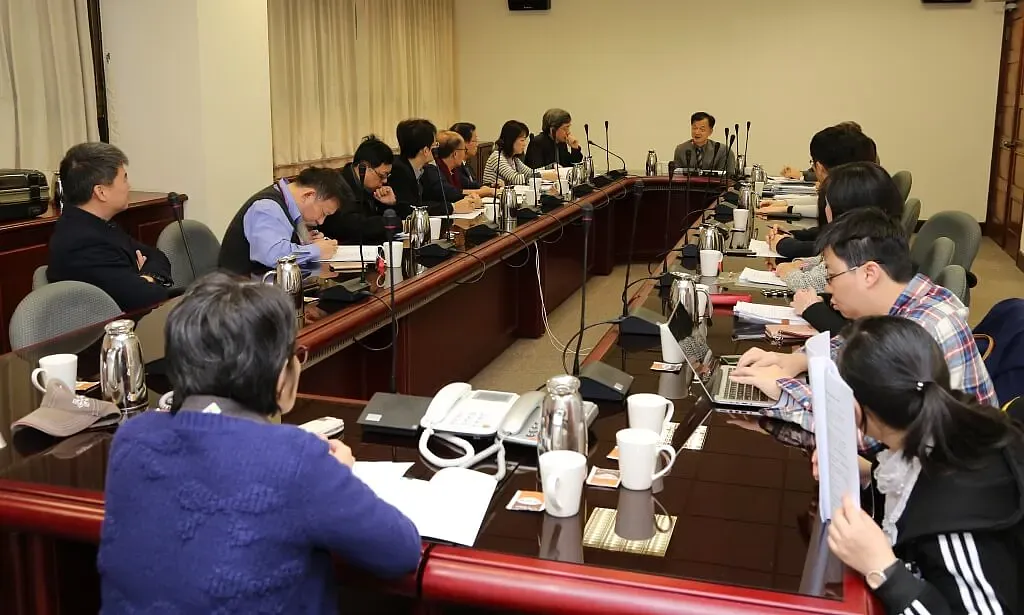
National Conference on Judicial Reform Must Raise Questions from the People's Perspective: Civil Society Coalition Representatives Visit the Ministry of Justice
Last edited: 2026-11-03
Preparations for the National Conference on Judicial Reform have entered a critical phase. To urge the Ministry of Justice to commit resources and actively promote conference preparations, 18 representatives from a coalition of civil society organizations (list provided below) visited the Ministry of Justice at 10:00 AM on January 17, 2017, where they were personally received by Minister Ch'en T'ai-san. Mr. Lin Yung-sung, Chairman of the Judicial Reform Foundation, first presented overall recommendations on behalf of the coalition, followed by individual representatives who voiced their concerns on various judicial issues (opinions detailed below).
Regarding the opinions of the civil society representatives, Minister Ch'en T'ai-san stated that the biggest difference between this National Conference and the 1999 Judicial Reform Conference is that over half of the participants will be non-legal professionals, meaning it will not be dominated by professional legal personnel. How to understand the issues? How to spark dialogue? Although everyone is crossing the river by feeling for the stones, raising questions from the people's perspective rather than a legal professional's perspective is Minister Ch'en's expectation for this National Conference. Minister Ch'en then invited Ministry of Justice Counselor Ch'en Jui-jen, Department of Overall Planning Director Lin Li-ying, and Department of Prosecutorial Affairs Deputy Director Yu Li-chen to respond to the coalition's feedback.
Counselor Ch'en Jui-jen responded to the question of whether the National Judicial Conference should be live-streamed, suggesting that it follow the practice of the Supreme Court of the United States by releasing the full audio recordings after the sessions to avoid disrupting participants. Department Director Lin Li-ying addressed the issue of making prosecutorial documents public, stating that the Ministry of Justice holds an open attitude toward making indictments public, which could be released simultaneously with the first-instance judgment to be subject to public scrutiny. However, non-prosecution disposition documents involve the protection of the parties' reputation and privacy and require further discussion. Deputy Department Director Yu Li-chen responded to the issue of redressing wrongful convictions, stating that the Ministry of Justice is expected to promote a refined conviction review team in January to examine cases with procedural doubts, with current plans to place it under the Taiwan High Prosecutors Office. Regarding prosecutor name tags during court arguments and the recording of the names of investigation and public prosecution prosecutors in judgments, the Ministry of Justice respects the regulations of the Judicial Yuan and will cooperate with the court's practices.
After submitting written opinions and fully expressing their views, the delegation concluded their visit at 12:00 PM.
Press Contact
Judicial Reform Foundation, CEO Kao Jung-chih 02-25231178
Civil Society Coalition Representatives
(in order of speaking)
- Judicial Reform Foundation, Chairman Lin Yung-sung (Written Statement)
- Garden of Hope Foundation, Director Wang Shu-fen (Written Statement)
- Association for Taiwan Public Advocacy, Director Huang Hsu-t'ien (Written Statement)
- Father Peter Nguyen Van Hung, Vietnamese Migrant Workers and Brides Office, Catholic Diocese of Hsinchu (Written Statement)
- Environmental Jurists Association, Chairman Chang Yü-yin (Written Statement)
- Taiwan Association for Human Rights / Taiwan Labour Front, Secretary-General Sun Yu-lien (Written Statement)
- Taiwan Jury Association, Chairman Chang Ching (Written Statement)
- Parents' Association of Intellectual Disabilities, R.O.C., Deputy Secretary-General Sun I-hsin (Written Statement)
- Association for Taiwan Democracy, Professor Yang Ts'ung-jung (Written Statement)
- Association for Victims of Occupational Injuries, Specialist Ho Kuang-wan (Summary of Remarks)
- Taiwan Civil Participation Association, Supervisor Wang Wei-chih (Written Statement)
- Taipei Mental Health Association, Director-General Chin Lin (Written Statement)
- Awakening Foundation (Written Statement)
- Taiwan Environmental Information Association (Written Statement)
-
Taiwan Medical Association (Written Statement)
(The above are organizational representatives who spoke)
- Catholic Diocese of Hsinchu Vietnamese Migrant Workers and Brides Office, Social Worker Lai Yü-fen
- Association for Taiwan Public Advocacy, Executive Secretary Ch'en Chia-p'ing
- Judicial Reform Foundation, CEO Kao Jung-chih
- Judicial Reform Foundation, Staff Attorney Huang Ying-chia
- Judicial Reform Foundation, Technical Specialist Lin Che-wei
- Judicial Reform Foundation, Regional Coordinator Hsiao I-min
Appendix 01: Written Statement of the Judicial Reform Foundation
(1) Recommendations Regarding the National Conference on Judicial Reform
-
In addition to online collection, physical opinion collection should also be conducted, and the process for selecting topics must be made public.
Online collection has certain barriers; not everyone uses the internet. Contracts should be awarded to county and city governments to hold physical meetings to collect opinions, integrating online and physical feedback to promote communication.
Furthermore, the initial stage of problem collection should also provide a public space to present civil society opinions and the process of organization or discussion. Relying solely on staff-compiled or condensed content may lead to criticisms that topic selection is a black-box process. -
Introduce diverse opinions for Conference members and publicize suitability criteria.
- To incorporate diverse views, the members of the National Judicial Conference should be diverse.
- The authorities should publicize the suitability criteria for panel members to gain public trust, such as whether they are well-respected and prestigious, actively concerned about social issues, and respected opinion leaders or representatives.
-
Demand that the procedures of preparatory meetings and divisional meetings be open and transparent.
- Preparatory committees and divisional meetings should both be live-streamed and text-broadcasted.
- Topics must be publicized prior to meetings for public comment, allowing external parties to express views during and after the meetings.
- Before the National Conference, the preparatory committee should compile white papers on both consensual conclusions and unresolved discussions from each group for public review, comment, and use as reference in the National Conference discussions.
-
Establish a standing committee for regular meetings and incorporate stakeholder perspectives.
To ensure that unresolved issues continue to be discussed after the National Conference and to implement resolutions reached during the Conference, a standing committee is needed for regular discussions and tracking. Furthermore, if stakeholders and related opinions were not included in the divisional meetings, they must be incorporated into the standing committee.
-
Other substantive issues (especially cross-ministerial issues):
Attorneys' issues, correctional facility issues, legal education for citizens, legal education reform, forensic science and identification science, selection and training for judges, prosecutors, and attorneys, and police-investigative reform.
(2) Judicial Reform Opinions Presented by the JRF to the Ministry of Justice
- Quality Justice
- Some prosecutors do not review case files beforehand and conduct court hearings merely as a formality; how to monitor and improve this.
- When wrongful convictions occur in final judgments, how to expand remedies.
- Comprehensively review the systems of non-prosecution, suspension of prosecution, and administrative disposition (file closure).
- How to prevent prosecutors from filing indiscriminate prosecutions.
- Strengthen the functions of the re-appeal (zaiyi) and court-mandated prosecution (jiaofu shenpan) systems.
- Establish a "Prosecutorial Review Board" system.
- High Prosecutors Office prosecutors should bring case files to court hearings and implement the cross-examination system.
- Efficient Justice
- To save judicial resources and ensure that prosecutors' powers match their responsibilities, a feasibility study on the "prosecutor prosecutes their own case" system should be conducted.
- Unnecessary repeated remandals for further investigation waste time; how to improve this.
- Professional Justice
- Implement specialized prosecutorial grouping and training.
- Support and jointly improve forensic medicine, criminalistics, and various appraisal systems by establishing SOPs, certification systems, and expert witness systems.
- Human Rights-Respecting and Humane Justice
- When courts find that police, prosecutors, or investigators obtained confessions illegally, aside from excluding the evidence in accordance with the law, the personnel violating handling procedures should be subjected to administrative discipline or criminal prosecution to effectively deter illegal confession-obtaining behavior.
- Improve investigations by local prosecutors offices into complaints regarding prosecutors' punctuality and attitude.
- Establish an Evaluation Foundation to conduct general evaluations, individual case evaluations, and elimination mechanisms for incompetent judges, prosecutors, and attorneys.
- Address prison overcrowding, improve medical quality for inmates, review the parole system, and establish an external oversight mechanism.
- Promote rehabilitation methods that cultivate self-esteem and bridge employment acquisition outside of prison.
- Comprehensively review the policy of heavy sentencing.
- Accessible and Convenient Justice
- Strengthen the court interpretation system.
- Plain language for courtroom terminology, document formats, and terminology (plain legal language).
- Grant attorneys the right to review files during detention review and investigation proceedings.
- Appropriately publicize prosecutorial documents to facilitate public inquiry and oversight.
- Prosecutor name tags should be placed in investigation rooms and court hearings, matching the practice for judges.
- Publicize information on judges, prosecutors, and attorneys (conducted separately by the Judicial Yuan, Ministry of Justice, and bar associations).
- Fair and Impartial Justice
- Review and formulate the Judges Act, Prosecutors Organization Act, and Code of Criminal Procedure concurrently.
- Implement the principle of non-disclosure of investigations by requiring units responsible for investigating leaks to thoroughly investigate, preventing police and prosecutors from shifting blame and ensuring information-leakers are held appropriately accountable.
- Prevent political intervention in the police, prosecutorial, and investigative systems, or the public perception thereof.
- Democratized Justice
- Implement prosecutors' meetings to promote internal decision-making democracy and transparency within the prosecutorial system.
- Introduce external members to the Prosecutor Personnel Review Committee to increase the diversity of its composition and enhance the independence of prosecutors in exercising their duties.
- Others
- Examination, selection, and training of judges, prosecutors, and attorneys.
- Allowing the copying of case files and optical discs for cases with final judgments.
- To alleviate prosecutors' workloads, simplify prosecutorial documents, allocate prosecutorial resources reasonably, and review types of cases that should not be resolved through the judiciary, proposing legislative amendments.
Appendix 02: Gender Judicial Reform Coalition Briefing
The Office of the President will hold the National Conference on Judicial Reform in 2017. Civil society groups hope that the topics discussed at the Conference will no longer be confined to traditional judicial issues, but will expand in scope to understand the general public's needs and resolve practical problems people encounter in the judicial system. Among these, gender issues require urgent attention.
Like other long-standing social systems, the judicial system is built upon a patriarchal structure. Long dominated by male legal professionals, it lacks gender awareness. Although we see the judicial system gradually progressing, there is still vast room for improvement in its current gender-friendliness. For instance, in marriage, family, or gender-related cases, it is common for legal professionals to lack gender awareness and sensitivity, holding gender biases that subject victims to secondary victimization in the judicial process and even affect judgment outcomes. In the workplace, although the proportion of female legal practitioners has increased year by year, men still outnumber women among court presidents, presiding judges, and judges in higher court instances. Workplace sexual harassment and gender equality incidents are frequently covered up and handled leniently through mutual protection among officials.
Many such gender-related issues within the judicial mechanism require greater attention and improvement. Therefore, this coalition proposes five major demands:
- Establish gender indicators for the supervision and evaluation of judicial professionals.
- Establish an education and training system for gender equality among judicial practitioners.
- Balance the gender ratio among judicial heads at all levels, collegiate panels, and committees.
- Establish a gender-friendly working and trial environment within judicial organs.
- Establish independent and dedicated gender equality units within judicial organs.
The Constitution requires the elimination of gender discrimination and the realization of substantive gender equality; the judicial system cannot be an exception. Starting from this judicial reform, it must carefully examine how to cultivate and enhance awareness and concepts of equal rights through education, selection, and training stages, ensuring that everyone in society can obtain fairness and justice in the judiciary. Therefore, we hope that this National Conference on Judicial Reform will incorporate gender issues, enabling Taiwan's judicial system to better respond to the people's needs and earn greater public trust.
Members of the Gender Judicial Reform Coalition
Judicial Reform Foundation, Legal Aid Foundation, Taipei Women's Rescue Foundation, Awakening Foundation, Modern Women's Foundation, Wan-Ching Women's Association, Garden of Hope Foundation
Appendix 03: Written Statement of the Association for Taiwan Public Advocacy
Brief remarks for the Ministry of Justice visit on 2017/01/17
- Legal education is not government propaganda! The Ministry of Justice has conducted numerous promotional campaigns without hitting the core issues!
Various legal education activities hosted or co-hosted by the Ministry of Justice primarily focus on anti-drug and anti-vote-buying themes, or competitions on the National Laws and Regulations Database organized jointly with the Ministry of Education, treating "searching for legal articles" as legal education. The core concept of legal education is neither government propaganda nor statutory education! It is suggested that the Ministry of Justice can combine civil society forces—such as the Taipei Bar Association, the Judicial Reform Foundation, and the Association for Taiwan Public Advocacy—to re-examine and ponder the axis and methodology of legal education.
- How to genuinely implement true legal education?
Legal education cannot be achieved overnight. It is suggested that the Ministry of Justice cooperate with civil society organizations for advocacy, starting with diverse methods such as classroom lectures, teaching materials, and teacher training workshops to truly implement it.
- Justice is not just about correcting wrongs!
Restorative justice, promoted by the Ministry of Justice in recent years, is merely one form of justice. Yet distributive justice, procedural justice, and other forms of justice are absent, showing a lack of comprehensive legal education mindset, which should be prudently reviewed and practiced.
Appendix 04: Written Statement of the Vietnamese Migrant Workers and Brides Office, Catholic Diocese of Hsinchu
As an advocacy organization for migrant workers, in view of the issues regarding judicial interpretation for migrant workers in Taiwan, our office proposes the following points:
- Although Taiwan has a judicial interpretation database, due to insufficient training, interpreters inject their personal opinions into the translation, confusing the true thoughts of investigators and parties.
- Police units investigating cases involving migrant workers often seek help from foreign spouses because the migrant worker does not understand the language. Our office has repeatedly reflected to police units that while spouses can assist with simple conversations, their professionalism is obviously inadequate, making them unsuitable to act as interpreters. Police and investigative units, however, state that they lack extra funding to invite dedicated interpreters.
- There should be a certain educational threshold for judicial interpreters. If an interpreter's comprehension of their native language is already inadequate, how can they smoothly translate Chinese into their native language, let alone translate terms containing legal jargon? While Chinese proficiency is fundamental, an interpreter's ability to comprehend their native language is even more crucial for the parties involved. An interpreter acts like a communication bridge for the parties; if the interpreter cannot understand the original meaning in the party's native language or accurately convert Chinese into the corresponding native language, how can they translate correctly? This leads cases toward unfair states. In other words, an interpreter's native language proficiency should be on par with their Chinese proficiency to ensure accurate translation.
- Regarding police units demanding that NGO organizations provide translation assistance, our office believes there are major issues. As a migrant worker organization, our office has bilingual personnel assigned to provide timely assistance, but given limited manpower, it is impossible to show up for support every time. The government should pay more attention to the field of judicial interpretation instead of letting NGO organizations and police units wrangle with each other.
- If police units truly lack deployable personnel, please ensure a conflict-of-interest avoidance mechanism. Those with conflicts of interest with the parties, such as brokers, are unsuited to serve as interpreters.
- Judgments do not contain the migrant worker's native language, rendering the parties unable to read and understand the judgment content. Please have the Judicial Yuan find ways to improve this.
Appendix 05: Written Statement of the Environmental Jurists Association
- Emulating the mechanism of the Financial Supervisory Commission's prosecutor's office, station prosecutors at the Environmental Protection Administration (EPA) to strengthen the connection between the EPA and judicial organs. Many environmental cases involve conglomerates—such as Formosa Plastics' air and soil pollution, and China Steel's furnace dust and collection ash—which eventually fizzled out. This is related to the initial lack of prosecutorial intervention to assist in evidence gathering and independent judicial investigation support. To cope with air pollution from large corporations, Mexico established an Office of the Environmental Protection Prosecutor, granting it administrative investigation, reporting, and criminal prosecution powers. Although Taiwan adopts the civil law system and cannot grant prosecutors too many administrative powers, stationing prosecutors to provide consultation and assistance in referring prosecutions might make environmental criminal cases involving large corporations and administrative inspections more effective.
- Amend the provisions concerning the suspension of execution in administrative litigation laws. The current law adopts the principle that "filing an action shall not suspend execution," but we hope it can be amended to "suspension of execution shall be the principle, and non-suspension shall be the exception" to prevent the execution of illegal administrative dispositions from infringing upon people's rights.
- Expeditiously establish environmental specialized courts in accordance with Article 14 of the Basic Environment Act: "For the trial of environmental dispute cases, courts may establish specialized courts or designate specialized personnel to handle them."
Appendix 06: Preliminary Position Paper of the Taiwan Labour Front on the "National Conference on Judicial Reform"
Taiwan Labour Front
"Justice delayed is justice denied." This legal adage originating from Britain reminds us of the importance of the issue of "timeliness" in judicial justice, and has simultaneously become an important guide for many countries in examining judicial human rights and judicial reform. Especially in labor litigation cases—whether concerning the confirmation of employment relationships, occupational accidents, discrimination, or any labor rights-related issues—even if laborers win final judgments after years of litigation, justice is often practically non-existent to the parties. At times, laborers must face the helplessness of being unable to seek judicial remedy alongside careless and crude judicial judgments. Therefore, how to enhance the accessibility, trial efficiency, and quality of the judiciary has become the most humble and simple expectation for many laborers when facing the legal system.
Since its establishment 33 years ago, from the "Labor Legal Assistance Association" in 1984 to the current "Taiwan Labour Front," from individual legal aid to promoting various policies and bills, we have consistently hoped to ensure the effective protection of labor rights and make Taiwanese society more equitable by fostering a legal environment more friendly to laborers and society. Over the past thirty-plus years, LF's efforts in judicial reform have included:
Building upon the efforts of the past 33 years, LF hopes to propose pragmatic judicial reform opinions that meet the needs of Taiwanese society prior to the convening of this "National Judicial Conference," and actively participate in this wave of judicial reform action. We look forward to Taiwan's judiciary becoming friendlier to workers in the future, allowing those suffering hardships to obtain timelier, more accurate, and more reasonable judicial justice. Regarding this "National Conference on Judicial Reform," the Taiwan Labour Front hopes to have a separate reform agenda dedicated to workers and formally initiates the judicial and administrative reform engineering of "labor justice" through the following specific demands:
- "Establish Labor Courts" for timely and specialized labor adjudication.
Establish labor courts to specialize labor adjudication. In 1990, the Taiwan Labour Front already proposed the constitutional reform proposition of a "Labor Charter," in which Article 5 revealed: "The State shall establish labor courts to handle the adjudication of labor litigation." Furthermore, it advocated: "The State shall establish a system of lay judges to participate in the adjudication of labor litigation." LF believes that although Article 6 of the Settlement of Labor Disputes Act stipulates: "For the trial of labor-rights disputes, courts shall establish labor courts when necessary," and Article 1 of the Directions for Courts Handling Labor Dispute Incidents explicitly mandates that "Taiwan High Court and its branches, Fujian High Court Kinmen Branch, Taiwan Taipei, Panchiao [Banciao], Shihlin, Taoyuan, Taichung, Changhua, Tainan, and Kaohsiung District Courts shall establish labor courts, while remaining district courts shall respectively designate specialized personnel to handle cases under the name of labor courts," whether observed from litigation case volume, litigation costs, or numerous labor adjudications, the professionalism and effectiveness of labor courts remain questioned.
In the past, whenever faced with societal demands to establish "labor courts," the Judicial Yuan brushed them off on the grounds of low labor litigation case volumes. However, according to the Judicial Yuan's statistics, litigation cases in 2015 reached 8,231, far exceeding the 1,227 cases of the Intellectual Property Court (based on new civil filings of 445 in the first instance, 215 in the second instance, 254 criminal cases, and 313 administrative litigation cases). Furthermore, labor dispute cases in 2015 reached as high as 23,204, clearly indicating that numerous workers still face judicial barriers and are forced to helplessly choose coordination and mediation to resolve disputes. Therefore, only by amending the Judicial Yuan Organization Act and establishing an independent "Labor Court" system under the Judicial Yuan can timely, effective, and professional judicial justice be achieved.
-
Enact the "Labor Case Litigation Act" to enhance the efficiency of labor litigation.
Enact the "Labor Case Adjudication Act" to establish new litigation procedures targeting the special characteristics of labor cases, returning timely justice to workers. Most labor-management disputes in our country are rights disputes involving employers violating the Labor Standards Act. Consequently, most cases, after mediation by labor departments, must undergo time-consuming judicial litigation, ultimately leading workers to sigh at the gates of the judiciary due to litigation cost considerations. As mentioned previously, out of approximately 20,000 labor-management disputes annually, only about one-third of the cases seek judicial resolution, and roughly 30% of labor dispute cases fail in mediation without entering judicial litigation. This clearly shows that the accessibility of judicial litigation for workers is extremely low.
Japan implemented the "Labor Tribunal Act" in 2006, resolving labor-management disputes swiftly through a unique labor litigation procedure. Therefore, to effectively resolve the rights and interests of workers encountering labor disputes and increase judicial accessibility while promptly resolving labor disputes, a specialized "Labor Case Adjudication Act" should also be enacted. Through special litigation procedures, it will strengthen pre-litigation problem-solving mechanisms on one hand, and return timely justice to workers on the other.
-
Judicial personnel education and training should strengthen awareness of labor law.
According to official statistics, Taiwan has an employed population of over ten million, making it the largest group in society. Yet labor law has never been included as an examination subject for judicial officers, leading to the judicial system's general unfamiliarity with labor law and labor litigation, which affects judgments. Especially in the Special Examination for Judicial Officers, observing many past labor litigation judgments reveals that the courts' interpretations of labor cases are overly divergent, with numerous judgments completely rooted in traditional civil law thinking, leaving workers helpless when facing judicial litigation and even affecting their willingness to seek judicial remedies. Regarding controversies over workers' freedom of association and trade union protection, judges frequently exhibit an embarrassing complete lack of collective labor law literacy.
For example, facing the quasi-judicial system for unfair labor practice adjudication established in the newly implemented Settlement of Labor Disputes Act on May 1, 2011, situations may arise where "unprofessional courts might overturn professional adjudications." The same situation appears in the adjudication of discrimination cases under labor law; discrimination cases investigated and deliberated as established by administrative agencies may also be overturned by courts. Therefore, how to elevate the labor law literacy of judicial personnel and strengthen their understanding of labor law starting from education and examination systems will become one of the focal points of subsequent judicial reform.
-
Enrich labor "legal aid resources" and promote judicial equality.
Under the efforts of all parties, the Legal Aid Foundation was officially established in 2004, providing timely legal aid work to many disadvantaged individuals. This is a concrete achievement of the previous wave of judicial reform and an important indicator of Taiwan's progress in judicial human rights. Over its 12-plus years of existence, the Legal Aid Foundation has not only provided legal consultation and litigation assistance to the disadvantaged through local branches, but has also branched out through various programs—including "criminal case companion monitoring," the "card debt debtor project," the "RCA project," and cooperative labor litigation cases—becoming crucial resources for workers encountering labor-management disputes. Currently, other labor legal aid resources also include "litigation" and "living" subsidies provided by central and local labor administrative authorities.
Given that workers are often in an absolute disadvantaged position when encountering labor disputes, while current labor-related legal aid resources are relatively scarce, future judicial reforms should—aside from vital reforms to the court system and litigation system—also consider enriching legal aid resources to provide adequate legal aid to eligible disadvantaged workers.
Appendix 07: Written Statement of the Taiwan Jury Association
The Taiwan Jury Association proposes ten recommendations for the current direction of judicial reform:
- Judicial Democratization:
- Establish a jury trial system.
Regardless of criminal or civil cases, especially litigation involving the government, including current administrative litigation, jury trials may be adopted upon request of the parties and under certain statutory conditions. - Adopt a system of popularly elected judges and chief prosecutors.
- Establish a jury trial system.
- Judicial Unification:
- Consolidate the Supreme Court.
Merge the Judicial Yuan, the Supreme Court, the Supreme Administrative Court, the Grand Justices, and the Disciplinary Court entirely into the Supreme Court. - Abolish administrative courts at all levels.
- The Supreme Court shall conduct oral arguments.
- Universalize constitutional review, adopting the individual case judgment system. Abolish the abstract centralized review system.
- Consolidate the Supreme Court.
- Implement the "Adversarial Litigation System":
- Absolute neutrality of judges.
- Prosecutors bear the full burden of proof.
- Attorneys possess moderate investigative powers.
- Implement rules of evidence.
- Implement the single-pleading-sheet system (ch'i-shih-chuang-i-pen-chu-i). Judges do not review case files to prevent preconceptions and maintain neutrality.
- Legal Education Reform:
- Abolish undergraduate law departments and replace them with post-bachelor law schools.
- Design a 3-year curriculum emphasizing litigation practice learning.
- Focus on the study and research of the "fair trial system."
- Judicial System Reform:
- Abolish the judicial officer examination system.
- Half of the judges shall come from "popular election."
- The other half of the judges shall come from recommendations of outstanding attorneys.
- Prosecutorial System Reform:
- Chief prosecutors shall be popularly elected.
- Prohibition of double jeopardy / double prosecution. In cases of not-guilty judgments, prosecutors shall have no right of appeal.
- Prosecutors' power of prosecution or non-prosecution should be restricted, considering the adoption of grand jury systems or prosecutorial review board systems modeled after the US and Japan.
- Establish Fast-Track Trial Courts for Summary Cases:
- Establish fast-track trial courts where cases carrying prison sentences under two months can be concluded on the same day.
- Notification of defendants' rights must be thorough and explicit.
- Establish a roster-based duty attorney system so that all arrested defendants can receive assistance from a duty attorney, ensuring defendants' rights.
- Revision of Civil Litigation Court Fees:
- Abolish proportional court fees in civil litigation.
- Adopt fixed-tier fees, with a ceiling of NT$10,000 per trial instance.
- Abolish Extraordinary Appeals and Expand the Scope of Retrials:
- Abolish the extraordinary appeal mechanism.
- Integrate the remedial function of extraordinary appeals into retrials.
- Introduce External Forces to Oversee Judges and Prosecutors, with Non-Lawyers Conducting Oversight and Evaluation:
- Court operations must be open and transparent; except for trials closed by law, television or internet live-streaming should be open.
- Implement the judge evaluation and prosecutor evaluation systems.
- Exclude practicing litigation attorneys from evaluation members to prevent practicing attorneys from influencing, interfering with, or pressuring judges and prosecutors through evaluations, which threatens their impartiality in handling cases.
Appendix 08: Summary of Remarks by the Parents' Association of Intellectual Disabilities, R.O.C.
Whether the judiciary is prepared to face an aging society, it is suggested that the National Judicial Conference should feature a theme on "Justice and Social Welfare." Two points are shared here. First, the social welfare system feeds into the judiciary, and judicial judgments also feed back into the social welfare system. Regarding guardianship cases, 97% involve family members and 3% involve county governments; although social welfare groups act as guardians, they are actually very rare. This part will face problems in future execution, as governments sometimes fail to fulfill their obligations as guardians, and we hope for organizations similar to the Legal Aid Foundation to perform guardianship work. Furthermore, applying for appraisal procedures requires payment, and many families are unable to afford appraisal fees of NT$10,000 to NT$20,000, thereby failing to protect the rights of the wards. This problem is severe and expected to grow increasingly common in the future. With the elderly population increasing, this issue must be addressed.
Second, regarding the social welfare system feeding into the courts, certain provisions of the Civil Code can exempt maintenance obligations, which affects the conditions for social welfare subsidies. However, exempting maintenance obligations must be processed through litigation. In many counties and cities, numerous people apply through courts to exempt maintenance obligations, and some judges grant partial exemptions. Yet, social welfare subsidies have no concept of partial exemption, causing subsidies to mismatch problems. Therefore, it is suggested that courts and the social administration system engage in more dialogue and actively promote academic programs for legally trained social workers to cope with the trend where family functions are weakened and numerous family problems are brought to courts for mediation.
Appendix 09: Written Statement of the Association for Taiwan Democracy
The National Conference on Judicial Reform is currently being prepared by the Office of the President. As this conference serves as a platform to promote judicial reform, and the founding purpose of the Association for Taiwan Democracy is to promote the sustainable development of Taiwan's democratic constitutionalism and rule of law, the Association naturally actively participates in discussions and offers advice to seek the most appropriate judicial reform directions and outcomes. Consequently, the Association for Taiwan Democracy proposes the following recommendations:
- Judicial Organizational Reform
- Judicial Yuan Adjudication Institutionalization: Adopt a unitary designation called the "Supreme Court" or "Judicial Yuan," or a binary designation of "Supreme Court" and "Constitutional Court."
- Enact new laws to adjust the number of Supreme Court judges.
- Abolish the judicial officer examination: Judges shall be selected from attorneys and related personnel with a certain level of seniority.
- Eliminate a certain percentage of incompetent judges within a specified period.
- Judicial System Reform
- Trial Procedure Reform: Implement substantive collegiate trials and prevent single judges from dominating collegiate panels. Implement trial centralization (continuous trials) to improve trial efficiency and quality.
- Introduce a jury system to realize the philosophy of public participation in trials and prevent judicial arbitrariness and autocracy.
- Judicial Administrative Reform: Borrow functions and talents from corporate and scientific management to improve trial quality and efficiency, and reduce judges' workloads.
- Plain-Language Judgments: Enhance public understanding of judgment contents and the philosophy of fairness and justice.
- Prosecutorial Positioning and Reform
- Enforce the separation (subordination) of adjudication and prosecution: Prosecutors shall not quasi-apply the Judges Act. Courts and prosecutors offices shall be mutually independent; for example, the "Taiwan Taipei District Prosecutors Office" should be properly named the "Taipei Prosecutors Office."
- Enact the Prosecutors Act and the Prosecutors Office Organization Act, and stipulate the scope of prosecutorial investigative independence and guidelines or laws governing superior prosecutors directing subordinate prosecutors in investigations.
- Clarify the subjects and boundaries governed by the principle of non-disclosure of investigations.
- Prosecutors may be recruited through prosecutorial examinations and selected from attorneys with a certain level of seniority.
- Eliminate a certain percentage of incompetent prosecutors within a specified period.
- Enhancement of Attorney Functions
- Strengthen the attorney self-regulation system.
- Publicize attorney information.
- Single bar admission, nationwide practice.
- Expand the scope of mandatory attorney legal representation.
- Legal Education
- Increase legal practical exercises, legal document drafting, and mock trial training.
- Enhance foreign language proficiency.
Appendix 10: Summary of Remarks by the Association for Victims of Occupational Injuries
Every time labor protection is discussed, it is handled by the Ministry of Labor, but there is also the Ministry of Justice, which should assist the Ministry of Labor in crime prevention. Two people die from occupational injuries in Taiwan every day, dozens suffer severed limbs, and hundreds lie in hospitals. Because the Ministry of Labor fails to provide adequate protection, employers run amok and abuse labor. The Ministry of Justice should intervene in criminal investigation and trial through the prosecutorial system. Overwork in Taiwan is common knowledge, and we want to question the feasibility of criminalizing overwork. What methods exist to protect the labor environment? Can criminal law intervene for protection?
The Daxi factory accident involved layered outsourcing resulting in several deaths. Taiwan's construction industry features layered outsourcing, and public project rush-work causes the highest occupational accident rate in public projects. Can the Ministry of Justice enhance criminal inspections? Corporate crime has been discussed for a long time; RCA is a very important example. Everyone knows such problems exist, yet RCA was found to have pollution abroad long ago and still came to Taiwan, offering money and technology in exchange for our workers' bodies. What is the Ministry of Justice's view on such crimes? In recent years, the Ministry of Justice has had no stance. The probability of filing lawsuits for the above cases is extremely low, and regarding crime prevention, such mild labor criminal penalties offer no benefit to preventive protection. Furthermore, numerous such cases are sentenced with suspension of prosecution; were the suspension-of-prosecution disposition fines used for occupational disaster protection? I am skeptical. What is the Ministry of Justice's perspective?
Appendix 11: Written Statement of the Taiwan Civil Participation Association
- Conference Information Transparency: Conference processes should be transparent, public, and live-streamed, with records uploaded online for downloading and viewing.
- Process Diversity and Flexibility: Conference formats should be diverse and flexible according to actual needs, such as cross-utilizing seminars, public hearings, expert meetings, and deliberative polling.
- Citizen Participation in the Process:
- Set up a website to collect opinions.
- Design discussion topic petitions.
- At least one public hearing or seminar per county and city during non-working hours.
- Hold five regional meetings, including one in the offshore islands.
- Hold one preliminary meeting.
- Confirm Reform Directions and Objectives: Please have the government first present current judicial problems and predicaments, expecting public-private cooperation to solve issues so that discussion topics can truly focus.
- Use the Jury System as the Core Axis of Reform: Judicial reform requires breakthrough changes. After two transfers of political power, the people have chosen the Democratic Progressive Party once again. The DPP should return to its core values, promote the party platform's "jury" system, allow judicial reform to achieve major breakthroughs, and respond to genuine public expectations.
Attending Representative: Wang Wei-chih, Supervisor | Conference Contact: Ho Tsung-hsun, Chairperson
Appendix 12: Written Statement of the Taipei Mental Health Association
The Taipei Mental Health Association is a public welfare social welfare organization serving patients with mental illness and their families, with persons with psychosocial disabilities holding disability certificates as its primary service targets. Recently, we had the opportunity to be invited to participate in meetings where civil society proposed recommendations for judicial reform, joining the Judicial Reform Foundation in presenting thoughts and suggestions to the judicial system.
The Mental Health Association is concerned with:
- Whether patients with mental illness who have lower stress tolerance or persons with psychosocial disabilities with weak cognitive abilities can comprehend and articulate clearly when entering the judicial system, and what kind of judicial aid system they require.
- Whether individuals serving prison sentences—either original patients or those who contracted mental illness after entering prison—can receive effective and quality treatment services.
- Whether mechanisms exist to transition individuals to social administration, public health administration, and medical service systems after they leave the judicial system (e.g., after psychiatric patients are discharged / after juvenile youth leave correctional institutions).
- In addiction prevention, aside from backend interdiction and sentencing by the judicial system, can it move toward frontend assistance to help addicts obtain supportive services, investing resources as a force for rehabilitation assistance?
- Whether there are areas for improvement in the system linking psychiatric evaluations prior to judicial judgments.
Appendix 13: Written Statement of the Awakening Foundation
To ensure that the topics discussed at the upcoming National Conference on Judicial Reform convened by the Office of the President are not constrained by traditional judicial issues, but can accommodate disadvantaged and minority groups, the friendliness of the judicial environment and resources toward them should be enhanced. This ensures that the general public not only enjoys easily accessible justice but also obtains fair opportunities during trials—which is of utmost importance. In particular, the entire judicial environment is often permeated with stereotypes and gender blindness, lacking gender awareness and understanding of diverse families and sexual minority groups such as LGBTI, even harboring many erroneous prejudices that urgently require attention.
- Although handling of many sexual assault and sexual harassment cases has progressed, a considerable number of judicial practitioners—whether police officers, prosecutors, or judges—are still influenced by rape myths or gender stereotypes in numerous cases. Failing to explore the context of incidents, they may recklessly make decisions detrimental to victims across various stages from interrogation transcripts and investigation directions to court trials. Recently, a prosecutor was even seen engaging in sexual transactions with an underage girl; as a law enforcement officer, he acted as a perpetrator of sexual exploitation, and routinely even advocated for gender equality education. This clearly demonstrates that personnel affiliated with the Ministry of Justice urgently need to strengthen gender awareness education and training, as their cognitive understanding and practice of gender equality suffer from serious flaws.
- Regarding the LGBT community and HIV carriers, the Ministry of Justice's historical stance has been quite conservative, showing insufficient attention to their rights and even serious discrimination due to a lack of basic understanding. Our foundation hopes that personnel belonging to the Ministry of Justice—whether in prosecution, corrections, or juvenile reform institutions—should possess gender equality and human rights awareness, and fulfill educational duties regarding knowledge related to HIV, preventing the recurring tragedies where state power discriminates against and harms the people.
- The judicial system is deeply affected by the patriarchal structure. With judges in managerial and authoritative positions long dominated by males, power imbalances have historically prevented the existence of gender-equal workplace ethics. Taking the sexual harassment case of a female assistant by a Taipei High Administrative Court judge as an example, the judge who committed sexual harassment was let off lightly with merely a warning, and the internal culture of sweeping things under the rug should be reviewed. Furthermore, aside from holding perpetrators accountable, workplace sexual harassment must also legally require employers to fulfill their obligations to prevent sexual harassment as mandated by the Act for Gender Equality in Employment, adopting immediate and effective measures alongside active friendly measures to maintain workplace safety and promote substantive workplace gender equality. Moreover, as venue managers regulated by the Sexual Harassment Prevention Act, they should also fulfill their responsibilities by law to ensure that all personnel and parties have comfortable and safe spaces and facilities.
- The Convention on the Elimination of All Forms of Discrimination against Women (CEDAW) has been implemented for several years. However, judicial personnel's gender awareness—whether exhibited in judgments or concrete judicial actions—still falls short of efforts to promote gender equality. Greater emphasis should be placed on fostering and practicing the concept of substantive equality during the recruitment, deployment, training, and evaluation of personnel in judicial reform. Please refer to Article 15 of CEDAW, United Nations CEDAW Committee General Recommendation No. 33, and concluding observations paragraphs 10-12 and 17-18 put forward by experts during the international review of Taiwan government's 2014 CEDAW national report (as attached).
In summary, it is urged that the Ministry of Justice incorporate these gender dimensions into its judicial reform planning and formulate concrete conference conclusions to draft future gender reform measures for the judicial system, further fulfilling the spirit of gender friendliness and achieving the goal of the constitutional principle of gender equality.
Members of the Awakening Foundation
Judicial Reform Foundation, Legal Aid Foundation, Taipei Women's Rescue Foundation, Awakening Foundation, Modern Women's Foundation, Wan-Ching Women's Association, Garden of Hope Foundation
Appendix 14: Written Statement of the Taiwan Environmental Information Association
Our association is not legally specialized and merely presents superficial opinions based on fragmented information and personal experience encountered in recent years for reference only.
- Currently, investigators, prosecutors, and the judiciary remain highly inadequate in identifying environmental pollution crimes, often reducing them merely to administrative fines. However, environmental pollution involves harming people's lives, property, and safety. Can it be examined from the perspective of large-scale, active criminality, going beyond passive non-interference unless reported, or individual claims for damages? Since I do not understand the law, could you please help propose relevant legal concepts and practices from this perspective.
- In previous years, the EPA demanded that polluting manufacturers pay "disgorgement of ill-gotten gains," requiring them to pay not only fines but also the improper financial benefits gained through non-compliance. I believe this practice is correct, but can it also be institutionalized, requiring judicial investigative units to incorporate it into routine handling?
- Punitive damages are a crucial deterrent against environmental pollution crimes, yet Taiwan's current judicial system seems to ignore this completely—or perhaps it does, and I am unaware of it. How can this be incorporated into laws and regulations? Could you assist professionally?
- Currently, I observe that judgments against polluting manufacturers occasionally include demands for manufacturers to donate to public welfare organizations. Can this become a regularized institutional norm? And can it feature directional practices? For instance, should polluting manufacturers be required to donate to environmental public welfare organizations or local victim organizations rather than indiscriminate social welfare institutions unrelated to their operations, such as the Child Welfare League Foundation or Eden Social Welfare Foundation?
- The incorporation of citizen suit clauses currently exists only in the EPA's Soil and Groundwater Pollution Remediation Act and a few other laws. However, for laws such as the Wildlife Conservation Act... almost most laws lack citizen suit clauses, rendering citizens unable to utilize citizen suits to openly address numerous pollution and public nuisance issues violating conservation.
- When our association deals with public agencies, 99% of the time we encounter situations where we submit official inquiries asking A, B, and C, only to receive evasive, irrelevant responses from X, Y, and Z, or verbal answers with no substantive content. While similar situations are pervasive in society, are there relevant laws to demand or assist with such situations?
Appendix 15: Written Statement of the Taiwan Medical Association
- A medical expert lay-adjudication system should be instituted.
- Medical dispute judicial cases are litigations involving a high degree of specialization; a medical expert lay-adjudication system should be established to strengthen judicial trial functions.
- Judicial personnel possess limited professional knowledge. They can utilize experts' capabilities during litigation to supplement judges' lack of professional knowledge, clarify the truth of facts, and meet the requirement for prompt and speedy trials.
- To enhance the quality of appraisal reports, preliminary appraisals should not be conducted by a single physician. It is recommended that hospitals establish standard operating procedures, complete preliminary appraisals through comprehensive preliminary evaluation mechanisms and steps to gather diverse opinions, and have committees jointly review and finalize preliminary appraisal reports.
This article is an AI-generated translation of the original Chinese text. In the event of any discrepancy, the Chinese version shall prevail.