
[Out-of-the-Box Lecture] The Companion: Attorney Li Yen-jung
Last edited: 2026-07-27
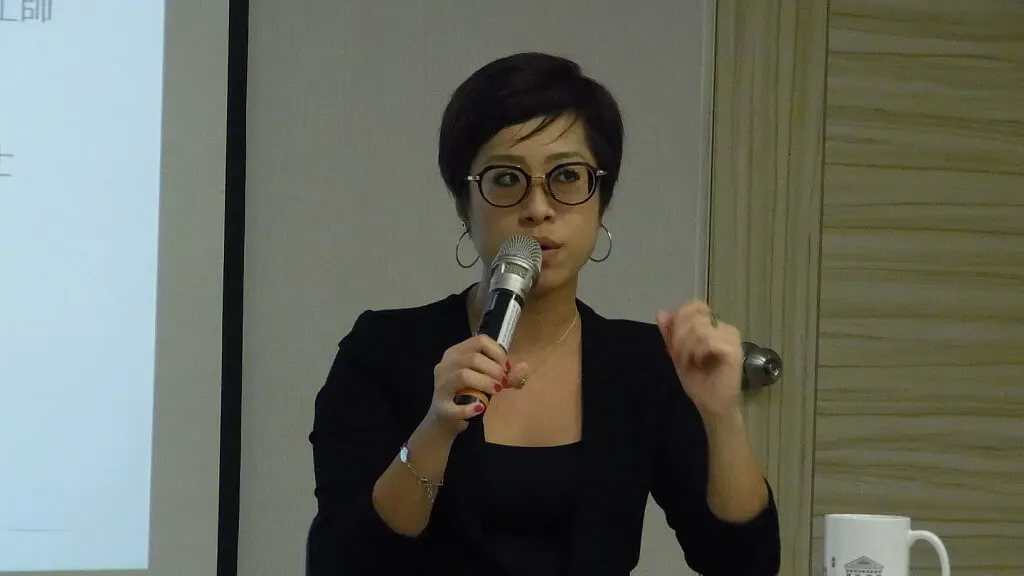
Before we knew it, it was time once again for the out-of-the-box tea party for lawyer training participants. This time, we invited two attorneys, Ch'en You-hsin and Li Yen-jung, to the JRF to share their colorful legal careers with the 24th cohort, Group 5 trainee lawyers, hoping to inspire new lawyers about to enter practice to imagine diverse possibilities for their futures.
Compared to other lawyers who begin practicing right out of school, Attorney Li Yen-jung's career path is rather unique. Having double-majored in law and social work during university, she was deeply passionate about social engagement. After completing her studies, she chose to first obtain her social worker license and worked at the Taipei Wan-Ching Women's Association, helping women recovering from the pain of divorce due to a spouse's infidelity. A little over a year later, she transitioned to the legal profession, joining a large domestic law firm as an associate.
"Looking back now, my supervising attorney at the time was truly quite courageous," Attorney Li Yen-jung recalled, "Usually, once he took on a case, he would hand it over to us with full responsibility." Early in her career, when faced with clients questioning her youth and lack of experience, Attorney Li Yen-jung could only rely on overly matronly attire to mask her still-green self beneath the suit. Yet, her potential was also unlocked in the process. "You have to believe that you can do it!" Attorney Li Yen-jung encouraged the new lawyers: "You might need to find ways, but you must believe you have the ability to handle clients' expectations and demands." She emphasized that when facing a lawsuit, any client is far more anxious than the lawyer. The professional value of a lawyer lies precisely in their ability to methodically help clients clarify issues, provide legal advice, and face sharp questioning from judges and prosecutors with an unflappable attitude.
During her university years, Attorney Li Yen-jung developed a keen interest in family law cases. She believes that while the law deals with human relationships every day, its professional training is remarkably de-humanized. Perhaps for clients in other types of cases, their lives return to normal once the case concludes; however, for clients seeking to exit a marriage, the end of a case marks the starting point of an entirely new life. Clients must shape their new lives through the law. Therefore, rather than viewing herself merely as a family law attorney, Attorney Li Yen-jung often defines herself as a companion to her clients.
"Divorce cases can sometimes be truly bothersome," Attorney Li Yen-jung said half-jokingly, "What clients say usually has nothing to do with the law, and they even ask me whether they should reply to the other party's text messages!" She noted that the complexity of family law cases often lies not in legal bottlenecks, but in how to manage clients' emotions, understand their perspectives, and provide professional advice without violating their wishes. Yet, these are precisely the things lacking in formal legal professional training.
Driven by her curiosity about the interaction between social, cultural, and legal systems, Attorney Li Yen-jung decided in her third year of practice to set aside her work and head to France for advanced studies in gender studies and human rights law, during which she also obtained her French qualification as an attorney. "I am very interested in the institution of marriage. Family law and inheritance law are among the areas most influenced by cultural values," Attorney Li Yen-jung stated, "To some extent, the law simply replicates the values deemed mainstream by society." Therefore, she also encouraged lawyers that if they observe things "that need to be changing" in their future careers, they should actively participate in driving change and care for society in their own ways.
Upon completing her studies in France, Attorney Li Yen-jung returned to Taiwan and co-founded Formosa Transnational Attorneys-at-Law (Note: The translated text refers to De-Chen Law Firm) with two other female lawyers. An all-female law firm remains quite rare in Taiwanese society today. Based on Attorney Li Yen-jung's observations, the majority of Taiwanese female lawyers still proportionally prefer employee positions; whereas those who choose solo practice often do so simply to ensure they still have time to care for their children while taking on cases. Regarding this phenomenon, Attorney Li Yen-jung expressed a slight sense of regret, believing that women should have more confidence in themselves. As for her personal dreams, Attorney Li Yen-jung laughed and said, "When I turn 45, I'm going to stop being a lawyer. Maybe I'll open a small bistro, or run for office—anything works!" She emphasized that the path of life is boundlessly wide, and one should keep an open mind without deliberately limiting their own development.
"Having not experienced certain experiences does not mean they won't happen to others." Attorney Li Yen-jung believes that a narrow perspective prevents people from understanding how society operates. Therefore, aside from advising new lawyers to explore various types of cases before finding a clear interest or specialty, she strongly encouraged them to take the opportunity to handle legal aid cases as well. She noted that there are still many people in society who truly rely on legal aid to navigate lawsuits, yet these are realities that individuals born into middle-class families might otherwise never have the chance to witness. By helping handle such cases, Attorney Li Yen-jung witnessed different facets of society. She said sentimentally, "Sometimes I am also very grateful to my clients, because they allow me to see the resilience of life."
"Society is indeed very unfair to the new generation of lawyers," Attorney Li Yen-jung said, "The environment and conditions of our era were simply different from those of your generation." As Taiwan transitions into a developed society and employment opportunities gradually stagnate, the speed at which new lawyers can climb the social ladder is far inferior to what it was thirty or forty years ago. How to develop one's own expertise so that clients feel you are "indispensable" is a challenge that lawyers of this generation must collectively confront. Finally, Attorney Li Yen-jung advised new lawyers to thoroughly study professional ethics codes and wished them the ability to find their own style and preferences, existing in the most comfortable manner possible.
This article is an AI-generated translation of the original Chinese text. In the event of any discrepancy, the Chinese version shall prevail.