
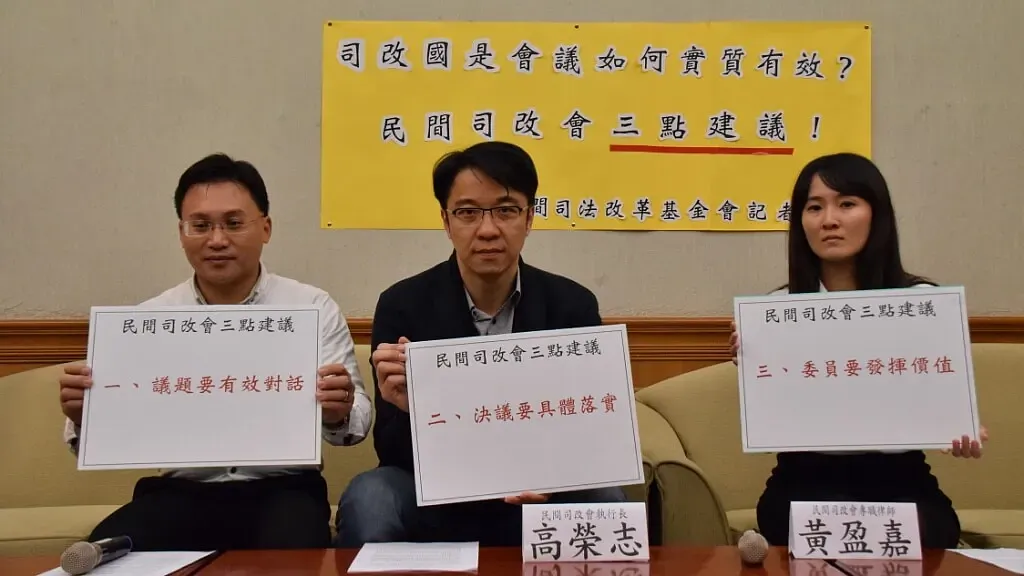
How Can the National Father on Judicial Reform Be Substantive and Effective? Three Recommendations!
Last edited: 2026-07-27
The second-stage group meetings of the National Conference on Judicial Reform are set to begin on February 20. The election of legal representatives—judges and prosecutors—for the group meetings has concluded, and elections for attorneys are currently underway. However, non-legal representatives, who make up more than half of the participants, are the defining feature of this conference. Various sectors are currently enthusiastically recommending candidates, and the preparatory meeting next Monday (the 13th) is expected to finalize the list of group representatives.
How can the non-legal representatives, who constitute more than half of the attendees, engage with legal representatives on professional and complex judicial reform issues to produce substantive and meaningful conference outcomes? The Judicial Reform Foundation offers the following three recommendations:
-
Effective Dialogue on Issues
The first stage of the National Conference on Judicial Reform collected and categorized a list of 20 major issues (see Attachment 1), comprehensively covering most judicial matters. To fully discuss such a vast array of issues and reach a consensus, the most crucial prerequisite is for participants to engage in effective dialogue on these issues. The current schedule allocates six group meetings over three months, with each meeting lasting two hours, totaling twelve hours. Without proper supporting measures, conducting effective dialogue within this timeframe will certainly be difficult.
The Judicial Reform Foundation recommends: (1) In addition to the scheduled group meetings, extra sessions can be convened based on actual needs, such as small issue-discussion meetings, consensus-coordination meetings, and creative brainstorming sessions, to help participating representatives have more opportunities to deeply communicate their ideas, aligning the dialogue to the right frequency before formal meetings take place to ensure effective communication. (2) Another possibility is to prioritize the numerous issues; only by establishing an order of priority can a focus for dialogue be formed and substantive, effective communication be conducted. (3) As for issues that may consequently be ranked lower or even fail to be scheduled for the meetings, explanations should still be provided regarding how they will be handled subsequently.
-
Concrete Implementation of Resolutions
The purpose of the National Conference on Judicial Reform is to forge reform directions and build effective consensus. However, what is even more important is that the consensus reached must be implemented; a consensus that cannot be implemented will severely undermine the public's confidence in the government. The Judicial Reform Foundation recommends: (1) Participating representatives must consider the feasibility of implementing resolutions during their discussions. (2) If a resolution can only point out policy directions, specific subsequent schedules and executing agencies should also be established. (3) In particular, for issues that cannot be independently resolved by the Judicial Yuan and the Ministry of Justice alone, concrete and feasible plans should be proposed on how to implement and execute them across ministries.
-
Maximizing the Value of Committee Members
The second stage of the National Conference on Judicial Reform has invited 75 attendees, divided into five groups based on five themes: (1) Rights: Establishing a judicial system that protects victims and vulnerable groups; (2) Trust: Establishing a fair, professional judicial system trusted by all citizens; (3) Efficiency: Establishing a highly efficient judicial system with commensurate rights and responsibilities; (4) Friendliness: Establishing a participatory, transparent, and accessible judicial system; and (5) Security: Establishing a judicial system that safeguards social security. Each group consists of 15 members, comprised of 2 judges, 2 prosecutors, 2 attorneys, 1 legal scholar, 3 non-legal professional scholars, 3 civil society organization personnel, and 2 active advocates.
Since the second-stage group meetings have invited individuals from all walks of life who care about the judiciary to gather in one place, the Judicial Reform Foundation recommends: (1) During grouping, the expertise and wishes of the attendees should be respected, placing them in positions suited to their abilities wherever possible. (2) During discussions, an environment conducive to non-legal professional representatives expressing their opinions and utilizing their expertise should be fostered, so as to facilitate the substantive participation of non-legal representatives in issue discussions and fulfill the value of inviting non-legal participants.
During the National Conference on Judicial Reform, the Judicial Reform Foundation will continue to monitor the proceedings of the conference, offer recommendations regarding the 14 major issues it has proposed (see Attachment 2), and oversee the concrete subsequent implementation of the resolutions. For the National Conference on Judicial Reform to be substantive, effective, and successful, it requires the patience and wisdom of the participating representatives. Society must also grant representatives the space to discuss and maintain continuous attention throughout the conference. The public's attention and participation are the absolute keys to the success of judicial reform.
Attachments
Attending Representatives
Kao Jung-chih, Attorney / Executive Director, Judicial Reform Foundation
Huang Ying-chia, Attorney / Staff Attorney, Judicial Reform Foundation
Hsiao I-min / Director of the Appeal Center, Judicial Reform Foundation
Press Contact
Kao Jung-chih, Executive Director, Judicial Reform Foundation 02-2523-1178
This article is an AI-generated translation of the original Chinese text. In the event of any discrepancy, the Chinese version shall prevail.