
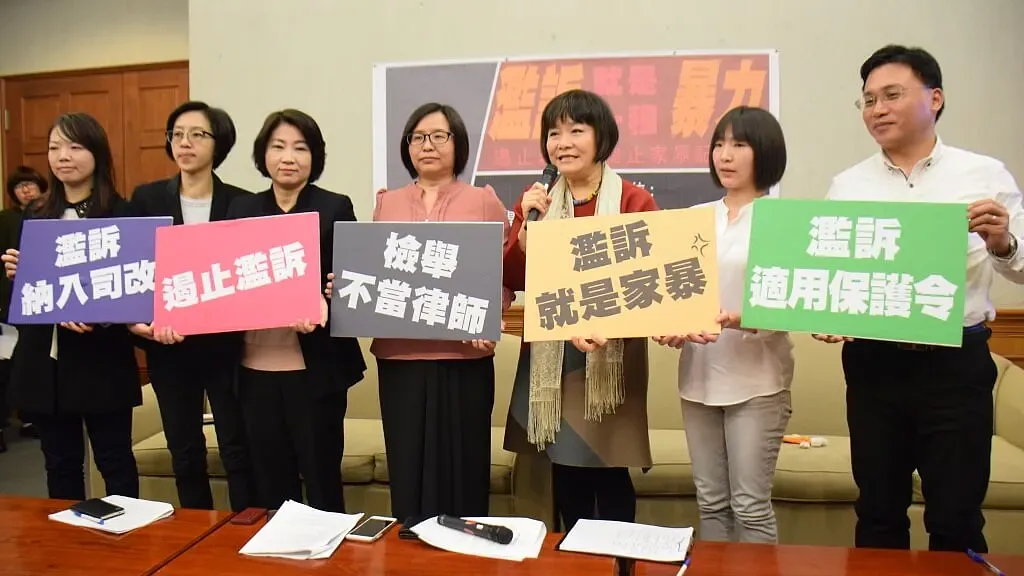
"Frivolous Litigation is a Form of Violence—Stop Frivolous Litigation, End Domestic Violence" Press Conference
Last edited: 2026-11-03
A recent series of domestic violence cases involving high socioeconomic status perpetrators has drawn intense public attention! The Gender Judicial Reform Alliance, composed of women's and judicial organizations, pointed out that some high-socioeconomic-status abusers resort to "frivolous litigation"—which wastes massive judicial resources—to target survivors. This forces survivors to constantly attend court appearances, undermines their job stability and subsequently harms their chances of gaining child custody, while also forcing them to spend vast sums of money on lawyers and worry about their children's physical and mental well-being. This imposes immense psychological and financial pressure on survivors, sometimes even breaking their will. Therefore, the Gender Judicial Reform Alliance calls for: frivolous litigation is a form of violence, it should be grounds for a protection order, and it must be included in the discussions of the National Judicial Reform Conference.
On the 22nd, the Garden of Hope Foundation, along with the Awakening Foundation, the Modern Women's Foundation, the Judicial Reform Foundation, and the Legislative Office of Legislator Li Li-fen, held a press conference at the Legislative Yuan titled "Frivolous Litigation is a Form of Violence—Stop Frivolous Litigation, End Domestic Violence." They also invited Legislator Chou Chun-mi, who formerly served as a judge and attorney, to attend in support. Wang Min, a domestic violence survivor, personally stepped forward to accuse the physical and psychological trauma she suffered due to frivolous litigation. This is the first time a domestic violence survivor of high socioeconomic status has publicly spoken out about her experience of victimization through abusive litigation. If her application for a protection order is successful in the future, it will also be the first case in Taiwan's judicial history where a protection order is granted on the grounds of frivolous litigation.
Garden of Hope Foundation CEO Chi Hui-jung stated that countries in Europe and the Americas all have measures in place to prevent frivolous litigation. For example, they may require frivolous litigants to obtain the consent of the chief judge before filing any lawsuit, otherwise they will be held in contempt of court; require frivolous litigants to post a bond in advance; impose fines to compensate defendants for legal fee losses; and publish lists of frivolous litigants. Therefore, the Garden of Hope Foundation specifically called upon relevant women's organizations, the Judicial Reform Foundation, and legislators concerned with domestic violence and judicial reform, alongside victims, to stand up and call for: (1) frivolous litigation is a form of domestic violence and should be eligible for protection orders; (2) Taiwan should implement relevant policies and laws to prevent frivolous litigation and guard against the abuse of judicial resources; and (3) halting frivolous litigation should be included in the agenda of the National Judicial Reform Conference.
Domestic violence survivor Wang Min also shared her agonizing experiences of being subjected to frivolous litigation over the past few years. Due to extreme nervousness, she could only read from her prepared notes, choking up and tearing up at one point. She stated that her two children suffered greatly from witnessing and experiencing their father's domestic violence. Like mothers everywhere, she hoped to provide her children with a safe and happy environment to grow up in, which is why she chose to face this and stop the vicious cycle of domestic violence with the utmost courage. This has been an extremely arduous path, but the process has been tens of thousands of times more rugged and perilous than she had imagined.
Wang Min expressed that from November 2013 to the present, the entire period of frivolous litigation has involved a total of 40 lawsuits, bringing tremendous pressure to her and her family and causing severe disruption to her life and mental health. During this period, she slept only three to four hours a day, was unable to work and earn a living normally, and could not make any plans for her life. Going back and forth to court took away time she could have spent with her children, which indirectly impacted her children's physical and mental health. Every noon when she saw the mail carrier deliver registered mail, it caused extreme tension and stomach cramps for her whole family, as she never knew what kind of summons, indictment, or lawyer's letter would arrive next. Unlike most people who might face civil suits that can be handled by lawyers, the other party filing criminal charges carried an even stronger sense of intimidation, deterrence, and harassment! For someone like her, who entered marriage right after graduating from university, prioritized her husband's family, and had no social experience, the psychological pressure brought by criminal litigation was even more severe. She cried, asking what she had done wrong. She had not sued the Hsu family, yet they had sued her so many times, and her elderly parents also had to bear the agony and pressure of attending court because of her marriage, which made her feel deeply distressed.
Modern Women's Foundation CEO Lin Mei-hsun stated that there was once a woman who suffered deeply from her husband's psychological and physical violence and finally resolved to leave with her children, successfully obtaining a protection order and a court-ordered divorce. However, her husband continuously harassed her over issues concerning custody and visitation, using lawsuits to pressure and force her to appear. At most, the client simultaneously faced 10 lawsuits, totaling around 20 cases overall. The types of cases spanned criminal, civil, family, and administrative enforcement, and court levels ranged from the district prosecutors' office to the High Court. Three consecutive years of litigation torment left the client unable to work in peace, live in stability, and physically and mentally exhausted, while constantly worrying that her children might be taken away, leaving the whole family living in fear.
Lin Mei-hsun stated that frivolous litigation should be regarded as a form of domestic violence intended to manipulate, oppress, and ruin reputations, and sometimes even serves as a tactic of stalking and harassment, forcing survivors who wish to escape domestic violence to show up or reconcile. Its impact is no less than any other form of violence, and at times it constitutes a form of class harassment—the oppression of others by the powerful and influential. Currently, many domestic violence survivors suffer deeply from frivolous litigation, the majority of which involve custody disputes. The most urgent task is to enhance judges' sensitivity to frivolous litigation and include the prohibition of abusive litigation violence in the items for issuing protection orders, so as to safeguard survivors and their children from litigation harassment. Taiwan's current laws lack legislation and measures to check malicious litigation harassment. The "Draft Stalking and Harassment Prevention Act" promoted by Modern Women in 2016 is currently still in the Legislative Yuan, and malicious litigation harassment will be incorporated into its behavioral patterns. We hereby urge legislators to swiftly pass this bill to increase avenues of relief for survivors suffering from frivolous litigation.
Warm Life Association for Women Deputy CEO Pai Chih-fang also presented a similar case, stating that the client is a new resident from Vietnam who came to Taiwan in 2009 and currently has two children. Starting from 2010, the perpetrator's physical violence became more frequent; whenever the client refused to provide money or sexual relations, the perpetrator would suspect her of having an affair and resort to severe acts of violence such as choking the client's neck and threatening to kill the client and the children. In order to obtain her Taiwanese ID card, the client had already renounced her native nationality, and fearing that calling the police would affect her ID and cause her to lose her children, she always chose to endure the abuse.
Pai Chih-fang stated that in May 2012, unwilling to accept that the client had applied for a protection order and intended to end their relationship, the perpetrator used lawsuits as a threat to demand that the client agree to reconciliation. However, having long faced violent threats and feeling deep fear, the client dared not reconcile. Consequently, the perpetrator filed a lawsuit to disavow the children for the first time. Although the disavowal suit was dismissed, the perpetrator subsequently filed multiple lawsuits including impairment of marriage, establishment of parent-child relationship, forgery, fraud, defamation, and assault. During this period, the perpetrator once again mentioned that if the client did not comply, he would pull strings to have her imprisoned and separated from her children. The client not only faced the pressure of litigation but also felt the perpetrator's threats and manipulation.
Judicial Reform Foundation Advocacy Center Director Hsiao I-min also addressed Wang Min's case, stating that since November 2013, excluding the divorce lawsuit, the Hsu family had initiated five waves of litigation actions, resulting in a total of 40 related lawsuits. However, the lawsuits filed by the Hsu family were manifestly groundless and repeatedly brought based on the same causes, constituting frivolous litigation. For example, the male partner himself, his parents, his driver, and his friends each filed a total of 33 criminal lawsuits and 7 civil lawsuits (calculated by case number) against the woman, her family, her lawyer, and her doctor on charges of defamation, forgery, and causing public officials to enter false information. Regarding the criminal lawsuits, aside from 2 with unclear outcomes and 3 non-prosecution decisions that were remanded for reinvestigation, the remaining 28 were dismissed by the courts or decided by prosecutors not to be prosecuted. All 6 civil lawsuits were dismissed by the courts, with 1 currently on second-instance appeal. Not a single lawsuit's grounds were accepted or recognized by prosecutors or judges. This shows that the Hsu family's purpose in filing lawsuits was to mentally harass Wang Min, impair judicial fairness, and completely abuse judicial litigation to inflict domestic violence upon Wang Min. For a detailed analysis, please refer to the appendix "Investigation Report on Wang Min's Grievance Regarding the Hsu Family's Frivolous Litigation Case."
Hsiao I-min stated that the Hsu family used frivolous litigation as a tool to commit domestic violence, employing coercion and intimidation in an attempt to control Wang Min into agreeing to a divorce and giving up child custody. In this regard, he recommended that the complainant Wang Min take the following measures to protect her own rights: (1) Petition the judicial authorities. (2) Apply to the court for a protection order under the Domestic Violence Prevention Act on the grounds that the Hsu family abused judicial litigation to commit unlawful psychological infringement. (3) Report the Hsu family's retained counsel to the bar association for disciplinary action due to violations of Article 36 of the Attorney Regulation Act. Given the drawbacks of abusing judicial litigation, which current legal systems struggle to effectively curb, domestic violence victims like Wang Min have emerged. We hereby call upon the National Judicial Reform Conference currently underway in the Office of the President to attach importance to this issue, uphold judicial fairness, and protect the rights of the people.
Legislator Chou Chun-mi stated that frivolous litigation is actually quite common in judicial practice. When citizens receive a summons from the court or prosecutors' office, their psychological state, mental well-being, work, and body and mind are disturbed, and their lives are impacted. Therefore, in terms of administrative management, the same defendant or complainant should ideally be handled by the same prosecutor's team during the investigative stage, effectively controlling frivolous litigation from the source. Frivolous litigation constitutes a form of psychological harassment, but whether it constitutes domestic violence is viewed differently by each judge or prosecutor. We should not leave the determination of this matter dependent on individuals, but rather rely on systems.
Chou Chun-mi also emphasized that even if a judge considers certain frivolous litigation to constitute domestic violence, whether the court can prohibit citizens from filing lawsuits is not so simple because it involves citizens' constitutional right of access to court. Frivolous litigation exists not only in domestic violence cases but also extensively in other case types; Working Group 2 of the Presidential Judicial Reform Conference will discuss the prevention of frivolous litigation. Furthermore, frivolous litigation also involves the abuse of judicial resources, so prosecutors and judges should exercise moderate control in individual cases in the future. In the Legislative Yuan, she will also unite with other legislators and women's organizations to study how to amend relevant laws.
Legislator Li Li-fen condemned all forms of violence against women, regardless of whether the goal is to achieve a divorce or child custody. Furthermore, she stated that the United Nations Convention on the Rights of the Child also proclaims that when adults face marriage issues, the best interests of the child should be the primary consideration; children are not accessories or tools to achieve an end. According to what Wang Min described, the Hsu family's actions constitute a form of domestic violence. Although currently no judge is willing to issue a protection order targeting the domestic violence form of frivolous litigation, she will work together with other legislators and women's groups to further study the possibility of legislative amendments, hoping that the judiciary can offer more protection to abused women in the future.
Reported domestic violence incidents in Taiwan grew rapidly from 66,080 cases in 2005 to 135,983 cases in 2015. Among domestic violence cases, sixty percent are marital relationship violence. Domestic violence can be roughly divided into physical violence, psychological violence, economic control, and sexual violence. Families of high socioeconomic status use their abundant resources and networks to manipulate frivolous litigation, making it a new form of domestic violence. Garden of Hope Foundation CEO Chi Hui-jung stated that frivolous litigation is not pursued to attain judicial justice, but merely to maliciously inflict pressure on the other party and disrupt their lives. Such behavior also results in the waste of massive judicial resources and should be regulated by law.
Finally, the Gender Judicial Reform Alliance called for "frivolous litigation" to be listed as a reform discussion agenda at this National Judicial Reform Conference, in order to swiftly put an end to unjust and unrighteous "frivolous litigation" behaviors.
Appendix
- Investigation Report on Wang Min's Grievance Regarding the Hsu Family's Frivolous Litigation Case
- Press Conference Presentation
Participating Groups or Units
Gender Judicial Reform Alliance
Garden of Hope Foundation
Awakening Foundation
Modern Women's Foundation
Judicial Reform Foundation
Legislative Office of Legislator Li Li-fen
Legislative Office of Legislator Chou Chun-mi
This article is an AI-generated translation of the original Chinese text. In the event of any discrepancy, the Chinese version shall prevail.