
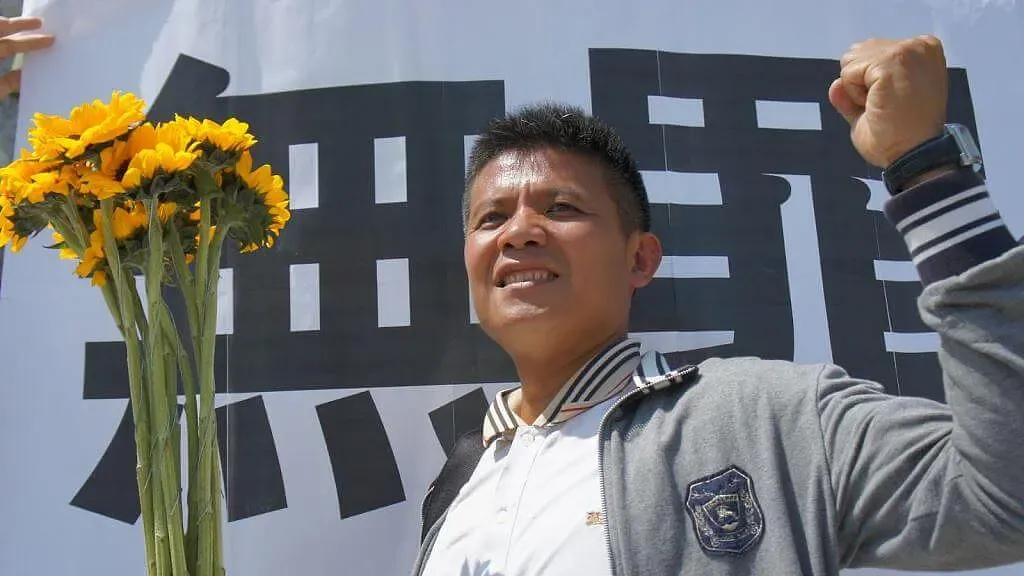
Breaking the DNA Chains: Professor Li Chun-i of the Department of Forensic Medicine, NTU, Discusses the Exoneration of Ch'en Lung-ch'i
Last edited: 2026-07-27
Five years ago, Ch'en Lung-ch'i was accused of taking advantage of a woman in a rented room along with friends, a charge he denied from beginning to end. Two co-defendants and other witnesses also testified that Ch'en was not at the scene, yet the court sentenced him to four years in prison based on the sole piece of evidence: DNA analysis of mixed semen stains on the victim's clothing, which "could not exclude" the presence of DNA from Ch'en and two other men. Ch'en was wrongfully convicted because of DNA evidence, but he was ultimately exonerated thanks to DNA evidence as well. At the intersection of misfortune and fortune, DNA played a pivotal role.
The Ch'en Lung-ch'i Case: Taiwan's First 23-Locus Y-STR DNA Profiling Case
Around 1996, Taiwan's DNA profiling relied on the HLA DQ-Alpha method, which was replaced after 2001 by the more discriminatory short tandem repeat (STR) DNA profiling method. STR genes are located on the 22 pairs of autosomes as well as the 23rd chromosome, the Y chromosome. This Y-STR gene is used as an exclusive system for identifying male identity. However, past Y-STR profiling could only analyze 17 loci, yielding lower discriminatory power for mixed evidence. In contrast, the 23-locus profiling system introduced internationally in 2013 relatively enhances this discriminatory power. The representative significance of Ch'en Lung-ch'i's case is that he is the first case in Taiwan successfully exonerated using 23-locus Y-STR profiling! Nevertheless, with the latest technology, can wrongful convictions finally be avoided? Professor Li Chun-i of the Graduate Institute of Forensic Medicine at National Taiwan University believes that if scientific evidence is improperly used, it is very likely to become evidence that tells lies.
Decoding DNA: The Beginning of Misfortune and Fortune
The DNA within the 23 pairs of human chromosomes is formed by four types of genetic materials linked together and wound into a long chain of 3.0 billion units, namely, sequences arranged by four bases: "A, C, G, and T." STR profiling targets regions of repetitive base sequences, assigning numerical codes based on the number of repeats, thereby generating genetic codes. For example, if the combinatorial sequence "AGAT" appears 11 and 12 times in person A's diploid chromosomes (two sets each from the 1st to the 22nd chromosomes), and 17 and 18 times in person B's, then this gene combination profile is designated as (11, 12) for person A, and (17, 18) for person B; if on the male Y chromosome (haploid, with only one set of chromosomes), person A's AGAT sequence appears 13 times and person B's 15 times, then person A's Y-chromosome sequence profile is 13, and person B's is 15.
Ch'en Lung-ch'i's Y-STR genetic profile is very similar to those of co-defendants Male A and Male B (see Table 1). Looking at profiles 1 and 2, the samples collected from the victim's underwear are 15 and 12 respectively, which are completely identical to Male A, Male B, and Ch'en Lung-ch'i; looking at profile 3, the sample from the victim is 23 and 25, Male A is 25, and both Ch'en Lung-ch'i and Male B are 23, neither being excluded. Unfortunately, after reviewing genetic profiles 1 through 17, it is indeed "not excluded" that Ch'en Lung-ch'i is a match, meaning Ch'en's DNA "might" be mixed in the sample.
Can't be excluded ≠ positive
However, if "not excluding" Ch'en Lung-ch'i is judged based on the 17 Y-STR genetic profiles, one in a thousand people in the population would still be viewed as suspects, because the recurrence rate of this profile in the Taiwanese population is approximately one in a thousand. In other words, assuming Taiwan's population of 23.0 million with a 1:1 male-to-female ratio, among the 11.5 million male population, 11,500 people would all be suspects.
Li Chun-i emphasized, we should ask: "How high can the accuracy of the defendant's involvement represented by such 'non-exclusion' actually be? If non-exclusion means the defendant might be involved or might not be involved, then forensic personnel have the responsibility to explain the probability of non-exclusion and how many potential suspects there will be based on this probability. If the forensic report fails to provide this explanation, it is not hard to imagine that judges and investigative personnel who do not fully understand DNA profiling might be misled by the neutral wording of 'not excluded' and issue a guilty verdict."
Ch'en Lung-ch'i, who consistently maintained he was never involved, unfortunately fell into the probability of "non-exclusion." The pro bono defense team needed to understand what scientific evidence could possibly prove his innocence. Li Chun-i stated that the Y-STR electrophoretic signal graph of the mixed DNA sample on the victim woman's underwear is the key. By examining the number of profile signals where each genetic signal intensity exceeds 150 units on the electrophoretic signal graph and the ratio of signal intensities, the number of individuals involved can be determined. As can also be seen from Table 1, among the 17 genetic profiles, 6 genetic profiles are DNA mixed from 2 individuals, without showing profiles mixed from 3 individuals. Therefore, the evidence in this case is most likely Y-chromosome DNA mixed from 2 individuals, rather than 3.
Furthermore, if DNA profiling increases from the past 17 profiles to 23 DNA profiles, it can increase discriminatory power by about one-third, which may perhaps further confirm whether Ch'en Lung-ch'i can be excluded. Among the 6 Y-STR genes added in the re-profiling of Ch'en Lung-ch'i's Y-chromosome DNA in Table 2, profiles mixed from only two individuals still appear at numbers 18, 20, 21, and 23, while numbers 18 and 20 do not show Ch'en's 17 and 13 profiles. Thus, the profiles of these two critical genes become ironclad proof that can exclude the evidence from containing Ch'en Lung-ch'i's DNA.
The Road to Exoneration: To Be Continued
Thanks to the 23-locus Y-STR DNA profiling system, Ch'en Lung-ch'i was fortunately exonerated after suffering a miscarriage of justice. However, advancements in forensic science still struggle to completely prevent wrongful convictions. Li Chun-i pointed out that although there is now a 23-locus Y-STR profiling system, due to cost considerations, casework still prioritizes 17 loci, performing 23 loci when necessary. For mixed samples that are harder to interpret, older forensic techniques in the past might indeed still produce "non-exclusion" leading to wrongful convictions, especially since prosecutors and judges rarely have the opportunity or channels to master the latest scientific knowledge such as new DNA profiling methods after graduating from the Academy for the Judiciary. Li Chun-i believes that judicial officers' continuing education must place importance on the current development of forensic science.
Although under current practical experience, to prevent knowledge of the case facts from influencing forensic personnel's mental judgment and thereby affecting experiments and interpretation results, laboratory personnel theoretically should not receive case dossier materials when conducting analyses. However, Li Chun-i also worries that if the testing unit is housed within the investigative system, it is difficult to 100% guarantee that the forensic personnel's mental judgment will not be tainted. In addition, current units conducting DNA profiling in Taiwan include the Institute of Forensic Medicine under the Ministry of Justice, the Investigation Bureau under the Ministry of Justice, and the National Police Agency under the Ministry of the Interior, presenting a tripartite standoff without a unified interpretation standard and with rare communication, making mutual verification to enhance testing quality difficult. A 2009 report by the U.S. National Research Council pointed out that DNA profiling is currently the most reliable forensic technique, but standardized interpretation mechanisms should still be established. In Taiwan, on the road to exonerating wrongful convictions, there is still vast room for effort.
Ch'en Lung-ch'i became the second case in Taiwan's judicial history, following Chiang Kuo-ch'ing, to be exonerated due to re-tested DNA profiling after the conviction became final. He is not only the first case of Taiwan's 23-locus Y-STR DNA profiling, but also an exceptional case among Taiwan's retrial cases: the court entrusted the Criminal Investigation Bureau with DNA profiling prior to the retrial, and used the new forensic report as new evidence to rule in favor of opening a retrial. The Ch'en Lung-ch'i case successfully lifted the curtain on the exoneration of wrongful convictions, but before the high walls of the institutional system, countless victims of injustice still await rescue helplessly. Everything is just beginning; it is not yet over.
※ Originally published in Taiwan Judicial Reform, Issue 102
This article is an AI-generated translation of the original Chinese text. In the event of any discrepancy, the Chinese version shall prevail.