
3rd Anniversary of the Anti-Black-Box CSSTA Movement – Litigation Progress Tracking Report
Last edited: 2026-07-27
Introduction
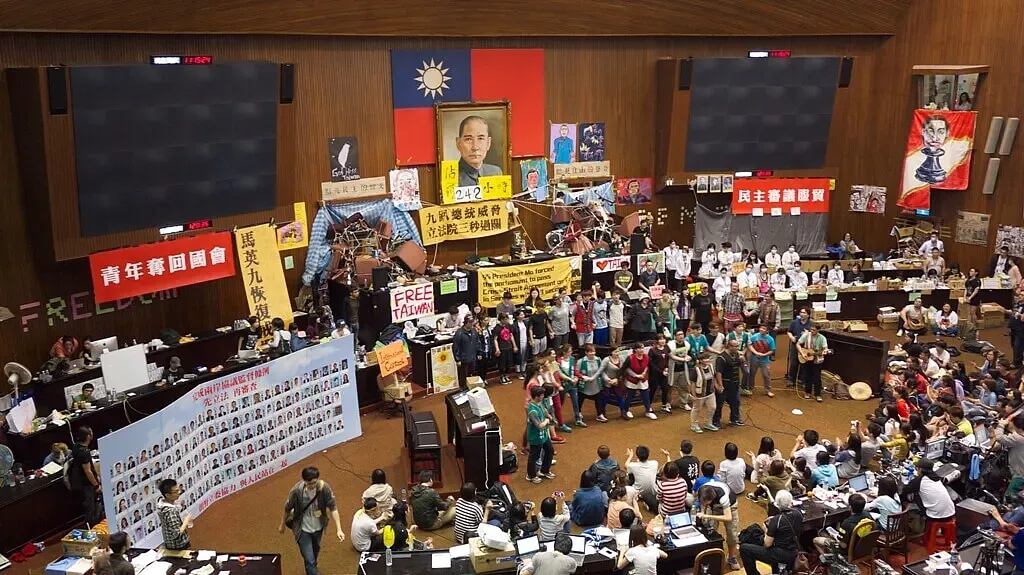
The Anti-Black-Box Cross-Strait Service Trade Agreement (CSSTA) movement originated on March 17, 2014, when Legislator Chang Ch'ing-chung rushed the CSSTA out of committee in less than 30 seconds, triggering the "March 18 Occupation of the Legislative Yuan." Later, due to the Ma administration's cold and indifferent response to the public's demands, the "March 23 Occupation of the Executive Yuan" erupted, with thousands of citizens occupying the plazas surrounding the Executive Yuan. Improper police clearance tactics subsequently resulted in numerous injuries. Injured citizens filed private prosecutions accusing the state of violence, thereby giving rise to the "March 24 Executive Yuan Eviction Case."
After the Anti-Black-Box CSSTA movement withdrew from the Legislative Yuan, the police cleared out the Referendum Alliance, which had lawfully applied for road-use rights, sparking the "April 11 Passing-by Zhongzheng First Precinct Incident." In addition, several months later during the initial visit to Taiwan by Taiwan Affairs Office Director Chang Chih-chung, citizens also went to protest and voice their demands, blocking roads in Wulai in an attempt to intercept Chang Chih-chung's motorcade, leading to arrests by the police in the "June 26 Wulai Vehicle-Blocking Incident" and other protest-related cases.
As the Anti-Black-Box CSSTA movement marks its third anniversary, what is the progress of these lawsuits in the courts? The Judicial Reform Foundation reviews the course of each litigation case and explains their current status, hoping that the public will continue to follow their subsequent developments.
March 18 Legislative Yuan Occupation Defense Case
Case Overview
On February 10, 2015, the Taipei District Prosecutors Office indicted 22 participants of the March 18 Legislative Yuan occupation on charges of "instigation," "obstruction of official duties," and "insulting an official office."
On January 18, 2017, oral arguments in the court of first instance concluded, and the verdict will be announced at 10:00 a.m. on March 31, followed by a press conference.
| Indicted Charge | Statutory Penalty for the Charge | Number of Individuals |
| Article 136, Assembly to Obstruct Official Duties | Under 7 years | 9 people |
| Article 153, Instigating Others to Commit Crimes | Under 2 years | 9 people |
| Article 135, Obstruction of Official Duties | Under 3 years | 4 people |
| Article 140, Insulting an Official Office | Under 6 months | 3 people |
| Article 29 of the Assembly and Procession Act, Ringleader of Failure to Disperse an Assembly or Procession | Under 2 years | 1 person |
March 23 Executive Yuan Occupation Defense Case
Case Overview
The March 23 Executive Yuan incident stemmed from 5 days into the March 18 Legislative Yuan occupation action, when President Ma Ying-jeou held his first press conference on March 23 and issued a public statement. However, rather than responding positively to the demands raised by the movement participants, he reiterated the importance of the CSSTA and emphasized that the occupation of the Legislative Yuan was illegal.
Disappointed and indignant that the President failed to positively respond to the student movement's demands, articles calling on the public to occupy the Executive Yuan appeared online on the evening of March 23. Although removed shortly thereafter, crowds began surging into the Executive Yuan, occupying the front plaza and building at around 8:00 p.m., thereby initiating the March 23 Executive Yuan occupation incident.
Chiang Yi-huah, then-Premier of the Executive Yuan, upon learning that citizens had occupied the Executive Yuan, instructed the police to clear the Executive Yuan before the morning work hours. To complete the time-limited clearance, police began forcibly evicting sitting protesters starting from the early morning of March 24. A total of 132 citizens who entered the Executive Yuan to sit in protest were subsequently indicted by prosecutors. The Executive Yuan withdrew complaints regarding trespassing and property damage on May 20, 2016, but 20 individuals remained prosecuted for non-complaint-dependent offenses such as instigation.
On February 20, 2017, oral arguments in the court of first instance concluded, and the verdict will be announced at 2:30 p.m. on April 10, followed by a press conference.
On February 24, 2017, the Taipei District Court dismissed the prosecutors' supplementary indictment against 39 individuals (all charged with trespassing), and the parties concerned received the court judgment on March 16.
| Indicted Charge | Penalty | Number of People |
| Article 306, Trespassing in a Building | Under 1 year | 125 people |
| Article 135, Obstruction of Official Duties | Under 3 years | 9 people |
| Article 153, Instigating Others to Commit Crimes | Under 2 years | 8 people |
| Article 138, Destruction of Public Property | Under 5 years | 2 people |
| Article 354, Property Damage | Under 2 years | 1 person |
March 24 Executive Yuan Eviction Private Prosecution Case
Case Overview
With the assistance of the Pro Bono Lawyers Platform, a total of 48 citizens improperly evicted by police on March 24 initially filed private prosecutions respectively, accusing Chiang Yi-huah, Wang Cho-chun, Huang Sheng-yung, Fang Yang-ning, several relevant precinct chiefs, and police officers on duty of offenses including causing injury, causing grievous bodily injury, and attempted murder.
Due to the lengthy litigation timeline, some private prosecutors have inevitably abandoned their pursuit, but as the third anniversary of the incident arrives, over thirty individuals have not given up on seeking justice through litigation proceedings, hoping to hold on-site commanders such as Chiang Yi-huah, Wang Cho-chun, Huang Sheng-yung, and Fang Yang-ning legally accountable through the judiciary.
However, regarding the accusations against the commanding officials who issued the orders, the court rejected the majority of citizens' prosecutions against commanders such as Chiang Yi-huah, Wang Cho-chun, Huang Sheng-yung, and Fang Yang-ning under the pretext of "identical cases." Regarding this aspect, some private prosecutors have filed petitions for Grand Justices' constitutional interpretation, hoping to defend citizens' right of litigation. In addition, private prosecutors have also sought to have the court accept the private prosecution through methods such as "taking over the litigation" and "litigation intervention."
-
Taking Over Litigation
Regarding the accusations against Chiang Yi-huah, Wang Cho-chun, and Fang Yang-ning, because the first private prosecutor unfortunately passed away during the litigation process, the remaining private prosecutors applied in accordance with the law to "take over the litigation," which was approved by the court. They are awaiting notification from the court regarding the hearing date.
-
Litigation Intervention
Regarding the accusations against Huang Sheng-yung, individual private prosecutors had applied to join the first private prosecutor's lawsuit and be listed jointly as "private prosecutors," but this was rejected by the court. They can only attend court hearings in the capacity of "parties concerned" to state the process of their injuries, and are unable to seek justice through proper litigation channels.
The next hearing date for this case is: March 23 at 10:15 a.m. (Only summoning the first party concerned)
Finally, regarding the accusations against unidentified police officers, due to the lack of investigative power, private prosecutors were unable to specifically identify the police officers who unlawfully executed duties and thereby pinpointed defendants who committed assaults. Consequently, their cases were successively dismissed without acceptance by the court, and only one case currently remains pending before the district court.
Trivia: The "Principle of Identity"
The reasons for the court's rejection without acceptance are almost uniformly based on the principle of identity in criminal law. The simple definition of identity is: the same defendant, the same facts. The court shall issue a judgment of dismissal without acceptance to maintain procedural economy.
For the events of the night of March 24, the first private prosecutor Chou Jung-tsung accused Ma Ying-jeou, Chiang Yi-huah, Wang Cho-chun, Fang Yang-ning, and others of suspected murder regarding the violent eviction of the public that night. Subsequent private prosecutors filing private prosecutions, such as Wang Hsin-kai and Chou Ni-an, as long as they accused Chiang Yi-huah, Wang Cho-chun, Huang Sheng-yung, Fang Yang-ning, or others, were determined by the court to involve the same defendants and all target the eviction action of the night of March 24. Therefore, all these cases were deemed identical to Chou Jung-tsung's private prosecution and their private prosecutions ought to be dismissed.
However, the defense attorney team argues that when the police executed the eviction that night, there were a large number of officers, each private prosecutor suffered injuries in different areas, and the attacking officers were also different. This should not be considered the same defendant with the same criminal facts. Furthermore, even if the court deems them identical cases, they should be tried concurrently rather than dismissing subsequent private prosecutors' private prosecutions. Such actions undoubtedly deprive private prosecutors of their litigation rights guaranteed by the Constitution.
March 24 Executive Yuan Eviction State Compensation Case
Case Overview
During the eviction incident, according to statistics from the Taipei City Department of Health, over a hundred citizens were injured and sought medical treatment. Among them, Lin Ming-hui was the first citizen to file a state compensation lawsuit with the Administrative Division of the Taipei District Court and obtained a winning judgment. Following the victory in the Lin Ming-hui case, the Pro Bono Lawyers Platform subsequently assisted 30 parties in filing state compensation claims against the Taipei City Government and the Taipei City Police Department. However, because government agencies refused compensation, they currently can only hope the judiciary will restore justice.
-
Lin Ming-hui Administrative Litigation Case
Preservation of evidence was filed on April 3, 2014, and the lawsuit was formally filed on April 23 of the same year. On August 7, 2015, the Taipei District Court ruled in favor of the plaintiff, ordering the Taipei City Government to pay NT$300,000 for mental distress compensation. Subsequently, the Taipei City Government waived its right to appeal, and the case was finalized.
-
Collective State Compensation Case for 30 Parties
Following the successful compensation outcome of the Lin Ming-hui case, the pro bono lawyer team relied on this judgment to negotiate state compensation agreements with the Taipei City Government and the Taipei City Police Department on behalf of the other 30 parties, but these were rejected by the government agencies. The lawyer team initially filed a state compensation lawsuit with the Administrative Division of the Taipei District Court, but the district court transferred the case to the Taipei High Administrative Court. After holding one hearing, the administrative court transferred the case back to the Civil Division of the Taipei District Court.
Following the first hearing of this case on March 6, the judge requested the defendants to submit a summary of disputed points and scheduled the mornings of May 11 and May 25 respectively to summon the plaintiffs to appear in court for statements.
April 11 Passing-by Zhongzheng First Precinct Defense Case
Case Overview
Since 2009, the Referendum Alliance (hereinafter referred to as the Alliance) has long held assemblies around the Legislative Yuan, having lawfully applied for road-use rights, and the Taipei City Police Department approved the assemblies every time.
On April 9, 2014, on the eve of the withdrawal from the March 18 movement, the Zhongzheng First Precinct of the Taipei City Police Department suddenly revoked the assembly originally applied for and approved by the Alliance on the grounds that the Alliance had repeatedly violated the "Assembly and Procession Act" and regulations regarding obstruction of official duties, emphasizing that future assembly applications by the Alliance would not be permitted. Upon receiving the notice of revocation of the assembly and procession, the Alliance filed a petition on April 10 in accordance with provisions of the Assembly and Procession Act. Fang Yang-ning, then-Chief of the Zhongzheng First Precinct, subsequently promised that there would be no forced eviction.
In the early hours of the next morning, the Zhongzheng First Precinct broke its promise and evicted the Alliance in the early morning, causing public dissatisfaction and prompting citizens to spontaneously gather in front of the Zhongzheng First Precinct to protest. Subsequently, on February 10, 2015, prosecutors indicted 4 parties who held microphones to speak or assisted in maintaining crowd order at the scene. The Taipei District Court delivered its verdict on December 30, 2016, finding all 4 parties guilty. Currently, 3 of them have appealed and are awaiting the court's first hearing.
| Indicted Charge | Number of Individuals |
| Article 135, Obstruction of Official Duties (Under 3 years) | 2 people |
| Article 140, Insulting an Official Office (Under 6 months) | 2 people |
| Article 29 of the Assembly and Procession Act, Ringleader of Failure to Disperse an Assembly or Procession (Under 2 years) | 1 person |
| Article 30 of the Assembly and Procession Act, Insulting an Official Office during an Assembly or Procession (Under 2 years) | 1 person |
| Name | Charge | Penalty | Aggregated Sentence |
| Hung O-yen | Insult Offense under Article 30 of the Assembly and Procession Act | Detention for 55 days | Detention for 55 days |
| Article 29 of the Assembly and Procession Act | Acquitted | ||
| Hsiao O-cheng | Offense of Obstructing the Execution of Official Duties | Detention for 50 days | Detention for 80 days |
| Offense of Insulting a Public Official | Detention for 40 days | ||
| Salumian Valingina | Offense of Obstructing the Execution of Official Duties | Detention for 40 days | Detention for 40 days |
| T'ao O | Offense of Insulting a Public Official | Detention for 30 days | Detention for 30 days |
June 26 Wulai Vehicle-Blocking Defense Case
Case Overview
On June 26, 2014, the second day of Taiwan Affairs Office Director Chang Chih-chung's visit to Taiwan, he was scheduled to visit Wulai. Crowds who had long monitored issues involving negotiations with China—such as the CSSTA, Cross-Strait Trade in Goods Agreement (TISA), and Free Economic Pilot Zones—had repeatedly failed in their attempts to directly express their opinions to Chang Chih-chung. Consequently, they staged a surprise protest on Xinyu Road, the only road leading to Wulai, at the 10.2-kilometer mark. Lining up side by side, they tied themselves with iron chains and hemp ropes, locked the two ends of the iron chains to guardrails on both sides, and held banners in an attempt to block the path of Chang Chih-chung's motorcade, hoping to express Taiwanese citizens' views on economic policy negotiations involving China-related factors.
In response to Chang Chih-chung's visit to Taiwan, the police had strengthened patrols along the locations Chang Chih-chung was scheduled to visit. Therefore, before Chang Chih-chung arrived at the protest site, the police removed and arrested the protesters. On December 11, 2014, all 8 protesting parties were indicted by prosecutors.
On January 15, 2016, the first-instance verdict was rendered. All eight individuals were found "guilty with penalty waived" for the offense of compulsion, and were acquitted of the charge of endangering public safety in transportation. After the case was appealed, the second instance rendered its verdict on February 9, 2017, acquitting all eight individuals. Because the prosecutors did not appeal, the case was thereby finalized with an acquittal.
| Indicted Charge | Number of People |
| Article 185, Endangering Public Safety in Transportation (Under 5 years) | 8 people |
| Article 304, Compulsion (Under 3 years) | 8 people |
Conclusion
Upon its establishment, the Pro Bono Lawyers Platform pledged to see all related litigation through to the end. Over the past three years, the Lin Ming-hui case successfully secured state compensation, and the Wulai case resulted in a finalized acquittal. Although several prosecuted cases remain pending, we trust that the judiciary will deliver a fair trial. Nevertheless, regarding accountability for state violence—while the footage of injured crowds from the March 24 peaceful assembly has become historical fact—the attribution of responsibility for perpetrators who inflicted physical harm under the guise of exercising state power remains unresolved. Defending justice was the original intent behind the establishment of the Pro Bono Lawyers Platform, and we will continue to accompany all parties involved as we walk this journey in pursuit of justice together.
This article is an AI-generated translation of the original Chinese text. In the event of any discrepancy, the Chinese version shall prevail.