
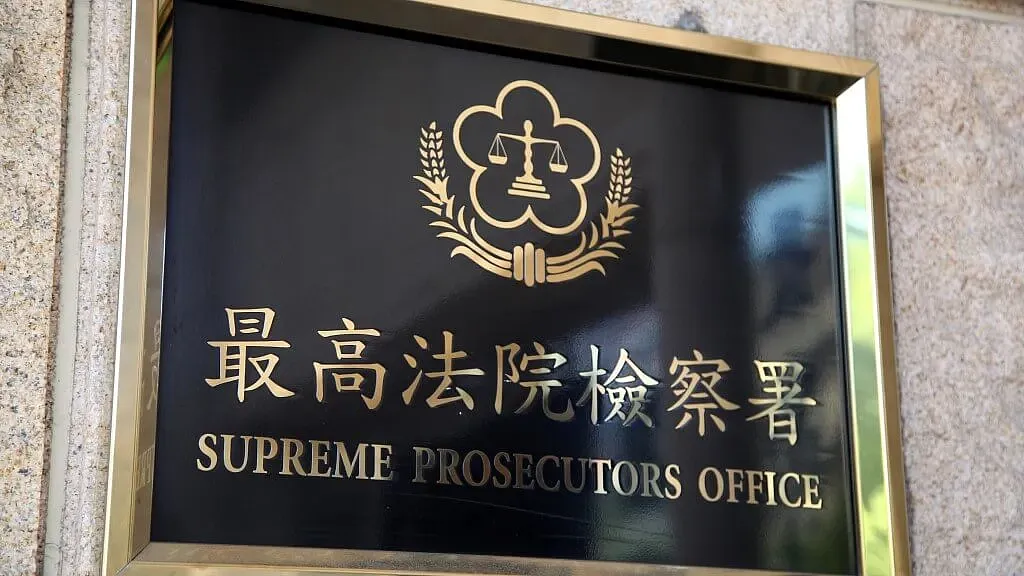
Unity of Prosecutors, Circling the Wagons in Self-Defense?!
Last edited: 2026-11-03
"Unity of prosecutors" refers to the internal administrative hierarchy within the prosecutorial system, where superiors issue orders and subordinates obey, in order to unify investigation and prosecution policies and prevent abuse of power (Article 63 of the Court Organization Act, Article 92 of the Judges Act). However, in the face of judicial reform and democratic accountability, prosecutors seem to have formed a "sense of unity" that stands together against the outside world—a collective self-defense consciousness that emphasizes group dignity and shields individual misconduct. Perhaps this gives "unity of prosecutors" a whole new meaning for our times!
The Office of the President is currently convening the National White Paper on Judicial Reform. Group III will discuss the "legal status of prosecutors" and the "organizational review of the prosecutorial system." Recently, prosecutors have been writing opinion pieces one after another, arguing for the value of their existence, emphasizing that prosecutors are not—or not purely—"administrative officials," but rather "representatives of the public interest" or "guardians of the law," possessing or approaching the nature of "judicial officials." It is understandable for prosecutors to strive for "prosecutorial independence" and guarantees regarding treatment and status equivalent to those of "judicial officials." However, judging from the following indicative cases, what they think and do may not always prioritize the public interest and the law:
Case 1: Prosecutorial Authorities Abusively Denying Criminal Compensation
The Criminal Compensation Act clearly stipulates that if a defendant is detained during the investigation stage and subsequently receives a final disposition of non-prosecution due to insufficient evidence, they may request compensation from the prosecutorial authorities. Although Article 4, Paragraph 1 of the Act provides that compensation may be denied if it is ascertained that the defendant "intended to incur criminal suspicion and engaged in conduct misleading the investigation," the criteria for application are extremely strict.
Take Party Y (whose personal information is withheld to protect the parties involved), who received a non-prosecution disposition and requested compensation on the grounds of having been detained during the investigation. The original district prosecutors' office denied compensation on the grounds that "Party Y's initial detention was due to an intention to incur criminal suspicion and conduct misleading the investigation." Although Party Y withheld the truth to some extent during questioning, they denied the crime from the very beginning and had no expectation of being detained. Their detention was not entirely attributable to them, and they still had the right to request compensation. They applied to the Criminal Compensation Court of the Judicial Yuan for a retrial. That court clarified that this case did not constitute the aforementioned circumstances for denying compensation, and thus revoked and remanded the case. After the original district prosecutors' office replaced the reviewing prosecutor, it repeatedly used the same reasons to deny compensation. Fortunately, repeated applications for retrial to the Criminal Compensation Court resulted in decisions to revoke and remand, ultimately forcing the original district prosecutors' office to grant compensation.
That the original district prosecutors' office so brazenly disregarded the legal restrictive interpretation favoring the people and the clear, repeated revocations and remands by the judicial authority was nothing more than gambling on whether Party Y could endure the first three denials of compensation and simply swallow their loss! This situation is likely not an isolated incident.
Case 2: Prosecutorial Self-Discipline Hollows Out External Evaluation
The prosecutorial evaluation system established by the Judges Act is conducted by the Prosecutor Evaluation Commission (referred to as the PEC), which introduces diverse external members to independently and collegially confirm whether a prosecutor's conduct constitutes unsuitability, and then reports it to the Prosecutor Review Committee (referred to as the PRC), which is formed internally within the prosecutorial system, for self-regulatory disciplinary deliberation. The factual determinations made by the PEC in individual evaluation resolutions are binding on the Ministry of Justice and the PRC in subsequent procedures.
As to the PEC's Evaluation Resolution No. 5 of the 104th Year (2015), which established that Prosecutor Kuo at the Taoyuan District Prosecutors' Office had indeed ultra vires acted, the PRC unexpectedly overturned the aforementioned factual determination and resolved not to impose disciplinary action. This clearly encroached upon the core functional scope of the PEC as an independent body and substantially destroyed the legal effect of the individual evaluation resolution as a confirmatory disposition. An individual evaluation resolution possessing the nature of external supervision and democratic accountability was thus hollowed out by the personnel review procedures of an internal, closed organization, making it difficult for "prosecutorial self-discipline" to shake off the taunt of "officials protecting officials"!
For more on this, readers may refer to the author's opinion piece from nearly a year ago, "Prosecutorial Self-Discipline, Officials Protecting Officials?"
Conclusion
Viewed in this light, rather than representing the public interest and guarding the law, prosecutors' primary consideration remains shielding group dignity and covering up the improper acts of their own people. Much like the Janissaries of the Ottoman Empire—who were supposed to be a regular army protecting the nation and the people with strict discipline, but gradually degenerated into an interest group solely focused on expanding power and consolidating class status due to an excess of collective self-consciousness. Prosecutors guard the law and exercise high authority on behalf of the state, deeply and profoundly affecting the rights of the people. How should they be supervised and held accountable? This is the core issue of the legal status of prosecutors discussed at the National White Paper on Judicial Reform.
Postscript
Last week, I heard through the grapevine that a certain senior famous prosecutor posted an announcement on the internal website of the prosecutorial system:
"...continuing to submit articles to print media (or via the internet) discussing the value of a prosecutor's existence should not only talk about the hardships of the work, but ideally cite some simple cases to explain the irreplaceable nature of prosecutors... Of course, it is also very important for senior colleagues with writing abilities to write some theoretical articles."
Right then, I felt that such a sentiment was nothing less than providing a new footnote for "unity of prosecutors." Having at least a modest capacity for argumentation, I hereby follow the famous prosecutor's instructions by citing some simple cases to explain the principle that because prosecutors hold high positions and heavy authority, they must naturally be subject to supervision and accountability. This article was submitted to the Apple Daily; the newspaper replied that it intended to use it, but held the manuscript for nearly a week before ultimately failing to print it due to a lack of space, whereupon I agreed to have it republished in the newspaper's "Instant Forum." Deputy Executive Director and Attorney Chiang Yu-fan (Chiang Yu-fan) invited me to reprint it on the official website of the Judicial Reform Foundation, and the origin of this writing is thus briefly noted above.
This article is an AI-generated translation of the original Chinese text. In the event of any discrepancy, the Chinese version shall prevail.
