
Judicial Review of Court Decisions, Here It Comes!
Last edited: 2026-11-03
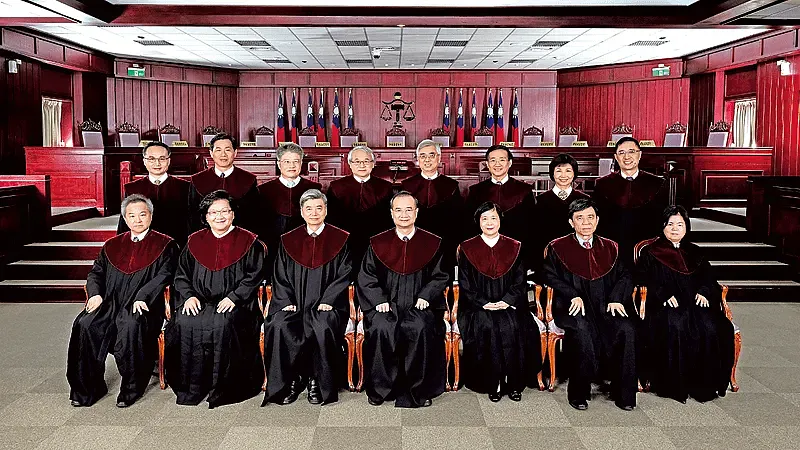
Photo Source/Judicial Yuan Website
Recently, the National Congress on Judicial Reform has been in full swing. Beyond becoming a primary battleground for legal professionals, the institutional adjustments discussed within the conference are closely tied to the public's right to litigation. Are our readers aware? One of the topics is the introduction of a new type of litigation known as "judicial review of court decisions," which allows citizens to seek relief from the Grand Justices against court decisions that violate the Constitution!
In the past, when individuals exhausted all levels of appellate relief in a lawsuit (for example, in a damages suit, litigating all the way from the district court to a final judgment by the Supreme Court), even if they believed the court's interpretation was constitutionally questionable, the current system maxes out at three instances across three tiers and cannot be expanded infinitely; thus, they had no choice but to swallow the outcome and accept the result. The recent resolution emerging from the National Congress on Judicial Reform aims to open this very door, giving citizens the opportunity to challenge unconstitutional judgments before the Grand Justices, allowing the latter to examine various types of rulings through a constitutional lens!
The prototype of the "judicial review of court decisions" system was conceived in Austria and popularized in Germany. Article 93, Paragraph 1, Item 4a of the German Basic Law stipulates that the Federal Constitutional Court may hear "constitutional complaints" brought by individuals claiming that their rights have been infringed by public authority (a concept slightly different from and broader than Taiwan's, extending beyond laws, treaties, administrative orders, and administrative dispositions to include various judicial rulings). Why did Germany introduce this system back then? It was a reflection on the pre-war Weimar Republic era, when courts were influenced by the Nazis, leading to a dysfunctional defense of the Constitution and inadequate protection of human rights. Post-war, driven by the aspiration to maintain constitutional order, the Constitutional Court was entrusted with the heavy responsibility of eliminating unconstitutional infringements by public authorities.
Is It Necessary to Introduce Judicial Review of Court Decisions? Consider the Following Cases
There is no shortage of dissenting voices domestically questioning whether the current system of appellate instances in civil, criminal, or administrative courts already exists to overturn unconstitutional judgments. The reality, however, is that if courts at all levels could genuinely and faithfully interpret various laws contested in individual cases in accordance with the spirit of the Constitution, the various situations forcing parties to painstakingly pursue constitutional interpretation would not arise. In other words, in most cases, ordinary courts dislike citing constitutional concepts as the basis for their judgments. Since the appellate system does not operate smoothly as the opponents assume, judgments interpreting laws unconstitutionally often fail to be corrected by the court of final appeal in these stories.
-
The Cross-Strait Bigamy Case─A couple separated across the Taiwan Strait for 60 years, unable to divorce yet forbidden to remarry. Is this reasonable?
The story goes like this: In the 1940s, Mr. Teng married Ms. Ch'en in Fujian, China. Due to the outbreak of the Chinese Civil War, Mr. Teng had no choice but to flee to Hong Kong and subsequently settled in Taiwan. Amid the turbulent cross-strait conditions of that era, realizing he might never be able to return home, Mr. Teng contemplated marrying a second time. In April 1960, he married Ms. Wu and wrote a letter to his first wife stating: "The Communist bandits have ruined the country and brought suffering upon us, causing our family to be torn apart... The Teng and Ch'en families were originally close relatives by marriage, and everyone should help one another... Under such unavoidable circumstances, I had no choice but to plan another marriage. This is the tragedy of the era." Unexpectedly, after the old and new families lived in peace for many years, Ms. Ch'en suddenly filed a lawsuit to revoke the bigamy (under the old laws, bigamy only entailed revocation rather than direct nullity). Because the evidence was conclusive, Mr. Teng lost every stage of the litigation. In 1987, following the final civil judgment by the Supreme Court, Mr. Teng resolved to petition for constitutional interpretation.
Mr. Teng harbored this confusion: The legal provisions prohibiting bigamy merely served to protect a paper marriage of decades of separation across the sea that existed in name only. Why did the Supreme Court still rely on such provisions to rule against him?
J.Y. Interpretation No. 242 responded to Mr. Teng's perplexity as follows: Where the state encounters major upheavals, resulting in couples being isolated with no prospect of reunion, or even losing all contact with life or death unknown, the occurrence of bigamy stems from unavoidable factors and differs from general bigamy cases. If Article 992 of the Civil Code were still applied to revoke such long-term post-cohabitation marital relationships, the result would deprive individuals of enjoying normal family life, severely impacting the family and ethical relationships of the parties to the subsequent marriage and their relatives, thereby obstructing social order instead. This indeed conflicts with Article 22 of the Constitution, which guarantees the freedom and rights of the people. In other words, the Grand Justices held that, considering the pulse of the times and the spirit of human rights, provisions prohibiting bigamy should not apply to bigamy cases arising from cross-strait separation.
-
The Journalist Stalking Case─How can facts be pursued without following? Fined under the Social Order Maintenance Act simply for following—is it too hard to be a journalist?
Fast forward to 2008. This time, the petitioner for constitutional interpretation was Mr. Wang, a daily newspaper reporter covering entertainment news. At the time, in order to take photographs, he twice pursued a corporate executive and his newlywed wife, who was an entertainer. Distressed by this, the couple entrusted a lawyer to mail depositions twice to dissuade him; however, Mr. Wang still pursued them throughout the entire day of September 7 of that year. Outraged, the husband decided to call the police.
Following an investigation by the Taipei City Police Department Zhongshan Precinct, Mr. Wang was penalized with a fine of NT$1,500 on the grounds of violating Article 89, Paragraph 2 of the Social Order Maintenance Act (stalking others without justifiable reason despite having been dissuaded). Disgruntled, and feeling he was performing his journalistic duties, Mr. Wang filed an objection pursuant to Article 55 of the same Act, but the Taipei District Court dismissed it as groundless.
Journalist Wang believed that the court merely mechanical-mindedly determined that his reporting behavior infringed upon the couple's privacy during their holiday outings, while failing to consider that, as a member of the media, when matters of public concern arise, even if the other party is unwilling to be interviewed, there remains a necessity to investigate and verify. This prohibitive provision deals a heavy blow to his freedom of the press and right to work; hence, he petitioned the Grand Justices for constitutional interpretation.
In a rare move, after convening a constitutional court, the Grand Justices issued Interpretation No. 689 in 2011, pointing out: While the provisions of the Social Order Maintenance Act prohibiting stalking aim to protect individuals from physical and mental harm and to ensure the freedom to reasonably expect not to be disturbed in public domains, consideration must still be given to the spirit of Article 11 of the Constitution, which guarantees freedom of the press, and Article 15, which guarantees people's right to work. If a journalist deems a specific event to be of public concern, public interest, and news value, and if pursuit is necessary for reporting, it is not something intolerable by general social consensus and thus constitutes a justifiable reason. Under such circumstances, penalties should not be imposed through the aforementioned provisions.
-
There Is a Need for the Existence of Judicial Review of Court Decisions!
While the number of such aforementioned cases is indeed small and cannot directly substantiate the conclusion that unconstitutional judgments run rampant, in the absence of a system for the judicial review of court decisions, the target of constitutional interpretation remains restricted to "abstract laws." Consequently, it cannot be ruled out that, even with sound legislation, there remain numerous unconstitutional judicial interpretations that are drowned out among countless "dismissed" decisions because parties fail to successfully petition for the unconstitutionality of the laws themselves. Therefore, the judicial review of court decisions retains its necessity.
Take, for instance, the Huaguang Community incident in 2013, where a group of people living on state-owned land due to historical structural conditions were subjected to forced eviction without the government providing resettlement in accordance with constitutional or international human rights covenants standards. Yet when the government sued these individuals in court as the plaintiff, the legal disputes involved only civil law provisions such as unjust enrichment or demolition and return of land. Under the premise that the laws themselves did not harbor significant constitutional doubts, despite the lack of concern in the trial process for "resident resettlement" or even the "adequate right to housing," it still proved difficult to meet the requirements for citizens to petition for constitutional interpretation, failing to summon the Grand Justices to manifest the constitutional spirit in concrete individual cases.
Are Grand Justices Unsuitable to Adjudicate Individual Case Opinions? Consider the Original Intent of the System
First, doubts have been raised that, according to relevant constitutional provisions, the Grand Justices lack trial jurisdiction over criminal, civil, administrative, and disciplinary cases; thus, allowing the Grand Justices to review such judicial opinions may carry constitutional doubts, and implementing this system would require a constitutional amendment. However, this view may overlook the fact that Articles 77 and 79 of the Constitution combined state from beginning to end only: "The Grand Justices shall have the power to interpret the Constitution." Following this logic, are the Grand Justices' current reviews of laws for unconstitutionality also problematic?
In reality, the reason Grand Justices can review the constitutionality of laws is precisely because they are vested with the role of interpreting the Constitution. In other words, the duty of the Grand Justices lies in grasping the intent of the Constitution, judging whether various state actions are constitutional, and protecting people's fundamental rights from arbitrary infringement by all kinds of state powers. Therefore, the aforementioned review should apply not only to the functions of the legislative and executive powers, but even more so to the exercise of judicial power.
Secondly, critics point out: Grand Justices may not be familiar with laws in specialized fields, and how to ensure such laws are applied concretely to individual cases in accordance with the constitutional spirit might fall short of judges from the Supreme Court who have long specialized in those fields. Furthermore, pursuant to Article 4 of the Judicial Yuan Organization Act, Grand Justices are not exclusively composed of seasoned judges or prosecutors; lawyers, professors, and scholars of legal studies with rich political experience may also serve. Thus, allowing Grand Justices to review individual cases would arouse public concern over the intervention of political forces.
To address this doubt, one can compare the operation of the German constitutional complaint. First, because it fulfills the functions of protecting fundamental human rights and maintaining constitutional order, decades after its creation, it remains a public institution widely supported in the hearts of its citizens. Second, pursuant to Article 2 and subsequent provisions of the Federal Constitutional Court Act of that country, the Federal Constitutional Court has two chambers, each with 8 judges, totaling 16 Grand Justices. Within each chamber, as few as three Grand Justices may hail from the federal supreme courts, while other Grand Justices only need to meet the judicial qualifications stipulated by the German Judges Act. Therefore, we can learn from that country's judicial operating experience that whether it can well discharge its duties of judicial review of court decisions has no direct correlation with whether all its members are incumbent judges.
Moreover, returning to Article 13 of the Trial of Cases Act of the Judicial Yuan, when Grand Justices interpret cases, they may still request notification of the petitioner, interested parties, and relevant agencies to provide explanations, and when necessary, may even hold oral arguments. Assistance through such procedures should be sufficient to mitigate the risk of Grand Justices being insufficiently familiar with specific laws.
Having Said So Much, Does the Government Have an Obligation to Do This?
In fact, more importantly, if the legitimacy of this system is recognized, supporting measures such as eliminating case backlogs are entirely negotiable. Therefore, the government must recognize its obligation to establish such a system. In short, in accordance with the spirit of the Constitution protecting the right to litigation, the government must provide citizens with a complete system of legal relief.
It is generally considered that the significance of the right to litigation guaranteed by Article 16 of the Constitution is to ensure that all constitutional rights enjoy avenues for relief when illegally infringed upon by public authority or third parties, with final judgments rendered by judicial authorities.
That is to say, when citizens' freedoms and rights are infringed upon by unconstitutional judgments, and the current appellate system cannot effectively eliminate them, failing to provide judicial review of court decisions would render the constitutional provisions guaranteeing fundamental rights mere dead letters. In particular, judicial relief channels are monopolized by the state, and whether to open them is entirely controlled by the state; citizens cannot seek them from society. Therefore, to provide citizens with seamless litigation safeguards, the government should diversify avenues of relief to combat various infringements originating from public authority. This is why we are advocating for the judicial review of court decisions here today.
This article is an AI-generated translation of the original Chinese text. In the event of any discrepancy, the Chinese version shall prevail.
