
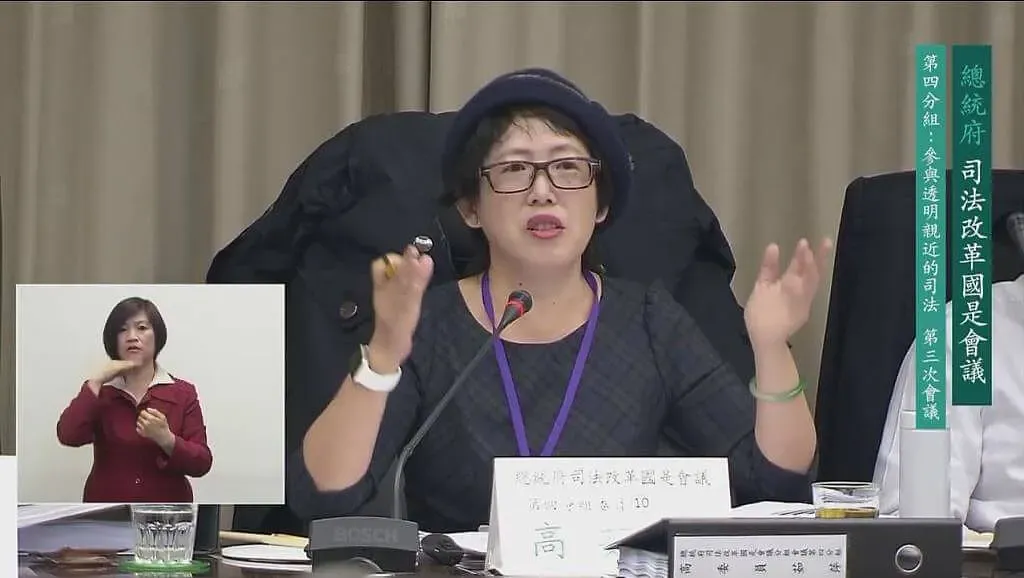
Brief Notes: The 3rd Meeting of the 4th Division of the Presidential Office's National Consultative Conference on Judicial Reform
Last edited: 2026-07-27
Meeting Resolutions
-
It is recommended that the Judicial Yuan's "Committee on the Simplification and Popularization of Judgment Documents" submit a report—including promotion goals, progress, and tracking mechanisms—to the 4th Division prior to its 6th subcommittee meeting (May 12, 2017), taking into consideration the following suggestions:
- Amend the "Standardization Act of Central Laws and Regulations" to explicitly require all agencies to use plain and easily understandable language that the public can readily comprehend when drafting legal norms such as laws, regulations, orders, bylaws, and implementation guidelines, thereby achieving the goal of "popularizing the law."
- Compile a "Legal Documents Terminology Dictionary" to facilitate public inquiries and understanding of legal content.
- Establish an online legal inquiry service, utilizing a design akin to "MoEdict" (萌典) so that the public can grasp legal knowledge with a swipe of their fingers.
- Build a "Legal Document Explanation and Support System," where judges from courts of final instance and non-lawyers jointly discuss and produce case studies using popularizing language and terminology.
- The Judicial Yuan and the Ministry of Justice shall formulate concrete incentive measures to promote the popularization of judicial documents. (Passed with 14 votes)
-
It is recommended to establish a cross-branch Civic Legal Education Promotion Task Force to advance civic legal education guided by the principle of "the people knowing the law, the government obeying the law." Suggestions include: constructing lively and relatable legal teaching materials, producing legal game-teaching apps, setting up legal-learning websites, enlisting professionals to assist in producing law-related drama programs, and discovering more constantly updated and progressive legal education methods through competitions and selections. At the same time, it is recommended that the Ministry of Justice allocate ample funding, invite cross-ministerial participation in the civic legal education promotion project, and integrate media and networks to actively promote lively, life-oriented content projects. (14 votes)
Discussion Summary
-
4-4-1 Reform of Judicial Documents and Judicial Language
This issue was reported by Committee Member Kao Ju-p'ing, who also assisted the chair in presiding over the meeting. The topic was discussed for approximately 120 minutes. There was relatively little controversy on this issue, and the majority of members agreed that judicial documents need to be simplified. Both the Judicial Yuan and the Ministry of Justice agreed that judicial documents should be simplified, and that in the future, neither review by superior officials nor legal education should continue to insist on using "semi-classical Chinese" (such as terms like "按" [whereas], "伊人" [said person], "經查" [upon investigation], etc.) which alienate the public. The most extensive degree of change would be to amend unnecessary "semi-classical Chinese" in statutory provisions as well.
Ch'iu Jui-hsiang, Director of the Department of Civil Affairs, Judicial Yuan: The reason judicial documents are abstruse and difficult to understand may be that many laws are transplanted from abroad, mixed with classical and vernacular Chinese, and filled with abstract concepts (e.g., duty of care of a good administrator, statutory period, grounds for exclusion of unlawfulness, oblique intent, discontinued attempt), while many judicial precedents are also a mix of classical and vernacular. In 1998 (87th year of the Republic), a questionnaire was conducted by the "Research Group on the Popularization of Judgment Documents," but out of 7,600 questionnaires, only 422 were returned—a very low proportion. Perhaps a new questionnaire needs to be conducted recently. Possible directions for reform include: In 2015 (104th year of the Republic), the Judicial Yuan established the "Research Group on Streamlining Criminal Judgment Documents," which completed the principles for simplifying criminal judgments. It proposed simplification suggestions regarding the main text of criminal judgments, grounds for the case, criminal facts, and legal reasoning, which were compiled into a book containing relevant examples for judges' reference. Additionally, for major or socially prominent cases, courts can use easy-to-understand language or charts to help the general public understand the contents of the judgment. Professional legal terminology used in judicial documents will be accompanied by explanatory comparison tables posted on our website by the court to help the public understand the content and meaning of professional terms. Furthermore, when mailing judgments to parties involved, information will be attached stating that if they are unclear about legal terms, they can check the comparison table on the Judicial Yuan's website; if they do not understand the content written in the judgment, they can inquire at various courts.
Lin Pang-liang, Department Head, Ministry of Justice: In 1973 (62nd year of the Republic), the "Main Points for the Implementation of Reforming Judicial Documents by Judicial Organs" were promulgated, explicitly ordering judicial documents to use vernacular Chinese as much as possible and adhere to the principle of being "plain and easy to understand." The Judicial Yuan subsequently compiled the "Formats of Criminal Procedure Documents and Their Preparation Methods" in May 1983 (72nd year of the Republic) requiring judgment texts to be concise and clear, and established the "Popularization of Judgment Documents Group" in November 1997 (86th year of the Republic), sequentially publishing the "Compiled Examples of Popularized Judgment Documents (I) and (II)" in 2002 and 2003 (91st and 92nd years of the Republic). However, these efforts failed to successfully "vernacularize" judicial documents. The reason may be that judicial personnel consider using "semi-classical Chinese" to be convention, a manifestation of solemnity, common text found in textbooks, and terminology frequently used by superior officials (the Supreme Court, the Supreme Prosecutors Office).
Committee Member Ch'en Ch'in-hsien: Regarding the vernacularization of judicial documents, I have tried writing them at the Tainan District Court for half a year. I have received encouragement from judges in appellate courts, but there were also instances where I did not receive their approval. When deciding to vernacularize judicial documents, I worried about the following four issues: (1) If I write this way, will the document pass review? (2) If I write this way, will my presiding judge accept it? Will they disagree? (3) If I write this way, will judges in appellate courts accept it? Will they scold me? (4) If I write this way, can I meet the requirement of precision? I also feel that the biggest problem with the vernacularization of judicial documents is that specialized terms are difficult to colloquialize, and colloquialization may lead to imprecise meanings. I hope that experts and scholars can help colloquialize the meanings of specialized terms, and the Supreme Court should also join the reform to colloquialize judicial documents. In conclusion: "Before I started writing, when writing judgments I thought: 'If I write this way, can I convince the appellate court?' After I started writing, when writing judgments I thought: 'If I write this way, can the defendant understand it?"
Committee Member Chiang Yuan-ch'ing: I believe the new mindset judicial officers should have regarding judicial documents is to "treat the judgment as a 'communication' tool." Beyond its communicative effect on individual case disputes, judicial documents also have a legal education effect on society. Formats, methods, and tools are merely auxiliary; common language and popular text are the key points. I also believe that since Judicial Yuan interpretations frequently involve the rights of citizens nationwide, they should also be vernacularized. I must issue a warning: the Judicial Administration Department (predecessor of the Ministry of Justice) promulgated the "Main Points for the Implementation of Reforming Judicial Documents by Judicial Organs" in 1962 (62nd year of the Republic). Now it is 2017 (106th year of the Republic), yet judicial documents have still not been successfully reformed. After 44 years of failure, are we going to drag our feet for yet another 44 years?
Committee Member Li Nien-tsu and Committee Member Wu Kuang-lu both proposed: Regarding judicial documents, in addition to making them understandable to the public, issues (points of contention) should also be separated to make them easy for the public to read. While civil litigation judgments feature issue summarization (also known as issue organization), judgments in criminal and administrative litigation should also have clear issue summarization.
-
4-4-2 Enhancing Civic Legal Education
This issue was reported by Committee Member Kao Ju-p'ing, who also assisted the chair in presiding over the meeting. The topic was discussed for approximately 60 minutes. Although both the Judicial Yuan and the Ministry of Justice believe that school-based legal education can be revitalized, they seem to think that simply increasing legal education hours in schools helps students acquire legal knowledge. However, with tight school curriculums, it is actually difficult to imagine how to revitalize it. How Japan improved its school education after its 1999 judicial reform was a matter not clearly discussed by this division. Furthermore, the Japanese television drama *HERO* boosting public affinity for the law in Japan seems to be something that both the Judicial Yuan and the Ministry of Justice are very interested in. However, whether the Judicial Yuan and the Ministry of Justice have the determination to have professionals assist in producing law-related drama programs was not proclaimed in this division and remains to be observed in the future. As for whether to recommend that the Ministry of Justice and the Ministry of Education commission bar associations to conduct legal education, members did not reach a consensus.
Judicial Yuan: Revitalize the "Date with the People" events to narrow the distance between the courts and the public, and proactively provide relevant event information to schools or institutional groups to facilitate their application and utilization. Channels featuring rapid and timely dissemination that are unrestricted by geography or time—such as audio-visual media, networks, and information platforms—can be utilized, combining easy-to-understand animations or popular, everyday vocabulary to make it easier for the public to receive and understand the judicial system and legal norms. Regarding students, it is suggested that educational authorities should strengthen and enrich the content of civic curricula regarding constitutional spirit, human rights awareness, separation of powers, judicial independence, the presumption of innocence, rules of evidence, and due process of law.
Ministry of Justice: It is believed that legal education has long been neglected within the school system, becoming a decorative supporting role and failing to establish an effective and progressive cultivation process, thus missing the golden learning stage. Regarding the role of the media, ratings reign supreme, and television programs centered on criminal cases are preferred; yet they are filled with bizarre and superstitious phenomena and inappropriate legal concepts that do not fit actual current conditions, causing viewers to misunderstand the law. Therefore, in school education, materials should focus more on the critical thinking of "rule of law" concepts and reduce crime prevention advocacy; in teaching methods, more activity-based operations (such as student courts), field visits (court tours), and situational simulations (learning the law through movies) should be used. Regarding social education, an integrated e-platform for rule-of-law education services can be built. In addition to attracting users' attention with lively and interactive webpage design, the policies and practices of various ministries promoting rule-of-law education can be integrated into a single-window platform, providing multi-functional services such as everyday law, literature and teaching materials, instant consultation, or policy advocacy, enabling the public to easily check the latest progress of rule-of-law education via mobile networks, the cloud, and other paths.
Committee Member Hsieh Ming-chu: Japan also experienced a wave of judicial reform in 1999, at which time Japan decided to adopt the lay judge participation system, scheduled for implementation in 2009. To enable the Japanese public to possess sufficient legal knowledge to transition into the lay judge participation system, Japan's Ministry of Justice actively used manga, mobile apps, mini legal dictionaries, and other methods to let Japanese citizens easily learn legal knowledge. In schools, students were allowed to acquire sufficient legal knowledge through lively methods such as outdoor education. Japan's Ministry of Justice even spared no expense in hiring well-known Japanese artists such as Takuya Kimura to star in the TV drama *HERO* to attract the Japanese public to watch and enrich their legal knowledge. The viewership rating of the TV drama *HERO* once reached as high as 34%! The drama also successfully elevated the image of Japan's Ministry of Justice in the minds of the Japanese public.
Committee Member Ch'en Hsien-hsu: Having attended three meetings, I feel that the PPT made by Committee Member Hsieh Ming-chu is the most brilliant. The Judicial Yuan and the Ministry of Justice should refer to the Japanese approach proposed by Committee Member Hsieh Ming-chu.
Committee Member Wu Kuang-lu: Rule-of-law education in remote areas should also be emphasized. When I served as the President of the Taichung Bar Association, I attempted to go to relatively remote mountainous areas in Taichung, such as Lishan, to conduct rule-of-law education. However, administrative agencies are more likely to overlook rule-of-law education in remote areas due to a lack of fixed budgets. Every village and town in Guangdong Province has a legal advisor to solve people's problems—something Taiwan can refer to.
Committee Member Chang Ching: Full live broadcasting of court trials is even more conducive to public legal education!
Committee Member Ch'en Shu-lan: I think we should make a resolution regarding rule-of-law education to encourage the Ministry of Justice to find the right people and the right budget to shoot films and television dramas and promote the implementation of rule-of-law education. I was just joking with Committee Member Tsai Yuan-shih: if there is a budget, we could get Takeshi Kaneshiro to star; if there is no budget, we might only be able to get the Minister of Justice to star.
-
4-2-2 Strengthening Alternative Dispute Resolution (ADR) Mechanisms and Establishing Diverse Dispute Resolution Channels to Reduce Litigation Origins and Enhance Judicial Quality; 4-2-3 Establishing Non-Litigious Medical Dispute Handling and Mediation Mechanisms Prioritized by Appraisal to Promote Rational Medical-Patient Dialogue and Escape the Quagmire of Disputes
This issue was reported by Committee Member Li Nien-tsu, who also assisted the chair in presiding over the meeting. The topic was discussed for approximately 150 minutes. Because six units—the Judicial Yuan, the Ministry of Justice, Koo Chia-chun of the Mediation Center of the Chinese Arbitration Association, President Li Fu-tien of the Chinese Arbitration Association, the Taipei City Apartment Building Dispute Mediation Committee, and the Taiwan Healthcare Reform Foundation represented by Liu Mei-chun—were invited to report, there were numerous topics, and thus no resolution was made at this meeting. Regarding whether the crime of professional negligence resulting in death in medical disputes should be decriminalized, Committee Member Li Nien-tsu believes it should be decriminalized, or changed to a crime prosecuted upon complaint, to prevent the public from using criminal charges to pressure civil settlements. However, the Ministry of Justice and Committee Member Tsai Yuan-shih believe that the crime of professional negligence resulting in death involves more significant legal interests in human life and should not be decriminalized or changed to a crime prosecuted upon complaint. Therefore, there is no consensus on decriminalization or whether it should be changed to a crime prosecuted upon complaint.
Regarding Alternative Dispute Resolution Mechanisms
Judicial Yuan: "Alternative dispute resolution mechanisms" help the public resolve cases outside the court at low cost, swiftly, and peacefully. Regarding judicial "alternative dispute resolution mechanisms," they are limited to civil cases, while criminal and administrative cases are severely lacking. Although administrative litigation has a settlement system, the proportion of successfully settled cases is very low. The Judicial Yuan once sent personnel to Japan to inspect "alternative dispute resolution mechanisms" and found that following the March 11 earthquake, the Japanese government immediately established the "Nuclear Damage Dispute Resolution Center" in December of the same year, dedicated to handling civil disputes arising from the Fukushima nuclear disaster. To date, it has accepted 21,224 cases, and among the 18,987 concluded cases, as many as 15,743 settlements were successfully reached. In other words, over 80% of dispute cases were resolved through settlement; the Japanese experience is worth referencing. In 2007, Japan enacted a basic law on "alternative dispute resolution mechanisms," and the Judicial Yuan also hopes to enact a special law on "alternative dispute resolution mechanisms" in the future. This special law will focus primarily on mediation systems and will not include arbitration systems.
Ministry_of_Justice: Regarding arbitration, arbitrators are professional private individuals who serve as arbitrators in dispute cases and resolve them. Regarding cross-strait arbitration affairs, both sides of the strait have signed the "Cross-Strait Investment Protection and Promotion Agreement" and established an investment arbitration mechanism between the two sides. The Ministry of Justice also hopes to strive for Taiwan's arbitrators to serve as members of the "Cross-Strait Arbitration Center" under the "China Council for the Promotion of International Trade" in Mainland China. However, because the Mainland Affairs Council interpreted the "Cross-Strait Arbitration Center" as a political organization of the Mainland area pursuant to Article 33, Paragraph 2 of the Act Governing Relations Between the People of the Taiwan Area and the Mainland Area, Taiwan's arbitrators cannot legally serve as members of the "Cross-Strait Arbitration Center." Regarding this part, the Ministry of Justice hopes the Mainland Affairs Council can relax regulations. Regarding mediators in township and city public offices, because Article 34, Paragraph 1 of the Township and City Mediation Act only requires that expenses for township and city public office mediators be paid when courts refer mediation cases, when prosecutors' offices refer mediation cases, there is no explicit provision in the law, hence there is no legal guarantee for the expenses of mediators, and prosecutors' offices often face problems of being unable to disburse funds. The Ministry of Justice hopes there will be explicit legal provisions to make payments for township and city public office mediators comparable to those referred by courts.
Koo Chia-chun, Mediation Center, Chinese Arbitration Association: In 2015 (104th year of the Republic), civil mediation cases in district courts accounted for only 4.87% of civil cases. The work of mediation committee members is mostly part-time, with low remuneration and without systematic teaching of mediation theory. It is recommended to reference Germany's 2012 special law on "alternative dispute resolution mechanisms," Japan's 2007 special law on "alternative dispute resolution mechanisms," and the United States' 2003 Uniform Mediation Act to enact Taiwan's own special law, thereby increasing the professionalism of mediators and effectively promoting "alternative dispute resolution mechanisms."}
-
Li Fu-tien, President of the Chinese Arbitration Association: Administrative agencies dislike arbitration mechanisms, and courts frequently set aside arbitration, which does not conform to the international practice where courts tend to respect arbitration conclusions. Most judges seem to lack an understanding of arbitration theory. Arbitration events in government procurement law are suspected of being both player and referee, hence lacking neutrality. It is suggested that Taiwan's standardized contracts include arbitration clauses more often, and Taiwan's judges should also engage in more mutual exchanges with the arbitration association.
-
Taipei City Apartment Building Dispute Mediation Committee: Apartment building dispute mediation cases do not yet have legal effect. In terms of helping community harmony, having only been established for 2 years and with only 23 mediated cases, its effectiveness remains to be evaluated. Regulations concerning mediation in apartment building bylaws seem to be relatively rare.
-
Liu Mei-chun, Taiwan Healthcare Reform Foundation: About 60% of the public responded that the hospital grievance system is not effective, and hospitals frequently fail to promptly provide medical records of the case for the public to review. The Department of Health's mediation system does not compel participation from both parties nor does it require investigative functions, resulting in low mediation efficiency. A 2017 questionnaire by the Healthcare Reform Foundation found that 60% of the public had never sought help from the Department of Health for mediation, and 44% did not trust the neutrality of the Department of Health. It is believed that a high volume of criminal litigation does not mean people like using criminal charges to force civil settlements. The 2017 questionnaire found that as high as 86% of the public reported not having been approached by hospital care initiatives. It is also felt that the district courts' system of jointly mediating medical and legal issues is insufficient.
Regarding Non-Litigious Medical Dispute Handling
Ministry of Justice: From August 2013 to June 2016, the total number of newly received medical dispute cases in various prosecutors' offices was 1,495 cases, and the total number of concluded investigations was 1,305 cases, among which 1,091 cases resulted in non-prosecution dispositions. In other words, non-prosecution dispositions in medical dispute cases accounted for 83.6% of concluded cases. Therefore, handling medical disputes through litigation often results in a situation of high investigation but low prosecution and conviction rates, failing to effectively resolve disputes. Appraisal times also frequently tend to be excessively long. The Ministry of Justice hopes to establish a "Dual-Member Medical and Legal Mediation System."
Scheduled Topics for the Next Meeting
The next meeting is scheduled to be held on April 14, continuing discussions on topics such as alternative dispute resolution mechanisms and the cultivation of legal professionals.
This article is an AI-generated translation of the original Chinese text. In the event of any discrepancy, the Chinese version shall prevail.