
Is Someone Like Him a Good Judge?
Last edited: 2026-08-24
A judge at the Taiwan High Court often asks during court sessions, "Am I a good judge, like this?" If anyone answers no or I don't know, he would respond with a hint of reproach: "You must not have read my articles!" or "You have no idea what I have done!" until the other person admits that he is a good judge. Attorneys who encounter this judge during court sessions invariably find it agonizing.
Su Chien-ho, Chuang Lin-xun, and Liu Bin-lang, whose wrongful prosecution dragged on for 21 years, encountered this very judge when they applied for criminal compensation after being acquitted with finality in 2012. During the hearing, Su Chien-ho stated, "My life has been ruined, but I hope that upon receiving compensation, we can first pay off the debts our families incurred for our lawsuits, and use the rest to do meaningful things." Unexpectedly, the judge pressed further: "To put it in plain terms, are you guys going to pocket this money yourselves, or donate it to charity? What percentage will go to charity?" He then badgered Su Chien-ho for the donation amount and demanded that he sign the trial record on the spot. This act provoked strong protests from the attorneys, to which the judge retorted: "Have you read the articles I wrote? If you haven't, it is wrong for you to criticize me!" When the attorney replied that they had not read them, the judge reprimanded the attorney: "It is a pity that you haven't read them, you see. Conversely, to say that the judge is being judgmental beforehand, and what forced signing, don't be like that. How agonizing is it if a judge is a good judge and you immediately slap a label on him, right?"
Utter Indifference to Torture-induced Confessions
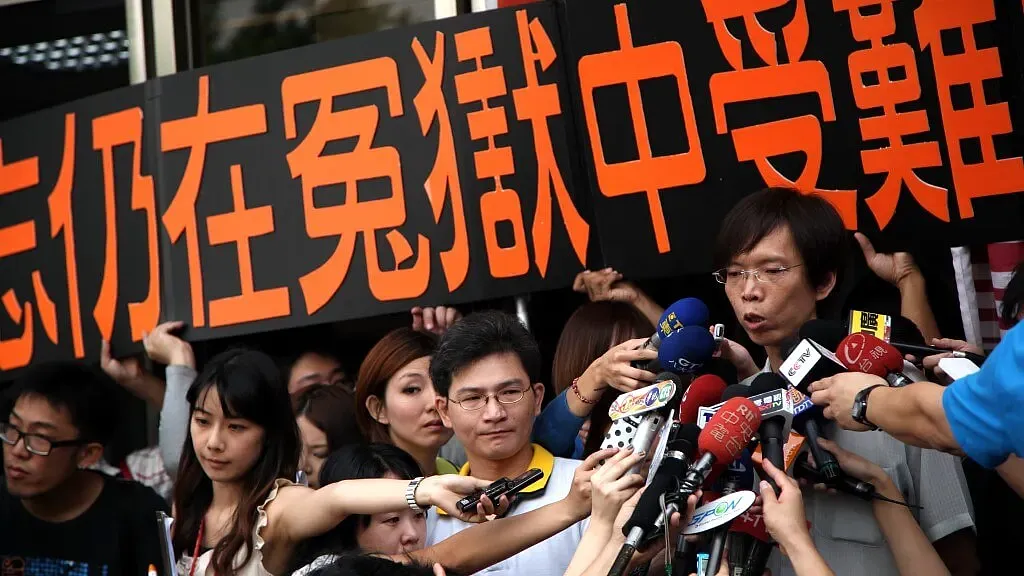
The judge's attitude during the hearings deeply unsettled the three individuals in the Su case. Believing that this judge held only a single hearing, showed complete indifference to the fact that the three had confessed only because they could no longer endure torture, cared only about whether their compensation would be donated, and cared only about whether their attorneys had read his articles, the trial process clearly reflected discrimination and bias against the three men. Consequently, they filed a grievance with the JRF. The amount of criminal compensation is one thing, but the judge attributed their detention to their self-confessed crimes (expecting everyone to withstand torture?) and deemed them blameworthy, while also citing their mere high school education (could someone arrested at 19 be expected to pursue a Ph.D.?) to justify refusing a higher compensation award. As if that weren't enough, he humiliated them with the bare minimum standard of just over 1,000 NTD per day, and the wording of his ruling did not conceal his bias and discrimination against the three men at all. At the time, the controversy surrounding the criminal compensation in the Su case was widely reported by the media, and public opinion called on the Judicial Yuan to proactively investigate and penalize the judge. Amid inaction from the Judicial Yuan, the JRF submitted a request for individual judicial evaluation. Regrettably, the Judges Evaluation Committee ultimately concluded that the evaluation request was unfounded.
Recently, Judge Wang Tzu-jung published an op-ed fiercely attacking the dismissal of the individual evaluation in the Su case, writing, "If this isn't abusive evaluation, what is!" He argued that the judge in question was merely overly enthusiastic and that the JRF should not have initiated an evaluation for the three individuals in the Su case. Opinions on institutional reform are open to discussion, and the JRF has always advocated that citizens should be able to file grievances directly without going through intermediary units (though it is unclear whether Judge Wang shares this view). However, using this case to once again rub salt into the wounds of the three individuals in the Su case—who have suffered all manner of judicial torment—is utterly inappropriate. Whether someone is a good judge should not be a self-answering question among judges. We hope that the National Conference on Judicial Reform will establish an evaluation system worthy of public trust, ensuring that the tragedy of the three men in the Su case is never repeated.
※ This article was published in the Apple Daily on April 10, 2017.
Attachments
20150409 Request for Evaluation against Judge Shih Chun-yao by Su Chien-ho et al.
104-Ping-Tzu Resolution No. 4
101-Hsing-Pu-Tzu Decision No. 36, Taiwan High Court Criminal Compensation Decision
Transcript of Court Audio Recording for 101-Hsing-Pu-Tzu No. 36
This article is an AI-generated translation of the original Chinese text. In the event of any discrepancy, the Chinese version shall prevail.