
Commentary | Drug Possession Grams: Raising or Lowering Are Both Wrong?
Last edited: 2026-08-24
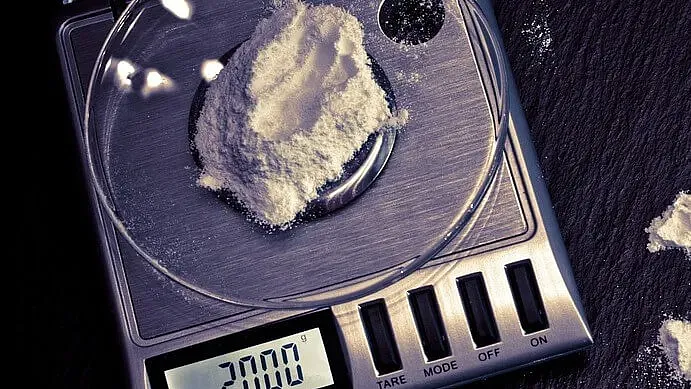
On April 20, the National Conference on Judicial Reform resolved to amend the Narcotics Hazard Prevention Act, changing "pure net weight" to "net weight" for the possession of Category 1 and Category 2 narcotics, and deliberated on lowering the threshold of "20 grams" for the possession of Category 3 and Category 4 narcotics.
This resolution came about as a result of a proposal by the Ministry of Justice:
The aggravating condition for the possession of Category 1 and Category 2 narcotics is a pure net weight of 10 grams or more, while the penalty condition for the possession of Category 3 and Category 4 narcotics is a pure net weight of 20 grams or more. The Ministry of Justice pointed out that the requirement of "pure net weight" results in excessively high costs for practical investigation and testing, which affects the willingness of judicial police units to conduct investigations. Furthermore, most foreign jurisdictions do not have the concept of "pure net weight" regarding the criminal punishment of drug possession. Therefore, it is proposed to amend the provisions concerning pure net weight. Regarding the possession of Category 1 and Category 2 narcotics, courts should sentence appropriate penalties based on the net weight of possession.
The current standard requiring 20 grams or more of Category 3 and Category 4 narcotics to be subject to criminal punishment should be lowered. The rationale is that those possessing less than 20 grams bear no criminal liability, and since the act of drug trafficking is difficult to prove, drug dealers take advantage of this penalty standard to carry drugs around for peddling, leading to a proliferation of drugs. To prevent minor drug dealers from evading criminal sanctions, the gram threshold should be lowered.
Regarding the revision from "pure net weight" to "net weight," this article has no particular opinion. What this article aims to discuss is how to determine the drug possession threshold, whether it should be punished, and how severe the penalty should be.
Regarding the determination of penalties based on the amount of drugs possessed, the most significant distinction lies in differentiating between possession for personal use and possession for the purpose of supplying drugs to others. The former should move as much as possible toward decriminalization and a diversified treatment model backed by criminal penalties, while the latter should, in principle, be subject to criminal punishment because there is a high probability that the drugs are intended to be supplied to others.
In the current discussions, the Ministry of Justice holds that possessing 20 grams or more of Category 3 and Category 4 narcotics—referring primarily to ketamine—can hardly be for personal use anymore, but rather likely involves carrying large quantities of drug-laced coffee packets. Therefore, the gram threshold for possession should be lowered in order to bring more drug dealers to justice.
Regarding this discussion, it must be pointed out that if the purpose is to distinguish whether a specific amount of possession is for personal use or trafficking, such a crude approach should not be used.
A reasonable approach should be to establish personal consumption possession thresholds based on different types of drugs, as the amounts required for personal consumption vary across different drug types. This issue already existed in the existing Narcotics Hazard Prevention Act. Since the possession of Category 1 and Category 2 narcotics is criminalized entirely anyway, this issue appeared less significant. However, for Category 3 and Category 4 narcotics, possession gram thresholds are indeed established based on actual personal use. From this logic, however, the more reasonable approach is to conduct empirical research on community drug use patterns for various types of Category 3 and Category 4 narcotics, and to determine personal consumption thresholds based on such research. Research on drug use patterns must take into account that different methods of use require different amounts of drugs (oral administration, injection, nasal inhalation); that tolerance increases after repeated drug use, which also raises the required possession amount; and that drug users might purchase large quantities at once to obtain cheaper drugs, with such bulk purchases potentially amounting to several grams.
Under this legislative amendment model, drug possession for personal use would not be criminalized. Meanwhile, the question of whether the use of ketamine should be decriminalized should still be addressed within the broader context of overall drug abuse countermeasures.
It is hoped that the government's revision of the possession thresholds for Category 3 and Category 4 narcotics will be grounded in rigorous empirical research rather than relying merely on intuition.
This article is an AI-generated translation of the original Chinese text. In the event of any discrepancy, the Chinese version shall prevail.