
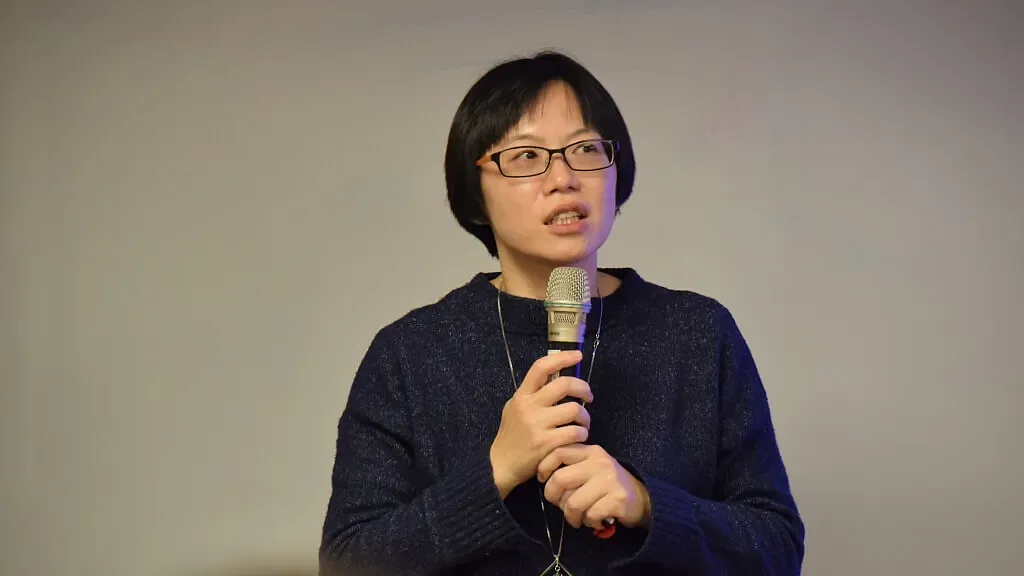
[Off-Beat Lecture] Various NGOs in Society Are All Worth Joining!—Attorney Kuo I-ching
Last edited: 2026-08-24
Attorney Kuo I-ching considers herself someone who dislikes interacting with people, so she did not wish to pursue a career in the legal field upon graduating from university, eventually passing the bar exam under pressure from her father. Even after becoming licensed, she remained unsure of what to do, until a fateful encounter with the Legal Aid Foundation sparked her interest in handling cases.
"My goal is to become a family law specialist, so I primarily focus on family law cases; however, after joining the Legal Aid Foundation, the cases assigned by them invariably include relatively special matters or major cases of significant public interest. If you are someone who enjoys interacting with people and challenging yourself with different types of cases, I strongly recommend joining the Legal Aid Foundation!" Attorney Kuo I-ching stated.
"Many junior attorneys ask me whether becoming a 'specialist attorney' is the trend of the times." If someone passes the bar exam directly without prior social experience, how can they discover their interests and identify their professional focus? Attorney Kuo I-ching believes that one should first try various different cases and use the experience gained from them to find areas of greater personal interest as the direction for professional development.
Having participated in NGOs such as the Legal Aid Foundation, the Judicial Reform Foundation, and Awakening Foundation, Attorney Kuo I-ching shared, "Engaging with NGOs allows you to receive diverse information!" She believes that NGO groups can be divided into two categories: monopolistic and non-monopolistic. Monopolistic groups refer to those that are singular within a specific field, such as the Judicial Reform Foundation or the Taiwan Alliance to End the Death Penalty. Such organizations have clear goals, are less prone to dissenting voices, and possess stronger advocacy power, though this also makes them easy targets for criticism. Non-monopolistic groups, on the other hand, refer to those where multiple different organizations exist within the same field, such as the Awakening Foundation and the Garden of Hope Foundation. In such groups, a hundred flowers bloom, which can lead to matters taking a very long time to resolve; however, the advantage of these groups is that one can observe different starting points and varied dialectical processes.
Attorney Kuo I-ching noted that all kinds of NGOs in society are worth joining because it is only through these organizations that one can acquire comprehensive information and truly understand what the principles and theories written in textbooks actually mean in practice.

This article is an AI-generated translation of the original Chinese text. In the event of any discrepancy, the Chinese version shall prevail.