
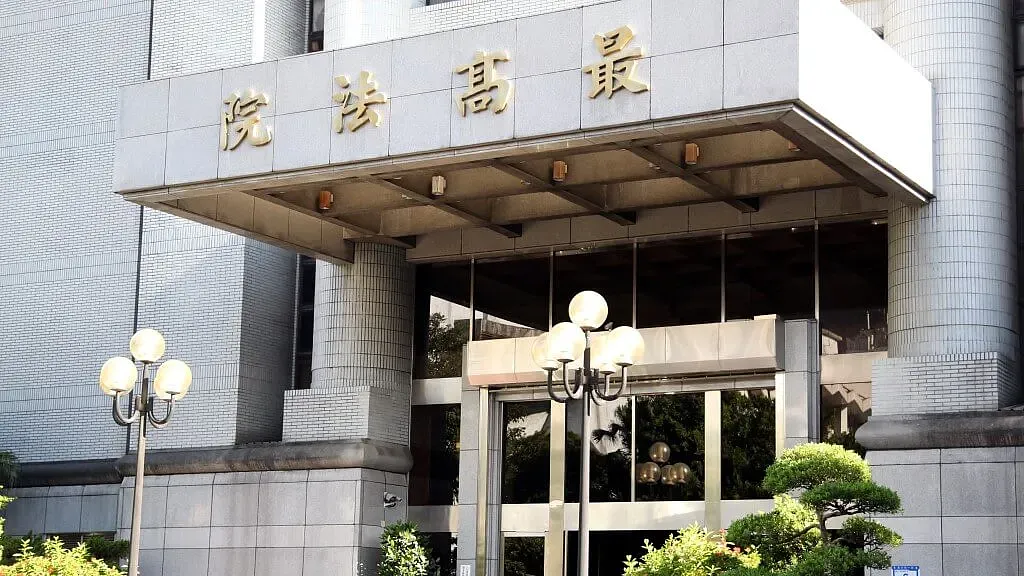
Op-Ed | Wang Chin-shou: Reforming the Supreme Court to Enhance Democratic Legitimacy
Last edited: 2026-08-25
The personnel promotion, transfer, and disciplinary systems of courts in Taiwan are almost entirely free from the intervention and oversight of democratic politics. To the best of the author's knowledge, few judicial systems in democratic countries maintain such an extreme, independently insulated system devoid of democratic oversight as Taiwan's: the qualifications and process for appointing judges are quite simple (consisting mainly of examinations and training) and entail lifetime tenure (whereas judges in neighboring countries like Japan and South Korea do not have lifetime tenure), while their promotions and transfers are virtually unaffected by democratic politics.
In fact, aside from the Grand Justices, no judges in the entire court system undergo any evaluation or scrutiny by democratic politics. Taiwan still lacks a system of oversight for the judiciary, with judicial independence serving as an excuse for certain judicial personnel to evade democratic accountability. As the scholar Friedrich noted, "Without supervision, judicial independence will lead to judicial tyranny."
Why is the issue of judicial personnel power one of the core problems in the current judicial system? Primarily because judicial personnel power is a crucial mechanism for influencing and supervising judges.
In short, the mechanisms for controlling and supervising judges can be divided into two parts: first, through rigorous screening during the initial appointment process of judges; and second, through internal control within the judicial system. Different political systems employ different methods to control and supervise judges. Taiwan relies on internal control and supervision within the judicial system. However, unlike many foreign experiences, Taiwan's internal judicial supervision and control exhibit a condition of being insulated from external oversight. Viewing the judicial personnel system as core, we find that several problems exist in Taiwan's current judicial system.
First, the existing Judicial Personnel Review Committee (JPRC) lacks democratic oversight. According to the Judicial Yuan Organization Act, the Judicial Yuan establishes the Judicial Personnel Review Committee, which is responsible for reviewing the appointment, dismissal, reassignment, transfer, evaluation, reward, and punishment of judges across all court levels and members of the Public Functionary Disciplinary Sanction Commission. In other words, the JPRC functions as a vital institution for controlling and supervising judges.
The JPRC of the Judicial Yuan currently has 24 members, with 11 designated by the President of the Judicial Yuan and the other 12 elected by judges of various court levels. All 24 members come from within the judicial system, completely lacking any external oversight power. Following the passage of the Judges Act, three external members were added, but in many important agendas, these three members only have the right to speak, not the right to vote.
Second, there are flaws in the mutual election mechanism for JPRC judges, and factionalism is severe. In addition to lacking external oversight, the current JPRC has encountered numerous operational problems. For instance, factionalism has emerged within the JPRC. Aside from half of the JPRC members being designated by the President of the Judicial Yuan, the other half are elected by judicial ballots, which has resulted in major district courts carving out their own spheres of influence. For example, major district courts like Taipei and Taichung virtually secure guaranteed seats. Meanwhile, most judges hardly pay attention to the election of JPRC members. Taking Chen Jung-ho, a High Court judge formerly implicated in a corruption case, as an example, he was elected as a JPRC member of the High Court multiple times with overwhelming votes.
Third, judicial personnel information lacks transparency, and the Judicial Yuan has failed to properly exercise its nomination power. During a certain period in the past, the JPRC deliberated on personnel cases for judges and division chiefs of the Supreme Court and the Supreme Administrative Court without seeing the Supreme Court and Supreme Administrative Court "state their reasons." This demonstrates that the deliberation process for many judicial personnel appointments is not necessarily based on moral character, academic ability, or work performance as the basis for promotion and transfer. To the outside world, it is even more impossible to know the reasons why these judges were able to be promoted or transferred.
Not only is this personnel information opaque internally, but it is entirely inaccessible outside the judicial system. Furthermore, the Judicial Yuan has failed to implement its nomination power, especially regarding recommendation lists for the Supreme Court or the Supreme Administrative Court, which it accepts almost wholesale and directly submits to the JPRC for deliberation. In short, unless prior consent has been obtained from the Supreme Court and the Supreme Administrative Court, the Judicial Yuan cannot push anyone else upward. This has also resulted in those who manage to be selected as judges of the Supreme Court and the Supreme Administrative Court being virtually unable to shake off cronyism and inbreeding.
We only need to ask the following most fundamental questions: Under the existing system, how exactly are judges of the Supreme Court and Supreme Administrative Court selected? Who selects them? According to what standards are they selected? This makes it very clear why there is such urgency to reform Supreme Court personnel.
Striking a balance between judicial independence and democratic accountability is a very difficult choice. We must consider Taiwan's judicial historical culture and the current reality of democratic politics. The US method of appointing judges, given Taiwan's existing democratic political reality, would not only fail to enhance the democratic accountability of the judiciary but would instead lead to the partisan polarization of the judiciary; thus, it is not a system that Taiwan's judiciary can study and emulate.
The resolutions passed by Division 2 of the National Conference on Judicial Reform this time entail several major processes for courts of final instance: First, the President of the Judicial Yuan nominates a triple pool of candidates; second, the candidate pool is screened down to a double pool by the Judges Selection Committee; third, appointments are made by the President. In addition, there is another characteristic: the Judges Selection Committee still retains a considerable number of representatives (such as judges, prosecutors, and lawyers elected by ballot). In short, this still preserves a fairly high degree of autonomy for professional associations. Simultaneously, however, representatives from the Legislative Yuan are added, increasing democratic accountability. In short, this is an attempt to strike a balance between judicial independence and democratic accountability.
Comparing this resolution with the current Grand Justices nomination system, we can observe several characteristics: First, the President's personnel power over the Supreme Court is subject to considerable restriction. The President can only select from the list recommended by the Selection Committee, and confirmation by the Legislative Yuan is not required. The degree of politically motivated appointments is far lower than that of Grand Justices. Second, the diverse and professional composition of the Selection Committee members, along with the addition of Legislative Yuan representatives, differs greatly from the current JPRC, where the Supreme Court dominates its own personnel affairs. In other words, this breaks the closed personnel power of the Supreme Court and enhances democratic legitimacy and accountability.
| Current System | Potential Future System |
|
|
|
|
|
※ Originally published in the Apple Forum on 2017-04-27
This article is an AI-generated translation of the original Chinese text. In the event of any discrepancy, the Chinese version shall prevail.