
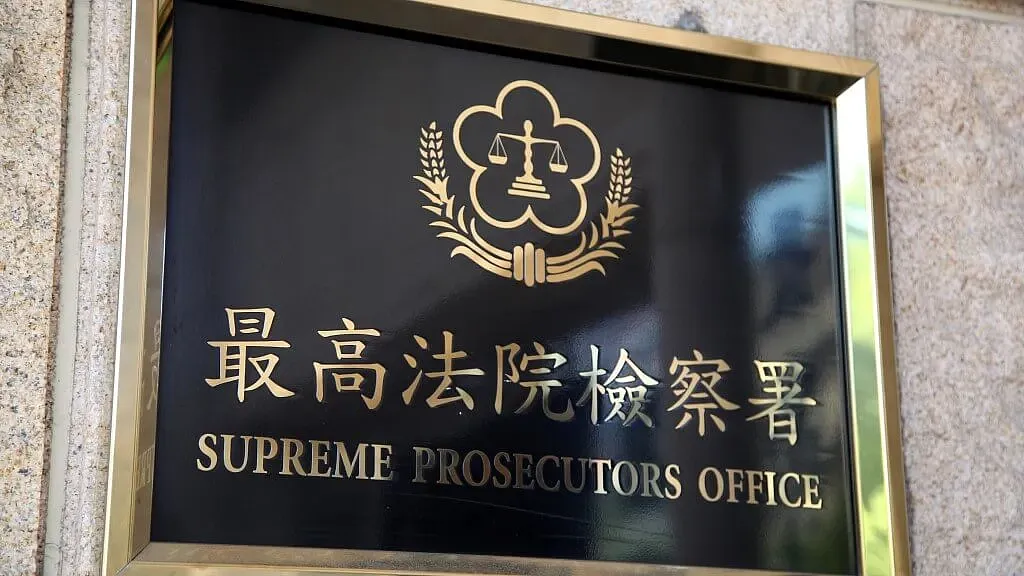
Op-Ed | The Judicial Attribute of Prosecutors: A Ponzi Scheme of Empty Rhetoric?
Last edited: 2026-08-28
On April 1, 1940, Robert H. Jackson, then United States Attorney General and later a Justice of the U.S. Supreme Court, delivered a famous speech titled "The Federal Prosecutor" at the Second Annual Conference of United States Attorneys, which became a frequently cited classic in later discussions of prosecutorial power and professional ethics. Justice Jackson pointed out in this speech that prosecutors are among the most powerful people in America, able to deploy all the government's power in law enforcement to crack down on any citizen. The discretionary power of indictment is the most fearsome power possessed by prosecutors; once abused, anyone disliked by a prosecutor, anyone a prosecutor wishes to trouble, or unpopular groups in society can be singled out as targets of accusation. Therefore, the impact prosecutors can have on people's lives, liberty, and reputations surpasses that of any other Americans.
The power of prosecution can be the most socially beneficial force, yet once abused, prosecutors become the most dangerous individuals to society. Justice Jackson further pointed out that, to prevent abuses of power from endangering human rights and democracy, prosecutors must be appointed through democratic procedures, maintain political neutrality for consistent policy implementation and law enforcement, and be subject to a degree of centralized administration.
Democratic Accountability and Political Neutrality of Prosecutorial Power
As shown by Justice Jackson's classic speech, although prosecutorial systems vary from country to country, because the restraint of prosecutorial power concerns the survival of human rights and democracy, restraining prosecutorial power is an issue that all democratic countries must take seriously: as a branch of executive power, even though prosecutorial power must adhere to higher standards of political neutrality than other executive departments, it remains impossible for it to be independent and exempt from democratic oversight and accountability. Furthermore, to prevent prosecutorial power from becoming too strong to control or even evolving into "prosecutor-led governance," under the framework of the separation of powers, adopting the warrant principle—requiring that compulsory measures infringing upon people's physical bodies, liberty, and property must be applied for and approved by a court rather than unilaterally decided by prosecutors—has become a universal practice in constitutional democracies.
The power wielded by prosecutors in our country far exceeds that of prosecutors in the United States. Not only can our prosecutors direct police and investigative agencies in investigating crimes and decide whether to indict or not, but during the authoritarian period, they even held compulsory powers entirely equivalent to those of courts; the authoritarian regime leveraged the principle of the unity of the prosecution system, commanding subordinates from the top down, to make prosecutors serve the rulers, adding wings to a tiger. Therefore, how to render prosecutors politically neutral, prevent them from abusing power to harm the people, or even turn into uncontrolled loose cannons endangering democracy has always been an extremely important issue during the process of democratic transition. Thus, upholding the warrant principle so that the power of compulsory measures is in principle returned to the courts, and reforming the prosecutorial organization to ensure that the principle of the unity of the prosecution system is not abused, enabling prosecutors to be democratically accountable and politically neutral, has become a widespread judicial reform demand for many years.
Prosecutorial Power Is a Branch of Executive Power, Subject to the Restraint of the Unity of the Prosecution System
The first battle of prosecutorial reform was J.Y. Interpretation No. 392 in 1995. Multiple petitioners, including the Legislative Yuan, argued that Article 8 of the Constitution stipulates that detention should follow the warrant principle, and since prosecutors are administrative organs under the Constitution based on the unity of the prosecution system and the subordination of subordinates to superiors, the provisions on prosecutorial detention in the then-Code of Criminal Procedure violated the Constitution. The Ministry of Justice argued in the Constitutional Court for that case that the legal status of prosecutors is the same as that of judges as judicial officials, independently exercising their powers and possessing the nature of examining magistrates, and thus it cannot be said that they should not possess the power of detention. The Ministry of Justice's argument confused prosecutors with examining magistrates (countries that abolished examining magistrates, such as Germany, did not hand over compulsory powers such as detention to prosecutors precisely because prosecutorial power is executive power), and also confused the concepts of civil servant political neutrality and judicial independence. Therefore, it is hardly surprising that the Justices did not buy the Ministry of Justice's narrative.
J.Y. Interpretation No. 392 declared that although prosecutors represent the state in conducting investigations and prosecutions, which can be called a broad judicial function, it did not state that prosecutors are judicial officers, and explicitly declared that prosecutors are not judges and cannot exercise the power of detention. This Interpretation opened the door for the return of the warrant principle. Subsequently, as searches and wiretaps were successively returned to the courts through legal amendments, it became a settled conclusion that prosecutorial power is executive power. For example, Article 3, Paragraph 2, Subparagraph 3 of the Administrative Procedure Act enacted in 1999 stipulates that criminal case investigation procedures do not apply to the procedural provisions of the Administrative Procedure Act, which is equivalent to acknowledging outright that criminal investigation is inherently an executive function, albeit one whose nature does not fall under the procedural rules of the Administrative Procedure Act.
The Ministry of Justice and the Association for Prosecutorial Reform Insist That Prosecutors Are Judicial Officers
However, even though the Justices did not buy it, even though legislators explicitly proclaimed in the Administrative Procedure Act that prosecutorial power is executive power, and even though laws directly regulating prosecutorial authority, such as the Code of Criminal Procedure and the Court Organization Act, do not contain the term "judicial officer" at all, the Ministry of Justice and prosecutorial groups such as the Association for Prosecutorial Reform have not changed their course, and to this day continue to insist that prosecutors are judicial officers who are not judges.
Whenever reforms concerning prosecutorial power are encountered, this claim is invoked to defend their positions, insisting that because prosecutors are judicial officers, it is only natural that they enjoy compulsory powers, take the same joint examination and training as judges, and enjoy the same treatment and status guarantees. If prosecutors were administrative officials, they would be unable to maintain independence in the performance of their duties, and based on the top-down subordination character of executive power, they would inevitably be subject to political interference, making it difficult to ferret out villains and uncover crimes.
The Judicial Attribute and Independence of Prosecutors Confuse Political Neutrality with Judicial Independence
There are many problems with this narrative. First, while top-down subordination is indeed an inherent characteristic of executive power, administrative officials should similarly maintain political neutrality in accordance with the Civil Servants Administrative Neutrality Act in order to administer the law lawfully and enforce it impartially. The argument that defining prosecutors as administrative officials would expose them to political interference is equivalent to saying that administrative officials necessarily fail to abide by the Civil Servants Administrative Neutrality Act; this stigmatizes administrative officials to appeal to public aversion to politics, which is actually a cheating argument.
Second, while the demand for political neutrality is admittedly higher for prosecutors than for ordinary administrative officials, prosecutorial power in a democratic state cannot be independent and free from democratic accountability; this narrative confuses political neutrality with independence. Following this logic, other administrative officials could also claim independence in the name of political neutrality. Third, if prosecutors on the one hand are not judges and do not apply the principle of judicial independence, while on the other hand they are bound by the principle of the unity of the prosecution system, what on earth is their so-called independence? Is it consistent with the conceptual content of the principle of judicial independence? How can it be reconciled with the principle of the unity of the prosecution system? Fourth, what on earth is a judicial officer who is neither a judge nor an administrative official? Under the framework of the separation of powers, to which branch do they belong? What kind of special relationship exists between the concepts of judicial attribute and independence? Why does having a judicial attribute allow prosecutors to be free from political interference? Without clearly explaining the concepts of judicial attribute and independence, we cannot understand whether the proponents of this theory are engaging in mystification, confusing the concepts of political neutrality and judicial independence to make us mistakenly believe that the operation of the prosecutorial system resembles a court, into which neither parliament nor the public may inquire, thereby preserving the current state of a closed, opaque prosecutorial system prone to abusing the principle of the unity of the prosecution system.
The Minister of Justice Also Fails to Clearly Explain the Judicial Attribute and Independence of Prosecutors
Because Minister of Justice Chiu Tai-san (邱太三) repeated old refrains at the Third Working Group of the National Conference on Judicial Reform on the two issues of "the legal status of prosecutors" and "organizational review of the prosecutorial system," proposing two reform plans: "1. Prosecutors are neither judges nor top-down subordinate administrative officials; therefore, the current system in which prosecutors mutatis mutandis apply the Judges Act should be maintained to safeguard the judicial attributes and independence of prosecutors; and 2. Prosecutorial organizations should change in response to changes in court litigation systems (including appeal thresholds); before the pyramidal restructuring of the trial system, the status quo should be maintained." To understand the content of the proposals and facilitate discussion, a few days before the fifth meeting on April 26 scheduled to discuss the above proposals, the author requested in the email group of the Third Working Group that Minister Chiu explain the definitions of the two concepts of judicial attribute and independence and clarify the various issues mentioned above, in order to understand how the Ministry of Justice intends to prevent prosecutors from abusing their power to prosecute or not prosecute, and why prosecutorial organizational reform must be synchronized with court litigation system reforms.
Minister Chiu did not respond in the group, leaving Committee Member Feng Hsien-hsien (馮賢賢) from the same group and the author to question the Minister on the spot during the meeting. Minister Chiu first stated that the judicial system only has a dualistic opposition between adjudicators and those being adjudicated (actually repeating medieval inquisitorial tropes, but any law student who has taken the Code of Criminal Procedure knows that this has long been discarded due to the merger of prosecution and adjudication; modern litigation consists of a tripartite relationship among the adjudicator judge, the prosecutor as prosecutor, and the defendant), and urged not to apply the concept of the separation of powers. He claimed that in the investigation stage, the defendant is the one being adjudicated, and the prosecutor is the adjudicator (Minister Chiu elevated prosecutors to the status of judges, which contradicts his own proposal that prosecutors are not judges and obviously departs from the most basic concepts of the rule of law). Later, Minister Chiu admitted that the terms adjudication and being adjudicated were somewhat imprecise, and then mentioned that prosecutors must pay attention to both evidence favorable and unfavorable to the defendant, whereas if they were administrative officials, they would only need to act as prosecutors without needing to consider what is favorable to the defendant, or even help the defendant file extraordinary appeals and retrials (Minister Chiu failed to notice that under Article 9 of the Administrative Procedure Act, administrative officials likewise bear an objective obligation to pay equal attention to circumstances favorable and unfavorable to the parties). Afterwards, although Minister Chiu interpreted the warrant principle through the separation of powers and checks and balances, he then stated that this is different from the separation of powers and that one cannot infer that prosecutors are administrative officials based on the warrant principle (what kind of logic is this? This author is slow-witted and still does not understand it).
The Judicial Attribute and Independence of Prosecutors Are Ultimately Empty Slogans Without Substance
When all is said and done, although the Minister demonstrated unique insights into the rule of law, he simply failed to define what a judicial officer is. As for independence, how to reconcile it with the principle of the unity of the prosecution system, how to be independent without abusing power, and how to accept democratic oversight and accountability, the Minister said nothing at all.
This author cannot go so far as to say that the Minister's silence was a black-box operation, but at least one thing is clear: even on an occasion as important as the National Conference on Judicial Reform, the Ministry of Justice still cannot clearly explain what the judicial attribute and independence are, which shows that they are fundamentally empty slogans. By confusing the two concepts of political neutrality and judicial independence, the Ministry of Justice conjures another empty slogan—independence—out of the empty slogan of judicial attributes. Doesn't this look very much like a Ponzi scheme of empty rhetoric in the marketplace of ideas?
※ This article was published on ETtoday on May 8, 2017
This article is an AI-generated translation of the original Chinese text. In the event of any discrepancy, the Chinese version shall prevail.