
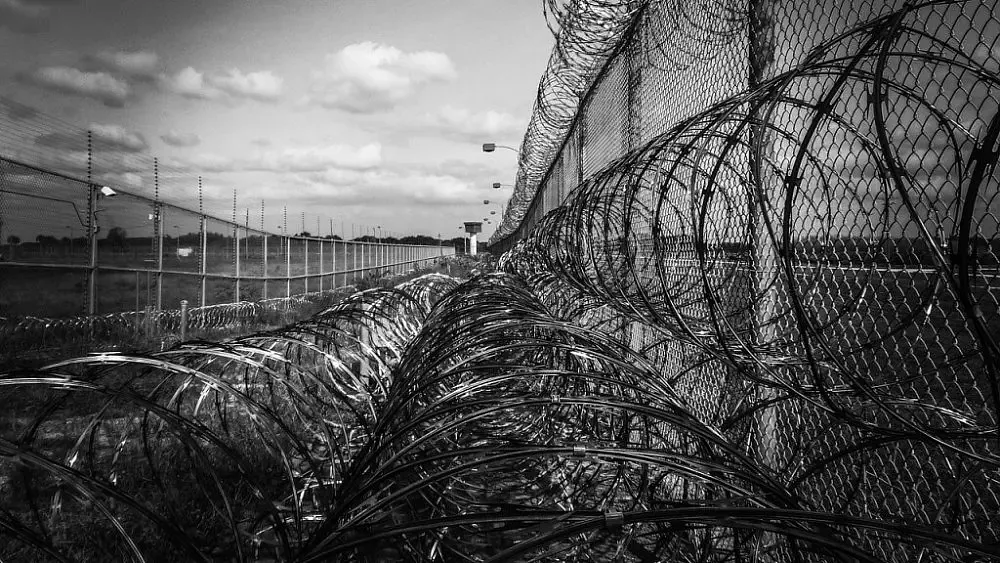
Reflections on the Taichung Prison Visit
Last edited: 2026-08-28
I am responsible for the health, hygiene, and medical care portion of this report. Based on what the institution and officials told us, the relevant issues never seemed to directly or clearly address what we actually wanted to know. For example, we all know that inmates' actual living conditions inside are quite poor, yet after touring Taichung Prison, what we saw and heard did not allow us to say directly or with any certainty just how bad conditions really are. Rather than coming away with answers from the visit, we came away with the opposite impression. Furthermore, we had no way to verify the figures and statements provided by the institution against the inmates themselves—realistically, this may simply not have been possible. Accordingly, the following offers only my own sensory impressions regarding inmates' basic living necessities—food, clothing, housing, and daily activities—along with a few thoughts.
Overall Environment
Taichung Prison occupies a sprawling site and appeared, from the outside, to be quite bright. My first impression was one of elegance and cleanliness: there was not a single piece of litter along the walkways or corridors, and the floors looked polished, as if waxed. Compared with the environment of elementary and junior high schools in Taipei, it might even be more comfortable. Peiteh Road, which leads to the prison, is lined with a clear stream and green trees—a scene strikingly at odds with the eight characters "shedding one's old self, reborn through fire" (脫胎換骨,浴火重生).
Food
According to the meal-provision standard for inmates at Taichung, adult inmates are allotted NT$1,800 per month for meals, averaging NT$20 per meal. The institution had laid out sample meals for breakfast, lunch, and dinner directly across from the main entrance of Peiteh Hospital. What I saw: breakfast consisted of a bowl of congee with one dish of pickles and one side dish; lunch and dinner were roughly "one meat dish, one vegetable dish, one soup, rice, and a beverage and fruit," with the samples all presented as generously filled bowls. What I could not help but question, however, is this: with a budget of only NT$20 per person—setting aside the quality of ingredients entirely—could a portion of this size realistically be produced? Furthermore, whether every inmate actually receives a portion matching the sample in both quality and quantity is also something I very much doubt. That said, in terms of variety and cleanliness, the samples at least appeared to be of a "fairly" respectable standard, with the menu changing daily—no worse, by comparison, than an ordinary boxed-lunch shop.
Clothing
Inmates uniformly wear white tops, blue trousers, and the traditional blue-and-white slippers. Upon asking staff, I learned that inmates may bring their own underwear into the prison, and there is a communal drying area for laundry; towels were also neatly hung on the bedroom walls. Perhaps because of the summer heat, a certain odor lingered in their work areas—a stuffy smell, if I had to describe it, similar to the smell of not having showered for two or three days, or the dried-out smell left after sweating from exercise. Passing through, it was not a particularly pleasant experience.
Housing
Because the cells opened for our visit were the smaller housing units—roughly 3 to 4 ping (about 10–13 square meters)—some held three occupants and others four, generally grouped by similar offense type or physiological need (for example, older inmates were housed together in a single cell). In terms of floor space per person, there was just enough room to lie flat, though I have no way of knowing whether the larger cells' capacity and allocation are similarly adequate. What we saw was uniformly tidy and clean; the odor here was perhaps less intense than described above, though the same stuffy smell was still faintly noticeable. Each room had only a single exhaust fan mounted high on the wall—on a hot summer day, with the door closed, conditions would presumably be extremely hot and humid. In the housing wing of Peiteh Hospital, by contrast, the air conditioning was very strong, with a large temperature gap from the outside; the vacancy rate there was also high, giving the impression that the space is not being fully utilized—particularly striking given how severe the overcrowding problem is elsewhere. Is there really no need for these beds to be used? I also observed one especially unusual phenomenon: patients sat "bolt upright" on their beds, completely motionless, with the blankets on every bed folded with remarkable precision. Whether this was arranged or required by staff, I cannot say.
Recreation
Outside the housing units there is a basketball court where a group of inmates can exercise during break periods (roughly 30 minutes). Those who do not wish to play basketball can sit in the shade of the trees or stroll and chat along the edge of the court. There also happened to be an internal volleyball match that day, and the atmosphere was no different from a match one might see at a university—what stood out was how uniform and well-coordinated their cheering was, giving the feeling of watching a school team competition. When introducing the event, a staff member remarked, "Everyone cheered so hard together that their voices went hoarse" (with a beaming smile!)—which left me with a strange, conflicted feeling. Are the staff really on such warm terms with the inmates? It felt somewhat at odds with what I had imagined their relationship to be. Beyond this, the institution also arranged a performance for us: first a choir sang three songs, followed by a performance resembling Sichuan face-changing opera. Honestly, I thought the standard was quite high—not entirely without flaws, but genuinely impressive given the setting and atmosphere—it left me with an odd sense of dissonance I can't quite put into words. When I asked staff about it, they told me the inmates involved in the arts, singing, and performance had prior training beforehand—that is, they were not starting entirely from scratch—and that the teachers hired by the institution taught them the relevant basic concepts, which the inmates then absorbed and built upon. The story behind the conducting instructor was also quite moving, though I suspect such cases remain the exception rather than the rule; I doubt every inmate goes on to fare so well after release. It might be worth considering compiling statistics or conducting a survey on inmates' circumstances after release, to arrive at a convincing set of data that would also be more persuasive to the public. In addition, after work hours end, inmates have their own free time—I saw some playing chess, reading newspapers, reading books, or simply sitting idle, not so different from life in a care facility, though I have no way of knowing whether daily reality is really this relaxed.
Conclusion
As we learned in our pre-visit briefing, this was arranged to be a "perfect route." From a purely sensory standpoint, it was impossible to detect any obvious problems, and the official explanations all sounded reasonable enough. Although doubts remain, whether they stem from practical constraints or from flaws in the current system—overcrowding being one example—none of it quite hit the heart of the issues we had hoped to uncover. Perhaps it is unfair to be so relentlessly skeptical of the institution; still, compared with the conditions previously described by inmates themselves, what I personally witnessed still diverged from those accounts in many respects. Perhaps a follow-up meeting could be held to review how such visits are designed, to compile the impressions and feedback gathered from all participants, and to hold a comprehensive debriefing session to pool ideas and make improvements—this might prove more useful in advancing discussion of the relevant issues.
This article is an AI-generated translation of the original Chinese text. In the event of any discrepancy, the Chinese version shall prevail.