
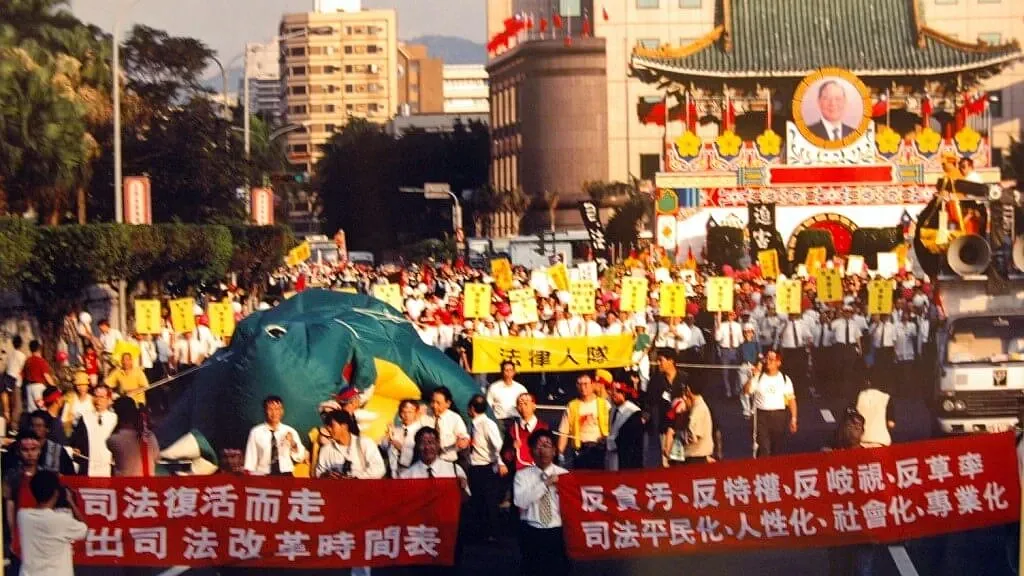
The Grassroots Vitality of Judicial Reform
Last edited: 2026-08-29
The problems within Taiwan's judicial system have become a source of pain for the people. Although judicial authorities claim to promote judicial reform, a significant gap still exists between their efforts and the justice envisioned by the general public. Against this backdrop, the grassroots judicial reform movement has gradually grown, emerging as a new force driving reform.
However, the "judicial reform movement" differs somewhat from the social movements with which we are traditionally familiar. Because the judiciary is expected to be an independent branch of power on the one hand, yet remains part of the bureaucratic apparatus in terms of administrative affiliation, reform forces from within the system often simultaneously shoulder two antagonistic roles: the "reformers" and the "targets in need of reform." This dual role frequently causes confusion for members of the legal community when they participate. For instance, when facing the Judicial Yuan, is a judge committed to judicial reform acting as a bureaucrat or as a social movement activist? Should they monitor and criticize, or cooperate with the Judicial Yuan? And when facing grassroots judicial reform forces spearheaded by lawyers, is this a reform competition between officials (judges) and civilians (lawyers), or are they fellow participants in the broader environment of advancing judicial reform? These questions have become the focal points of confusion in the existing judicial reform movement.
The Judicial Reform Foundation (JRF), which upholds "grassroots power," faces the very same dilemma. When the JRF fulfills its duty of supervising the Judicial Yuan by pointing out the inadequacies of official judicial reform policies and advocating for more thorough reforms, it easily becomes the target of accusations such as "opposing for the sake of opposing." For example, when the JRF demanded that the issue of easing judges' workloads be approached from the premise of improving the quality of adjudication—and thus disagreed with imposing case-closure quotas for judges that could compromise the rights of litigants—it was perceived as opposing official policy. Moreover, when arduous efforts were made to propose concrete legislative demands such as "judicial budget independence," amendments to the Code of Criminal Procedure, and the Judges Act, these initiatives were easily drowned out by voices from within the system, overshadowed by focal points such as Judicial Yuan President Shih's trip to Yangmingshan or his offer to resign over salary increases for court clerks.
Regarding this paradoxical development in official-civilian relations, on the one hand, it should be regarded as a normal state of reform work to be gradually overcome; on the other hand, it serves as a reminder to reformers occupying different positions within the legal community: what judicial reform advocates truly need to do at this stage is to break away from sectionalism where "position dictates mindset," put aside their status, and jointly forge a united front for reform. For we believe that no reform can be achieved top-down without the support of a social foundation. Indeed, it should be said that no "reform" lacking public support can succeed! Therefore, regarding judicial reform, the question that must be asked is: "What kind of justice do the people want?" The key to the success of reform lies in whether we can delineate the blueprint of justice desired by the public.
Perhaps some in the legal community believe the existing judiciary is already much better than it used to be, but what we must say is: it still falls far short of what the public wants! It is precisely because we hold this objective that we put forward demands such as opposing perfunctory trials, opposing corruption, and opposing interference; that we prioritize the improvement of the broader judicial environment; and that we view supervising and improving the existing system as an incumbent duty. We do not believe that "ideological purity in opposition" is the sole standard for evaluating a movement, but neither can we remain silent when we know there are better choices for reform! We disagree with opposing for the sake of opposing, but we likewise disagree with supporting for the sake of supporting. We believe that those who engage in grassroots judicial reform work will witness the JRF's efforts regarding bills and systems along the path of promoting judicial reform; from technical rules inside the courtroom to the abstract goal of enhancing adjudication quality, we have concretely put forward reform proposals; from establishing an honest judiciary to restoring the dignity of judges, we have proposed various countermeasures; to provide evidence, we have invested massive manpower into various evaluations, questionnaires, and courtroom observations... All these efforts represent one thing: returning to the people a courtroom where substantive fairness and justice can be realized!
The road to judicial reform remains long and arduous, requiring everyone who cares to open their minds, cast aside the limitations of specific positions, and work together. We sincerely look forward to the day when, standing on the frontlines of judicial reform, judges are no longer just judges and lawyers are no longer just lawyers, but all forces merge into a singular effort to build a judiciary worthy of the people's trust.
This article is an AI-generated translation of the original Chinese text. In the event of any discrepancy, the Chinese version shall prevail.