
The Country Chicken Restaurant Owner's Judicial Reform
Last edited: 2026-08-29
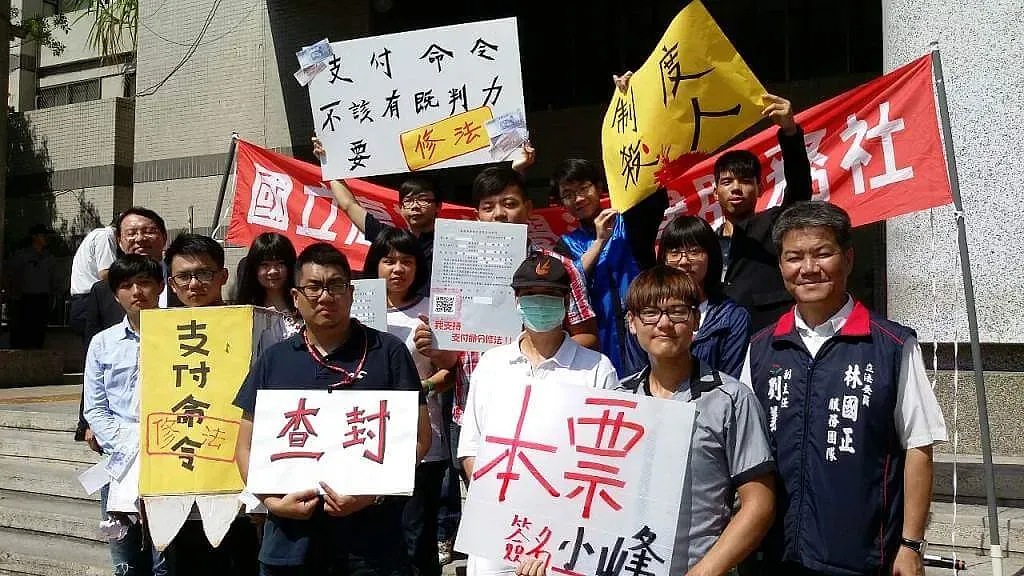
Two years ago, a news story about a "country chicken restaurant being usurped because an order for payment was ignored" drew nationwide attention. Fraud rings exploited a legal loophole wherein payment orders required only formal review, directing members to apply for hundreds of such orders to commit fraud, effectively turning the courts into an accomplice to fraud. The restaurant owner was just one of many victims. To patch this legal loophole, the Judicial Reform Foundation proposed a legal amendment, but unexpectedly, the Judicial Yuan strongly opposed it.
The Judicial Yuan denied that there was any legal loophole, emphasizing that the amendment would cause people to stop applying for orders for payment, resulting in approximately 400,000 payment order cases per year turning into litigation cases. Some judges also published warning op-eds that "payment order amendments will trigger a flood of litigation," and even scholars cited the German legal system to harshly criticize the move as "a payment order amendment that makes us the laughingstock of the international community." However, tragedies like the one suffered by the country chicken restaurant owner continued to occur, and the Judicial Yuan was helpless. Faced with public pressure, the Legislative Yuan passed the Judicial Reform Foundation's amendment draft, which officially took effect on this day two years ago.
Although every possible scenario was exhaustively rehearsed beforehand, no one was certain whether the new law could pass the test of practice once implemented. Therefore, after the new law came into force, the Judicial Reform Foundation's primary task was to assist the country chicken restaurant owner in applying for a retrial. Through the efforts of pro bono lawyers, the Kaohsiung District Court rendered Judgments No. 5 and No. 9 of the 104 Year Hsiung-Tsai-Chien Character (104年度雄再簡字第5號與9號判決), releasing the restaurant owner from all debts. This became a landmark case for a successful retrial involving an order for payment, proving that the new law could indeed help innocent victims.
Next was the question of whether the flood of litigation predicted by the Judicial Yuan would occur. Over the past two years, the number of payment order cases decreased from 445,000 before the amendment (2010) and 380,000 (2014) to 300,000 in 2016. Meanwhile, the number of first-instance civil lawsuits went from 153,000 before the amendment (2010) and 137,000 (2014) to a stable 147,000 in 2016. The data shows that the majority of the public still continues to choose orders for payment to handle debts. Furthermore, the decrease in payment order cases did not cause a significant increase in litigation cases, demonstrating that the so-called flood of litigation was merely alarmism.
The final question was whether the new law would cause chaos in the legal system. Fortunately, the amendment did not emulate Germany's two-stage approach; instead, it retained the existing compulsory execution system. Most of the original administrative rulings and directives could continue to be used, and the changes were quickly familiarized by all sectors. Perhaps the new law is theoretically less rigorous than Germany's, but it is likely more suitable for Taiwan. Legal amendments must prioritize reality, and the best theory is not necessarily the best solution.
Currently, the National Conference on Judicial Reform is about to hold its concluding meeting, and the experience with payment orders is well worth referencing. First, reform must be able to solve real problems for the people, just as the payment order amendment resolved the restaurant owner's debt problem. Second, someone will inevitably exaggerate the risks of reform, but with careful risk management, there is no need to borrow trouble. Finally, there is no need to pursue theoretical perfection; weighing the pros and cons is the key. We look forward to the concluding meeting pragmatically proposing judicial reform plans so that all ordinary people like the country chicken restaurant owner can genuinely benefit.
※ This article was published in Apple Daily on July 3, 2017
This article is an AI-generated translation of the original Chinese text. In the event of any discrepancy, the Chinese version shall prevail.