
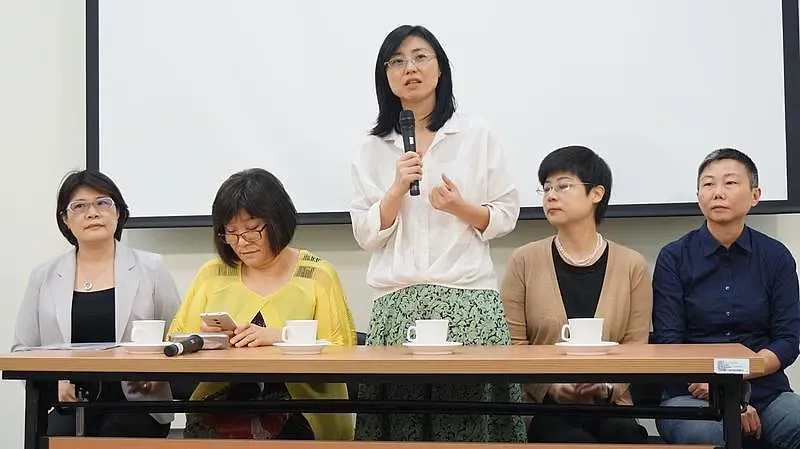
[Gender Judicial Reform Coalition Statement] Gender Judicial Reform Vanished into Thin Air
Last edited: 2026-08-29
Abandoned Gender Human Rights Issues
Through the joint efforts of National Conference on Judicial Reform committee members and civil society organizations, multiple resolutions concerning gender human rights were passed. Disappointingly, the twelve major focal issues announced by the Office of the President completely ignored them, reducing them to a single phrase: "Gender-friendly justice." It can be said that the members' efforts were completely in vain. This action disrespects the panel's resolutions, lacks procedural justice, and ignores public expectations, to which the Gender Judicial Reform Coalition expresses its stern protest.
Furthermore, in the reform plans responding to the National Conference on Judicial Reform released by the Judicial Yuan and the Ministry of Justice, there was not even a single mention of the focal issue "Gender-friendly justice"! In summary, before the concluding conference has even been held, judicial administrative authorities have completely ignored gender human rights issues!
The Importance of Gender Issues to Judicial Reform
The traditional judicial system appears gender-neutral, but is actually built upon a patriarchal structure centered around the male perspective, ignoring women's experiences and needs. For example, among victims of sexual assault and domestic violence, approximately eighty percent are women. Traditional legal education and practical training fail to review various myths detrimental to victims, preventing the victimization experiences of most women from being seen and understood. When presiding over cases, some judges not only find it difficult to comprehend victimization experiences, but are also influenced by sexual assault myths. Examining indictments or judgments from prosecutors and judges, one frequently finds black-and-white text questioning why sexual assault victims behaved improperly, or asking victims why they did not escape, completely failing to see the structural gender factors causing their victimization.
Taiwan began actively promoting gender mainstreaming in 2005, but due to lax promotion within the judicial system, law enforcement personnel in Taiwan generally lack gender sensitivity. Many judges and prosecutors ignore the importance of gender when trying cases, and some even exhibit obvious gender bias, causing secondary trauma to parties involved and affecting trial outcomes. This widespread problem even leads women to be unwilling to utilize judicial procedures to seek remedies, believing the judicial system cannot provide effective assistance. All of this demonstrates how the lack of gender consciousness within the judicial system affects ordinary people. If judicial reform aims to bring the judiciary closer to the people, so that people no longer fear the judiciary and feel it can provide protection, then what reason does judicial reform have to exclude gender issues?
Our Demands: Implement Gender Human Rights Resolutions
We demand that the Judicial Yuan and the Ministry of Justice implement the resolutions concerning gender human rights from the National Conference on Judicial Reform, list them as work priorities, and propose an implementation schedule. The gender human rights issues are elaborated below:
Starting from gender education, utilize gender mainstreaming to examine gender issues in the judicial system
Gender issues in the judicial system primarily require the elevation of legal personnel's gender consciousness. To improve this phenomenon of "judicial gender blindness," we must begin with university legal education, as well as the pre-service and in-service training of judges, prosecutors, and even attorneys, so that judicial procedures and judgments possess a gender perspective and consciously avoid actions where gender bias influences rulings.
Although gender courses are currently offered during judicial officer training, whether these gender courses have appropriate instructors and whether the courses are effective are things that need to be examined; university law department education also lacks systematic gender courses. We suggest that systematic gender courses should be added to university legal education, and the Judicial Yuan should establish an inter-departmental "Child, Youth, and Gender-Friendly Justice Committee" within six months. One of its powers and duties would be to conduct gender training for judicial personnel, which should help enhance the professional competence and gender consciousness of judicial personnel. However, gender issues in the judicial system are not limited to the enhancement of gender consciousness; this Coalition suggests that the "Child, Youth, and Gender-Friendly Justice Committee" utilize a gender mainstreaming perspective to execute the following tasks:
Establish a gender equality education and training system for judicial practitioners.
Balance the gender ratio of judicial heads at all levels, collegial panels, and committees.
Establish gender indicators for the supervision and evaluation of judiciary-related professionals.
Establish a gender-friendly working and trial environment within judicial organs.
Establish an independent, dedicated gender equality unit within judicial organs.
Expeditiously amend legal provisions inconsistent with gender human rights and the rule of law
Laws do not merely exist within the judicial system; to the general public, law is a part of daily life and profoundly affects life. In particular, Taiwan's current legal system originates from a patriarchal society and still contains many discriminatory provisions against women, resulting in substantive discrimination against women. These are inconsistent with gender human rights and the rule of law and should be amended expeditiously. Therefore, regarding the gender human rights reform resolutions passed at the National Conference on Judicial Reform—including amendments to provisions such as the crime of adultery, Romeo and Juliet clauses, Genetic Health Act, and the litigation participation system for sexual assault victims—the Judicial Yuan and the Ministry of Justice must not evade them and should expeditiously initiate dialogue and legislative amendment work.
Conclusion: The Gender Judicial Reform Coalition Will Maintain Its Original Intentions and Supervise the Government in Conducting Gender Judicial Reform
When the President placed the social safety net and judicial reform together on National Day in 2016, it elicited thunderous applause from the audience, demonstrating the people's earnest expectations and hopes. But we must ask: after holding such a time-consuming and laborious National Conference on Judicial Reform, what has actually changed? Has it truly responded to the public's earnest expectations and demands? Gender human rights issues were abandoned and undervalued in the concluding conference of the National Conference on Judicial Reform. We call upon the National Conference on Judicial Reform to respect gender human rights resolutions and expeditiously implement related resolutions. The Gender Judicial Reform Coalition will continue to supervise the government in conducting gender judicial reform until the judicial system truly achieves gender friendliness.
Members of the Gender Judicial Reform Coalition
(Ordered by stroke count)
Judicial Reform Foundation
Taipei Wan-Ching Women's Association
Taiwan Coalition Against Violence
Modern Women's Foundation
Taipei Women's Rescue Foundation
Garden of Hope Foundation
This article is an AI-generated translation of the original Chinese text. In the event of any discrepancy, the Chinese version shall prevail.