
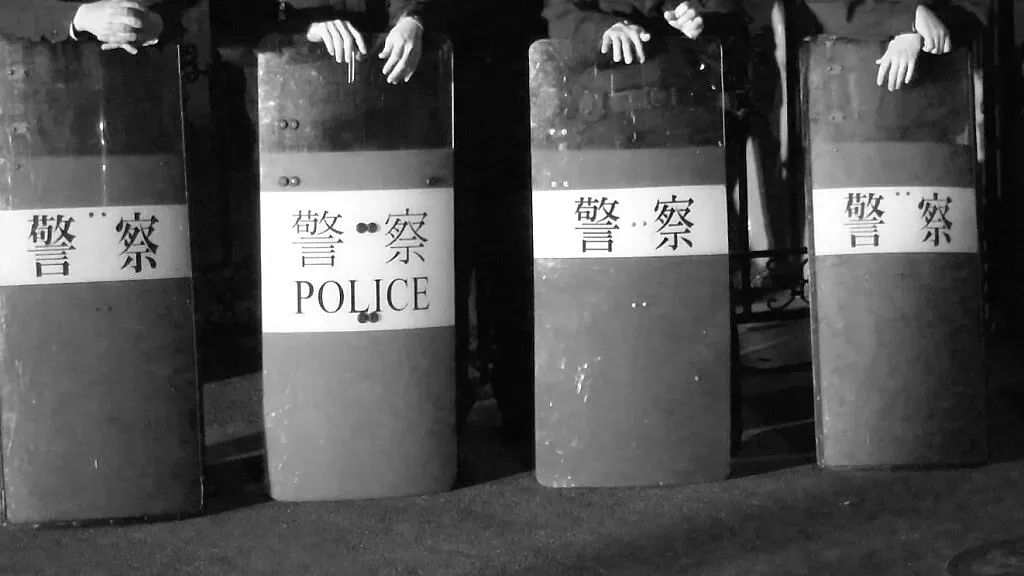
A Grassroots Police Officer's Confession: A Police Academy Student Criticized and Attacked for Opposing Pension Reform—What is Wrong with Police Education?
Last edited: 2026-08-29
The verbal abuse directed online at a Taiwan Police College student who expressed opinions on the recent pension reform protests actually stems from the long-standing disrespect within police culture toward individual police officers. The Taiwan Police Trade Union believes this is related to structural problems in current police education.
The contemporary role of the police is defined as combating crime, maintaining social order, and community service. The more comprehensive police officers' concepts of human rights and the rule of law are, the more immune they are to political interference and the more they can enhance the legitimacy of law enforcement.
Unfortunately, current police officers in Taiwan do not reality-wise reflect this. There is a heavy emphasis on, and subjection to, the bureaucratic organization's top-down command structure, where superiors' demands take priority; the organizational culture is closed off, excluding external oversight and participation, and so on.
The Ills of Police Education
We believe this stems from two major issues in police education: first, an educational approach that "ignores student agency and emphasizes obedience above all else," which disregards student self-governance space and leaves rights protection entirely blank, lagging behind universities with more advanced student rights and lacking student courts to check and balance student disciplinary actions.
The second is that police academies feature "ideological courses" known as "spiritual education" to manage students' lives. Through a closed collective lifestyle, upperclassmen student cadres responsible for life management hold regulatory and disciplinary authority over underclassmen (including corporal punishment or humiliation). Such an educational approach lacks any real meaning and merely produces distorted or rigid mindsets.
The Evils of Ideological Courses
Whether at the Central Police University or the Taiwan Police College, there is practically an absurd educational policy that "emphasizes obedience as a virtue." However, "police education" is education that "nurtures law enforcement officers," and its internal curriculum should not contain "authoritarian consciousness" such as "spiritual education" or an "emphasis on obedience." These are things that must be fundamentally eradicated.
Another problem is that this type of education fails to teach students stress management and relief methods. Overemphasizing obedience tends instead to make them overlook their own physical and mental conditions during future work, pushing through regardless, which becomes a hidden trigger for illness, overwork, and suicide.
Furthermore, regarding cases encountered by the Taiwan Police Trade Union, there have been instances where students submitted articles suggesting curriculum reforms, but the school magazine refused to publish them. Currently, due to curriculum planning, "ideological" courses such as "spiritual education" are squeezing out professional technical and legal courses.
Openness, Oversight, and Reform
To address these issues, the Taiwan Police Trade Union and the Judicial Reform Foundation successfully promoted a resolution during the National Conference on Judicial Reform to establish a "Police Education and Training Curriculum Committee" under the Ministry of the Interior. This gives police students channels to reflect the actual conditions of school administration, take the initiative to break down the rigid system, and utilize the power of external professional personnel to assist in reform.
Current police education is a top-down oppression. We should break down this closed educational model that emphasizes obedience, safeguard students' basic rights and freedom of expression, and allow the public to share concerns. Our association will continue to oversee reforms to steer police education toward a direction that aligns with a contemporary civil society.
※ Originally published in the Apple Daily on August 23, 2017
This article is an AI-generated translation of the original Chinese text. In the event of any discrepancy, the Chinese version shall prevail.