
"First Encounter with the Police Powers Act!" Special Feature ~ The Key to Success or Failure?! The Urgent Need to Elevate Police Quality
Last edited: 2026-08-29
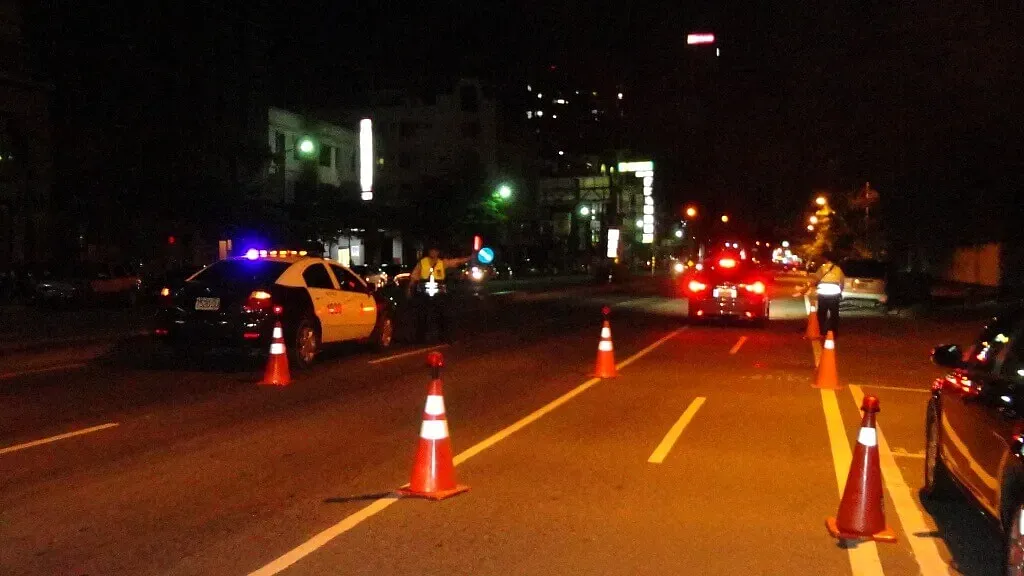
For a long time, police authorities have heavily enforced administrative dispositions such as "spot checks," "roadblocks," and "stop-and-frisks" under the banner of "maintaining public order." Due to insufficient qualifications and poor training among frontline officers, this frequently leads to improper discretion when exercising public power, arousing public resentment. Furthermore, the lack of a clear legal basis and regulatory framework has also made police officers prone to controversy.
Looking at police-related laws and regulations as a whole, Article 11, Paragraph 3 of the "Police Duties Act" can be described as the sole legal basis for "spot checks." However, analyzing the legal system, Article 11 of the "Police Duties Act" enumerates the methods that may be adopted in carrying out duties. Aside from possessing the nature of an organizational law, it actually also serves the function of a behavioral law. Moreover, from the perspective of the "reservation of law" principle, administrative dispositions possessing the nature of compulsory measures—such as "spot checks," "roadblocks," and "stop-and-frisks"—implicate fundamental rights of the people guaranteed by the Constitution. Relying solely on the broad, general provisions of the Police Duties Act clearly fails to meet the requirements of the rule of law and administration in accordance with the law.
However, is the practical sphere completely unaware of the above? The answer is clearly no, as can be seen from the National Police Agency's active research and drafting of the "Police Power Exercise Act (Draft)." However, current regulations afford police authorities immense leeway in operational discretion. At the same time, the grand banners of "striking against illegality" and "maintaining social order" have caused current improper systems to be viewed as a "necessary evil," causing the "Police Power Exercise Act (Draft)" to remain unreleased even after several years of research and drafting. In addition to revealing that current regulations governing the execution of police duties are incomplete and—in weighing "human rights protection" against "the maintenance of social order"—no longer meet societal needs, J.Y. Interpretation No. 535 further prompted all sectors of society to actively confront this issue.
The "Police Power Exercise Act Bill" proposed by the JRF is based on the framework proposed by Professor Li Chen-shan, and has been deliberated upon more rigorously toward the direction of "protecting human rights." The author has repeatedly participated in the JRF's discussions on the "Police Power Exercise Act Bill" and found that, on the one hand, the senior legal practitioners participating in the discussions were anxious for reform and expected the police to shoulder the heavy responsibility of maintaining social order; on the other hand, they harbored an extreme sense of distrust toward the quality of police officers in the execution of their duties. They intended to strictly regulate police officers' performance of duties through the enactment of this bill to prevent the occurrence of ultra vires and abusive acts. As a key member of the Taiwan Police Reform Association, the author hopes that under the premise of balancing human rights protection and the maintenance of social order, the "Police Power Exercise Act" will enable police officers to carry out their duties and missions more actively and effectively, rather than merely passively preventing flaws in police performance and damaging police morale.
As previously mentioned, J.Y. Interpretation No. 535 has stated that current regulations governing the execution of police duties are incomplete. The purpose of the JRF in drafting the "Police Power Exercise Act Bill" is also to find an appropriate and reasonable balance between "the maintenance of social order" and "human rights protection." However, with rapid societal changes, maintaining this balance is no aberration.
Nevertheless, the author believes that whether frontline duty officers possess sufficient professional competence to correctly and appropriately judge the timing of application is the key to whether this bill can be effectively implemented. "Laws cannot enforce themselves"; the ultimate concern of all sectors of society should be whether frontline law enforcement police officers can legally and correctly apply relevant provisions after the passage of the "Police Power Exercise Act," thereby elevating the quality of law enforcement.
Most police operational acts are professional judgments made by police officers based on the maintenance of social order. Compared to the current judicial system's restrictions on personal liberty and physical freedom—which both require an "independent adjudication organ" and "high-caliber professionals" to exercise strict gatekeeping from both systemic and human perspectives (recently, the prosecutorial organ's power of compulsory measures was returned to the courts, aligning with the trend of the times favoring human rights protection)—when police officers carry out duties such as "spot checks," "roadblocks," and "stop-and-frisks," they are constrained by the characteristics of their duties and must exercise discretion at the very first instance, unable to adopt a prior warrant system requiring advance application for search warrants, wiretap warrants, etc., subject to layers of checks and controls by superiors or other organs. In the provisions of this bill, the use of many "indeterminate legal concepts" is unavoidable—such as "to prevent specific harm, with factual grounds sufficient to warrant verifying one's identity," or "lingering with factual grounds sufficient to warrant the agreement, preparation, or execution of a major crime." The purpose is to enable law enforcement officers to exercise the most appropriate discretion based on the circumstances of individual cases. Therefore, whether police officers can precisely grasp the indeterminate legal concepts within the provisions and exercise appropriate discretion amidst the myriad situations at the duty scene is the key to the success or failure of the implementation of the "Police Power Exercise Act."
As is universally known, the quality of police personnel is uneven and cannot be compared to that of judicial officials or investigators. Coupled with the large number of police personnel, the quality of services they provide varies drastically. Whether current police operational acts can meet the expectations of all sectors of society is a matter of concern. In fact, prior to the rendering of J.Y. Interpretation No. 535, the author explained the dilemmas encountered by police officers in executing "spot checks," "roadblocks," and "stop-and-frisk" duties to multiple legislators regarding relevant provisions of the "Police Power Exercise Act (Draft)" and requested support for the enactment of related bills. Although most legislators understood that the act would immensely impact the rights and interests of the people, they unanimously questioned whether the quality of police personnel was sufficient to shoulder the law enforcement powers conferred by the law. Although the views of the legislators reflect the aspirations of the majority of the public and constitute the key to the promotion of this bill—namely, the quality of the officers—as a member of the Police Reform Association, the author remains apprehensive regarding the legislators' reaction of preferring to tolerate ambiguous provisions in current laws rather than legislate to clearly confer law enforcement authority upon the police.
The declaration in J.Y. Interpretation No. 535 that relevant laws and regulations must be enacted within two years has forced relevant government units to confront the gray areas of the current system. At the same time, it has also announced that the doubts held by honorable legislators and the public regarding the quality and duty-execution capabilities of police personnel must be resolved within two years. The enactment of the "Police Power Exercise Act" achieves completeness at the legal level, but whether the doubts concerning police quality can be resolved awaits long-term planning from the perspective of the police education system. The Police Reform Association is currently promoting draft amendments to the Police Act, the Police Personnel Appointment Act, and the Police Education Act. It hopes to reference the Ministry of Justice Investigation Bureau and Judges and Prosecutors Training Institute's model of "testing first, training later," merging the Central Police University and the Taiwan Police College, recruiting police personnel from among college graduates, and—after they pass the police special examination, receive professional police training, and acquire appointment qualifications—dispatching them to serve in frontline police units, thereby achieving the rapid elevation of the quality and capability of frontline duty officers.
Finally, the author hopes that the impact of J.Y. Interpretation No. 535 on police authorities will be positive. Not only can it accelerate the pace of reform within police authorities to meet the requirements of administration in accordance with the law, but it also compels them to engage in self-learning, growth, and re-education, thereby elevating the quality of police duties. At the same time, it protects the rights and interests of duty officers and the public, regaining public confidence and respect for the police.
This article is an AI-generated translation of the original Chinese text. In the event of any discrepancy, the Chinese version shall prevail.