
Are Chief Prosecutors Handling Cases a Farce? Or a Reform?
Last edited: 2026-08-29
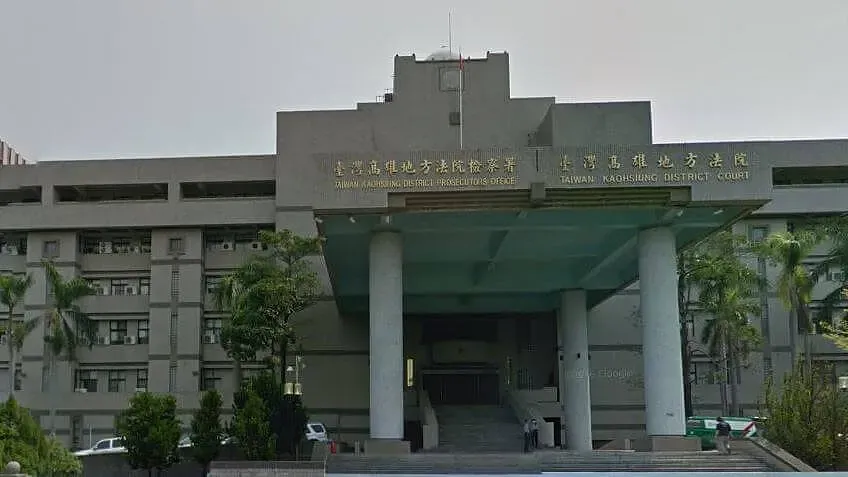
Recently, the Kaohsiung District Prosecutors Office held a prosecutors' meeting and resolved that the Chief Prosecutor "shall be assigned and investigate major public security endangering cases with no defendants in custody." This resolution has sparked considerable debate. Some prosecutors believe that assigning just "one case" carries "symbolic meaning far greater than its substantive significance." Meanwhile, some chief prosecutors argue that based on the principle of the unity of the prosecution system, chief prosecutors already direct and supervise major high-profile cases, and coupled with heavy administrative duties, requiring them to personally handle cases "is truly a farce."
The Significance of Chief Prosecutors Personally Handling Cases
Based on the principle of the unity of the prosecution system, a chief prosecutor naturally has the authority to direct and supervise the investigation of cases. The perspective of frontline prosecutors may stem from a hope that chief prosecutors handle cases personally and experience frontline realities firsthand, thereby avoiding the issuance of unreasonable directives. Alternatively, prosecutors may hope that chief prosecutors can personally experience the problem of excessive workloads at the grassroots level. Relying solely on statistical management and evaluation makes it difficult to perceive the true state of affairs. When chief prosecutors directly handle cases, they can appreciate the full weight of investigative work, and subsequently seek effective reform strategies.
Of course, if a chief prosecutor handles only a single case, it will not alleviate the workload burden of prosecutors; and if the discussion stops at whether chief prosecutors should handle cases or not, it will fail to foster further reforms in the prosecutorial system. Therefore, if this incident has any significance, it should be hoped that it brings out the substantive effects of internal prosecutor autonomy and democratic self-governance, particularly the two major issues of "democratization of prosecutors' meetings" and "making the unity of the prosecution system transparent (sunshining)."
Realizing the Democratization of Prosecutors' Meetings and the Transparency of the Unity of the Prosecution System
Under Article 91 of the current Judges Act, resolutions made in prosecutors' meetings are merely advisory in nature. However, as prosecutors' meetings represent the collective will of all prosecutors, if resolutions remain merely advisory, it will hinder the promotion of internal prosecutorial democratization. Furthermore, according to the Implementation Regulations of Prosecutors' Meetings issued by the Ministry of Justice, prosecutors' meetings are convened only once every six months. To cope with ever-changing crime patterns and allow the prosecutorial organization to function effectively, convening so infrequently is likely too little, too late. To implement internal prosecutorial democratization and respond to social dynamics, prosecutors' meetings should be held monthly and should carry a certain binding force. Of course, since the chief prosecutor concurrently serves as the head of administrative supervision, if they disagree with a meeting resolution, under current law they may directly alter it (respecting the chief prosecutor); alternatively, the law could be amended to require the submission of a request for reconsideration, and if overruled, the chief prosecutor must accept it (respecting the prosecutors' meeting); or a request for reconsideration could be submitted first, and if the prosecutors' meeting still disagrees after reconsideration, the chief prosecutor may still directly alter it, but must state the reasons in writing with an attached note (the eclecticism approach).
Secondly, based on the principle of the unity of the prosecution system, chief prosecutors may direct and supervise cases under investigation. Although Article 93 of the Judges Act explicitly stipulates that chief prosecutors must do so in writing, it fails to prescribe penalties for violations. Facing chief prosecutors who fail to comply with regulations, prosecutors often have grievances with no recourse. In this regard, the National Conference on Judicial Reform resolved that: when a chief prosecutor fails to submit written instructions in accordance with regulations, it shall constitute grounds for individual case evaluation, thereby clarifying the attribution of responsibility and achieving transparency in the unity of the prosecution system.
Viewing Reform Opportunities Positively
The National Conference on Judicial Reform has triggered a series of reform-oriented awareness, and it is hoped that both high-level and grassroots prosecutors will positively view the "resolution of the prosecutors' meeting" recently made by the Kaohsiung District Prosecutors Office. Serving as an opportunity for reform, a comprehensive review of reform items should be conducted to make the prosecutorial system even more robust.
※ This article was published in the Apple Daily on August 26, 2017
This article is an AI-generated translation of the original Chinese text. In the event of any discrepancy, the Chinese version shall prevail.