
A Social Work Student Stumbling into the Legal Realm—Reflections of a Summer 2017 Intern
Last edited: 2026-07-27
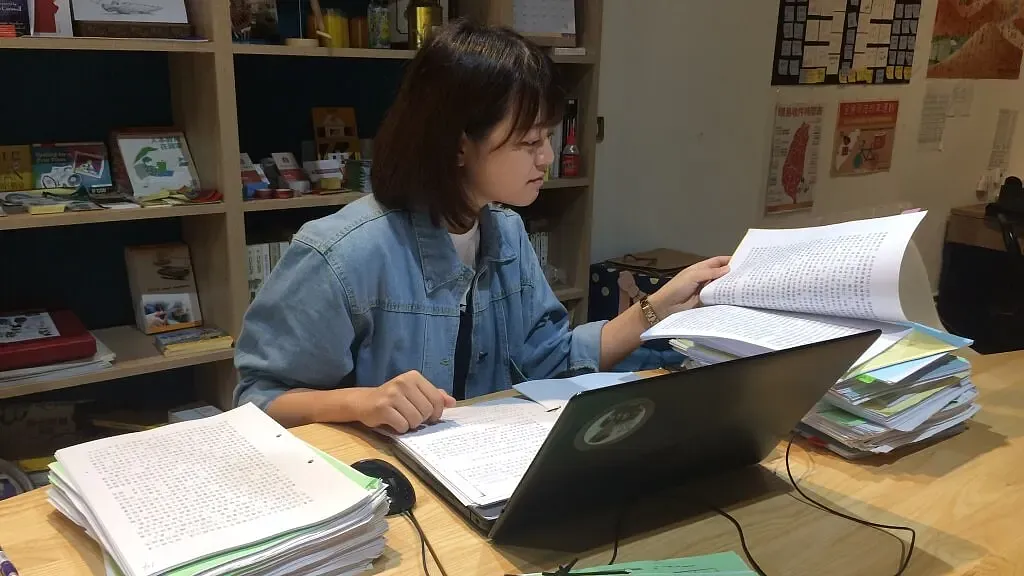
As a social work major, I unexpectedly ended up interning at the Judicial Reform Foundation, an NGO that seemingly consists entirely of legal professionals. Saying I wasn't scared would be a lie; I worried about my lack of legal knowledge and feared spending the whole summer handling administrative tasks. However, the Taichung Office completely shattered my expectations. Case files, clients, home visits, and defense team meetings—these encounters with actual "practice" and "people" became my daily routine.
Cases and Clients
During my internship, I handled four grievance cases. The one that left the deepest impression on me was a document forgery case. To better understand the client's background and situation, my supervisor took me on a home visit. Dealing with a client pouring out a heart full of grievances, trying to express my listening and understanding, and feeling sympathy for her story—all these complex emotions intertwined to form my first home visit experience. Actually walking into the client's home and sitting down to listen to her speak was just like the roleplays in university classrooms: both authentic and exhilarating.
Court observation was also part of my internship activities. Over the summer, the Cheng Hsing-tzu (鄭性澤) case was holding intensive hearings at the Taiwan High Court. When I heard Cheng Hsing-tzu tell the judge during a court observation, "The police tortured me," for a fleeting moment I thought I was in a movie scene, yet it was a harsh irony of real life. It was then that I truly understood how infinitesimal an individual can be in the face of the state apparatus.
There was so much more. Internship life wasn't just about dealing with case files at hand and understanding the needs of grievance petitioners. When living, breathing clients of wrongful convictions stood right before me, I deeply felt the pressing impact, and I began to ponder whether social work has the potential to integrate with the judiciary when addressing these needs.
Interprofessional Collaboration
The issues encountered by the clients and subjects served by the Judicial Reform Foundation are typically "legal problems," so the staff members within the organization are practitioners with legal backgrounds. As a social work student, going from feeling nervous and unsure of how to navigate the cooperation between social workers and legal professionals to genuinely getting to know the other law interns made me realize my worries were completely redundant. Every single law student became a consultant and a source of security for me during my internship.
Through this, I also realized the importance of interprofessional collaboration. For the cases accepted by the JRF, the problems faced by individuals are rarely one-dimensional; multiple professions are often needed to intervene and provide treatment. At this point, I understood that as a "helping professional," one must maintain respect and acceptance toward various professions. After all, an individual's predicament is generated by the reciprocal influences of various domains in the social environment, and different professions must interconnect closely to provide the client with the most appropriate service.
The Role of Social Work
With the Judicial Reform Foundation sharing the vocation of helping others, I often felt as though I were in an office without social workers, yet brimming with a "social work soul." Throughout the two months, I kept pondering how the social work profession could be integrated. I believe that during initial client interviews, post-case intervention planning, and follow-ups after clients return to social life, social work can help individuals rebuild social resource networks once they step away from their "cases," ensuring that the case does not continue to affect their future lives.
Stumbling into an internship at the JRF brought rewards I never could have imagined. Although the practical work I encountered was not social work and I couldn't always meet face-to-face with clients, I witnessed countless lives through case files and was prompted to consider how the social work profession can be applied in the judicial dimension. I am so glad I came to the Judicial Reform Foundation, which allowed me to learn helping practices while understanding how other helping professionals utilize their expertise to assist people.
※Editor's Note: This organization is an approved cooperative internship partner of the Department of Social Work at Tunghai University.
This article is an AI-generated translation of the original Chinese text. In the event of any discrepancy, the Chinese version shall prevail.