
White Paper on Police Administration Reform
Last edited: 2026-08-29
Introduction
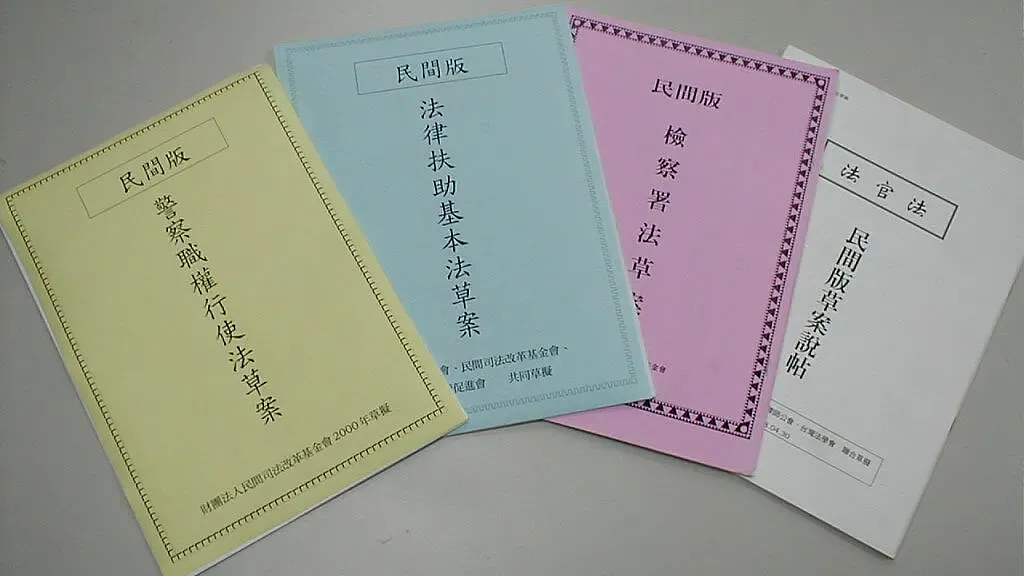
As front-line law enforcement officers, police are also at the very upstream of judicial reform. In recent years, judicial reform has become a social consensus in Taiwan, with judicial authorities and civil society organizations cooperating and monitoring each other to jointly advance judicial reform. Regarding the development of police administration reform, not only has the Police Reform Association recently been established, but police authorities have also proactively proposed measures to implement the principle of "non-disclosure of investigation" stipulated in the Code of Criminal Procedure, marking another step forward in human rights protection within Taiwan's police administration. Reviewing Taiwan's police administration over the long term—constrained at times by human and material resources, or limited by conceptual education—there remains much room for improvement. Therefore, in addition to hoping to enact the "Police Power Exercise Act" through a long-term schedule to comprehensively regulate and institutionalize police powers, civil society organizations also hope to establish a medium- and short-term reform timetable to inject vitality into police administration reform. Consequently, several reform opinions are proposed as recommendations for future police administration reform.
Demands for Improvement
Enhancing Scientific Investigation and Eradicating Extortion by Torture
Scientific investigation is a common goal for advanced democratic nations worldwide. Its purpose is not only to combat crime more effectively, but also to achieve the objective of maintaining public order with the minimum infringement on human rights.
Strengthening Training in Scientific Investigation
Scientific investigation requires not only equipment and instruments, but more importantly, the police must possess the knowledge and ability to conduct scientific investigations. For example, maintaining the initial crime scene, preserving physical evidence, and collecting evidence all involve critical factors that determine whether scientific investigations can be effective. Therefore, enhancing the police's understanding of scientific investigation and subsequently cultivating professional knowledge in scientific investigation is the way for the police as a whole to step into a new era of scientific investigation.
Establishing Scientific Investigation Equipment
Scientific investigation changes not only the methods by which the police investigate cases, but also requires scientific instrument equipment to complement each other and enhance the police's ability to combat crime. Therefore, securing budget allocations for scientific investigation instruments and equipment is a major undertaking alongside personnel training.
Establishing a Scientific Forensics Center
The establishment of scientific investigation capabilities can by no means be achieved overnight. From a long-term perspective, establishing a national-level professional forensics unit is necessary to raise the domestic level of forensic expertise and build public trust in scientific forensics, rather than relying on "biased scientific forensics" which results in important forensic cases having to be sent abroad for analysis to convince society. Therefore, a professional, neutral, and academic forensic unit should be fostered to lay a solid foundation for the scientification of Taiwan's police administration.
(Please refer to Appendix I: Preliminary Proposal for the Reform of Taiwan's Criminal Forensics System)
Eradicating the Bad Habits of Planting Evidence and Suppressing Cases
The issues of police suppressing cases (failing to record reported crimes) and planting evidence have become the main reasons for public distrust in the police, thereby severely damaging police credibility. To fundamentally eradicate this problem, standard operating procedures for reporting cases should be established on the one hand, requiring the police to strictly abide by statutory procedures and establishing corresponding rights and responsibilities through a stratified responsibility system. Simultaneously, police officers who suppress cases or plant evidence should be severely punished.
Establishing Standard Operating Procedures for Identification
To date, Taiwan still lacks a set of standard identification procedures. In fact, flaws in many criminal cases stem precisely from defects in the identification procedure. Therefore, a set of standard identification procedures should be established and included in the police investigation manual as the basis for police conducting identification procedures. The purpose is, on the one hand, to soundly develop the identification system, and on the other hand, to protect the police in exercising their duties under the premise of observing procedural justice. (Please refer to Appendix II: Identification Procedures in Advanced Nations—Taking Germany as an Example)
Implementing Audio and Video Recording Throughout the Entire Process
The Code of Criminal Procedure clearly stipulates that police interrogation procedures must be audio-recorded throughout the entire process, and video-recorded when necessary. However, in practice, this has never been properly implemented; either audio tapes are claimed to be lost when reviewed by the court afterward, or recordings were never made from the beginning. This consequently creates a general public distrust and shadow of extortion by torture regarding police interrogations. Therefore, the police should rapidly establish audio and video recording equipment and incorporate it into the manual for interrogating officers, so as to fulfill the provisions of the Code of Criminal Procedure, win public trust, and reshape the professional image and working dignity of the police.
Improving the Preparation of Police Interrogation Records
The preparation of police interrogation records should be professionalized. On the one hand, basic competencies in preparing records should be trained for general police officers, or specialized police officers for preparing records can even be cultivated through a division of labor to collaborate with criminal police officers in preparing records. Furthermore, records inconsistent with the truth must not be produced through improper means. For example, the prohibition of nighttime interrogation should not be circumvented using template documents that cause the interrogated person to unknowingly waive their rights against nighttime interrogations and continuous interrogations.
Respecting the Right to Legal Consultation
In current practice, even when an interrogated person notifies their lawyer to be present, the police prohibit the lawyer from communicating with their client, rendering the client's right to defense by counsel entirely nominal. Therefore, the police's mindset of respecting basic human rights must be rebuilt, and they must not obstruct the legitimate exercise of the fundamental criminal right of the right to legal consultation.
Revising the Performance Evaluation System
A rigid evaluation system not only affects police morale, but also indirectly affects the police's determination to investigate the real perpetrators. Regarding the performance system, the system used by the Investigation Bureau should at least be emulated, where the issuance of case-solving bonuses is based on the prosecutor's indictment (foreign countries mostly base this on the first-instance guilty verdict), rather than the timing of the police's announcement of a solved case. Additionally, prosecutors' evaluations should be included in the scope of police performance appraisals, ensuring that outstanding police officers who can cooperate with prosecutors' directives to combat crime receive the recognition they deserve.
Strengthening the Implementation of Human Rights Education for Police
It is necessary not only to strengthen human rights education and training curricula in police educational institutions, but also to roll out in-service human rights education for serving police officers, preventing the police from crossing human rights boundaries out of eagerness to combat crime.
This article represents the opinions of the Foundation's "Police Law Drafting Group" and was written by Professor Meng Hsien-hui of the Central Police University.
Appendices
This article is an AI-generated translation of the original Chinese text. In the event of any discrepancy, the Chinese version shall prevail.