
Observations on the Li Ming-che Case: Seeing What Taiwan Must Do at the Yueyang Court
Last edited: 2026-08-29
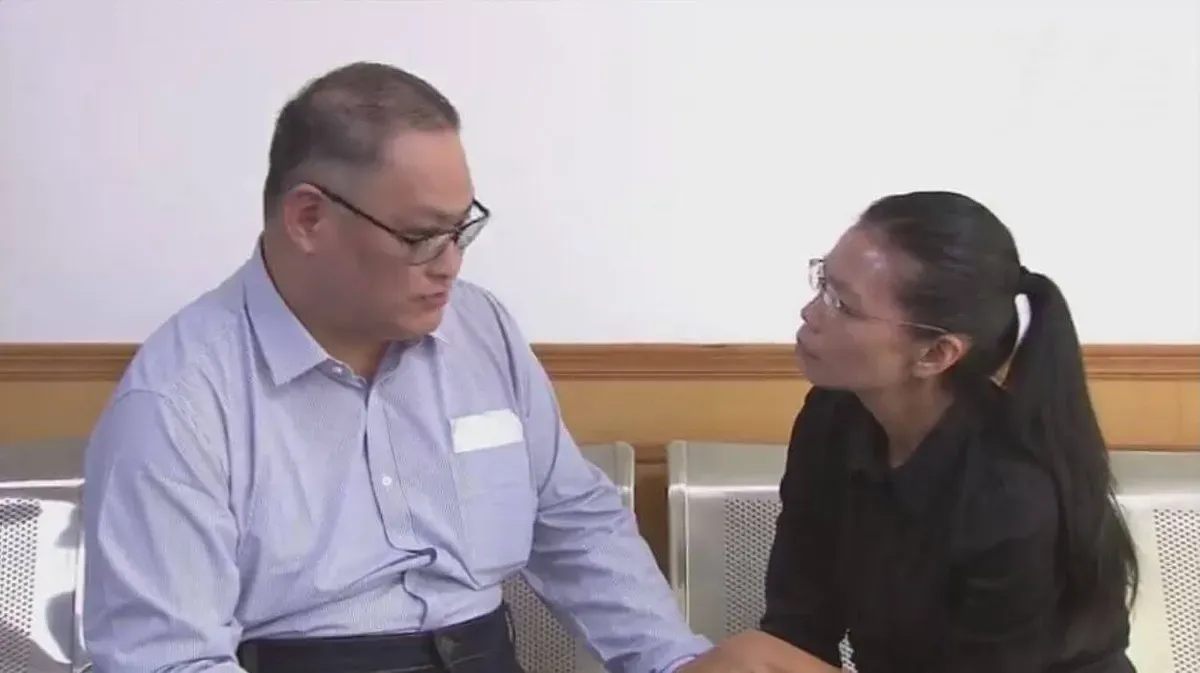
Photo / Sourced from the official Weibo account of the Yueyang Intermediate People's Court of China
Monday's major trial in the Lee Ming-che case set numerous records in cross-strait judicial relations. Most notably, the live broadcasting of court proceedings via Weibo allowed Taiwanese people—and even Taiwanese legal professionals—to witness the actual operations of China's judiciary for the first time. Having accompanied Lee Ming-che's wife, Lee Ching-yu, to observe the trial at the Yueyang Intermediate People's Court, I witnessed China's confident display of "the power of the rule of law" and its efforts to "educate Taiwanese people to consciously abide by mainland laws." Feeling the anxieties and difficulties faced by our Taiwanese compatriots in a foreign land, I deeply felt that beyond military, diplomatic, and economic affairs, the judiciary has also become a major issue concerning the stable development of cross-strait relations.
Since the signing of the Cross-Strait Joint Crime-Fighting and Judicial Mutual Assistance Agreement in 2009, both sides have engaged in formal judicial cooperation and established a normalized operational model. However, since President Tsai Ing-wen took office, the Chinese side has unilaterally suspended the vast majority of these operations. The most impactful consequence is the complete paralysis of personal safety protections for Taiwanese people detained, held in custody, or serving sentences in China. Consequently, matters such as family visits, hiring lawyers, parole, medical parole, and the repatriation of prisoners have once again been driven underground, and cross-strait brokers—who had been dormant for a long time—have become active once more.
After Lee Ming-che went missing, Mrs. Lee refused to have cross-strait brokers mediate behind the scenes, instead presenting her case forcefully to the international community. This not only secured her permission from China to attend the trial as an observer, but also allowed a Straits Exchange Foundation representative to set foot on Chinese territory for the first time since May 20 of last year. Even Taiwanese lawyers and legal groups, whose accompaniment was never previously permitted, were allowed to join the delegation. Mrs. Lee's refusal to settle privately may have raised concerns about Lee Ming-che's situation, but it has compelled governments on both sides to confront the deadlock into which the judicial mutual assistance agreement has fallen.
Seeing Lee Ming-che finally read from a script that "the enforcement of the rule of law in mainland China is vastly different, and this has given me a renewed understanding of mainland China," I believe every Taiwanese person shares his renewed understanding of China's judiciary, while simultaneously cherishing Taiwan's hard-won judicial independence and legal civilization all the more. In fact, Taiwan's judiciary has repeatedly faced external challenges. For example, in the Andrew Wang case and the Zain Taj Dean case, the judiciaries of Switzerland and the United Kingdom refused to extradite the defendants on the grounds that Taiwan retains the death penalty and has poor prison conditions, which prompted the Taiwanese government to reform and respond. Facing the challenge of China trying the Lee Ming-che case under the charge of "subversion of state power," how should the current Taiwanese government respond?
First, China emphasized that it had no obligation to notify the arrest of Lee Ming-che, citing that cases involving national security fall outside the scope of notification stipulated in the Cross-Strait Joint Crime-Fighting and Judicial Mutual Assistance Agreement, thereby highlighting the loopholes in the existing agreement. In this regard, the Taiwanese government should strive to ensure that whenever a Taiwanese person has their personal freedom restricted in China, China must notify Taiwan. Until the agreement is amended, the Taiwanese government should widely publicize the special and distinct provisions of Chinese law so that our citizens are aware and can take precautions.
Second, almost all the criminal acts for which China indicted Lee Ming-che were committed in Taiwan (via the internet), and these acts are entirely legal in Taiwan. According to Article 8 of China's Criminal Code, if a foreigner commits a crime against China outside of China, and the act is not punishable under the law of the place where the crime was committed, China has no jurisdiction. The Taiwanese government should fight for Taiwanese people to enjoy this same right; otherwise, cases in which Taiwanese people—who are extremely unfamiliar with Chinese laws—unwittingly violate Chinese law will happen repeatedly.
Finally, precisely because the Chinese government has closed off communication channels, the Taiwanese government should all the more proactively collect cases of individuals losing their personal freedom in China, grasp comprehensive information to the greatest extent possible, and actively provide legal assistance modeled after the Lee Ming-che case, thereby cutting off the space for cross-strait brokers to profit from the situation. The Taiwanese people must also unite, reject private settlements and extortion, and demand that cases be handled through formal judicial procedures. Only in this way can we secure bargaining chips to restart negotiations and ensure that the judicial rights of all Taiwanese people in China receive genuine protection.
※ Originally published in the Apple Daily on 2017/9/13
This article is an AI-generated translation of the original Chinese text. In the event of any discrepancy, the Chinese version shall prevail.