
Hoping the Court Sees Diverse Gender Oppression within Police Ranks
Last edited: 2026-08-29
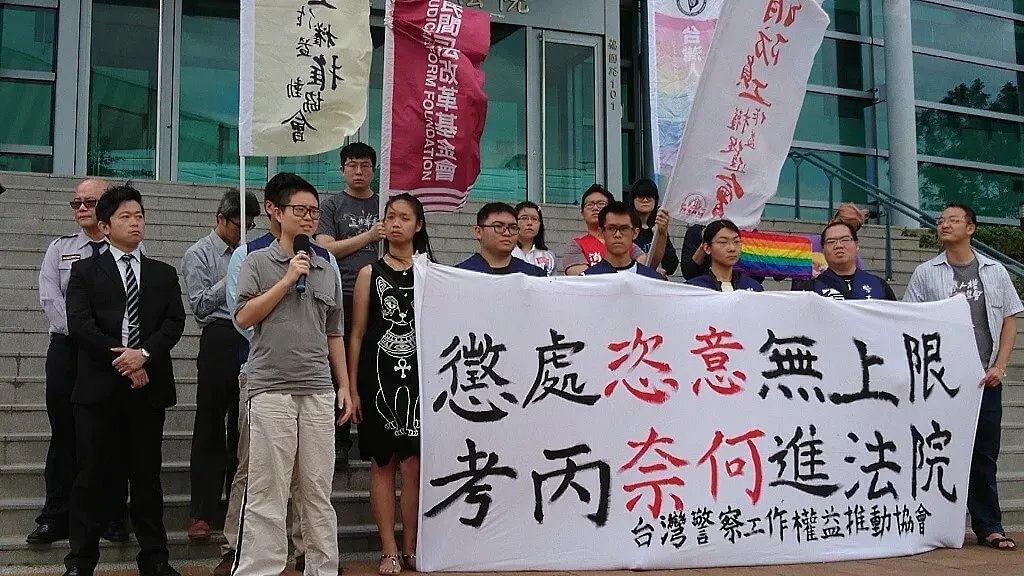
Yeh Chi-yuan, an officer of the Second Special Police Corps, received 17 reprimands and a grade-C annual performance rating in 2015 from his superiors for growing his hair long. His application for review was rejected by the Civil Service Protection and Training Commission, and today (October 26, 2017), the Taipei High Administrative Court dismissed Yeh's lawsuit, primarily on the grounds of deferring to the administrative agency's judgment. We are deeply disappointed by this ruling from the Taipei High Administrative Court.
In a constitutional state, courts bear the responsibility of guarding human rights. When administrative agencies act unlawfully or infringe upon human rights, the courts must step in to correct them. Yeh's case is a landmark case concerning gender human rights, and the court's judgment has the power to either advance or hinder the development of gender human rights.
According to Article 7 of the Act of Gender Equality in Employment, "Employers shall not practice discrimination against job applicants or employees on the basis of sex or sexual orientation in respect of the following: 1. Recruitment, screening, employment, assignment, allocation, performance appraisal or promotion." The legislative reasoning for the 2007 amendment to Article 7 explicitly stated: "The term 'sex' referred to in this article encompasses not only the physiological characteristics of sex, but also gender stereotypes, such as physiological males being bold or physiological females being gentle." This rationale for the amendment actually incorporates the concept of "gender diversity"; individuals should not suffer differential treatment based on their physiological sex, gender identity, or gender expression. Behind this legislative reasoning lie the stacked sufferings of many individuals whose traditional physiological sex, gender identity, or gender expression do not conform to norms, enduring meticulous daily gender policing, gender punishment, and even gender harassment.
The Key Requirements for Police Personnel Appearance, Etiquette, and Environmental Interior Affairs stipulate that male police officers are not permitted to grow long hair. While growing hair may seem like a minor issue, it actually constitutes an important part of gender self-identity. For those who identify with and conform to traditional gender expressions, the rule prohibiting male officers from growing long hair may seem natural and causes them no distress. However, this regulation inflicts pain on those whose gender identity and expression do not conform to traditions, even subjecting them to widespread interpersonal pressure, discrimination, and punishment. This clearly constitutes differential treatment against gender-diverse individuals. A mere phrase like "defer to the administrative agency" condones and ignores a vast amount of suffering—does the court even know?
This case can still be appealed to the Supreme Administrative Court, and Yeh will indeed appeal. We expect the Supreme Administrative Court to see the living people and their living sufferings within the law, and to deliver a landmark judgment that upholds gender human rights, truly realizing the Act of Gender Equality in Employment and making Taiwan a genuine human rights nation!
This article is an AI-generated translation of the original Chinese text. In the event of any discrepancy, the Chinese version shall prevail.