
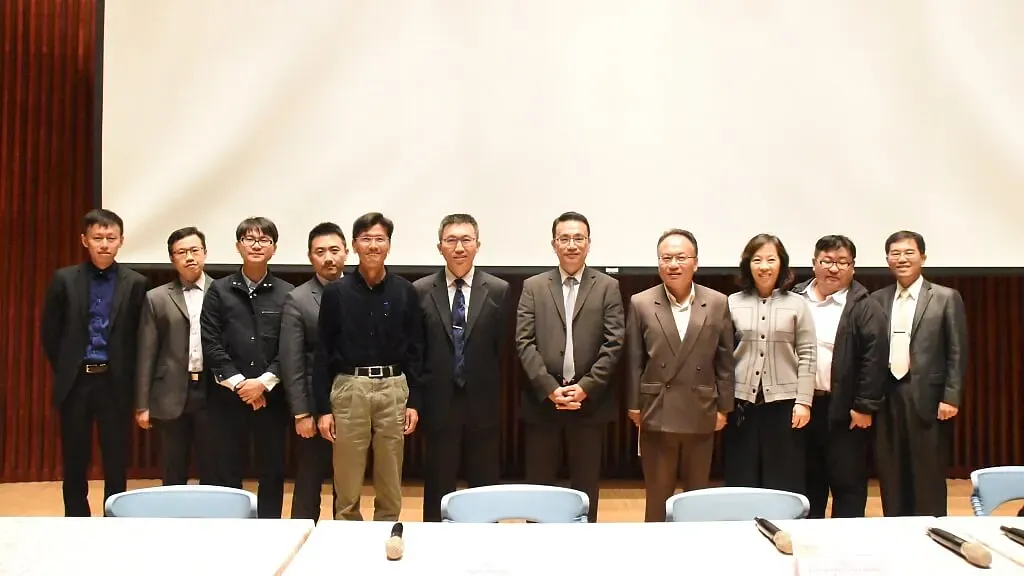
Seminar | Symposium on Forensic Science, Criminal Evidence, and Wrongful Conviction Relief | 70th Anniversary of the Taichung Bar Association
Last edited: 2026-08-29
The Innocent Relief Project originated in 2014, co-initiated by the Taichung Bar Association, the JRF Taichung Office, and the Taiwan Innocence Project (TIP). It brought together many lawyers passionate about pro bono cases to accept appeals from citizens regarding miscarriages of justice. The goal was to examine cases through multiple perspectives and collective efforts to identify potential judicial misjudgments, thereby providing relief and assisting innocent individuals in exoneration. However, in actual participation in relief work, successive challenges continuously arose, including inadequate systems to prevent misjudgments, improper preservation and difficult retrieval of evidence, high barriers to extraordinary remedies, and forensic science, all of which constitute obstacles and dilemmas in relief work.
To address the difficulties of wrongful conviction relief and attempt to formulate strategies, on the occasion of its 70th anniversary, the Taichung Bar Association invited the Taiwan Innocence Project, which is dedicated to the exoneration of the innocent, and the JRF Taichung Office, which is deeply rooted in improving the judicial environment, to hold the commemorative seminar "Forensic Science, Criminal Evidence, and Wrongful Conviction Relief" (see Appendix 1 and Appendix 2) at the Assembly Hall of the Taichung City Government New Municipal Building. It is hoped that targeting the main difficulties faced in wrongful conviction relief, three themes will be proposed from different dimensions: "The Role of Forensic Science and Criminal Evidence in Wrongful Conviction Relief," "Roundtable Meeting — Sharing Practical Experience in Wrongful Conviction Relief Cases," and "Acquisition of Audio-Visual Case Files After the Finality of Criminal Judgments – Starting from Retrial Evidence Investigation."
On October 26, Cheng Hsing-tse (鄭性澤), who was implicated in a police-killing case, was acquitted following the opening of a retrial. The Taiwan High Prosecutors Office Taichung Branch also issued a rare statement, stating: "The High Prosecutors Office has secured exoneration for Cheng Hsing-tse, who was accused of killing a police officer, setting a benchmark and model for the new law. It is hoped that judicial personnel will take this case as a lesson and that the government can inject resources to enhance criminal forensics capabilities and prevent the occurrence of wrongful convictions." After 15 years, the innocence of the wrongfully accused was finally restored, and the Cheng case also established an important milestone in gathering the judiciary, prosecution, and defense to jointly rescue wrongful conviction cases. Much like the purpose of this commemorative seminar, it is hoped that diverse compositions and multi-party perspectives will be gathered, coming together to participate through discussion and critical thinking to see a clearer prospect and way out for wrongful conviction relief practice.
In the future, the Taichung Bar Association will continue to cooperate with civil society organizations to continuously promote judicial reform and fulfill the mission of lawyers in safeguarding human rights and promoting the rule of law. It is further anticipated that through the discussions of this seminar, reform momentum can be centralized and extended, continuing and expanding case relief in central and southern Taiwan, joining hands to improve the judicial environment, and injecting more vitality into Taiwan's wrongful conviction relief.
Press Contacts
Lo Shih-hsiang, Executive Director, Taiwan Association for Innocence
Huang Wei-ting, Director, JRF Taichung Office
Appendices
| Time | Session and Content | |
| 09:30~09:50 | Registration | |
| 09:50~10:00 | Opening Remarks by Organizing Organizations & Introduction of Distinguished Guests Hung Ming-ju, Chairperson (Chairperson, Taichung Bar Association) Chiang Hui-min, Chief Prosecutor (Chief Prosecutor, Taiwan High Prosecutors Office Taichung Branch) Chang Pen-sung, Deputy Director-General (Representative, Legal Affairs Bureau, Taichung City Government) |
|
| 10:00~12:00 | Session I The Role of Forensic Science and Criminal Evidence in Wrongful Conviction Relief |
Moderator: Yeh Chien-ting, Attorney-at-Law / Chairperson, Taiwan Association for Innocence (5 mins) Presenter: Huang Chih-hao, Attorney-at-Law / Attorney, Lex-Actus International Law Firm (55 mins) Discussant: Prof. Chao Yi-shan / Assistant Professor, Department and Graduate Institute of Psychology, National Taiwan University (40 mins) Discussion Q&A (20 mins) |
| 12:00~13:00 | Lunch Break | |
| 13:00~14:40 | Session II Roundtable Meeting (Sharing Practical Experience in Wrongful Conviction Relief Cases) |
Moderator: Judge Lin Meng-huang / Judge, Taiwan High Court (5 mins) Discussants (75 mins): Discussion Q&A (20 mins) |
| 14:40~15:00 | Tea Break | |
| 15:00~17:00 | Session III Acquisition of Audio-Visual Case Files After the Finality of Criminal Judgments – Starting from Retrial Evidence Investigation |
Moderator: Lin Chih-chung, Attorney-at-Law / Former Chairperson, Taichung Bar Association (5 mins) Presenter: Prof. Hu Po-yen / Associate Professor, School of Law and Department of Law, Soochow University (40 mins) Discussant: Prof. Hsu Wei-chun / Associate Professor, College of Law, Chung Yuan Christian University (40 mins) Discussion Q&A (35 mins) |
| 17:00~17:10 | Closing Remarks and Adjournment Announcement by Organizing Organizations | |

This article is an AI-generated translation of the original Chinese text. In the event of any discrepancy, the Chinese version shall prevail.