
Grand Justices' Declarations of Unconstitutionality: Are the Courts Always Protecting Bad People?
Last edited: 2026-08-29
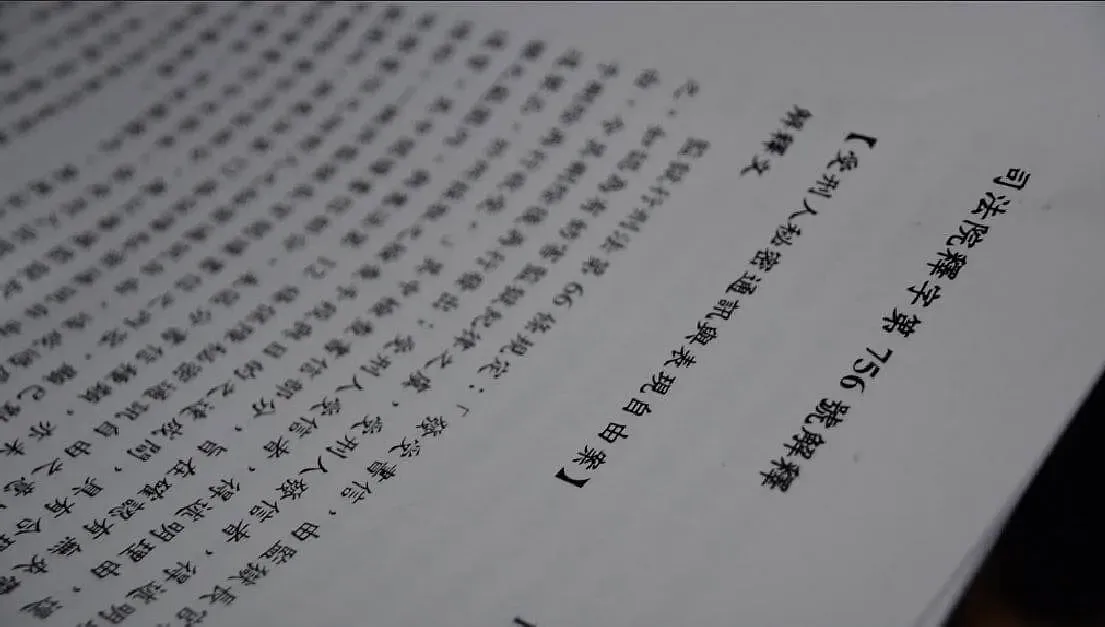
On December 1, 2017, the Judicial Yuan rather unusually issued two Constitutional Interpretations on the same day, declaring certain provisions of the Enforcement Rules of the Prison Act and other regulations unconstitutional. The reason is that under the current system, if prison inmates believe there is an issue with their prison treatment, they can file a grievance with the authorities; however, if the grievance is dismissed, there is no possibility of subsequent remedies, including court litigation. In addition, the current system also requires that prison inmates must obtain approval from prison authorities before they can send or receive letters. One of the parties in this case wrote a memoir about what he saw in prison for public reference. After reviewing the content, correctional institution authorities deemed it problematic and required revisions before it could be sent with their consent, which the party refused, leading to a dispute and ultimately giving birth to these two interpretations.
Such a system was not only deemed by the Grand Justices to violate people's right of litigation, but in the future, the state must grant inmates the opportunity to file lawsuits in court. Regarding the inspection of inmates' correspondence, the Grand Justices provided a complex discourse, but the general meaning is: allowing prisons to inspect inmates' correspondence and demand the deletion or modification of content should only be done under conditions necessary for prison discipline, and not arbitrarily by the prison.
Such declarations of unconstitutionality may be incomprehensible to some people, or even lead them to think that the courts are always protecting bad people. However, before carefully considering this issue, we must first clarify some prerequisite questions: What is the purpose of imposing particularly strict management on inmates? Do these purposes still exist today? To achieve this purpose, what means should we use?
The most common argument is that, due to the close relationship between civil servants, inmates, and the state, and the state's necessity to command and supervise these individuals, the theory of "special power relations" was developed. This theory posits that in order to exercise state sovereignty, anyone who has a special power relationship with the state will consequently lose most of their constitutional rights, such as the right of litigation. Otherwise, if civil servants could confront the state through lawsuits, the government's authority would be difficult to establish.
However, this view is gradually being overturned. After all, we must first be human beings enjoying basic rights before we can begin to discuss how rights and obligations with the government are established. Therefore, provisions like the early Civil Service Act prohibiting dismissed civil servants from filing lawsuits in court to challenge the legality of their dismissal were deemed unconstitutional by the Grand Justices. It is conceivable that if a third party (namely, the court) is not given the opportunity to challenge the legality of government decisions, any demand made by superiors upon subordinates will become an unquestionable forbidden zone, and the possibility of abuse of power or erroneous decisions cannot be avoided. To date, those no longer considered to be in a special power relationship by the Grand Justices include civil servants, students, teachers, and detained defendants. The emergence of these two interpretations also means that inmates are no longer placed within the framework of special power relations.
Furthermore, we should more squarely face how our country's prison management policies ought to be adjusted. In fact, in our country, the basic dignity a person ought to have has rarely received attention despite the breakthroughs in special power relations. After all, besides making someone pay the price for past mistakes, another key focus of locking someone up is how to reintegrate them into society.
In these two interpretations, Grand Justice Hsu Tzong-li (許宗力) once mentioned: "When living conditions in correctional institutions fail to meet humanitarian standards and fail to implement the protection of fundamental rights, rendering inmates unable to effectively reintegrate into society, the ultimate victims and backlash will not only be correctional personnel, the inmates themselves, and their families, but will also include the entire society."
Grand Justice Huang Chao-yuan (黃昭元) also stated: "Isolation is often the breeding ground for the abuse of power, and segregation is mutually causal with discrimination. Under the condition of deprived personal freedom, inmates' external communication, submissions, and other expressions of speech are already a rare channel for them to vent depression, maintain physical and mental balance, and even seek remedies (other channels include family visits, etc.). If the restriction of personal freedom is like binding the hands and feet of inmates, then prior censorship of communication and freedom of speech is like sewing the lips of inmates shut to prevent them from making a sound."
The Shawshank Redemption, the film that has long stably ranked first on IMDb (Internet Movie Database), put a lot of effort into describing prison life. In one memorable scene, an aging inmate reflects on how these prison walls go from something a man hates, to something he grows used to, to something he eventually comes to depend on — a process the film's characters describe as being "institutionalized." This captures the process of how a prison domesticates a person. The author certainly does not agree that all prisons have problems, but neither can we agree that the current prison system is completely flawless. If we can establish a good correctional system that allows inmates to truly repent and resocialize, thereby reducing social problems such as recidivism, the beneficiaries will not be limited to inmates alone, but every member of society.
※ This article was published in ETtoday News Cloud on Dec. 12, 2017
This article is an AI-generated translation of the original Chinese text. In the event of any discrepancy, the Chinese version shall prevail.