
Doctors Who Save Lives Should Not Be Criminals
Last edited: 2026-11-03
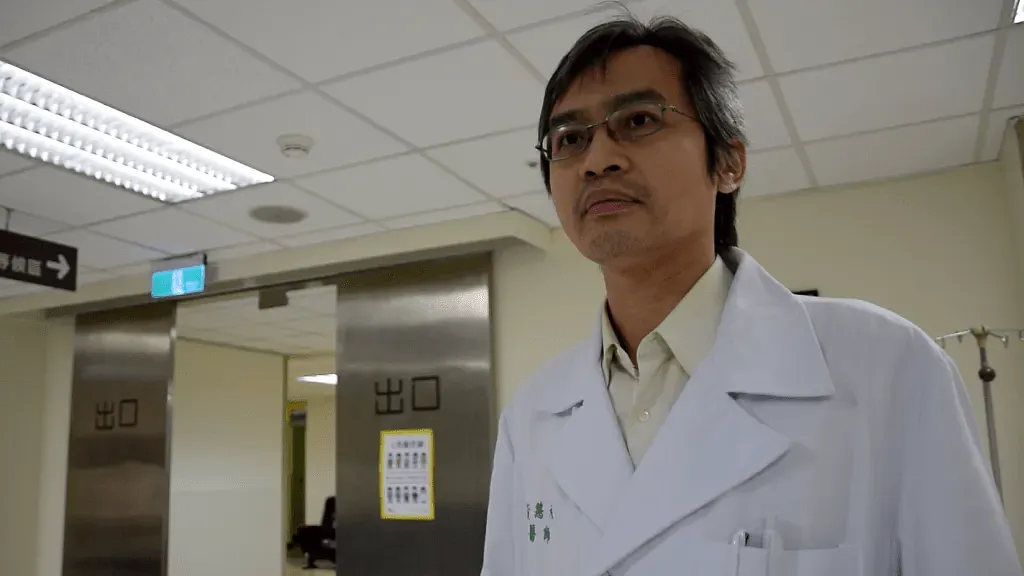
Video / Public Hearing on Article 7-11 of the Enforcement Act of the Code of Criminal Procedure—Statement by Dr. Huang Hui-fu
Regarding the caseload of the High Court.
Three years ago during the Formosa Fun Coast dust explosion, 500 patients suffered burns that very night; what were doctors supposed to do? We stayed up all night and called back doctors who were on leave, because this is our duty, our mission to serve the public. I believe judicial institutions also serve the public; medical care needs to be better, and the judiciary also needs to be better.I bravely stood forward because my medical practice stands up to scrutiny, and every single surgery I have performed can be brought out into the sunlight for public inspection.
Modern medicine is built upon continuous experimental analysis and logical reasoning; it is a scientific method of demonstration. All medical diagnosis and treatment guidelines must be supported by sufficient evidence and cannot be based on groundless speculation. The rigor of medicine is actually humility in the face of disease, because the more one understands the mysteries of the human body, the more one can only marvel at the greatness of the Creator and recognize the limitations of medicine. As a surgeon, healing the sick and saving lives is my calling, but what is hard to accept is that after devoting my body and soul to fighting disease, I am treated as a "criminal" under criminal law simply because the outcome was not ideal.
On Thursday, August 7, 2008, around 4:00 PM, the emergency department notified me of a critical patient whose right lower leg was severely swollen and exhibiting "compartment syndrome." This condition is commonly seen in traffic accidents; if not treated promptly, the mortality rate can be as high as 40%. Its treatment method is also quite specific: a "fasciotomy" must be performed, cutting an incision of about 20 centimeters in the affected area to allow blood and fluids to drain, and keeping the wound open until the swelling subsides after about two weeks before it can be sutured. During the period waiting for the swelling to subside, because the open wound lacks skin protection, bacterial infection needs to be controlled. According to medical statistics, the success rate of a "fasciotomy" is about 70%, 20% still require amputation, and 10% may result in death. At around 6:00 PM, I performed emergency surgery hoping to save this young man's right lower leg, but unfortunately, six days later, amputation was still necessary.
The patient's father believed that the amputation was the doctor's fault and filed a criminal complaint. The first-instance judgment was an acquittal, but the second-instance court sentenced me to 4 months of imprisonment. Because Article 376 of the former Code of Criminal Procedure stipulated that for offenses carrying a maximum principal sentence of three years or less, once a second-instance judgment is finalized, regardless of the outcome, it cannot be appealed to a third-instance court; thus, my case became final at the second instance and could not be appealed. The second-instance judges changed my verdict to "guilty" on the grounds that I failed to pay attention to blood circulation and vascular blockage post-operatively. The problem is that, aside from the medical records, the medical team took photographs of the wound every day, clearly proving that the blood circulation in the leg was good, which was the main reason for the "acquittal" in the first instance. However, the second-instance judgment did not mention a single word about this, presumably because the judges did not even notice the existence of the photographs. The entire judgment defies medical pathology, plays word games, and erroneously interprets the identification opinions of the Medical Review Committee using non-existent speculation, completely oblivious to its own errors. Following the second-instance judgment, however, I was deprived of my right of appeal because of the old law, losing the opportunity to defend myself.
Unjustly wronged, I sought help alone from the Judicial Reform Foundation. Over three years, efforts to overturn the case met repeated failures, making me profoundly realize the reality that Taiwan's judiciary is in urgent need of reform. Last year, after Judicial Yuan Interpretation No. 752 declared unconstitutional the provision prohibiting defendants of minor offenses convicted on appeal from appealing to the third-instance court, the Judicial Reform Foundation contacted me to inform me that this interpretation addressed the very problem I had encountered. Surprisingly, around 300 people every year share my experience of having their right of appeal stripped away, and they asked me whether I would be willing to speak out for the public, calling on the Legislative Yuan to amend the law to provide relief for past cases. Because a criminal conviction pertains to whether one has committed a crime, it has a massive impact on personal reputation, future career, and life; people should at least have one opportunity to fight for their innocence. Sun Ssu-miao of the Tang dynasty wrote: "A supreme physician heals the country, a mediocre physician heals people, and an inferior physician heals illness." Helping myself while also speaking out for these 8,000 people, I think, does not exceed the duties of a physician!
After I stepped forward alongside legislators, the Judicial Reform Foundation collected a considerable number of similar cases, eliciting a massive response. Some questioned whether appealing to the Supreme Court would necessarily overturn injustices, so why bother fighting for legal amendments? For us, while overturning injustices is certainly important, what is even more meaningful is that I will thus have the opportunity to go to the Supreme Court to argue our advocated legal interpretations, hoping thereby to influence the rulings of all lower courts! I believe this is also the shared sentiment of all those whose appeals to the third instance have been restricted, and we look forward to legislators understanding this and swiftly passing the legal amendments. After all, for an innocent person, a single day of imprisonment is a lifelong stain!
※ This article was published in the Apple Daily on 2018.05.01
This article is an AI-generated translation of the original Chinese text. In the event of any discrepancy, the Chinese version shall prevail.