
The State Owe Me a Chance for Relief to Fight for My Innocence
Last edited: 2026-07-27
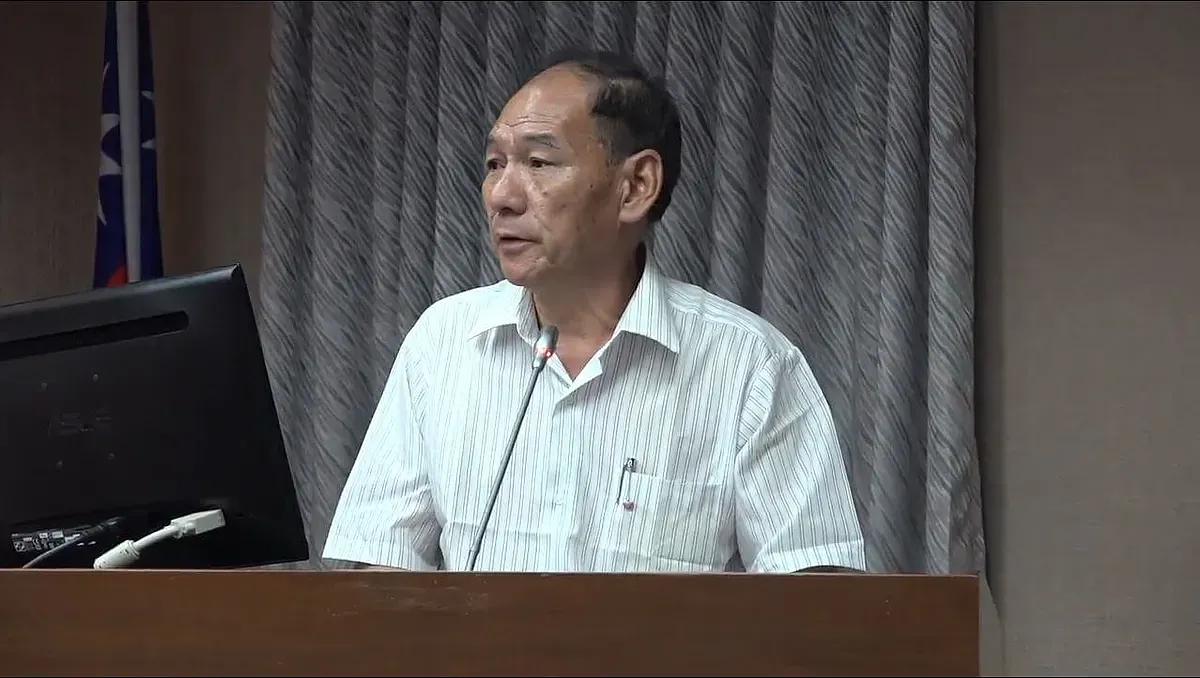
Video / Public Hearing on Article 7-11 of the Enforcement Act of the Code of Criminal Procedure — Statement by litigant Ho Ch'ing-liang
There are simply too many cases where judgments from the second instance cannot be appealed to the third instance, and I am not the only one.
I have already finished serving my ten-month sentence, and the state should grant me a chance for relief to fight for my innocence. This is our most humble plea.
I run a car rental business locally and am usually very enthusiastic about helping others. In 2011, the village warden from next door brought Mrs. Li to my home, asking me to help her handle a car accident settlement. That is how we met.
Later, Mr. Li's daughter suffered a stroke and had disputes regarding a rehabilitation vehicle, which I helped mediate. Mr. Li also had National Health Insurance issues, which I assisted with. Afterwards, Mr. Li was in another car accident and came to me to handle the settlement. They trusted me deeply. Later on, when a piece of land owned by the Li family was reclaimed by the township office, they also asked me to handle it. They often wanted to give me red envelopes of money, which I always declined. Finding that I truly had his best interests at heart and was capable of handling matters, Mr. Li entrusted me with his land, which led to the present case.
Because Mr. Li's son was serving a prison sentence, his daughter was ill and bedridden from a stroke, and he owed money to others with his land placed under a mortgage, he worried that the interest would accumulate and grow larger over time. Being advanced in age, he wanted to resolve the matter quickly.
The land was sold to settle debts, but it was co-owned by Mr. Li and his brothers, with whom he was on bad terms. Mr. Li wanted my assistance in paying off his debts, handling the property partition, and then selling the land to me. Because he trusted me, he asked me to manage these debts and the partition. His debts originally amounted to 4.6 million NTD, and he sold the land to me for 12.6 million NTD. The remaining 8 million NTD after handling the land was meant for him to retire on and care for his children. We also entrusted a local scrivener to draw up a contract. However, two weeks later, the original mortgagee of his land raised objections and even came to my house to beat me up. Two weeks after that, Mr. Li suddenly accused me of fraud.
During the subsequent investigation—that is, after the accusation was filed—they began gathering evidence to apply for an adjudication of guardianship. The court did not approve it and instead only issued an adjudication of assistance. The first-instance court therefore acquitted me.
However, in the second instance, the plaintiff presented no new evidence, and the judge presented no new evidence either. They simply claimed that because I had no money, and because I learned that there was land in their household through helping them with the car accident, I had defrauded them, thereby changing the judgment to guilty. Yet, these adjudications of assistance were all done afterwards; how could they be used to determine that he was of unsound mind previously? The opposing party's witnesses also stated that Mr. Li was completely clear-minded and showed no abnormalities when signing the contract. Why did the second-instance judge refuse to accept the testimony of the opposing party's witnesses which the first-instance court had accepted? All the favorable evidence adopted by the first-instance court was completely overturned by the second-instance judge. In my 62 years of life, I, Ho Ch'ing-liang, have had a completely clean record and am innocent. The second-instance court directly sentenced me, Ho Ch'ing-liang, to ten months for quasi-fraud. Once the judgment became final, they issued a warrant for my arrest and had me locked up.
I believe it is grossly unfair to society that the second-instance court overturned the acquittal and found me guilty without even giving me a chance to speak. It is not just me—many citizens are denied the right to further appeal. I believe a conviction reversal must be supported by substantial evidence; otherwise, no one will accept the verdict.
I have already fully served my ten-month prison sentence. I feel that the second-instance court overturned the first-instance judgment completely without any new evidence or witnesses. The state should give me a chance for relief so that I can fight for my innocence and explain things clearly to the court.
This article is an AI-generated translation of the original Chinese text. In the event of any discrepancy, the Chinese version shall prevail.