
The Constitutional Protection Vacuum Following the Abolition of the Precedent System
Last edited: 2026-11-03
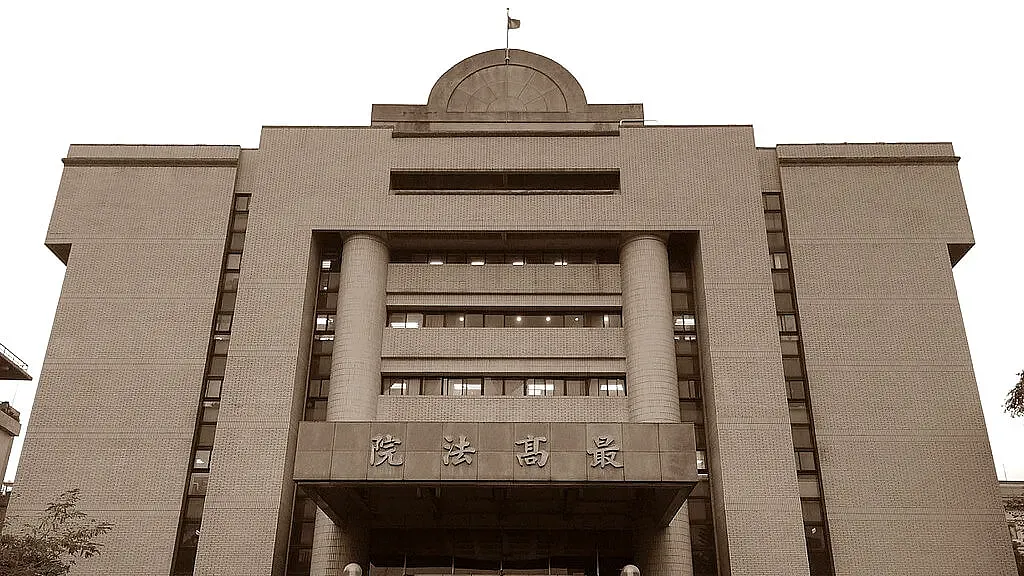
Photo Source / Wikipedia
To unify the legal interpretations of the Supreme Court, the Judicial Yuan strongly promoted the "Grand Chamber System," which was reviewed by the Legislative Yuan last week and may pass its third reading this session. Once effective, the interlocutory rulings rendered by the Grand Chamber will replace the current precedent and resolution systems, serving to unify legal interpretations. The precedent and resolution systems will thus become history; existing precedents will lose their lofty status and simply become ordinary Supreme Court judgments.
Similarly, the "Constitutional Review of Judicial Decisions System," which Judicial Yuan President Hsu Tsung-li (許宗力) is committed to promoting in the "Draft Amendment to the Constitutional Court Procedure Act," aims to allow Grand Justices to review whether the legal interpretations in final judgments are unconstitutional. However, its legislative progress is far behind that of the aforementioned Grand Chamber System. Furthermore, even if the Judicial Yuan's version of the draft were to pass its third reading today, it would still take another two years to officially take effect.
The result of the disparate legislative paces between these two seemingly unrelated systems is that Supreme Court judgments will be entirely incapable of undergoing unconstitutional review by the Grand Justices for at least several years. In particular, the aforementioned Grand Chamber rulings, which will unify Supreme Court interpretations, carry immense binding force. If such rulings violate the Constitution yet cannot be reviewed, it will create a concerning vacuum in constitutional protection.

Under the current system, "precedents" have such strong binding force that they can bind courts at all levels, practically functioning as abstract laws or orders. Consequently, the practical development of the Grand Justices' jurisprudence has extended the scope of constitutional review to cover precedents and resolutions, ensuring that people still have the opportunity to petition the Grand Justices to review whether a "precedent" is unconstitutional, thereby indirectly influencing the outcome of individual cases.
However, once the Grand Chamber System is passed first, since the precedent and resolution systems will also be abolished, the Grand Justices will naturally have no way to review whether the legal interpretations held in Supreme Court judgments are unconstitutional through precedents. At the same time, because the "Constitutional Review of Judicial Decisions System" is not passed simultaneously, the Grand Justices will be unable to review the legal interpretations adopted by the Grand Chamber, creating a constitutional protection vacuum.
Taking the case of Hsiu Tzu-chiang (徐自強) as an example: in 2000, citing a Supreme Court precedent and relying solely on the unfavorable testimonies of co-defendants Huang Chun-ch'i (黃春棋) and Ch'en I-lung (陳憶龍), the Supreme Court concluded that Hsiu Tzu-chiang had committed kidnapping for ransom and intentional homicide, sentencing him to death with finality, and Hsiu faced the prospect of execution by firing squad at any moment. The pro bono defense team considered the Supreme Court precedent cited in the judgment to be unconstitutional and petitioned the Grand Justices for an interpretation.
In 2004, the Grand Justices rendered Interpretation No. 582, declaring the two precedents cited in the Supreme Court judgment unconstitutional. The Grand Justices held that co-defendants are essentially "witnesses" and must, by law, undergo procedures of oath-taking and cross-examination before their testimonies can serve as the basis for convicting a defendant. Therefore, the un-cross-examined testimonies of Huang Chun-ch'i and Ch'en I-lung could not be used as evidence to convict Hsiu Tzu-chiang. Only then did Hsiu's case have the opportunity for a retrial, ultimately clearing his name and resulting in a final acquittal.
The reason the Grand Justices were able to accept Hsiu Tzu-chiang's petition for constitutional interpretation, issue a declaration of unconstitutionality, and ultimately vindicate Hsiu Tzu-chiang's case was precisely because the "precedent" cited in the death sentence was an object subject to review by the Grand Justices. However, once precedents and resolutions are abolished without simultaneously passing the "Constitutional Review of Judicial Decisions System" to allow the Grand Justices to review legal opinions within judgments, cases similar to Hsiu Tzu-chiang's will neither be able to petition the Grand Justices for interpretation nor have the opportunity for a retrial. Lives are at stake; how can constitutional protection tolerate a vacuum, and how can it afford to wait?
In weighing the constitutional protection of people's rights against the necessity of unifying legal interpretations, we believe that the Grand Chamber System should not take effect before the Constitutional Review of Judicial Decisions System. Otherwise, prior to the effective date of the Constitutional Review of Judicial Decisions System, people should at least be permitted to petition for constitutional interpretation regarding Supreme Court legal interpretations that previously held precedent status, as well as the legal opinions of the Grand Chamber (i.e., final judgments applying Grand Chamber rulings). This is to prevent the well-intentioned haste in passing the Grand Chamber from instead exposing the public to loopholes in constitutional protection and causing irreparable harm.
※ This article was published in the Public Television Service News Issue Center on May 3, 2018
This article is an AI-generated translation of the original Chinese text. In the event of any discrepancy, the Chinese version shall prevail.