
Item-by-Item Review of Contentions in the Second-Instance Verdict of Ch'en Ching-k'ai's Case
Last edited: 2026-07-27
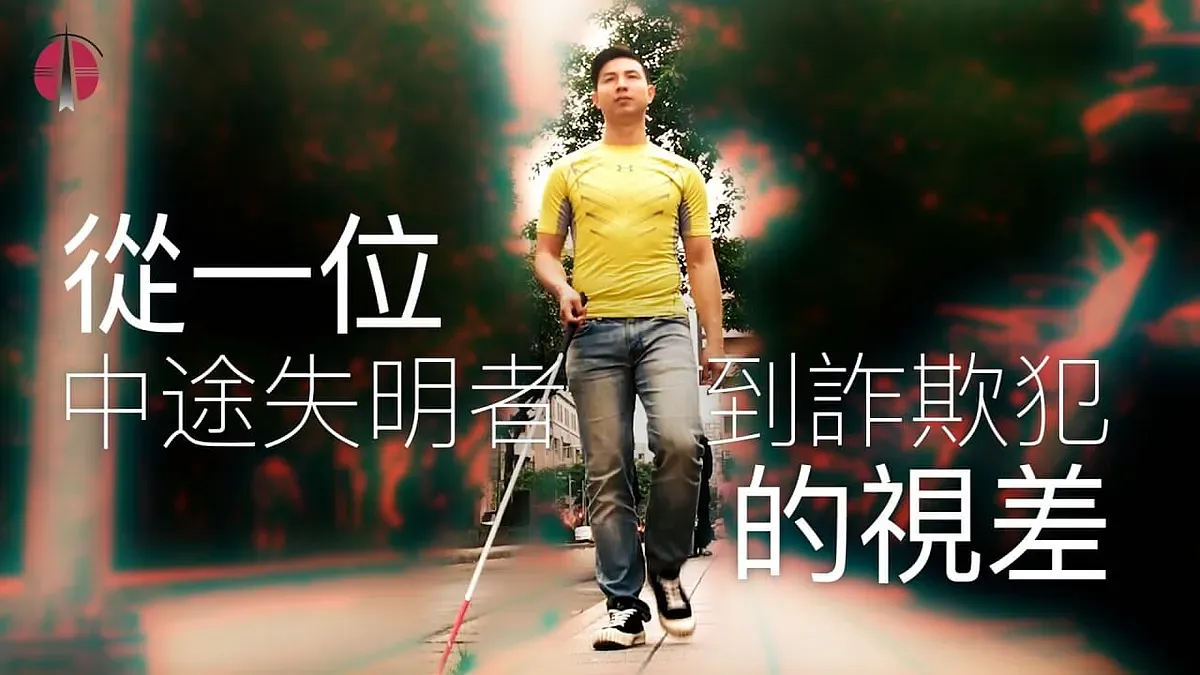
Ch'en Ching-k'ai, a former national handball athlete, suffered severe visual impairment as a result of a traffic accident. Afterward, Ch'en Ching-k'ai strove to make his behavior resemble that of a normal person, yet the court determined that he was faking blindness in order to defraud insurance payouts...
After reviewing the second-instance judgment of Ch'en Ching-k'ai's case, do you have numerous questions? It is recommended that you first read the Ch'en Ching-k'ai Case Q&A. This article provides a point-by-point response and organization regarding the contentions of the second-instance judgment.
Instruments unable to determine Ch'en Ching-k'ai's visual acuity?
Although the defendant went to multiple hospitals for Pattern ERG and Pattern VEP examinations, which can establish that the defendant's vision differs from ordinary people and is weaker than that of ordinary people, none of the aforementioned instruments can read whether the defendant's visual acuity has reached the total blindness state below the international visual acuity standard of 0.01. Many medical examination results must be coordinated with clinical symptoms for comprehensive judgment; not all diseases can be determined by a single examination or solely relying on the results (reports) of instrument examinations.
Response to Contentions
- In this case, ophthalmological examination reports can be roughly divided into two categories: "visual evoked potentials" and "visual field charts." Pattern ERG and Pattern VEP examinations can determine whether visual evoked potentials are normal, and when combined with visual field charts interpreted by experts, determine whether visual acuity is below 0.01. There are multiple test reports in this case since Ch'en Ching-k'ai's traffic accident in 2009; please refer to related appraisal history.
- If it is considered that ophthalmological vision examinations cannot objectively determine whether visual acuity is below 0.01, this case invited Professor Ch'en Chien-chung from the Department of Psychology at National Taiwan University to assist with the appraisal, using methods such as functional magnetic resonance imaging (fMRI), electroencephalography (EEG), and psychophysical behavioral evaluation. Moreover, the experimental design had already excluded the possibility of the test subject faking blindness, and appraised Ch'en Ching-k'ai's visual acuity as 0.00055.
- Regarding the appraisal, please refer to Q5 to Q8 of the Ch'en Ching-k'ai Case Q&A.
Instrument vision testing requires cooperation from the test subject?
Testing visual acuity with scientific instruments still involves factors such as the test subject's level of cooperation and the examiner's experience, which affect its accuracy. Visual evoked potential examinations may still be affected by the test subject intentionally closing their eyes or intentionally not concentrating on the screen in front of them, thereby affecting the final result. Therefore, close attention must be paid to the test subject's behavior during the examination.
Response to Contentions
-
In fact, neither the prosecution nor the judgment has ever clearly explained what kind of "trickery" and "specific non-cooperative method" Ch'en Ching-k'ai supposedly used, nor how this "non-cooperation" could successfully pass the tests of multiple hospitals and professional physicians consecutively. Furthermore, the testing method used by Shin Kong Wu Ho-Su Memorial Hospital among them utilized a Burian Allen contact lens electrode to hold open the eyelids, making it impossible for the test subject to "intentionally close their eyes." During the court session, Dr. Chao of Shin Kong Hospital also opined that even if a highly experienced vitreoretinal specialist were to perform the test, it would be difficult to fabricate such data. Yet the judgment still concluded that Ch'en Ching-k'ai had the ability to fake blindness on the grounds that the testing "might" be influenced by the test subject. Please refer to Q6 to Q8 of the Ch'en Ching-k'ai Case Q&A.
 Photo / Burian Allen
- As in the preceding item, if it is still considered that ophthalmological examinations cannot all be objectively judged, this case invited National Taiwan University to assist with the appraisal, directly measuring neural responses with fMRI and EEG. It is impossible to alter the objective correspondence between visual stimuli and neural responses; meanwhile, the testing process of the psychophysical behavioral evaluation was video-recorded throughout and observed by someone on the side, which can also detect whether the test subject cooperated. The experimental design has already excluded the possibility of the test subject faking blindness. Please refer to Q5 of the Ch'en Ching-k'ai Case Q&A.
Did Ch'en Ching-k'ai describe things to the insurance specialist differently from daily life?
Ch'en Ching-k'ai described 6 characteristics to Dr. Ch'en Shan-ni and the insurance specialist that were inconsistent with daily life:
- Inability of both eyes to focus (no response whatsoever to external stimuli).
- Both eyes dull and lifeless (only a tiny bit of light perception remaining, only a mass of blackness).
- Able to see only finger movement 10 centimeters in front of the eyes, unable to clearly see the number of fingers.
- Needing to use assistive devices (needing to hold a cane or be pushed in a wheelchair by others to go out).
- Needing assistance from others (eating, using the bathroom, putting on and taking off clothes requiring assistance from others before they can be completed, needing someone to care for daily life and unable to be self-reliant).
- Walking slowly at home and at school, needing to grope while walking with a single cane, having to feel around everywhere.
Response to Contentions
Before the traffic accident, Ch'en Ching-k'ai was a prominent figure on campus. Because he did not want the outside world to feel that he could no longer see, Ch'en Ching-k'ai pushed himself quite hard on many occasions at school after the accident, spending a lot of time through extensive practice and trial and error to barely make himself look as he did before, though he was still vastly inferior.
When facing physicians and insurance specialists, Ch'en Ching-k'ai, who was undergoing rehabilitation and medical treatment, had to let them accurately assess his visual state in order to obtain the correct diagnosis and treatment. Therefore, he naturally compared and described the differences before and after his traffic accident.
Ch'en Ching-k'ai's unwillingness to wear an eye mask and catch a frisbee in the courtroom?
During the preparatory proceedings, the original trial court inquired whether the defendant was willing to wear a translucent eye mask (to simulate the defendant's own description of his current vision being like layers of plastic bags covering his vision, creating a foggy appearance) to recreate the athletic movements in the attachments, such as jumping to catch frisbees and ball sport teaching. The defendant showed no willingness to try this throughout the prolonged court trial period, which is truly suspicious.
Response to Contentions
The courtroom space was not a familiar place to Ch'en Ching-k'ai and could not manifest the athletic abilities Ch'en Ching-k'ai was capable of. In addition, by the time of the court hearings, Ch'en Ching-k'ai had left his student days behind and was busy with vocational rehabilitation and making a living; the athletic feel he had previously cultivated was mostly lost. Therefore, Ch'en Ching-k'ai did not respond to the judge's request.
Although it was not conducted within the courtroom space during the original trial, a video of Ch'en Ching-k'ai wearing an eye mask and moving without relying on vision on June 14, 2016, was played in court during the hearings.
Was Ch'en Ching-k'ai unable to engage in sports before rehabilitation? If he could engage in sports before rehabilitation, why still undergo rehabilitation?
Without having undergone any rehabilitation training for the mid-course blind in 2010 and 2011, the defendant unexpectedly had no transition or bridging period required for mid-course blind individuals, and his performance remained indistinguishable from that of a normal person—for example, engaging in various sports activities such as dodgeball, tennis teaching, frisbee jump-catching, running, and table tennis teaching. For instance, when teaching sports skills (static) to children sitting on the lawn, he did not step on the children while walking around; when playing tag and shuttle run with children, he could dodge the children's hands to avoid being grabbed by them, and no collision accidents occurred. When teaching a junior female student to play ball, without closely approaching the junior student's hand, he could see and articulate the junior student's incorrect swing movement and correct it, etc.
Since the defendant possessed the execution capability for the aforementioned high-difficulty behaviors even before receiving rehabilitation, what necessity was there for him to enter a rehabilitation center for the blind to receive rehabilitation training, just like ordinary mid-course blind persons?
Response to Contentions
Prior to losing his sight, Ch'en Ching-k'ai was himself an outstanding athlete, and total blindness is not "pitch black"; Ch'en Ching-k'ai still possessed "light perception" and "color-patch perception." Through practice and trial and error, he could still complete many actions. Although returning to competitive sports for sighted people was no longer possible, ordinary leisure sports could still be achieved.
Moreover, experts at the Blind Welfare Rehabilitation Center also explained Ch'en Ching-k'ai's condition upon entering the center. The rehabilitation instructor conducted an assessment upon Ch'en Ching-k'ai's admission, deeming his "visual efficiency" to be extremely low. Therefore, the instructor conducted interviews and observations targeting his behavioral characteristics, categorized his behaviors according to efficiency, and addressed the "inefficient" behaviors among them. Furthermore, the experts explained that if a blind person does not undergo rehabilitation, they can still live according to strategies they find themselves, but certain behaviors might have poor efficiency.
However, the judges still believed that these experts had all been deceived by Ch'en Ching-k'ai, insisting that persons with severe visual impairments could not possibly accomplish such things prior to rehabilitation.
Why did athletic ability decline after rehabilitation?
Furthermore, after being investigated in this case, the defendant chose to enter the Blind Welfare Rehabilitation Center to receive a full year of professional rehabilitation training. Yet why did the result of his "rehabilitation" instead cause all the outstanding abilities he previously possessed to "engage in sports for sighted persons under conditions of total blindness" to be stripped away and lost? Not only was he no longer able to engage in all the aforementioned sports for sighted persons, switching entirely to modified-rule and modified-equipment "blind baseball" and "visually impaired road running" (Attachment Item 57 event), but even his everyday mobility dropped to the extent of "needing to rely on assistive devices and assistance from others to move around." The defendant's athletic and mobility abilities after receiving rehabilitation training declined much further than without rehabilitation training, which clearly defies common sense.
Response to Contentions
The intensity and speed of "competitive sports" and "leisure sports" cannot be compared. Through repetitive practice, a blind person may achieve ordinary leisure sports, but it is no longer possible to recover to the extent where Ch'en Ching-k'ai, formerly a national handball athlete, competed on the same field as sighted people. Meanwhile, blind baseball is a "competitive sport" that does not use vision; Ch'en Ching-k'ai going from "leisure" to being able to engage in "competitive baseball" while "blindfolded" actually represents progress within baseball competitive sports.
Using assistive devices does not mean a decline in athletic and mobility abilities, but rather an enhancement of "mobility efficiency." Before rehabilitation, Ch'en Ching-k'ai had to spend a significant amount of time and trial and error to become familiar with unfamiliar venues, and even once bumped into a massage bed because he could not judge that its position had been moved in a familiar massage classroom. In addition, referring to the explanation in the previous question, a blind person who has not undergone rehabilitation can still live according to strategies they find themselves, but some behaviors may have poor efficiency, and rehabilitation experts will counsel behaviors with poor efficiency.
How was Ch'en Ching-k'ai able to walk without assistive devices or anyone supporting him?
If both his eyes had reached the state of total blindness where he could only see his own hand moving, corresponding to an international visual acuity below 0.01, then he should have had no possibility of engaging in actions and behaviors consistent with a normal person in a constantly changing environment without assistive devices or anyone supporting him. Yet today, the defendant is able to do so freely and at will, without any hesitation, pause, or collision accidents. He could even walk the distance of about 10 minutes from his residence to Yang-ming Junior High School without correct assistance, walking straight or crossing streets while disregarding pedestrians, vehicles, or any sudden situations encountered along the way. There is only one possibility: the defendant's vision is not merely below the international visual acuity standard of 0.01 up to total blindness.
Response to Contentions
Total blindness does not necessarily mean "pitch black before the eyes"; Ch'en Ching-k'ai still possessed light perception and color-patch perception. During court hearings, many experts and scholars also explained that most CVI (cortical visual impairment) patients still have residual vision and can complete many actions under certain circumstances. In addition, Ch'en Ching-k'ai was not able to walk smoothly without collisions every single time. That video was provided by the perpetrator; if there were videos capturing collisions, it is hard to imagine the perpetrator voluntarily providing them to the court.
How could he guess that it was the two characters for "sports" (運動) based on "that stroke" and "force" (力)?
How was the defendant able to read the densely packed text on the examination paper during court proceedings? His explanations were numerous—for example: "I have light perception and color-patch perception, I only know I see the weight of that shape and that color, and then I judge by that," and "For example, for the test questions, I would first look for blobs and blobs, a ball of blackness. After finding it, for instance, for the character 'yün' (運) in 'yün-tung' (運動), I might compare that stroke, I would look for one of its sides. How to guess one of its sides? It was guessed randomly, looking for that edge. Supposing I find that edge, I then look for the second character, for example, the character 'tung' (動) in 'yün-tung', I might find that 'li' (力), and then I might guess that this word is 'yün-tung', etc." However, how many Chinese characters have "that stroke"? How to guess what character it is from "that stroke"? The defendant also stated it was a random guess, so how could he guess correctly? How many times does one have to guess wrong before guessing right, how does one know whether one guessed right or wrong, and how does one create continuity with the shape of the next character? Furthermore, quite a few Chinese characters also have the radical "li" (力); since the character "yün" is already easy to guess wrong, how could one guess it is the character "tung" from the radical "li" of "tung" and string them together into the meaningful two-character phrase "yün-tung" (sports)?
Response to Contentions
Some professors preparing the exam helped Ch'en Ching-k'ai prepare examination papers with enlarged fonts (A3 size), which differed from the reduced photocopy version (A4 or smaller than A4) seen by the judge during the court session. Moreover, the time allowed for writing the test paper was also longer than that for other classmates. The reason Ch'en Ching-k'ai was able to guess the two characters "yün-tung" was because the course title was "Sports Physiology"; when guessing characters, the scope of words and phrases likely to appear on the exam paper would be narrowed down, trying as much as possible to guess words related to what was learned in class. In reality, Ch'en Ching-k'ai did not guess correctly every time, nor could he know whether he guessed right or wrong; reading remains quite laborious for Ch'en Ching-k'ai.
Were Ch'en Ching-k'ai's character-recognition methods unable to complete answering within the time limit?
On January 14, 2011, for the General Education course "Taiwan's Plants," there were 20 true/false questions, 15 multiple-choice questions, and 3 short-answer questions; among them, the true/false and multiple-choice questions alone contained over 1,000 Chinese characters, densely packed across the entire exam paper. If, as the defendant claimed in this court, he used his self-explored character-recognition method, taking 20 seconds to 1 minute to recognize each single character, reading just the multiple-choice questions would take at least 4 or 5 hours minimum, not to mention having to think and write down answers. Furthermore, according to his described method of neatly aligning and spacing his handwriting (discarding the use of a ruler to evaluate the spacing between upper and lower lines of exam paper grids, instead using a finger as a ruler to fix the grid lines of the exam paper, and then using a pen to anchor himself to prevent crooked and unaligned handwriting between lines), the time consumed would be even greater. How could this ever be achieved simply by having a little extra exam time?
Response to Contentions
Ch'en Ching-k'ai did not need to understand every single word of the questions; as long as he could grasp a few key words in the questions and recall the main content taught by the teacher to make a guess. But even so, reading remained quite laborious for Ch'en Ching-k'ai, his exam scores were not ideal, and his filled-in answers were off-topic. In reality, among the three short-answer questions on the "Taiwan's Plants" exam paper, although Ch'en Ching-k'ai answered them, his answers were completely beside the point, clearly revealing that he had guessed the meaning of the questions wrong, and his exam scores were not ideal. Please refer to the General Education course "Taiwan's Plants" exam paper (37 points).
Did Ch'en Ching-k'ai answer "I forgot" regarding his reading and writing methods, showing inconsistent statements?
The police asked: "Upon investigating information such as your final exam papers, it was discovered that the defendant normally signed attendance sheets, took courses, and 'participated in handwritten examinations,' no different from ordinary students. Given that your vision has been appraised by medical professionals to be a severe visual impairment degree below the international visual acuity of 0.01, how were you able to engage in the aforementioned static activities?" Regarding such a profound experience as practicing reading and writing every single day until his eyes swelled up immensely, the defendant unexpectedly stated: "I forgot." How could there be such diametrically opposed answers regarding the methods and process of practicing reading, answering, and writing when facing the text on examination papers? The reading and character-viewing methods he claimed to have explored himself are clearly untrustworthy.
Response to Contentions
At that time, many teachers adopted different examination or grading methods to accommodate Ch'en Ching-k'ai's situation. Some teachers provided enlarged exam papers; some teachers switched to oral examinations instead of testing with paper exam papers; some subjects used video playback for testing questions without requiring complete reading of paper texts to fill out answers; some subjects even switched to service-learning for grading. Examination methods and conditions varied across subjects, making it difficult to correspond to them one by one through memory.
Did Dr. Ch'en Shan-ni's medical records record that Ch'en Ching-k'ai could not rule out faking illness?
According to the results obtained by witness Dr. Ch'en Shan-ni across successive instrument examinations, the defendant's eye organs all belonged to normal structures; it was merely because the defendant performed very poorly in his historical chief complaints and examination items subjectively controllable by humans that Dr. Ch'en Shan-ni diagnosed based on doctor-patient mutual trust, believing the defendant's vision seemed to be below the international visual acuity standard of 0.01. However, Dr. Ch'en Shan-ni also grew suspicious, subsequently recording phrases stating that faking illness could not be ruled out in her medical records on February 21, March 7, July 6, and August 8, 2011, as evidenced by her medical records. It can be recognized that the witness Dr. Ch'en Shan-ni issuing the aforementioned 4 diagnosis certificates was primarily based on the defendant's clinical performance and chief complaint contents during consultations. Because the defendant's chief complaint contents and clinical performance did not conform to the performance that his true visual status ought to have had, this naturally had the potential to mislead Dr. Ch'en Shan-ni and cause her to generate misdirected trust.
Response to Contentions
The visual function examination performed by Ch'en Ching-k'ai at Changhua Christian Hospital took place on December 25, 2009. During that test, there were no notations whatsoever such as "uncooperative with examination" or "malinger can't be ruled out." Furthermore, visual evoked potentials (PVEP) measured at Kaohsiung Veterans General Hospital were abnormal, and the visual field chart showed both eyes completely black. In April 2010, the Social Affairs Bureau issued a severe visual impairment disability handbook.
If Ch'en Ching-k'ai were faking blindness, there would be fundamentally no need to continue returning for follow-up visits after obtaining the diagnosis certificate and applying for claims. Besides Changhua Christian Hospital, he also sought treatment at medical institutions such as Kaohsiung Veterans General Hospital, Jui-jung Eye Clinic, Kaohsiung Medical University Chung-Ho Memorial Hospital, National Taiwan University Hospital, Tsai Jui-fang Eye Clinic, and National Cheng Kung Hospital. From the traffic accident on November 24, 2009, to January 29, 2013, Ch'en Ching-k'ai sought medical treatment a total of 133 times. Counting from when he collected 1.05 million NTD in disability insurance benefits from the insurance company on August 22, 2011, he still sought treatment 55 times; counting from when a settlement was reached with the perpetrator, he also sought treatment 38 times.
Meanwhile, the dates Dr. Ch'en made notations were February 21, March 7, and August 8, 2011. "Malinger can't be ruled out" can only explain that the examination results of that particular time might lack reference value, and cannot inversely deduce "faking illness." This is similar to the situation of "not excluded" in DNA testing; "not excluded" cannot be inversely deduced as "present," but rather means "possibly present or possibly absent."
In the past, society's understanding of visual impairment was mostly centered on "eyebrow/eyeball structural damage"; understanding of visual impairments caused by damage to "the cerebral cortex or optic nerve transmission pathways" was not widespread. Before this type of visual impairment became recognized, patients were frequently judged as intentionally faking illness. Meanwhile, Taiwanese ophthalmologists' professional expertise focuses on "ocular structures," whereas Dr. Ch'en is a retina specialist and was relatively unfamiliar with matters involving "the cerebral cortex or optic nerve transmission pathways."
According to Dr. Ch'en's testimony in the court transcript, initially, following ophthalmological testing procedures, Dr. Ch'en had issued a certificate stating Ch'en Ching-k'ai's "international visual acuity was below 0.01"; and because Ch'en Ching-k'ai's eye structures were normal, yet brain blood perfusion examinations detected that his brain's visual area—specifically "bilateral occipital lobes showed blood perfusion significantly reduced compared to other parts"—Dr. Ch'en had also previously put forward diagnostic opinions of "suspected cortical blindness."
In December 2011, the Changhua District Court attached Ch'en Ching-k'ai's exercise videos and handwritten exam papers and sent them to Dr. Ch'en. Dr. Ch'en deemed that Ch'en Ching-k'ai's athletic abilities did not resemble those of a totally blind person.
Although the "brain blood perfusion nuclear medicine Tc-99m" examination performed at Changhua Christian Hospital discovered that Ch'en Ching-k'ai's brain visual area had "blood perfusion significantly reduced compared to other parts," Dr. Ch'en stated during the second-instance court hearing that this was "for reference only" and had no direct relationship with visual acuity. Simply put, Dr. Ch'en ruled out the vision impairment results detected by "functional" tests, believing that severe vision impairment could not possibly be undetected in terms of "structure." In reality, structural examinations cannot completely rule out visual impairments caused by brain lesions, such as amblyopia or cortical blindness.
Did Ch'en Ching-k'ai fail to keep his eyes wide open during testing, and open and close his eyes intermittently?
On January 17, 2012, the defendant was sent by the Taiwan Changhua District Court to Changhua Christian Hospital for appraisal, which recorded: "Left eye and right eye both show hand motion at 10 centimeters (this is a subjective examination). Left eye and right eye both completely black (visual field report result is completely black; if the patient is uncooperative, then this report lacks any credibility). Cornea, anterior chamber, retina, and pupillary response are normal. Electroretinogram (ERG) and visual evoked cortical potential (VEP) examinations show waveforms in the examination reports are all normal, except that waveform amplitudes are slightly lower; the patient was uncooperative in keeping eyes wide open, thereby affecting the examination results. Appraisal result: During the examination, eyes were opened and closed intermittently, causing the examination results to be slightly lower than normal values. Coupled with the fact that anatomical eye structures are normal and pupillary light reflex is normal, poor vision is merely the patient's own description, and it is impossible to prove the patient has poor vision."
Response to Contentions
When Dr. Ch'en testified in court during the second instance, monitoring footage of Ch'en Ching-k'ai undergoing the left-eye visual evoked potential (VEP) test in January 2012 was played in the courtroom, and the prosecutor also agreed that Ch'en Ching-k'ai was blinking occasionally in the video and did not close his eyes.
Photo / Burian AllenEven if it is considered that Changhua Christian Hospital's testing was untrustworthy due to the test subject's uncooperation, Ch'en Ching-k'ai still possessed diagnostic report proofs of total blindness issued by multiple other hospitals. Among them, the testing method used by Shin Kong Hospital utilized a Burian Allen contact lens electrode to hold open the eyelids, making it fundamentally impossible for the test subject to "intentionally close their eyes." During the court session, Dr. Chao of Shin Kong Hospital also opined that even if a highly experienced vitreoretinal specialist were to perform the test, it would be difficult to fabricate such data.
Yet the judgment still concluded that Ch'en Ching-k'ai had the ability to fake blindness on the grounds that the testing "might" be influenced by the test subject.
Did Ch'en Ching-k'ai's vision improve after the traffic accident?
Although the witness and defendant's older sister, Ch'en Chüan-fu, testified during the original trial that the defendant had consistently been unable to see, etc., the Attachment Item 5 event involved witness Ch'en Chüan-fu posting on her Wretch blog on February 24, 2010: "This is a miracle. Simply put, the best red envelope of this Year of the Tiger is... my younger brother Ching-k'ai can see. I hope he can continue to persevere and let himself gradually grow healthier..."
On February 15, 17, and 22, 2010, the defendant also posted on his own Wretch blog confessing his visual status, writing: "Vision, hearing, and physical mobility are recovering and growing... My eyes are so sore, the more I type (this article) the more exhilarating it is!!" "Happy New Year! This is Ching-k'ai himself wishing you a Happy New Year, may you have great fortune in the Year of the Tiger, recent conditions are exceptionally good... Recent conditions continue to progress... Physical agility, eyesight, hearing, and all other aspects will continue to recover..." "Hello ~~ Sorry for making you worry, current conditions are recovering better and better!"
Response to Contentions
Ch'en Ching-k'ai's injuries in the traffic accident at that time were quite severe; diagnoses showed he suffered a concussion, fractures of the lumbar, thoracic, and cervical vertebrae, a fractured right zygomatic bone, and a dislocated mandible. In addition to vision issues, both hearing and memory experienced problems.
Following the traffic accident, Ch'en Ching-k'ai only possessed faint light perception, and only colors appeared before his eyes. Later, during rehabilitation, color patches gradually became more concentrated and distinct. At that time, he felt his vision had slightly improved and also anticipated that his vision might get better and better. Ch'en Ching-k'ai and his family, who were undergoing treatment and rehabilitation, held optimistic expectations for any progress or changes. Moreover, as other injuries improved, Ch'en Ching-k'ai, who was actively rehabilitating, believed his vision also had a chance to improve.
Furthermore, after February 2010, Ch'en Ching-k'ai still continued to seek medical treatment. On June 24, 2014, Dr. Chao Hsiao-ming of Shin Kong Hospital diagnosed Ch'en Ching-k'ai with "cortical blindness" and issued a Class A diagnostic certificate (refer to Q6 of the Ch'en Ching-k'ai Case Q&A). During the interim, there were also diagnostic certificates from other hospitals; please refer to the chronological record.
Was Ch'en Ching-k'ai entering the Blind Welfare Rehabilitation Center caused by fear of litigation?
After being investigated by the police, the defendant admitted to Dr. Ch'en Shan-ni that his vision had improved. In the same month, the defendant withdrew his criminal complaint against Shih Chih-chia and changed his 13.84 million NTD civil damages claim to a settlement of 300,000 NTD to conclude the litigation. However, the following month he applied to enter the Blind Welfare Rehabilitation Center on the grounds of severe visual impairment and total blindness. Judging from these events, this must have been caused by fear of litigation.
Response to Contentions
- Choosing to conclude the litigation through settlement was because, in addition to the perpetrator's long-term stalking and covert photography, two men claiming to be friends of the perpetrator had also come to school to find Ch'en Ching-k'ai. Upon finding Ch'en Ching-k'ai was not at school, they cursed at department classmates and threatened that they would come looking for him again. Under circumstances where personal safety was heavily compromised, elders advised treating it as a debt owed in a past life to be repaid in this one, and the settlement was reached in order to bring the matter to a close early.
- Ch'en Ching-k'ai applied to enter the Blind Welfare Rehabilitation Center only after being investigated by the police because he only had time to do so after graduating from university. Furthermore, in April 2012, the Southern Taiwan Rehabilitation Center proactively contacted Ch'en Ching-k'ai, informing him that visually impaired rehabilitation services could be provided, and subsequently referred him to the Blind Welfare Rehabilitation Center for residential training.
Do the appraisal results from National Taiwan University contradict Ch'en Ching-k'ai's ability to read and catch frisbees?
According to the appraisal opinion of National Taiwan University Department of Psychology Professor Ch'en Chien-chung, the defendant's residual vision cannot support higher-level visual cognitive processing, such as object recognition, reading, etc., and the defendant's visual sensitivity is merely equivalent to such a low visual state of being able to detect an object 175 centimeters in size at a distance of 3 meters. How is it that the defendant, with visual acuity enabling him to perceive an object 175 centimeters in size only at a distance beyond 3 meters, was able to determine the direction when a frisbee flew quickly toward him and jump to catch it, without jumping in the wrong direction, missing it, or even being hit by the frisbee? How was he able to see a frisbee flying quickly from a distance and immediately make hand-eye coordination reactions to grab it? Moreover, as mentioned previously, how could the defendant read and answer questions on a densely packed examination paper with tiny characters and even smaller character spacing? This likewise contradicts the conclusion pointed out by the aforementioned appraisal: that the defendant's residual vision cannot support higher-level visual cognitive processing, such as object recognition, reading, etc.
Response to Contentions
"Total blindness" is not equivalent to "pitch black before the eyes"; there may still be "light perception" (imagine the situation of facing the light with eyes closed). Furthermore, "blindness" is not equivalent to "complete disability." Ch'en Ching-k'ai experienced mid-course blindness and possesses memories of writing and sports; moreover, Ch'en Ching-k'ai still retains light perception, color-patch perception, and peripheral vision in the lower-left visual field. Through strategic learning, accomplishing these things is not strange.
Regarding reading, as stated in the preceding questions, the professors preparing the exam at the time helped Ch'en Ching-k'ai prepare exam papers with enlarged fonts (A3 size), which differed from the reduced photocopy version (A4 or smaller than A4) seen by the judge during the court session. Moreover, to accommodate Ch'en Ching-k'ai's visual impairment, some teachers switched to oral examinations instead of testing with paper exam papers; some subjects used video playback for testing questions without requiring complete reading of paper texts to fill out answers; some subjects even switched to service-learning for grading. However, the judge did not conduct a detailed investigation to understand the teachers' exam-preparation conditions.
Regarding writing, Ch'en Ching-k'ai used the spacing between his left index and middle fingers as a measuring ruler; after finishing a line, he touched the handwriting with his right index finger, then moved his left hand to find the position of the next line. Regarding throwing frisbees, Ch'en Ching-k'ai would select brightly colored frisbees, and frisbees would generate "color patches" when illuminated by light, with color patches becoming even more distinct during movement. Therefore, Ch'en Ching-k'ai could sense "moving color patches," and through repetitive practice, could grasp the relationship between color-patch changes and distance, making immediate responses.
Were the examination results of the Tri-Service General Hospital appraisal normal?
Assuming Ch'en were truly suffering from abnormal pattern VEP results caused by poor vision, then flash VEP ought to also be abnormal, but his flash VEP latency and amplitude are normal; this therefore represents that pattern VEP waveforms might have errors caused by the absence of a fixation machine. The subject's subjective vision tested very poorly, which contrasts greatly with the normal flash VEP examination results. Multifocal ERG and multifocal VEP contain many noise waves, representing severe interference, which could also be caused by his eyeballs failing to fixate on a target, and therefore cannot serve as a basis for judgment. Visual field examination also belongs to relatively subjective examinations; "False negative error: N/A" in the results might be caused by inability to be measured or completely no response, and no response could be caused by inability to respond due to poor vision, but could also be caused by the patient voluntarily not responding. Such subjective examinations easily harbor artificial errors.
Response to Contentions
Professor Chang Yin opined that the "normal" judgments made by the objective examinations performed by Tri-Service General Hospital—such as Pattern ERG, Pattern VEP, Flash VEP, Multifocal ERG, and Multifocal VEP—lack academic grounding and are difficult to agree with, and he concluded that chart results show Ch'en Ching-k'ai's visual function is abnormal, issuing two opinion papers. Professor Chang Yin's appraisal opinions are briefly organized as follows:
- Pattern ERG appraisal results:
The Pattern ERG results performed on Ch'en Ching-k'ai by Tri-Service General Hospital showed a (P50-N95)/(N35-P50) ratio less than 1.1, indicating that N95 is abnormal and revealing that the problem lies in the optic nerve. - Pattern VEP appraisal results:
The Pattern VEP graphs administered to Ch'en Ching-k'ai by Tri-Service General Hospital lacked N75, P100, and N135 markings, nor did they have discernible N75, P100, and N135, making them difficult to interpret and unable to serve as official test reports. Even trying reluctantly, one could still find that Ch'en Ching-k'ai's values were much lower than official values, and PVEP was clearly abnormal. - Flash VEP appraisal results:
The Flash VEP waveforms administered to Ch'en Ching-k'ai by Tri-Service General Hospital were abnormal, showing distinct differences from normal Flash VEPs.
This article is an AI-generated translation of the original Chinese text. In the event of any discrepancy, the Chinese version shall prevail.