
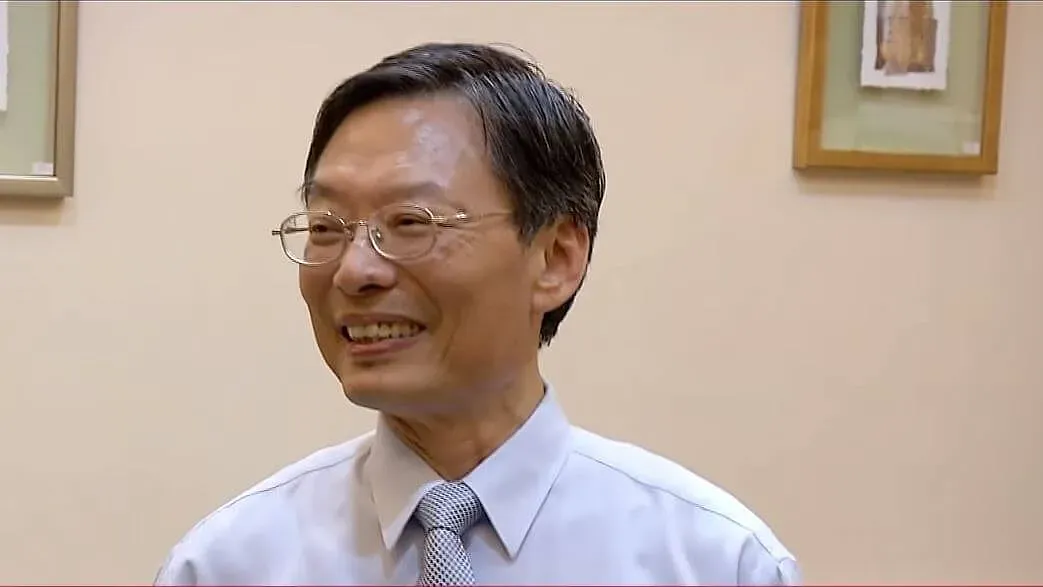
Judicial Reform: Is the Prosecutor-General Ready?
Last edited: 2026-07-27
On April 23, the Judiciary and Organic Laws and Statutes Committee and the Internal Administration Committee of the Legislative Yuan reviewed the presidential nomination of Chiang Hui-min (then Chief Prosecutor of the Taiwan High Prosecutors Office Taichung Branch) for the position of Prosecutor-General. We offer the following observations regarding the review procedure and the nominee's responses to legislators during the session:
First, regarding the review procedure, back in 2016, the Democratic Progressive Party (DPP) proposed a "parliamentary reform" draft amendment aimed at strengthening the review process for exercising consent powers. This included incorporating hearing procedures and investigative powers when the Legislative Yuan exercises personnel consent powers. However, two years have passed since the proposal, and not only did the review of this Prosecutor-General nominee fail to follow the DPP's own past advocacy, but it was also hastily scheduled as a joint review by merely two committees—the Judiciary and Organic Laws and Statutes Committee and the Internal Administration Committee—rather than by a plenary committee session. The schedule was overly compressed, and the questioning time allocated to individual legislators was limited, making a rigorous review difficult.
Intensity of Prosecutor-General Nomination Review Far Below That of Grand Justices
In American law, the Prosecutor-General is often dubbed the "Tenth Grand Justice," yet the intensity of our country's review for the Prosecutor-General nominee falls far short of that for Grand Justices. As the Legislative Yuan is soon to review the Transitional Justice Commission, it will likely encounter the same issue. The exercise of parliamentary personnel consent power has become an urgent issue for parliamentary reform that brooks no delay.
Second, regarding the substance of the review, nominee Chiang Hui-min was more willing to offer commitments and declarations regarding human rights protection and the redress of wrongful convictions and miscarriages of justice. Not only did he promise to investigate the improper conduct of prosecutors, police, and investigators in wrongful conviction cases, but he also expressed willingness to relinquish the Prosecutor-General's exclusive monopoly over filing extraordinary appeals, thereby opening a window of relief for the people. However, on the front of prosecutorial personnel reform, he appeared conservative, failing to put forward bold insights and visions for personnel reform.
Much Said on Redressing Wrongful Convictions, But What About Personnel Reform?
Regarding personnel reform in the rotation system, Chief Prosecutor Chiang had previously argued that experienced and passionate prosecutors from high prosecutors offices (second instance) should return to district prosecutors offices (first instance) to pass on experience and lead case investigations. Yet, during the current review, he repeatedly "defended" the Ministry of Justice's recently selected and heavily criticized rotation plan. He cited reasons such as the differing nature of work between first and second instances, second-instance prosecutors being older and lacking drive and enthusiasm, and the difficulty of streamlining second-instance human resources before the pyramid-structured litigation system is achieved. This not only ignores the imbalance in workload between the first and second instances but also casts doubt on Chiang's determination to drive prosecutorial personnel reform.
Regarding actions taken by prosecutors, police, and investigators during investigations, the principle of侦查不公開 (non-disclosure of investigations) was one of the key questions during this review. Chief Prosecutor Chiang supported the Ministry of Justice's recently formulated "Implementation Plan for the Ministry of Justice to Strengthen Subordinate Prosecutorial, Investigative, and Anti-Corruption Agencies in Observing the Principle of Non-Disclosure of Investigations." Prosecutorial heads have a supervisory duty and should proactively investigate cases that violate the principle of non-disclosure, while also potentially holding heads accountable for supervisory negligence, which could affect their promotions and performance evaluations. Furthermore, addressing instances where illegal actions by prosecutors, police, and investigators during investigations lead to wrongful convictions, Chiang emphasized that any illegality or negligence must be held accountable, and investigative mechanisms can be established to further clarify relevant responsibilities.
Poor Efficacy of Evaluation Mechanisms: Is There a Solution?
Regarding the implementation and strengthening of the mechanism for weeding out incompetent prosecutors, Chiang mentioned that he will fully cooperate with the Ministry of Justice in strengthening the evaluation mechanism under the Judges Act. He also hopes to understand prosecutors' case-handling situations through routine business inspections, incorporating them as a reference for performance evaluation and elimination. Unfortunately, Chiang offered no constructive advice on the currently ineffective evaluation mechanism.
rIn response to legislators' questions about how the current prosecutorial system separates investigative prosecutors from public prosecution (trial) prosecutors, and how different prosecutors take over after an appeal is filed—which leads to prosecutors filing indiscriminate prosecutions and appeals while the public is left with no one to be held accountable, coupled with inconsistent standards in certain cases—Chiang was asked whether he would take concrete actions after assuming the office of Prosecutor-General. Chiang stated that a unified investigation-prosecution system currently faces human resource difficulties, and under the present system, public prosecution prosecutors can serve as a review mechanism, allowing them to withdraw prosecutions or appeals when necessary. However, in current practice, the proportion of prosecutors withdrawing prosecutions or appeals remains minor, while complaints are frequently heard about trial prosecutors arriving at appellate hearings without case files—drawing the mockery of "attending court without case files." Therefore, whether this review mechanism is truly effective remains open to debate.
Resolutions of the National Judicial Reform Guu-Shih Conference Awaited for Implementation
Regarding how to prevent prosecutors from abusing their power in individual case determinations, Chiang stated that a consistent standard for prosecution should be established so that the entire prosecutorial system can adopt a uniform approach. He also promised to review cases that are legal but inappropriate, such as individuals prosecuted for stealing wire worth five NTD or ice cream worth ten NTD. In fact, the resolutions of the National Judicial Reform Guu-Shih Conference also included decisions regarding the supervision of prosecutors' decisions on indictment, suspension of prosecution, and non-prosecution. This shows that preventing prosecutorial abuse of power is also a crucial issue for judicial reform. We look forward to the newly appointed Prosecutor-General concretely implementing this resolution upon taking office to build a prosecutorial system worthy of public trust.
Regarding the relief of wrongful convictions, concerning the excessively low proportion of extraordinary appeals filed and initiated, Chiang stated that he does not oppose opening the door to relief and even suggested that extraordinary appeals could be abolished, making a judgment's violation of law a ground for retrial. As for the "Review Operational Guidelines for Cases with Final Convictions Handled by Prosecutorial Agencies," where the chief prosecutor can unilaterally decide whether to convene a review committee—meaning a review mechanism for reopening cases is monopolized by a single person—Chiang promised not to let the review become a black box. However, due to time constraints, he did not elaborate on concrete methods. Thus, the adjustment of the review mechanism still awaits the efforts of the new Prosecutor-General.
Errors of the Prosecutorial System During the Authoritarian Era: Are You Willing to Apologize?
Finally, some legislators mentioned that during the past authoritarian era, the prosecutorial system pursued legal actions that infringed upon human rights under various laws that harmed human rights, resulting in numerous wrongful convictions and political prisoners. South Korea's newly appointed Prosecutor-General publicly apologized twice last year and this year to victims of past political cases. This demonstrates that as the supreme head of the prosecutorial system, one must possess the courage to confront the past mistakes of the prosecutorial system. Yet today, Chiang brushed this off by claiming it was highly political, stating that these events were not something he could represent. This truly lacks the moral stature expected of the head of the prosecutorial system.
As the highest head of the prosecutorial system, one must have the courage to face history and confront the injustices caused by the prosecutorial system during the past authoritarian era in order to draw lessons from them and look toward the future. Although Chiang has fully demonstrated his sincerity regarding human rights protection and wrongful conviction relief during the review, to command the prosecutorial system, he must exhibit a stronger conviction for reform. We look forward to Chiang demonstrating the demeanor and backbone befitting the highest prosecutorial head before the parliament exercises its consent power, proving his determination to give the prosecutorial system a new lease on life.
※ This article was published in the PTS News Issues Center on April 26, 2018.
This article is an AI-generated translation of the original Chinese text. In the event of any discrepancy, the Chinese version shall prevail.