
Can Lie Detector Reports Lie!? Control Yuan Petition Report Released
Last edited: 2026-07-27
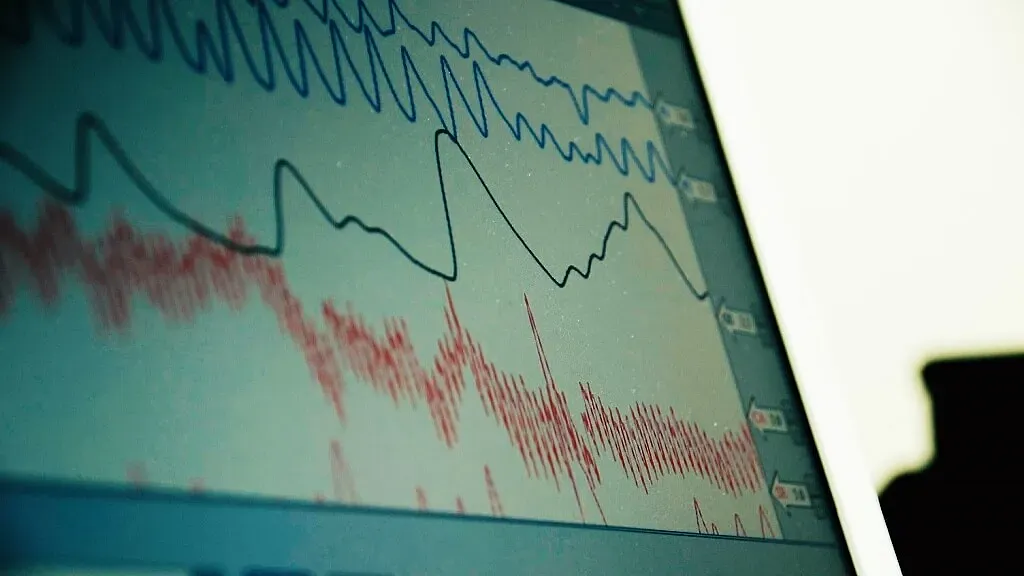
"Polygraph testing" is often a "divination block" consulted by judicial practitioners when they cannot find sufficient incriminating evidence, yet it remains difficult to determine whether it reveals the truth or nonsense. Li Fu-kuo, an investigator at the Ministry of Justice Investigation Bureau (MJIB), once used a polygraph to target Chiang Kuo-ch'ing as the "real killer" in the rape and murder of a young girl, thereby helping to solve the case. This "feat" was regarded by him as a masterpiece. Over a decade later, when the Chiang case was exonerated, it was discovered that the wrong killer had been identified. Whether the inaccuracy of the polygraph back then was a problem of the polygraph's inherent accuracy or a flaw in the testing process remains a question to this day.
To improve polygraph forensic practice, the Judicial Reform Foundation and the Taiwan Association for Innocence held the "Polygraph Reports Can Lie!?" press conference on September 25, 2015. In addition to raising the Chiang Kuo-ch'ing case, they submitted three other cases with suspected polygraph flaws—the Lo Ming-ts'un case, the Ts'ai Lin-yüan case, and Mr. Hsieh's case—to the Control Yuan in a petition to comprehensively review current practices in polygraph examinations.
The JRF continues to supervise official authorities and advocate for the following:
- Establish a national-level forensic science organization.
- Formulate "standard operating procedures" for polygraph examinations.
- Establish regulations for the training, certification, and auditing of polygraph examiners.
- Polygraphs should only be used as investigative evidence and must not be used as scientific evidence in court.
- Actively provide relief channels for wrongfully convicted parties in cases involving flawed polygraphs.
Introduction to Flawed Cases
-
The Chiang Kuo-ch'ing Case: Chiang Kuo-ch'ing was innocent, yet failed the polygraph. The polygraph examiner was Li Fu-kuo of the Ministry of Justice Investigation Bureau.
In the famous wrongful death case of Chiang Kuo-ch'ing, the judgment of the Air Force Operations Command that originally found Chiang Kuo-ch'ing guilty stated, "According to the forensic polygraph report conducted by the Ministry of Justice Investigation Bureau on the defendant, it was discovered that he was heavily implicated, and thus he was targeted." Subsequently, investigators claimed to have broken Chiang Kuo-ch'ing's psychological defense, leading to his confession. Facts have proven that the polygraph expert from the MJIB who identified the liar was precisely the innocent person who suffered a wrongful death. Li Fu-kuo, the polygraph expert who conducted the test at the time, stated that polygraph testing is a symbol of human rights protection because it can replace torture and filter out whether suspects are involved in a crime (United Evening News, January 2, 1997). This appears exceptionally ironic today.
After the Ministry of National Defense paid over 100 million NTD in compensation, it sought recourse from eight individuals, including the then-commander of the Air Force Operations Command, the counterintelligence personnel who investigated the case, and military judicial personnel. However, the polygraph personnel who steered the investigation direction toward the innocent Chiang Kuo-ch'ing were never held accountable, and the Investigation Bureau conducted no self-reflection whatsoever.
-
The Lo Ming-ts'un Case: The polygraph examiner was once again Li Fu-kuo of the Ministry of Justice Investigation Bureau.
This case involves corruption, in which the court sentenced Lo Ming-ts'un to 13 years in prison. The basic facts of the case are: a witness was subjected to improper interrogation at the Investigation Bureau and identified police officer Lo Ming-ts'un as taking bribes, but later completely recanted during the trial. Nonetheless, because Lo Ming-ts'un failed the polygraph, his defense was not accepted by the court, and his conviction was finalized. The polygraph examination in this case contained the following flaws:
Flaw Specific Content of the Flaw Submitting the forensic report before completing the polygraph procedure - A polygraph examination includes a pre-test interview, the main test, and a post-test interview. While the "pre-test interview" alone requires 30 minutes to 2 hours, the entire polygraph procedure in this case took only 29 minutes.
- The examiner originally prepared 9 questions, but the testing question set shown on the chart* reached a maximum of only 6 questions, failing to complete the questioning altogether.
※Note: A chart is a graph recording the physiological responses of the examinee during a polygraph, on which the questions actually asked during the test are marked.
The examiner stated "Your heartbeat has a problem" while concluding that the examinee failed the polygraph During the polygraph process, the examiner told Lo Ming-ts'un, "Your heartbeat has a problem" and "You need to go get checked," and stopped the polygraph because they believed Lo Ming-ts'un had a heart problem, yet still concluded in the polygraph report that Lo Ming-ts'un was "lying." Suspected forgery of the polygraph chart - The order and number of questions on the chart differed from the order and number of questions designed by the examiner.
- The signature of the party concerned on the chart was executed by the examiner, not Lo Ming-ts'un.
-
The Ts'ai Lin-yüan Case: The polygraph examiners were Lin Chen-hsing of the Ministry of Justice Investigation Bureau and Hsiao Chih-p'ing of the National Police Agency.
This case involves a sexual autonomy offense, in which the court sentenced Ts'ai Lin-yüan to 7 years and 4 months in prison. The basic facts of the case are: a homeless woman, Woman A, accused Ts'ai Lin-yüan, who has a moderate intellectual disability, of sexual assault. Another male homeless person who originally testified that Ts'ai Lin-yüan was involved in the sexual assault later recanted, claiming that Woman A's mother had instigated him to commit perjury. The forensic report showing a failed polygraph was the sole "scientific" evidence in this case. The polygraph examination in this case contained the following flaws:
Flaw Specific Content of the Flaw Inaccurate entries in the examiner's credentials - The American Polygraph Association (APA) requires members to undergo training every year to learn the latest polygraph techniques in order to maintain their membership. Examiner Lin Chen-hsing obtained APA membership in 1997, but his membership was suspended in 2010. However, in the forensic report submitted that year, Lin Chen-hsing claimed to be an APA member without disclosing that his membership had been suspended.
- Examiner Hsiao Chih-p'ing claimed in the forensic report that he possessed APA membership, but attached no proof of qualification, and his name could not be found in the APA membership database.
The examinee had a moderate intellectual disability, yet the examiner forced the test - Polygraph experts believe that individuals with an IQ below 70 are unsuited for polygraph testing; Ts'ai Lin-yüan's IQ was only 51, yet he was still subjected to a polygraph.
- During the testing process, Ts'ai Lin-yüan already exhibited obvious comprehension difficulties, but examiner Hsiao Chih-p'ing instead regarded this as non-cooperation and reprimanded him: "Don't you go messing around here. You need to follow my instructions. Don't go messing around on your own with the things I ask you. If you mess around, I actually know all about it."
The examiner confused the roles of a neutral expert witness and an investigative officer Based on the role of a neutral expert witness, the purpose of the "post-test interview" is to confirm with the examinee the true meaning of their chart responses in order to ascertain whether there were other factors affecting the polygraph. However, during the "post-test interview," examiner Hsiao Chih-p'ing said to Ts'ai Lin-yüan, "Why do you want to bully this girl like this? Confess," and "If you play fast and loose with the judiciary like this, you will definitely receive a heavy sentence." This shows that he had assumed the role of an investigative officer to conduct the interrogation. -
Mr. Hsieh's Case: The polygraph examiner was once again Lin Chen-hsing of the Ministry of Justice Investigation Bureau.
This case involves a violation of the Public Officials Election and Recall Act, and Mr. Hsieh was acquitted upon retrial for the fourth time (Geng-Si). The basic facts of the case are: Mr. Hsieh was accused by an informant of involvement in vote-buying, with no other clear evidence. However, the testimonies of four witnesses who testified that he did not engage in bribery were disregarded because they failed the polygraph. It was not until the fourth retrial that severe flaws in the polygraph were discovered, and the entire case was reversed, resulting in an acquittal. The polygraph examination in this case contained the following flaws:
Flaw Specific Content of the Flaw Inadequate pre-test interview The pre-test interview must include introducing the principles of the polygraph, understanding the examinee's background, analyzing the case issues, and discussing the polygraph questions—none of which were done by the examiner. False and inaccurate entries in the examinee's physical and mental questionnaire The examinee stated that they had slept only 2 hours the day before the polygraph and that their sleep condition was not very good, but the examiner recorded the sleep duration as "6 hours" and the sleep condition as "fairly good." Displaying bias during the polygraph process When conducting a polygraph on a witness, and the witness stated they had not received bribe money, the examiner unexpectedly remarked, "This seems to be an open secret anyway." Using the "Matrix Test (MGQT)" for the polygraph without testing according to the fixed format of MGQT - The "Matrix Test (MGQT)" requires asking the examinee 10 to 11 questions, which must include 2 control questions, and conducting the test 3 to 4 times. However, the examiner in this case compiled only 6 questions, included only 1 control question, and conducted the test only 2 times.
- The 6 questions modified by the polygraph examiner had not undergone validity verification.
Progress Update
On January 17, 2017, the Control Yuan issued its investigative opinions regarding this petition case. The key points of the Control Yuan's investigative opinions are as follows:
- The Executive Yuan should formulate consistent regulations regarding the training, qualification certification, and auditing requirements for polygraph forensic personnel.
- The standard operating procedure regulations for polygraph forensic agencies in our country—namely the Ministry of Justice Investigation Bureau, the National Police Agency of the Ministry of the Interior, and the Military Police Command—are inconsistent and lack a mechanism for reviewing and verifying forensic results. The Executive Yuan should integrate the polygraph forensic operational procedure regulations of the major forensic agencies and formulate consistent standard operating procedures.
- Polygraph examinations not only suffer from controversies regarding accuracy and inconsistent standards of acceptance in judicial practice, but also lack clear criteria regarding the circumstances under which they are suitable to be commissioned. Competent authorities such as the Judicial Yuan and the Executive Yuan should compile statistics on commissioned polygraph examination results, analyze their adoption in judicial practice, and establish (enact) requirements and procedures for commissioning polygraph examinations in laws such as the Code of Criminal Procedure to facilitate compliance.
- Under the pressure of criminal prosecution, a defendant's agreement to a judge's or prosecutor's request for a polygraph examination may lack genuine consent. Therefore, polygraph examinations conducted upon a prosecutor's or judge's request for the defendant's consent may violate the privilege against self-incrimination and the protection of people's right of litigation.
- Li Fu-kuo has submitted polygraph reports in numerous wrongful and erroneous convictions, and the polygraph examination methods he adopted do not comply with current polygraph examination standards. The Executive Yuan should comprehensively re-examine cases tested by Li Fu-kuo and proactively provide assistance if any are found likely to constitute wrongful or erroneous convictions.
Regarding the Control Yuan's investigative opinions, the responses from agencies such as the Judicial Yuan and the Executive Yuan are as follows:
- Regarding the training of polygraph personnel and the establishment of standard operating procedures: The Ministry of Justice, the National Police Agency of the Ministry of the Interior, the Military Police Command, and the Investigation Bureau convened a meeting on February 16, 2017, on the "Principle of Consistency for Polygraph Procedure Regulations," resolving that polygraph personnel must receive complete, professional training, or obtain a qualified certificate from a school or institution certified by the American Polygraph Association, and complete at least 8 weeks of professional basic training and at least 2 months of internship courses. Regarding inconsistencies in forensic regulations across agencies, they will continue to be respected based on the principle of flexibility, but agencies are requested to revise and adjust them according to the meeting conclusions.
- Regarding analyzing the adoption of polygraph examinations in judicial practice through statistical analysis to serve as a reference for legal amendments: The Ministry of Justice Investigation Bureau compiled statistics on the rates at which prosecutors and courts at all levels adopt polygraph examination results. However, both the Ministry of Justice Investigation Bureau and the Judicial Yuan consider that because specific case circumstances vary, the aforementioned statistical analysis has limited significance and cannot be used to demonstrate the accuracy of polygraph results.
- Regarding establishing (enacting) requirements and procedures for commissioning polygraph examinations in the Code of Criminal Procedure and related laws: The Judicial Yuan stated that judges should inherently examine whether the forensic process complies with the latest standard operating procedures, and polygraph examinations are no exception. There seems to be no necessity to explicitly stipulate polygraph examination procedures in the Code of Criminal Procedure. As for whether judges determine polygraph evidence to have evidentiary capability and admissibility, this falls within the core of adjudication, and it is inappropriate for the Judicial Yuan to express an opinion.
- Regarding comprehensively re-examining cases tested by Li Fu-kuo: The Ministry of Justice stated that the polygraph training received by Li Fu-kuo differed from the training of personnel who later used computerized polygraph equipment, and their operations also differed. It is difficult for new polygraph personnel to comprehensively re-examine whether the polygraph tests conducted by Li Fu-kuo using traditional methods contained reading flaws.
The Control Yuan expressed regret over the Judicial Yuan's view that it is unnecessary to explicitly stipulate polygraph examination procedures in the Code of Criminal Procedure, but reminded the Judicial Yuan that the President's Office Judicial Reform National Consultative Conference, First Division on "Justice Protecting Victims and Vulnerable Groups," has resolved the following matters, and requested the Judicial Yuan to handle them in accordance with its authority and responsibilities:
- Establish a national-level Judicial Science Committee, improve the rules of evidence, and evaluate the establishment of an expert witness system. Issues concerning the standard operating procedures and evidentiary capability of polygraph evidence should be reviewed concurrently within the aforementioned resolution matters. Prior to the establishment of the Judicial Science Committee and the enactment of a specialized law on the law of evidence, the administration and evidentiary admissibility of polygraph evidence should be considered with caution.
- In accordance with United Nations core human rights conventions, review current legal protection measures and systems for different types of vulnerable populations in the judiciary, which include prohibiting the administration of polygraphs on vulnerable victims or defendants.
The Judicial Yuan responded to the Control Yuan on September 14, 2017, stating that regarding the enactment of a specialized law on the law of evidence, the improvement of the rules of evidence, the evaluation of the establishment of an expert witness system, and the active enhancement of protections for judicial vulnerable groups, relevant law-amendment committees have already been established. The establishment of the Judicial Science Committee will be handled appropriately by competent authorities within a scope that does not conflict with judicial independence.
Subsequent Updates
This article is an AI-generated translation of the original Chinese text. In the event of any discrepancy, the Chinese version shall prevail.