
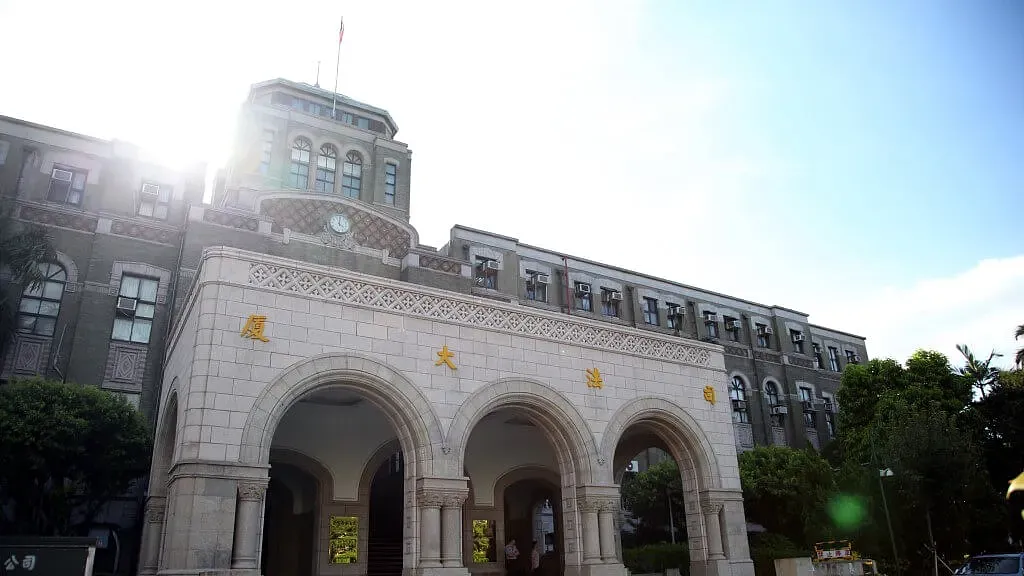
The Judicial Yuan's Personnel Review Committee with External Members Convenes
Last edited: 2026-11-03
Today is July 18, 2012. The Judicial Yuan's Personnel Review Committee (hereinafter referred to as the JYPIRC), which includes scholars and experts, has finally convened! Readers may wonder: What was the composition of the past JYPIRC? Why should the JYPIRC have external members? What are its objectives and the functions it aims to manifest?
The reason Article 4 of the Judges Act, which officially took effect on July 6, 2012, incorporated external members into the JYPIRC is because the original advocates were the author and Judge Ch'ien Chien-jung of the Taoyuan District Court. However, the domestic entity that first made this proposal was actually the Judicial Yuan. As early as 1997, Article 20 of the draft Judicial Yuan Organization Act proposed by the Judicial Yuan adopted the recommendation made by the Taiwan Law Society in 1996, advocating for the participation of law professors and attorneys in the JYPIRC. Nevertheless, after the Legislative Yuan temporarily suspended review that year on the grounds that the draft "failed to respond to the adjustment of government structure and the change of judicial budget after constitutional amendment," no similar proposals had been made for over a decade. Past drafts of the Judges Act also never contained similar provisions.
Since assuming office as a judge, the author had never seriously concerned himself with judicial personnel matters until July 2010, when a collective corruption scandal involving judges such as Ch'en Jung-ho and Tsai Kuang-chih broke out. Upon hearing that Ch'en Jung-ho was actually a member of the JYPIRC and had also served as a self-discipline committee member of the Taiwan High Court, the author realized with a start that the community of judges indeed harbors a culture of "compromise" and "being on good terms with everyone." This clearly demonstrated that if all members of the JYPIRC are judges, the lack of external oversight and checks-and-balances mechanisms will lead to endless similar malpractice. To borrow the words of Judge Lin Chen-hsien of the Tainan District Court:
Within the judicial circle, around me, ethics and seniority are emphasized, and warmth prevails everywhere. Good people who can bring out the best in others and add flowers to embroidery are truly overwhelmingly abundant, but "bad people" who possess both the capacity for oversight and the willingness to shoulder the responsibility and obligation of oversight—I cannot think of any. Therefore, having no way to figure out "specifically who" within the circle (President of the Judicial Yuan? Presidents of various courts? Chief judges? Directors of departments? Presiding judges? Committee members?) should bear the responsibility of acting as that "bad person" who has the obligation, responsibility, and ability to "pick out" and "clear out" the bad apples in this pot of porridge, I also believe that leaving it to "observers" is perhaps the only possibility to achieve "purity."
Therefore, on July 21, 2010, the author wrote an article in the Judges Forum entitled "Inviting the Qing Army through the Shanhai Pass? — My Views on Adopting a Pluralistic Representative System for the Judicial Yuan's Personnel Review Committee". Following its publication, the article sparked heated discussions among fellow judges; while there were supporters, voices of opposition were even louder. The main objections generally revolved around: worries about political interference, infringement upon judicial independence, and differences in foreign legal cultures. However, none of these reasons could convince me, and the author remained firmly committed to advocating for the introduction of external members to the JYPIRC. Because this legislative amendment involved the actual operations of the JYPIRC, the author invited Judge Ch'ien Chien-jung, then a JYPIRC member whose ideals frequently aligned with mine, to jointly participate in the JRF's Legislative Reform Committee.
At that time, due to events such as the collective judicial corruption scandal and the White Rose Movement, whether the draft Judges Act would pass became one of the country's major political issues. The JRF, which had consistently cared about judicial reform activities, also had a legislative reform group dedicated to discussing this issue, convened by Attorney Lin Yung-sung. Consequently, Judge Ch'ien Chien-jung and I participated in several meetings of this group starting in August 2010. I recall that initially, Attorney Wellington Koo (顧立雄) maintained a skeptical attitude (actually, the recommended provisions of the Taiwan Law Society in 1996 originated from Attorney Koo), mainly worrying that this involved the issue of "judicial self-governance." Simultaneously, because the group members were mostly attorneys and unfamiliar with the judicial ecosystem, their focus of concern concentrated on the judicial evaluation mechanism. Through communication by Judge Ch'ien and myself, the attending members favored this proposal, which ultimately became the text of Article 4 of the JRF's version of the draft Judges Act.
At that time, the text of Article 4, Paragraph 2 drafted by us was: "The committee mentioned in the preceding paragraph shall be composed of twenty-five members, with the President of the Judicial Yuan serving as an ex officio member and chairperson. Other members shall serve a term of one year and may be reappointed once. Their quotas and methods of selection shall be as follows: 1. Seven members designated by the President of the Judicial Yuan. 2. Thirteen judge representatives: one representative of Supreme Court judges, one representative of Supreme Administrative Court judges and the Commission on the Disciplinary Sanctions of Public Functionaries, two representatives of High Court judges, one representative of High Administrative Court judges, and eight representatives of District Court judges, to be elected reciprocally by judges of all court levels. 3. One prosecutor representative: designated by the Prosecutor-General or a person designated thereby. 4. One attorney representative: the Chairperson of the Taiwan Bar Association. 5. Two scholars and socially impartial figures: jointly nominated at twice the quota by the judge representatives of subparagraph 2, to be appointed by the President of the Judicial Yuan." Simultaneously, it was stipulated that regardless of their status as JYPIRC members, they should have voting rights on all personnel motions. As for the legislative reasoning, it stated:
-
Pursuant to Article 20 of the Judicial Yuan Organization Act, the Judicial Yuan establishes a... Personnel Review Committee to deliberate personnel matters such as the appointment, discharge, transfer, etc., of judges at all court levels. While years of implementation have indeed avoided external interference, it has also produced relationships of ethics and seniority because our judges mostly originate from the Judges and Prosecutors Training Institute. Coupled with the result of adopting a judge-centric perspective, grudges, seniority, seniority rank, and personal wishes have become the primary determinants of judicial personnel matters, whereas factors such as selecting the superior and eliminating the inferior, and pursuing accountability through personnel decisions, are rarely taken into consideration. Consequently, judges have become a closed group prone to the criticism of "protecting one's own." Meanwhile, countries that similarly adopt the examination-and-training model and are responsible for judicial personnel decisions—such as the German Judiciary Selection Committee, the French High Council of the Judiciary, the High Council of the Judiciary in Italy, and the General Council of the Judiciary in Spain—are all composed of members with pluralistic representation. Therefore, Paragraph 1 explicitly stipulates that the Judicial Yuan shall establish a Personnel Review Committee to deliberate matters such as the appointment and discharge of judges, while members of the Personnel Review Committee shall adopt a pluralistic representative system, and Paragraph 2 explicitly stipulates...
-
To democratize, self-govern, transparentize, and diversify the judicial personnel system, as well as to elevate the hierarchy of the Personnel Review Committee and ensure the prudent and transcendent exercise of its functions, Paragraph 2 explicitly stipulates that the Personnel Review Committee shall consist of twenty-five members. Aside from the President of the Judicial Yuan serving as an ex officio member and chairperson, it shall be composed of seven members designated by the President of the Judicial Yuan, thirteen judge representatives, one prosecutor representative, one attorney representative, and two scholars and socially impartial figures. Pluralistic opinions are utilized to reduce biased listening and avoid entanglements of grievances among judicial peers. Furthermore, to prevent members from holding office for too long and abusing their power, it is stipulated that members shall serve a term of one year, limited to one reappointment.
Subsequently, during the Legislative Yuan's deliberation of the draft Judges Act, this provision became one of the primary contentious articles (others included the composition of the Judges Evaluation Committee and the Disciplinary Court). Although both the President and Vice President of the Judicial Yuan supported having external members on the JYPIRC, some judges remained adamantly opposed and actively lobbied cross-party political parties and legislators. After multiple rounds of cross-party negotiations, the current provision was passed, which involves the participation of 3 scholars and experts who possess only the right to express opinions but no voting rights regarding judicial transfers (though they hold voting rights concerning the entry and exit of judges). As for the method of producing scholars and experts, the Ministry of Justice and the Taiwan Bar Association shall each nominate 3 persons other than prosecutors and attorneys to be submitted to the President of the Judicial Yuan for appointment.
After the main provisions of the Judges Act officially took effect on July 6, 2012, the President of the Judicial Yuan immediately selected and appointed 3 persons from the recommended list—Professor Hsieh Ming-yang of the National Taiwan University College of Law, Professor Yang Chien of the National Chiao Tung University Institute of Business Administration, and Professor Hsieh I-hung of the Soochow University Department of Law—as external members. Meanwhile, as per customary practice, 11 designated members were appointed: Vice President of the Judicial Yuan Su Yung-ch'in, Secretary-General Lin Chin-fang, Director of the Civil Department Ch'en Chün-pi, Director of the Criminal Department Lin Chün-i, Director of the Administrative Litigation and Disciplinary Department Hsü Chin-cha, Director of the Department of Juvenile and Family Affairs Huang Mei-yü, Director of the Department of Judicial Administration Huang Kuo-chung, President of the Supreme Court Yang Ting-chang, President of the Supreme Administrative Court Tsai Chin-t'ien, President of the Taiwan High Court Ch'en Tsung-chen, along with newly appointed Deputy Secretary-General Chiang Jen-hsiu (replacing the customary President of the Commission on the Disciplinary Sanctions of Public Functionaries, because the President would concurrently serve as the presiding judge of the newly established Disciplinary Court, responsible for the discipline of judges, which would raise recusal issues).
As for the JYPIRC members elected by judges, following the results of voting conducted separately by all judges in accordance with courts at all instance levels, the 12 individuals who emerged to assume office were: Supreme Court Judge Kuo Yü-chou, Supreme Administrative Court Judge Cheng Hsiao-k'ang, Taiwan High Court Judge Ch'en Hsien-yü, Taiwan High Court Tainan Branch Court Judge Li Wen-fu, Intellectual Property Court Judge Tseng Ch'i-mou, Taipei District Court Judge Lin Meng-huang, Panchiao District Court Judge Yang Chih-hsiung, Taoyuan District Court Judge Fan Ming-ta, Taichung District Court Judge Hung Yao-tsan, Changhua District Court Judge Kuo Hsüan-yi, Tainan District Court Judge Lin Chen-hsien, and Kaohsiung District Court Judge Ch'en Ming-ch'eng.
On July 18, 2012, our group of 27 JYPIRC members in total (including the chairperson, the President of the Judicial Yuan) held the 6th JYPIRC meeting of 2012 at the Judicial Yuan, taking charge of judicial personnel deliberation matters for the coming year. The main agenda item of the meeting involved JYPIRC members voting to select 12 candidates from among the 18 candidates for the Judicial Yuan's Judge Selection Committee nominated by the President of the Judicial Yuan. Subsequently, all judges would vote to select 6 judge representatives to become members of the newly established Judicial Yuan Judge Selection Committee (this committee also adopts a pluralistic representative system).
The meeting proceeded smoothly, and the 12 candidates were formally elected. Because it was the initial assembly and there were few agenda items, the author had prepared in advance a piece of written material entitled "Retrospect and Prospect of the Judicial Yuan's Personnel Review Committee—Remarks at the 6th Meeting of 2012" and presented an oral report during the extraordinary motions phase after the conclusion of the agenda. This served as experience transmission as a reappointed JYPIRC member. The 3 participating scholars and experts also delivered brief remarks and offered suggestions, which could be considered opening a new chapter for our country's judicial personnel deliberation matters. Recorded specially for posterity!
Attachments
- Inviting the Qing Army through the Shanhai Pass? — My Views on Adopting a Pluralistic Representative System for mackerel the Judicial Yuan's Personnel Review Committee
- Retrospect and Prospect of the Judicial Yuan's Personnel Review Committee—Remarks at the 6th Meeting of 2012
- Meeting Minutes of the 6th Personnel Review Committee of 2012
Inviting the Qing Army through the Shanhai Pass? — My Views on Adopting a Pluralistic Representative System for the Judicial Yuan's Personnel Review Committee
In view of the operational problems of the current JYPIRC, I have successively published three articles: "The Judicial Personnel System Needs Reform" (October 2009), "How Much Longer Must the People Endure the Judiciary?", and "Dawn Appears for the Culture of Judicial Accountability" (July 2009 [Note: actually July 2010]), emphasizing that the JYPIRC should adopt a committee composed of pluralistic representatives. I have pondered this issue for a long time, and have exchanged views with fellow judges privately and on the Judges Forum. Most fellow judges found it unacceptable, believing that introducing external forces brings unpredictable fortune or misfortune, and might even lead to concerns of interfering with adjudication. Simply put, there are concerns of "inviting the Qing army through the Shanhai Pass."
In response to this, my view is: Whether this can be considered inviting the Qing army through the Shanhai Pass is already doubtful; even if it is inviting the Qing army through the Shanhai Pass, is it truly inappropriate? Historical experience tells us that whether Wu San-kuei's inviting the Qing army through the Shanhai Pass was the primary factor leading to the downfall of the Ming dynasty remains open to study. Furthermore, compared to the fatuity, incompetence, and corrupted governance of most emperors of the Ming dynasty, the general caliber of the emperors of the Qing dynasty was far superior to that of the Ming. Setting aside Han nationalism, the Qing dynasty brought over a century of prosperous eras under Kangxi, Yongzheng, and Qianlong, during which the people lived comparatively prosperous lives.
Returning to the JYPIRC, our country's selection and appointment of judges adopts the examination-and-training model, and subsequent judicial personnel decisions all adopt a judge-centric perspective. The current judicial personnel system is a reform undertaken after the lifting of martial law. At a time when political departments such as the executive and legislative branches still harbored concerns of interfering with adjudication through judicial administration, strengthening the democratization of the judicial personnel system and replacing the old JYPIRC members—who were all officials appointed by heads—with representatives elected by judges to make joint decisions perhaps possessed its stage-specific necessity.
However, today, when political interference has significantly decreased, this should truly no longer be used as an excuse, because even if JYPIRC members faithfully perform their duties, they will still be perceived as protecting their own. Moreover, the seniority rankings caused by the centralized judicial study and training system inherently tend to affect judicial personnel decisions. Coupled with the fact that our country's judicial personnel deliberations adopt a judge-centric perspective, the result where the JYPIRC consists entirely of judges leads to grievances, seniority, seniority rank, and personal wishes becoming the primary determinants. If one casts aside the judge-centric stance, do you believe the current organizational model where JYPIRC members consist entirely of judges is a relatively appropriate arrangement?
After much weighing, I resolved to promote legislative or law-amendment work for the JYPIRC to adopt a pluralistic representative system. The attachment contains the provisions I drafted referencing the Judicial Yuan's version of the draft Judges Act. If you look closely, you can see that even if the Qing army is invited through the Shanhai Pass, external forces will not directly affect or dominate judicial personnel matters. Instead, due to the participation of external forces and mutual oversight and checks and balances, judicial administration can propose more appropriate personnel motions, avoiding situations where personnel changes are decided based on personal grievances, and entirely preventing the current phenomenon of the Supreme Court finding the JYPIRC to endorse its actions.
Of course, I must confess: having never served as a JYPIRC member or participated in judicial administration matters, some of my views may have blind spots. Nevertheless, I am willing to offer a modest contribution by drafting the provisions shown in the attachment, and I kindly ask my fellow judges to offer their valuable opinions. I have repeatedly discussed this concept with the Chairperson of the Judges Association and civil groups. Once such a draft was formulated, I also sent it to prosecutors, civil groups, and attorney groups I know to invite their opinions. In any case, I hope that promoting the reform for the JYPIRC to adopt a pluralistic representative system becomes even more ideal with your participation.
Retrospect and Prospect of the Judicial Yuan's Personnel Review Committee—Remarks at the 6th Meeting of 2012
I. Basic Understanding
- Before President Lai took office, all members of the JYPIRC were judges, adopting a judge-centric personnel policy. The rights and interests of judicial transfers outweighed the people's litigation rights; every year, the proportion of inter-court transfers and intra-court workload reallocations reached nearly one-quarter of the total number of judges nationwide. Seniority, seniority rank, personal wishes, and even personal grievances became primary considerations for judicial transfers. It was not until the series of judicial storms in July and August 2010, which caused public indignation, that the people's litigation rights finally began to receive the attention they deserved.
- Personnel adjustments, arrangements, or evaluations inherently possess the function of implying values. If a value system shared by the community of judges is to be established, it must start from here. Therefore, the selection of higher-instance judges, appointment of court presidents, appointment of presiding judges, renewal and exemption of concurrent duties, and review of probationary and preliminary judges appear particularly crucial.
- Personnel decisions differ from adjudication work (especially criminal adjudication); they lack the presumption of innocence and the application of a standard of proof beyond a reasonable doubt, placing emphasis instead on reliance, trust, and putting the right person in the right place.
- Calculated by the ratio of judges per 100,000 population, our country's final-instance court has the largest number of judges in the world. While this is certainly inseparable from the litigation system, an excessive number only diminishes the dignity and prestige of the "final-instance court judge" position, causes each to "blow their own horn," and increases the cost of unifying legal interpretations. Therefore, the number of final-instance court judges should be reduced in coordination with the construction of a pyramid-shaped litigation system.
II. Review of the Functions of the JYPIRC over the Past Year
- Retribution is not absent; it is merely a matter of time—Judicial lobbying behavior will ultimately face disadvantages or accountability.
- Senior Grand Justices are also judges; they must not violate judicial neutrality by campaigning or endorsing candidates improperly during election periods.
- A court president who fails to fulfill duties such as supervising and evaluating judges should bear administrative responsibility—The judge drunk-and-disorderly incident.
- For a judge's righteous act of taking active initiative on matters outside their official jurisdiction, the President of the Judicial Yuan followed the opinions of members, increased rewards, issued a press release, and published it in the Judicial Journal to encourage emulation of the virtuous.
- With the assistance of JYPIRC members, judges transferred to final-instance courts submitted judgments and writings for deliberation on their suitability.
- Judges assigned to work at the Judicial Yuan must conscientiously fulfill their administrative service duties and avoid bureaucratic airs.
- Performance evaluations for probationary and preliminary judges focus not only on written documents, but even more on their moral character and integrity, as well as their dedication to work.
- Itinerant judges, farewell!—The people's litigation rights outweigh judges' transfer rights and interests.
III. Prospect of the Deliberation Functions of the JYPIRC in the Future
- A JYPIRC with the participation of external members can operate harmoniously while exercising substantial deliberation functions.
- Proper division of labor regarding the functions and powers among the JYPIRC, the Judge Selection Committee, the Judges Evaluation Committee, etc.
- Before each year's major judicial personnel transfers, the Judicial Yuan should present data including case intake and disposition statistics of courts at all levels over the past three years, the number of judges, the number of presiding judges, the number of probationary and preliminary judges, and the headcount required to coordinate with policy promotion (such as lay participation or juvenile and family courts), enabling JYPIRC members to possess a macro perspective and make decisions based on overall judicial needs.
- Prudent selection of court presidents at all levels—The Judicial Yuan should require nominees to submit resumes, visions, and other data for deliberation.
- Pluralistic recruitment for the appointment of final-instance court judges, directly selecting them from attorneys and scholars.
- Breaking the seniority-based tier-and-ethics culture in the appointment of final-instance court presiding judges—Stones cannot turn into immortals.
- Judges transferred to final-instance courts should submit writings, judgments, and other data to ensure their suitability for legal review work.
- Directly assigning first-instance judges as final-instance court judges to thoroughly implement the concept that all judges are equal regardless of court level.
- The term-of-office system for presiding judges should be solidly and faithfully implemented and executed.
- Personnel policies should thoroughly implement the ideals of judicial reform—For instance, if the Judicial Yuan wishes to implement the policy of simplifying and popularizing judgments, the Document Review Committee should possess policy-making authority and select suitable committee members.
Meeting Minutes of the 6th Personnel Review Committee of 2012
Announcement Date: July 18, 2012
Publishing Unit: Department of Personnel, Judicial Yuan
Summary: Meeting Minutes of the 6th Personnel Review Committee of 2012
Resolutions of the 6th Personnel Review Committee of the Judicial Yuan for 2012:
(1) Deliberated and selected 12 individuals—including Supreme Court Judge and Presiding Judge Liu Fu-lai, Supreme Administrative Court Judge Hou Tung-sheng, Taiwan High Court Judge Chung Jen-tz'u, Taiwan High Court Taichung Branch Court Judge Tang Kuang-yi, Taiwan High Court Tainan Branch Court Judge Kao Ming-fa, Taiwan High Court Kaohsiung Branch Court Judge and Presiding Judge Ch'en Chung-ho, Taichung High Administrative Court Judge and Presiding Judge Shen Ying-nan, Intellectual Property Court Judge Tsai Hui-ju, Taipei District Court Judge Chou Chan-chun, Panchiao District Court Judge Kao Wen-yüan, Shihlin District Court Judge Ch'en Mei-t'ung, and Kaohsiung District Court Judge and Presiding Judge Yang Kuo-hsiang—as nominees at twice the quota for judge representatives on the "Judicial Yuan Judge Selection Committee," to be submitted for voting by judges.
(2) Elected Supreme Court Judge Kuo Yü-chou, Intellectual Property Court Judge Tseng Ch'i-mou, Panchiao District Court Judge Yang Chih-hsiung, and National Taiwan University College of Law Professor Hsieh Ming-yang as 4 members of the "Judicial Yuan Committee on the Selection of Judges for Specialized Courts."
(3) Elected Supreme Administrative Court Judge Cheng Hsiao-k'ang, Taiwan High Court Judge Ch'en Hsien-yü, Taipei District Court Judge Lin Meng-huang, and Soochow University College of Law Department and Graduate Institute of Law Adjunct Professor Hsieh I-hung as 4 members of the "Judicial Yuan Committee on the Review of Judicial Documents."
(4) Elected Supreme Court Judge Kuo Yü-chou, Taiwan High Court Tainan Branch Court Judge and Presiding Judge Li Wen-fu, Tainan District Court Judge Lin Chen-hsien, and National Taiwan University College of Law Professor Hsieh Ming-yang as 4 members of the "Judicial Yuan Committee on the Review of Presiding Judges' Terms of Office."
(5) Elected Taoyuan District Court Judge Fan Ming-ta and National Chiao Tung University Institute of Business Administration Professor Yang Chien as 2 members of the "Judicial Yuan Committee on the Re-review of Judicial Performance Evaluations."
This article is an AI-generated translation of the original Chinese text. In the event of any discrepancy, the Chinese version shall prevail.