
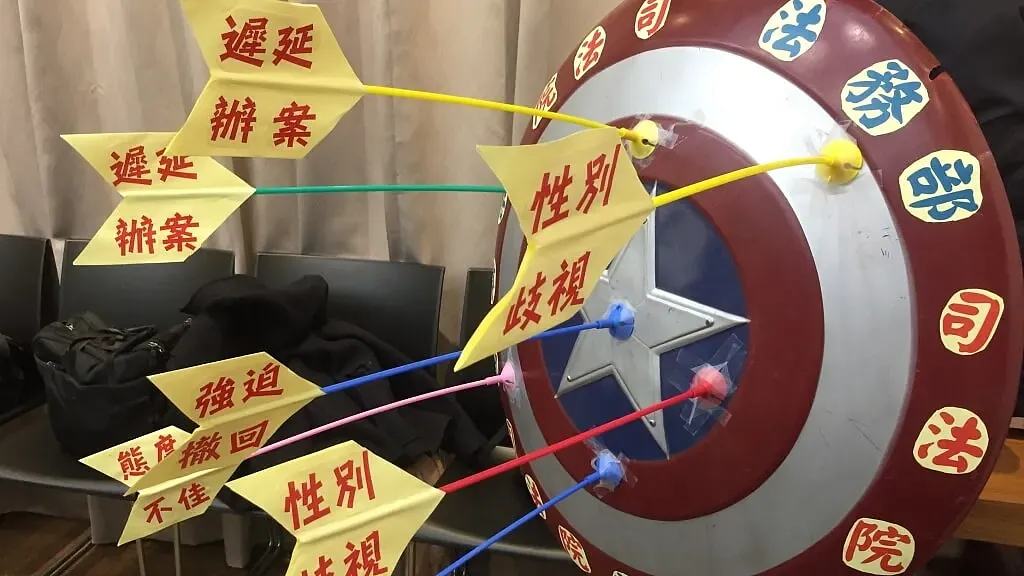
Ignoring Evaluation Equates to Protecting One's Own: A Critique of the Judicial Evaluation System
Last edited: 2026-07-27
The judicial officer evaluation system, responsible for supervision and elimination, has always been of utmost concern to the public while remaining a source of skepticism among judges and prosecutors. Before the passage of the Judges Act in 2011, supervision of judges and prosecutors in Taiwan relied heavily on "self-discipline." The Judicial Yuan and the Ministry of Justice established "Evaluation Committees" consisting mostly of insiders, which lacked transparency. Over more than a decade, only a handful of cases were determined to involve misconduct, casting serious doubt on the effectiveness of self-discipline.
Where Should Judicial Evaluation Head?
Following the outbreak of a collective corruption scandal among High Court judges and the White Rose Movement, the Judges Act was finally enacted. However, it was the product of political compromise and negotiation among various parties at the time. The public demand to establish an "Evaluation Foundation" independent of the Judicial Yuan and the Ministry of Justice was not passed; instead, "Evaluation Committees" were established "under the jurisdiction" of the Judicial Yuan and the Ministry of Justice respectively, incorporating "external members" who were neither judges nor prosecutors. Furthermore, while the public originally advocated for evaluations encompassing both individual case evaluations and comprehensive assessments, ultimately only individual case evaluations and "comprehensive reviews" were passed. Therefore, in this legislative movement, the establishment of "external discipline" cannot be considered a success.
Overall, however, the evaluation system has been implemented for over six years since 2012. The Judicial Yuan has been more proactive in handling judge evaluations than the Ministry of Justice has been with prosecutor evaluations, and both the public and official authorities have accumulated experience, leading to many reflections and calls for amendment. During last year's National Consultative Conference on Judicial Reform, multiple recommendations for reforming the evaluation system were made, though unfortunately they have yet to be implemented. This year, around Women's Day, the retrial ruling of Judge Ch'en Hung-pin's disciplinary case by the Disciplinary Court erupted, which further prompted the Judicial Yuan to propose an amendment draft to the Judges Act.
Amidst the legislative amendments regarding the future direction of the evaluation system, some argue that external discipline fails to identify truly unfit judges and prosecutors, and that the system should return to self-discipline by strengthening the supervisory responsibilities of court and prosecutor's office heads. After all, within the inner circle, who is unfit, who frequently skips work, scolds people during court hearings, has complicated social relationships, or produces low-quality written judgments is an open secret among superiors.
In reality, however, when a certain judge was presiding over a sexual assault case, they ignored the social worker's dissuasion and conducted a "personal identity inquiry" of the victim in front of the defendant. Although the accompanying social worker later petitioned the court to which the judge belonged, the court maintained that the judge's actions were not improper. The social worker had no choice but to turn to a civil society organization for evaluation assistance. After numerous twists and turns, the Evaluation Committee ultimately concluded that the "circumstances were not serious" and resolved that the evaluation was not established, merely referring the case to the president of the court for managerial supervision (106-Yüan-P'ing-Tzu No. 2). Such cases undermine confidence in self-discipline.
This article suggests that at the present stage, the legislative direction should focus on improving the external evaluation system and enhancing its functions, and offers several recommendations to this end.
The Comprehensive Review System Should Return to the Jurisdiction of the Evaluation Committee
The current "comprehensive review" refers to a process whereby the Judicial Yuan and the Ministry of Justice set specific criteria to evaluate all judges and prosecutors respectively within a certain period. Its function is to encourage excellence and "discover problems." When a review discovers that a judge or prosecutor has engaged in misconduct, the case is referred to the Evaluation Committee for individual case evaluation.
Comprehensive reviews are essentially "self-examinations" conducted by the Judicial Yuan and the Ministry of Justice over all judges and prosecutors; the inherent problems of self-discipline will inevitably manifest in comprehensive reviews as well. To date, the courts and ministries have conducted comprehensive reviews twice, without a single judge or prosecutor being referred for individual case evaluation or investigation. Moreover, the review process and results are not public, leaving outsiders unable to examine the implementation of the reviews and offer suggestions for improvement. Under such opaque conditions, the credibility of the comprehensive review results has been questioned by the public.
Therefore, comprehensive reviews should be returned to the jurisdiction of the "Evaluation Committee," and the courts and ministries should no longer intervene. Appropriate evaluation indicators should be established by scholars and experts possessing professional expertise in management, sociology, and statistics. The indicators, results, and handling methods of comprehensive reviews should be moderately made public. For example, the number and proportion of individuals falling at the very bottom in two consecutive reviews should be disclosed, along with explanations of the assistance methods and outcomes provided to help them improve. Once specific misconduct is discovered, individual case evaluations can also be directly initiated through the Evaluation Committee, thereby fulfilling the function of supervising judges and prosecutors.
The Evaluation Committee Must Possess Greater Independence, and a Majority of Its Members Should Be Non-Lawyers
There are widespread public concerns regarding the lack of independence in the Evaluation Committees established within the courts and ministries, particularly concerning the Prosecutor Evaluation Committee (PEC) under the Ministry of Justice. For instance, during the first meeting of the first-term PEC members, the then-Minister of Justice Tseng Yung-fu went to the meeting site and designated a prosecutor from the Supreme Prosecutors Office as the meeting chair, raising suspicions. It was later discovered that the basis for this action was the "Regulations Governing the Organization of the Prosecutor Evaluation Committee." Furthermore, the two most important subsidiary regulations governing the prosecutor evaluation system—namely the "Measures for Implementing Prosecutor Evaluations" and the "Regulations Governing the Organization of the Prosecutor Evaluation Committee"—were formulated by the Ministry of Justice pursuant to the Judges Act long before the Evaluation Committee even held its meetings, leaving no room for input from the PEC. This has resulted in the operation of prosecutor evaluations falling short of true independence from the Ministry of Justice. It is therefore recommended that all relevant regulations be formulated only after prior consultation with the Evaluation Committee.
Furthermore, examining the method of selecting members, taking the Prosecutor Evaluation Committee as an example: it is composed of 3 prosecutors, 1 judge, 3 lawyers, and 4 scholars and socially impartial individuals. Among them, the evaluation members who are judges, prosecutors, and lawyers are elected by all judges, prosecutors, and lawyers respectively. The 4 scholars and socially impartial individuals are each nominated by the Judicial Yuan and Taiwan Bar Association, and then appointed by the Minister of Justice. An actual analysis of the backgrounds of past prosecutor evaluation members reveals that the first, second, and third terms each had only 1 member with a non-legal background, while the fourth term had not even a single one. This has led outsiders to question whether the perspectives of the evaluation resolutions are overly narrow.
Taking the recently highlighted issue of gender equality as an example, when a certain prosecutor investigated a sexual assault case and interrogated the victim (a child) without a social worker present, the requesting evaluation organization argued that an evaluation should be established. However, the PEC held that although the prosecutor violated case-handling regulations, the "circumstances were not serious," citing only a lack of majority votes as the reason for the decision, thus dismissing the evaluation and failing to refer the case to the prosecutor's office for managerial supervision (104-Chien-P'ing No. 2).
Absurd Non-Prosecution Dispositions and Expired Statutes of Limitations for Evaluating Bad Prosecutors
In another case, a prosecutor investigating a foreign migrant worker allegedly sexually assaulted by her employer stated in the non-prosecution reasons that the victim "could have taken the opportunity while performing oral sex on the defendant to bite the defendant's penis, shout loudly for help, or make noises to attract the neighbors' and the defendant's mother's attention, thereby interrupting the defendant's sexual intercourse." Civil society organizations considered that the prosecutor "ignored the vulnerable plight of the victim, utilized gender stereotypes and sexual assault myths as reasons for non-prosecution, and violated prosecutorial ethics," and thus requested an individual case evaluation from the PEC. The PEC ultimately concluded that the prosecutor had committed no impropriety, stating in its resolution document: "Why did the defendant feel safe enough to place his genitalia into Party A's [victim's] mouth without any intimidation or coercive behavior toward Party A on that occasion, without fearing injury from sharp teeth? If there was no considerable trust in Party A, given common sense, this would not have occurred." In other words, the PEC deemed it completely reasonable for the prosecutor to use the fact that the victim did not bite the defendant's genitalia in self-defense as a justification for a non-prosecution disposition (106-Chien-P'ing-Tzu No. 3).
Therefore, it is recommended that the proportion of external members on the Evaluation Committee should be increased, with non-lawyers making up the majority. This will diversify and heterogenize perspectives (incorporating fields such as gender, psychology, forensic science, and management). Thinking from perspectives different from those of legal practitioners will reflect the diverse opinions of the community. As for the selection of external members, intervention by the Judicial Yuan and the Ministry of Justice should cease; from the perspective of democratic legitimacy and oversight, a selection committee can be formed by socially impartial individuals nominated by the legislature, which will then select the non-lawyer evaluation members.
The Public Should Be Able to Directly Request Evaluations, Party Procedural Participation Should Be Strengthened, and Full-Time Members and Staff Should Be Appointed
The current evaluation mechanism is like "making bricks without straw." When the Judges Act was legislated, the Judicial Yuan feared that the public would abuse evaluation requests, and therefore restricted case parties from directly requesting evaluations, requiring them to go through organizations such as civil society organizations or bar associations. Consequently, cases have struggled to reach the Evaluation Committee. Over the past six years, the Judges Evaluation Committee (JEC) has accepted only slightly more than 50 cases (with the PEC accepting a similar number), whereas the Judicial Yuan alone receives over 7,000 public petition cases in a single year. This huge discrepancy in numbers raises concerns that real problems are failing to be reflected in the number of cases accepted by the Evaluation Committee.
It is rumored that the Judicial Yuan's legislative amendment direction already contemplates allowing case parties to directly request evaluations. Furthermore, considering human rights protections, mechanisms allowing groups to request evaluations should still be preserved for populations vulnerable to unfair treatment in judicial practice, such as new residents, migrant workers, indigenous peoples, women and children, and persons with disabilities.
As for parties, they should enjoy comprehensive rights to procedural participation in the evaluation process, such as the right to express opinions and review materials during the proceedings. Needless to say, once the public is permitted to request evaluations, full-time members and dedicated administrative staff will be needed to handle the anticipated increase in case volume, alongside management mechanisms to handle high volumes of cases.
The Statute of Limitations for Evaluations Should Be Extended
The problem of excessively short statutes of limitations for individual case evaluations is particularly severe regarding prosecutors. From the establishment of the PEC up to 2017, out of 16 cases dismissed without evaluation, 12 were dismissed due to the expiration of the statute of limitations (accounting for 75%), all concentrated within the second term of the Evaluation Committee.
For example, a prosecutor once told a defendant during interrogation: "I can see you shaking while you talk; I know you're lying, we can do a lie detector test now. I want to make the stakes clear to you beforehand—this matter can be big or small," "If you aren't honest, I can make it very big, I'm not lying to you, it will become very big," "If you aren't honest, his ghost will come back to settle accounts with you," "If you don't know anything, I'll have you detained right away," "As long as you're honest, I won't have you detained today," "Maybe you've been possessed by his ghost, who knows?," and "Then you're done for. He'll come looking for you later. If you aren't honest, you're done for. He entrusted me in a dream saying that whoever isn't honest, he's going to find them." Although the PEC determined that these statements violated the Prosecutorial Ethics Norms, because the statute of limitations had already exceeded the two-year period, no evaluation could be conducted.
In criminal investigation cases, individuals are restricted from reviewing case files until "after indictment" or "upon application for adjudication by application," making it difficult for the public to gather complete materials. However, defendants who have been indicted are often exhausted by the trial proceedings and have no spare time to file individual case evaluation requests against prosecutors. By the time the trial proceedings come to a close, the time elapsed since the date of indictment frequently far exceeds two years. It is recommended that the statute of limitations for evaluations be extended to "within five years from the date the evaluated facts concluded. Regarding cases handled by prosecutors, it may be extended to three years 'from the date the judgment becomes final,' or six years from the date the case is concluded."
The Evaluation Process Should Be Streamlined
Under the current individual case evaluation mechanism, when the Evaluation Committee deems disciplinary action necessary, it must first request the "Control Yuan" to impeach, and then the "Disciplinary Court" makes the final decision on whether to impose discipline. In other words, the Evaluation Committee cannot directly refer cases to the Disciplinary Court. However, the Control Yuan and the Evaluation Committee exercise their respective powers independently of one another; the current system is overly bureaucratic and redundant, leading to prolonged delays and a waste of resources. Judge Ch'en Hung-pin, who was involved in sexual harassment, has already spent four years from the initiation of investigations in 2014 to the retrial ruling by the Disciplinary Court, and now the Control Yuan has once again requested a retrial, leaving it uncertain whether the outcome will change. The recommended direction for amendment is that decisions made by the Evaluation Committee can be directly referred to the Disciplinary Court for trial, without first passing through Control Yuan impeachment. Notably, the Judicial Yuan's draft amendment adds an appellate tier to the Disciplinary Court, providing judges and prosecutors with greater multi-instance procedural protection, but making the entire mechanism even more protracted, which will likely draw considerable criticism.
Self-Discipline Equals Protecting One's Own: Tolerating Black Sheep Severely Harms the Judiciary
Historically, the judiciary has ignored or even suppressed public appeals and complaints, making self-discipline nearly synonymous with protecting one's own. With social progress, the public has realized the importance of striving for a fair, just, open, and transparent judiciary, thus placing deep hopes in the evaluation system. We believe that the majority of judicial personnel still cherish their reputation, but the achievements of the majority of competent judges and prosecutors are easily and thoroughly ruined by a minority of unfit judges and prosecutors. The function of establishing an evaluation system is to be able to identify misconduct by judges and prosecutors and handle it appropriately according to the severity of the circumstances. Failing to deal with a minority of black sheep severely harms the judiciary and is deeply unfair to the majority of conscientious practitioners. Alongside self-discipline, strengthening external discipline and establishing a fairer, more independent evaluation mechanism will not only appropriately stimulate self-discipline but also enhance judicial credibility.
President Tsai Ing-wen responded to the public's calls for judicial reform by convening the National Consultative Conference on Judicial Reform, but the conclusion of the conference marks merely the beginning of reform. Whether it can be implemented depends on whether the ruling authorities possess the political will for reform. We call upon President HSU Tsung-li and Minister CHIU Tai-san, who shoulder the heavy responsibility of implementation, to demonstrate their determination starting directly with the evaluation system. The resolutions of the National Consultative Conference on Judicial Reform concerning evaluation system reforms are numerous, alongside issues regarding the Disciplinary Court. Due to space limitations, this article cannot discuss them one by one, but we hope that the Judicial Yuan, as the competent authority for the Judges Act, will seize the opportunity for reform, cast off its burdens, and propose an amendment draft that genuinely solves problems, ensuring that unfit judges and prosecutors do not become the root cause of public disappointment in the judiciary.
※ This article was published in ETtoday News Cloud on July 8, 2018
This article is an AI-generated translation of the original Chinese text. In the event of any discrepancy, the Chinese version shall prevail.