
Who Is Singing the Prison's Lament Alone?: A Discussion on Solitary Confinement Management in Prisons
Last edited: 2026-07-27
Recently, a prison officer exposed alleged prisoner abuse in a prison to the media in an attempt to spark public attention and oversight. In response, the Agency of Corrections issued two reprimands for "damaging the reputation of correctional institutions and inappropriate speech and conduct." Our prison administration can truly be said to "treat everyone equally": not only is the plight of inmates in prison harsh, but prison officers—who are ordinarily responsible for guarding, correcting, and educating inmates—will similarly find themselves serving time in a custom-made "literary inquisition" if they cause the prison to lose face, making them the most depressed prison guards in the truest sense of the word.
The case described in this prison officer's writing involves an inmate with mild intellectual disability. Due to poor family finances and without financial support from family members, he provided sexual services to his cellmates in exchange for daily necessities. Deeming him to be at high risk of sexual assault and with an extremely high probability of suicide, the prison placed him in leg irons and locked him in a solitary confinement cell for a very long period. Because the period of solitary confinement was too long, the inmate's mental condition deteriorated day by day, and he even cried and begged the prison officers not to keep him in solitary confinement.
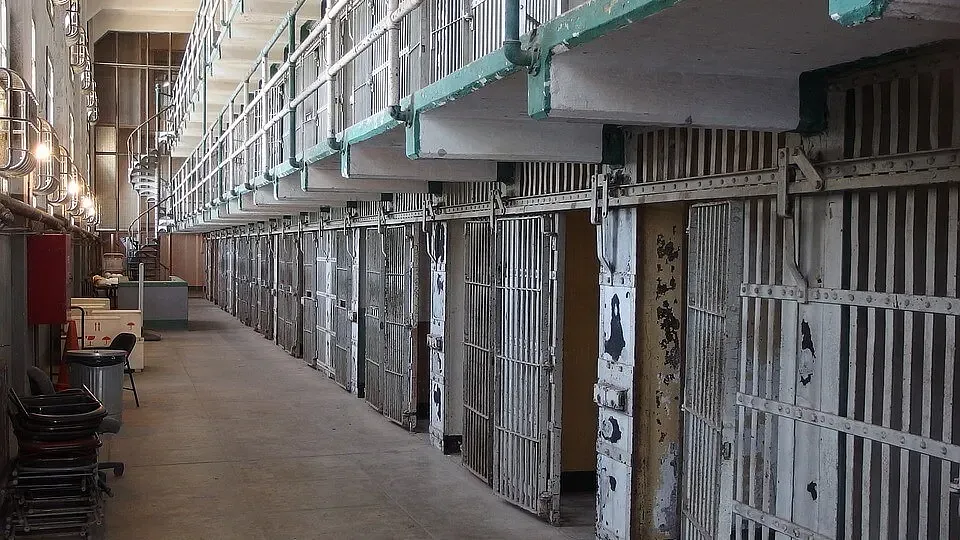
The actual operation of solitary confinement in Taiwan's prisons involves confining an inmate alone in a solitary cell, cutting off opportunities to see or talk to others. Exercise periods and visits are also conducted individually. Those in solitary confinement are not even allowed to go to the factory workshops to work; barring special circumstances, the inmate has absolutely no opportunity to contact other inmates. Prisons generally use solitary cells as a means to punish rule-breaking inmates and maintain prison order when inmates exhibit violent behavior, refuse to obey prison discipline, are at high risk of committing or being subjected to sexual assault, suffer from mental illnesses, cannot adapt to group life, or make false and abusive accusations against prison officers or others.
Outsiders harbor a misconception, thinking that solitary confinement allows inmates to "face the wall and contemplate" in order to deeply reflect upon themselves during the process of solitary confinement, while also preventing them from being "corrupted" by other inmates, and even allowing them to "enjoy exclusively" the cell space instead of squeezing into narrow shared cells with other inmates, presenting no incentives that should be prohibited.
In fact, solitary confinement is not a panacea for correction; its disadvantages often outweigh its advantages. Humans are gregarious creatures. Day and night in a solitary cell, completely alone and subjected to long-term isolation, inmates lose contact with the outside world, lack stimulation, and are unable to enhance their self-worth. Inmates will suffer severe mental torture: mild cases involve auditory and visual hallucinations, emotional dysregulation, or violent behavior, while severe cases deteriorate into major depression, self-harm, or suicide. To make matters worse, when inmates exhibit the aforementioned unstable conditions, the prison responds by citing disobedience and indefinitely extending the period of solitary confinement, often causing the situation to spiral out of control. These negative conditions arising from solitary confinement are frequently heard of both domestically and internationally; they not only obstruct prison security and correction, but also constitute a failure to properly care for the inmates' mental health, let alone expecting them to return to society with a sound mind after their sentence is served.
In this case, the inmate is a person with mild intellectual disability. Individuals with intellectual disabilities may be unable to understand the consequences of their actions. Attempting to use solitary confinement to make them reflect on their behavior is fundamentally ineffective. Moreover, isolating them in a solitary cell may, in the understanding of someone with an intellectual disability, be tantamount to abandonment, feeling akin to extremely cruel torture. Furthermore, the inmate in this case was placed in solitary confinement because the prison authorities worried he would be sexually assaulted, which makes no logical sense whatsoever. If there were concerns that the inmate might be sexually assaulted by others, he should have been assigned to share a cell with prison mates who do not have a homosexual inclination toward sexual assault, and security discipline and life counseling should have been strengthened, rather than placing an inmate with pre-existing mild intellectual disability in a solitary cell and leaving his mind to rot there. Such actions by the prison were purely for the convenience of security and discipline, completely disregarding the physical health of the inmate.
A similar case occurred with Tseng Wen-ch'in, an inmate in a high-profile case. After entering the detention center, due to his violent tendencies and refusal to bathe, he had multiple physical conflicts with cellmates and officers, and was consequently placed in solitary confinement. After solitary confinement, his behavior still could not be improved; his violent behavior showed no improvement, and he even contracted a skin disease and was unable to care for himself, leading to skin ulceration, which was discovered by the judge after he appeared in court. The judge reminded and officially notified the prison authorities to pay attention to his physical condition. Following the official notice, after the prison authorities coordinated with psychiatric and dermatological physicians for treatment, Tseng Wen-ch'in's condition stabilized, and he began to observe order.
The psychological impact of solitary confinement on human beings is very similar to the condition of mental disorders. Placing inmates with pre-existing mental disorders in solitary confinement will only worsen their mental condition. Providing proper psychological treatment is the only right way to help inmates adapt to prison life.
If solitary confinement is truly necessary under certain circumstances, there should also be reasonable supporting measures. Under current prison practice, upon the mere decision of the head of the security division, inmates can be subjected to indefinite solitary confinement. Solitary confinement significantly affects the rights and interests of inmates; yet, in the absence of explicit statutory regulations, it is reduced to the arbitrary whim of administrative agencies and should be strictly regulated by legislation. First, careful evaluations must be conducted for those intended to be subjected to solitary confinement, and the number of days in solitary confinement should have clear statutory limits. After solitary confinement is implemented, the prison authorities should record the physical and mental condition of the inmate in detail on a regular basis. In addition to ensuring that the solitary-confined person establishes interpersonal connections with others at appropriate times, regular follow-up examinations by doctors and psychologists must be provided to safeguard the physical and mental health of the inmate. The aforementioned records and examination reports should allow family members and the outside world to exercise appropriate oversight in a timely manner, and be submitted to the competent authority for review; if there are any doubts, solitary confinement should be suspended immediately. In this case, this inmate had been in solitary confinement for as long as a year, showed an increase in medication usage, and his mood was no longer as cheerful as before; solitary confinement should truly be suspended immediately, and he should be transferred to professional physicians for diagnosis and treatment.
The purpose of establishing prisons is to enable inmates to repent and reform themselves, making them fit for social life. All actions taken by prisons toward inmates should keep this constantly in mind and operate centered around this principle. Inmates committed crimes in the past, and entering prison to take responsibility for their actions is a matter of course; however, even upon entering prison, the essence of inmates as "human beings" cannot be negated thereby. If our prison administration consists of endless exploitation and abuse of inmates, driving inmates to despair, distrusting the system, lacking the acquisition of livelihood skills, and even worsening their physical and mental health, how can we expect inmates to leave such prisons, return to society, not walk down the old path, and instead live out a life better than before? We sincerely hope that our prison system can transcend crime, and through education and correction, preemptively plan for the future of inmates so that they can believe hope truly exists.
Postscript
The Control Yuan announced an investigation report regarding the solitary confinement of defendants subject to communication bans on 2018.7.18.
※ This article was published in the 2016.06.07 PNN PTS News Issues Center
This article is an AI-generated translation of the original Chinese text. In the event of any discrepancy, the Chinese version shall prevail.